Meet

Neura HQ,
Your connected AI Agent Workforce Know more



.jpg)
Retail is heading into the second half of 2026 with two very different stories playing out at once.
U.S. retail sales grew 3.9% to $5.4 trillion in 2025, and the National Retail Federation (NRF) expects sales to accelerate to $5.6 trillion in 2026. Yet that growth is uneven. Value retailers and warehouse clubs are expanding, while many department stores and mid-tier chains are shrinking or filing for bankruptcy.
At the same time, online spending continues to grow, AI is changing how shoppers discover products, tariffs are pushing up costs, and retailers are relying more heavily on first-party data to understand customers.
The result is a retail market increasingly split between value-conscious shoppers and resilient high-income consumers, with customer data becoming a critical competitive advantage.
Let’s look at what’s happening across the major retail trends.
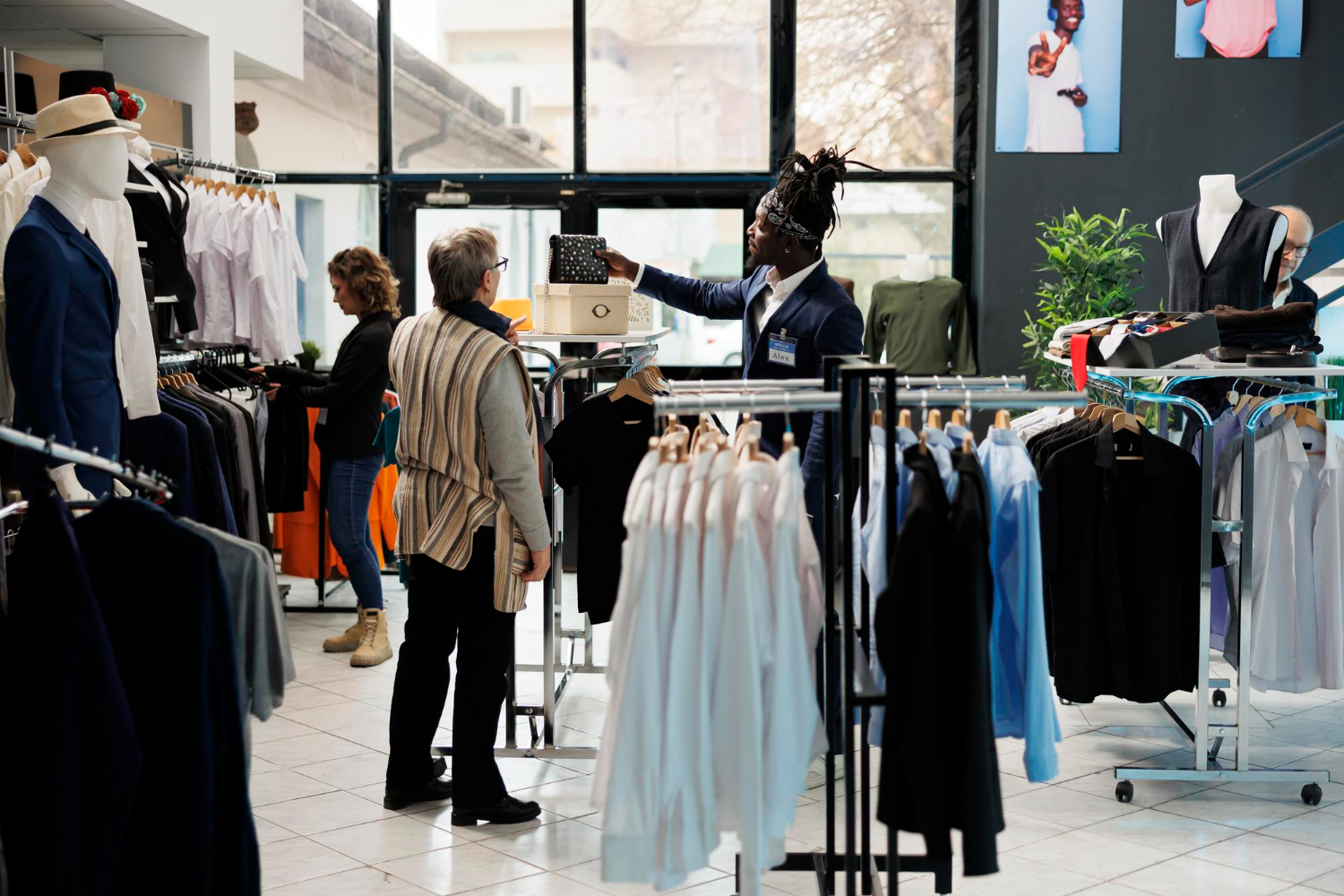
NRF opened 2026 with an optimistic forecast. Working with Oxford Economics, it projected 4.4% retail sales growth, taking the market to $5.6 trillion.
That is well above the 3.6% average annual growth rate of the previous decade, excluding the pandemic years.
Other forecasters are more cautious:
So far, actual spending has supported the more optimistic outlook. The CNBC/NRF Retail Monitor recorded its 10th consecutive month of year-over-year sales growth in July 2026, with core retail sales up 4.72%.
However, the picture changes depending on which data source you use. NRF estimated 2025 holiday sales growth at 4.1%, while Census data showed December retail sales were flat and KPMG estimated holiday growth at closer to 3.6%.
The takeaway is that retail is growing, but the strength of that growth depends on where and how you measure it.
"K-shaped" remains one of the best ways to describe the retail consumer.
High-income households continue to spend, while lower- and middle-income shoppers remain much more cautious.
Federal Reserve Bank of New York data shows cumulative real spending growth through March 2026 of:
Moody’s Analytics found that spending among the top 10% of earners increased 62% between Q3 2020 and Q3 2025, significantly outpacing other income groups.
There is one encouraging sign. NRF's midyear data found that no income group posted negative year-over-year spending growth between January and June 2026.
High-income consumers are still driving much of the dollar growth, but the gap between income groups has become slightly less severe than it was in 2025.
Retailers spent much of 2025 absorbing higher tariff costs rather than passing them directly to shoppers. That cushion is now largely gone.
The realized U.S. tariff rate:
The Federal Reserve estimates that tariffs implemented through late 2025 added roughly 0.8 percentage points to core PCE goods inflation through February 2026.
The cost has increasingly reached consumers.
The Congressional Joint Economic Committee estimated that U.S. consumers paid more than $231 billion in tariff costs between February 2025 and January 2026, equivalent to around $1,745 per household.
The impact varies significantly by price point.
Econofact research found:
The end of the $800 de minimis exemption in August 2025 has also affected cross-border e-commerce, particularly the low-cost imports that supported parts of the fast-fashion and marketplace sectors.
Retailers are now becoming more open about passing those costs on.
Walmart has said tariffs will result in higher prices, while Amazon has indicated that its pre-tariff inventory stockpile had largely run out by late 2025.
Meanwhile, TJX has positioned itself as relatively tariff-neutral because of its scale and global vendor network.
BOPIS, or buy online, pick up in store, has moved well beyond its pandemic roots.
U.S. click-and-collect sales are expected to reach around $178 billion in 2026, up approximately 15% year over year.
That represents nearly 12% of e-commerce sales.
The preferred fulfillment method is also changing.
By 2026-2027, eMarketer expects roughly two-thirds of click-and-collect shoppers to prefer in-store pickup, ahead of curbside pickup.
An estimated three-quarters or more of click-and-collect spending comes from grocery.
The opportunity extends beyond fulfillment. Customers who enter the store to collect an order may purchase additional products, turning pickup into an incremental sales opportunity.
Walmart illustrates the scale of this model:
Retailers are also investing in:
The store is increasingly becoming part of the digital shopping journey.
While traditional department stores are reducing their footprints, digitally native brands are moving in the opposite direction.
Coresight Research expects U.S. retailers to open around 5,500 stores in 2026, up 4.4% year over year, against approximately 7,900 closures.
Discount, off-price and grocery formats account for much of the expansion, but digitally native brands are also becoming significant store operators.
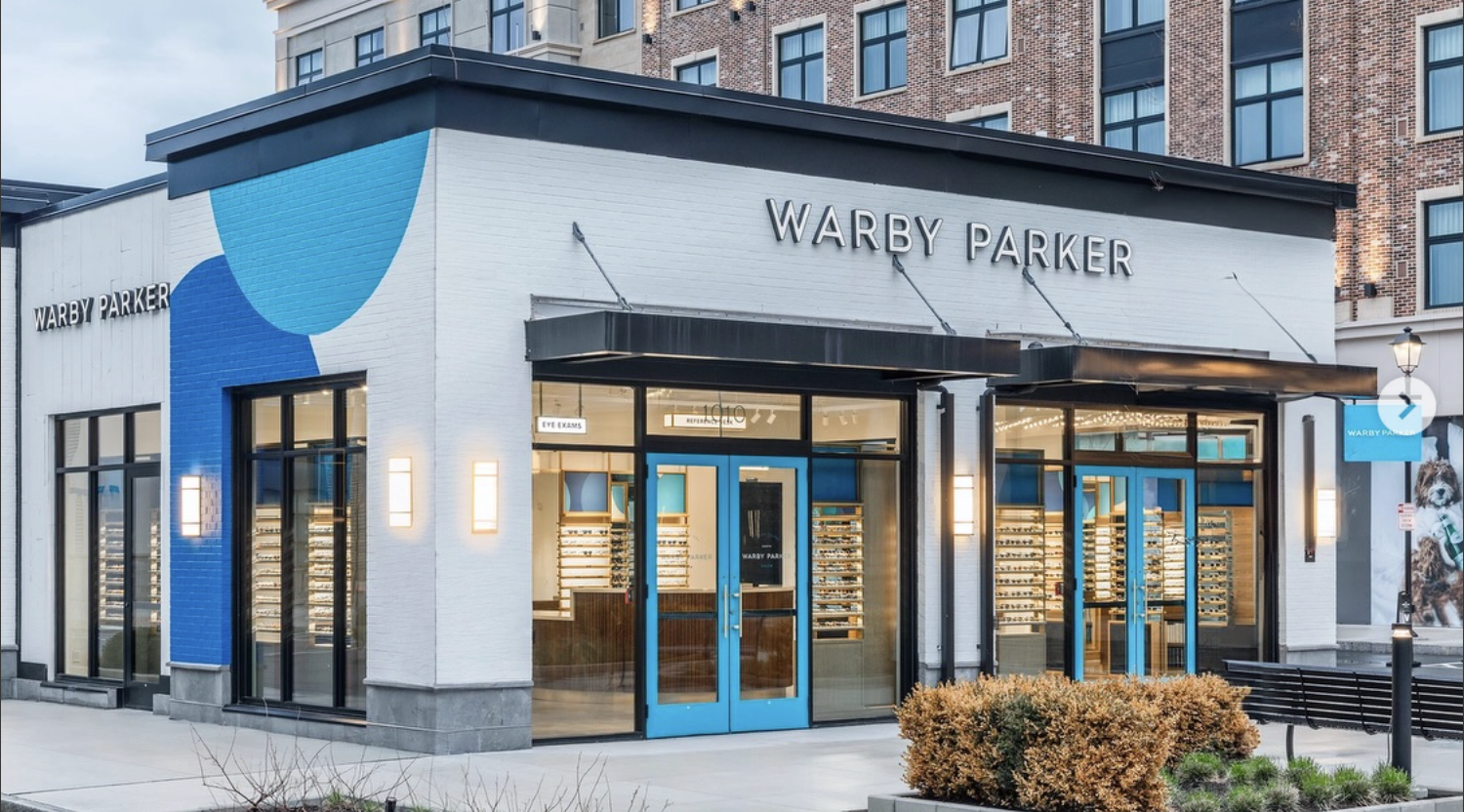
Warby Parker opened 47 stores in 2025, ending the year with 323 locations and its first full year of net profitability.
It plans another 50 stores in 2026 and has a long-term target of more than 900 U.S. locations.
Its stores support several parts of the customer journey:
Other digitally native brands are following:
Allbirds provides a useful counterexample. The brand paused new U.S. store openings to focus on four-wall profitability and shifted some markets toward wholesale distribution.
ICSC research covering 69 retailers and $848 billion in spending found that opening a new store increased online sales in the surrounding trade area by around 7% on average.
For emerging direct-to-consumer brands, the increase was nearly 14%.
That makes physical retail increasingly valuable as a customer acquisition channel.
The larger shift is toward a single retail loop:
Online discovery → store visit → purchase → online engagement → repeat purchase
Retailers need the customer data to understand how each shopper moves through that loop.
U.S. consumers spent a record $257.8 billion online during the 2025 holiday season, up 6.8% year over year.
Cyber Week generated $44.2 billion, while Cyber Monday alone reached $14.25 billion.
Other notable figures:
AI is becoming a particularly important source of traffic.
Adobe reported that traffic to U.S. retail sites from AI tools increased 393% year over year in Q1 2026.
During the 2025 holiday season, GenAI-referred traffic had already increased 693.4% year over year.
That makes AI one of the fastest-growing retail discovery channels.
Social commerce is also accelerating.
eMarketer estimates approximately $101 billion in U.S. social commerce sales in 2026, up around 48% year over year.
TikTok Shop alone is expected to generate close to $23 billion in U.S. GMV.
AI agents were expected to become a major purchasing channel in 2026. The reality has been more gradual.
OpenAI's Agentic Commerce Protocol, developed with Stripe, initially enabled shoppers to buy products directly within ChatGPT.
Etsy joined the program, alongside more than a million Shopify merchants.
However, direct checkout was later scaled back. The model increasingly shifted toward AI-led discovery followed by checkout on the merchant's own website.
Google launched its competing Universal Commerce Protocol in January 2026, with partners including Shopify, Walmart and Target.
Shopify also made products from 5.6 million stores discoverable across platforms including ChatGPT, Microsoft Copilot, Google AI Mode and Gemini.
Amazon, meanwhile, blocked OpenAI crawlers from indexing its listings, preventing Amazon products from appearing in ChatGPT shopping results.
AI-driven discovery is scaling faster than AI-driven checkout.
For now, merchants still control:
McKinsey estimates agentic commerce could redirect $3 trillion to $5 trillion in global retail spending by 2030.
That makes product data, inventory data and customer data increasingly important infrastructure.
U.S. retail media spending is expected to reach around $70 billion to $71 billion in 2026, up approximately 18%.
Amazon and Walmart are expected to capture close to 89% of new U.S. retail media investment.
Amazon's advertising business generated more than $68 billion in 2025, while Walmart's global advertising business grew 46% to $6.4 billion in its most recent fiscal year.
Retail media is increasingly becoming another way for retailers to monetize customer and transaction data.
That creates a direct connection between:
Customer data → personalization → loyalty → retail media → revenue
Loyalty remains one of retail's most effective ways to collect customer data.
Antavo's 2026 analysis found:
Enrollment alone does not guarantee engagement.
The opportunity is particularly strong in grocery, where approximately 45% of U.S. adults actively use a loyalty app connected to their primary grocery retailer.
As loyalty, transaction and browsing data come together, the customer data platform market is expected to reach $10.3 billion in 2026.
Retailers are becoming more serious about AI, even if spending remains cautious.
The most immediate AI returns are also coming from less visible areas.
Supply chain forecasting, demand planning and inventory management are currently delivering some of the clearest business value.
That matters because better data and inventory systems also improve customer-facing AI applications.
Deloitte's 2026 Back-to-School Survey projected:
Interestingly, lower- and lower-middle-income households planned to increase spending, while higher-income households planned to pull back.
Around one-third of parents were classified as "hyper value-seekers", using four or more money-saving tactics.
These shoppers still spent 14% more than other shoppers.
The lesson is important: value-seeking does not automatically mean spending less. It can mean being more selective about where money goes.
Deloitte found that:
Retailers are therefore becoming more selective about where they invest.
Estimates for the quick-commerce market vary between approximately $55 billion and $66 billion in 2026, depending on the definition used.
Several forecasts expect the market to exceed $90 billion in the early 2030s.
Major developments include:
Fulfillment is increasingly becoming a platform for subscriptions, advertising and customer engagement.

Black Friday falls on November 27, followed by Cyber Monday on November 30.
But shoppers are unlikely to wait until those dates.
Amazon is expected to run Prime Big Deal Days in early to mid-October, while Target, Walmart and Best Buy have increasingly spread Black Friday promotions across several weeks.
At the same time, consumer confidence remains fragile.
The Conference Board's Consumer Confidence Index fell to 89.4 in August 2026, with the Expectations Index dropping to 68.2.
The Supreme Court's February 2026 ruling against the administration's IEEPA-based tariffs led to their replacement with a flat 10% global tariff under a different legal authority.
The effective U.S. tariff rate fell from nearly 11% in late 2025 to around 7.1% by June 2026.
That is lower than retailers expected last fall, but still significantly above the 2.3% baseline from January 2025.
China-origin goods continue to face an effective rate above 23%.
AI is moving from an emerging discovery channel to a mainstream shopping tool.
Consumer reliance on AI assistants as the first step in a purchase journey increased 200% between May 2025 and May 2026.
Other findings include:
Retailers that already had a shopping agent in 2025 saw holiday sales growth of 6.2%, more than two percentage points ahead of retailers without one.
Black Friday and Cyber Monday remain important, but the shopping season continues to spread across the calendar.
50% of shoppers still consider Black Friday and Cyber Monday compelling, up from 34% a year earlier.
Physical stores remain central to the journey.
Those shoppers may be checking competitor prices, loyalty apps, product information, or online reviews while standing inside a store.
Hybrid shopping is expected to account for 38% of holiday retail dollars in 2026.
Three themes appear across almost every part of the retail landscape.
1. AI is becoming part of retail infrastructure
Whether a product appears in ChatGPT, Google AI Mode or a retail media platform increasingly depends on the quality of the underlying product, inventory and customer data.
2. The K-shaped consumer keeps evolving
High-income consumers continue to drive much of the dollar growth, while off-price retailers, warehouse clubs and dollar stores are gaining shoppers across multiple income groups.
The pattern can also reverse depending on the category, as back-to-school spending demonstrates.
3. First-party data is becoming a competitive advantage
Retailers need first-party data to personalize experiences, power AI, strengthen loyalty and build retail media businesses.
The companies that can connect these pieces have a better chance of retaining the customer relationship as more discovery moves to platforms such as Amazon, TikTok and AI assistants.
Across all these trends, the same operational challenge keeps appearing.
Customer and transaction data often sits across:
When those systems operate separately, retailers struggle to build a consistent view of the customer.
AI needs connected data
AI-driven personalization, agentic commerce, and retail media all depend on reliable product and customer data.
Fragmented data makes it harder to deliver accurate recommendations, understand customer behavior, and activate insights quickly.
Personalization needs a single customer view
A shopper might:
If each interaction sits in a separate system, the retailer may see six different activities instead of one customer journey.
The direct relationship is also a data problem
Retailers that recognize customers across channels can build stronger direct relationships.
Those that cannot may remain dependent on the platforms that introduce customers to them, whether that is Amazon, TikTok Shop or an AI assistant.
The retail landscape is becoming more connected across physical stores, e-commerce, loyalty, social commerce and AI.
That creates a clear need for a unified customer data layer.
A customer data platform can bring together information from multiple systems to create a single Customer 360, making that data available for segmentation, personalization and activation.
For retailers, the goal is straightforward:
Recognize the same customer wherever they interact with your brand, then use that context to deliver the right experience.
This is the gap ZEPIC was built to close.
ZEPIC combines a built-in customer data platform with AI-powered activation, connecting data from 50+ tools into a real-time Customer 360.
From there, retailers can activate customer journeys across:
All from one platform, without requiring an engineering team to build every segment or journey.
For retailers preparing for the holiday season, that means a loyalty-app shopper, BOPIS shopper, and AI-assisted browser can be recognized as the same customer, giving marketing teams one connected view of the journey.
Book a ZEPIC demo and see how a unified customer view can come together before Q4 peak season.

%201.png)


.png)