Meet

Neura HQ,
Your connected AI Agent Workforce Know more


Close the loop between your business and your stack. ZEPIC's destination webhooks pull in real-time events from different tools in your tech stack and push enriched customer data back to help you create meaningful customer experiences.
Book a demo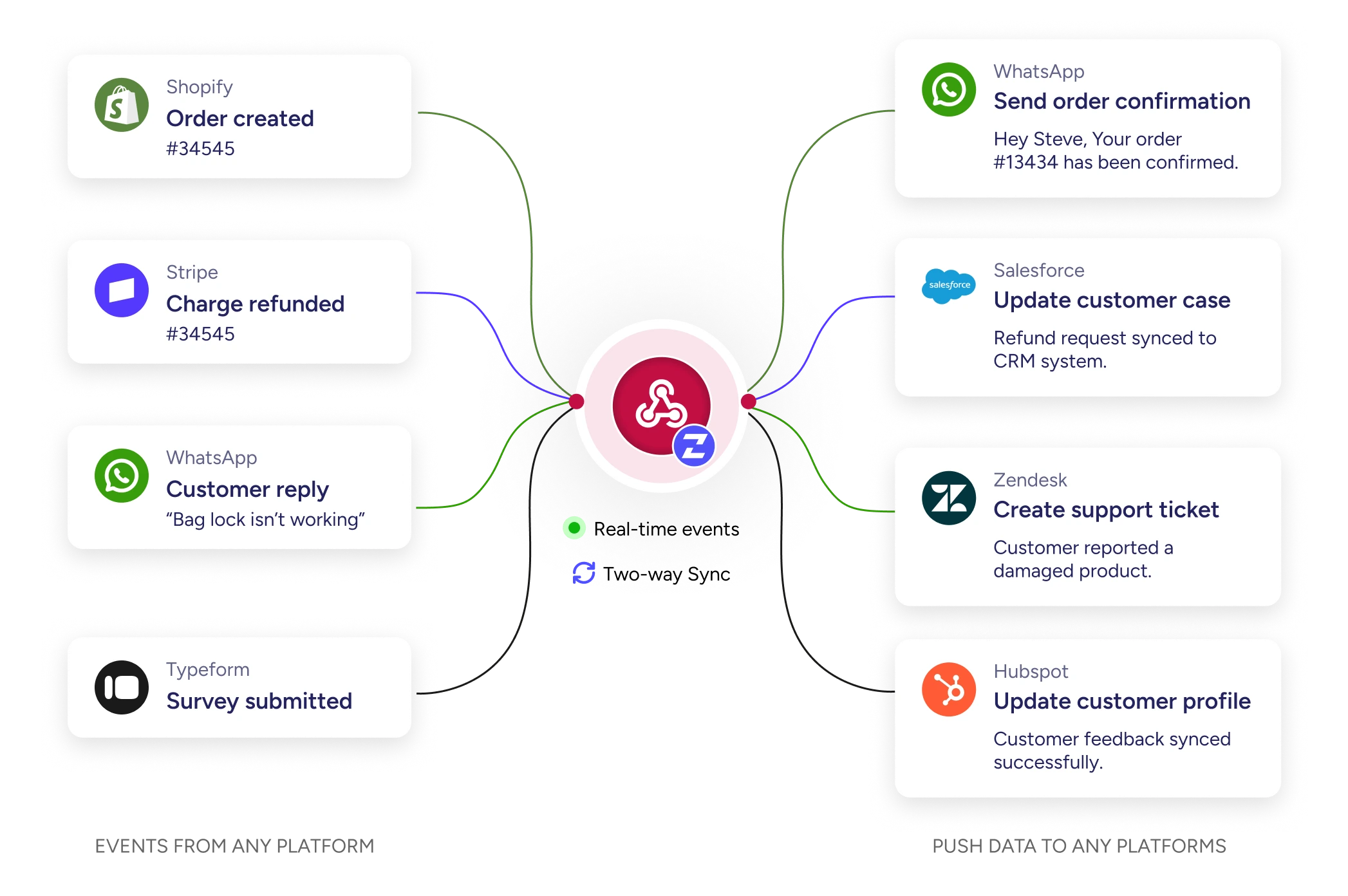








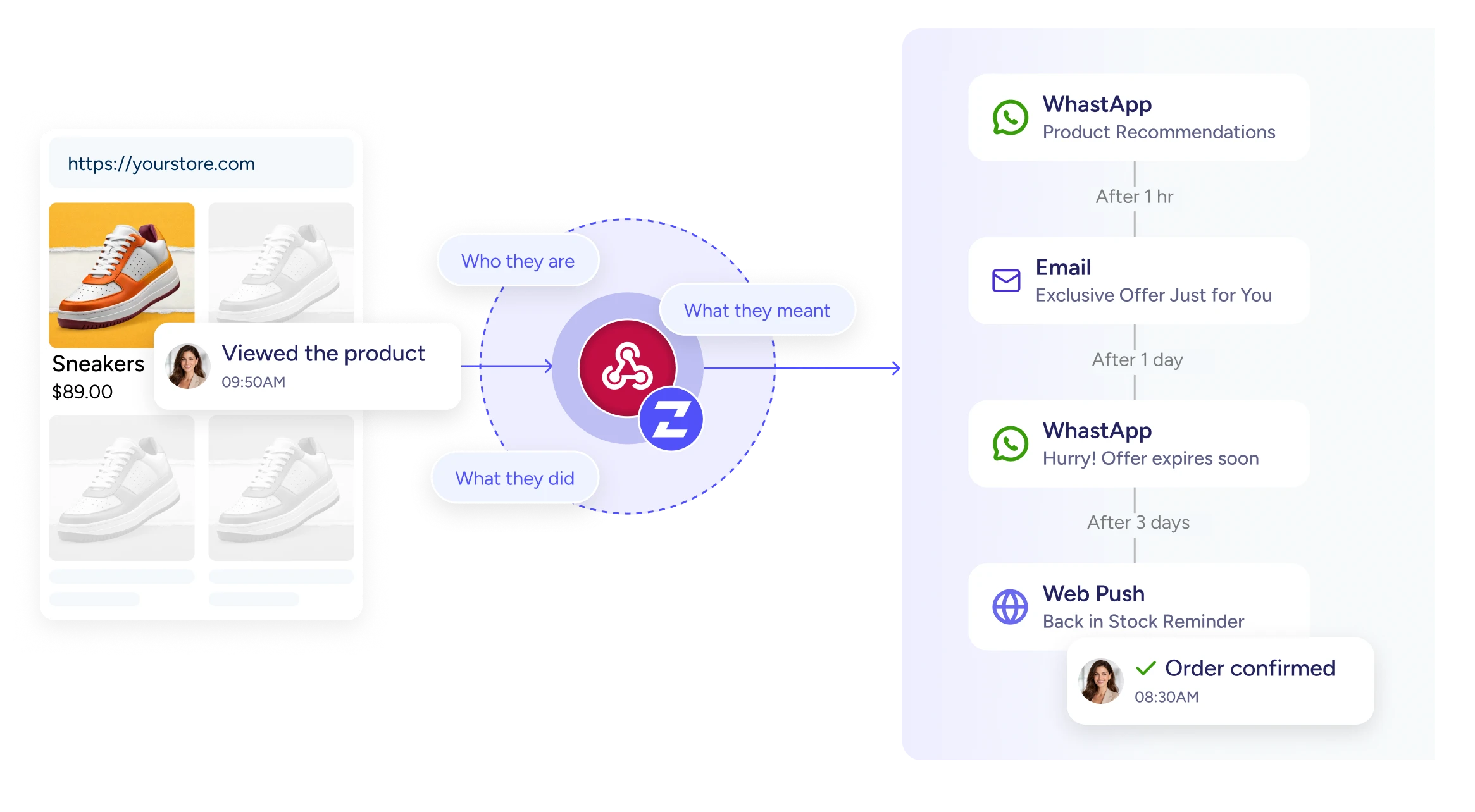
ZEPIC's destination webhooks translate every customer interaction into actionable intent and route it to your CRM, helpdesk, or sales team the moment it happens.
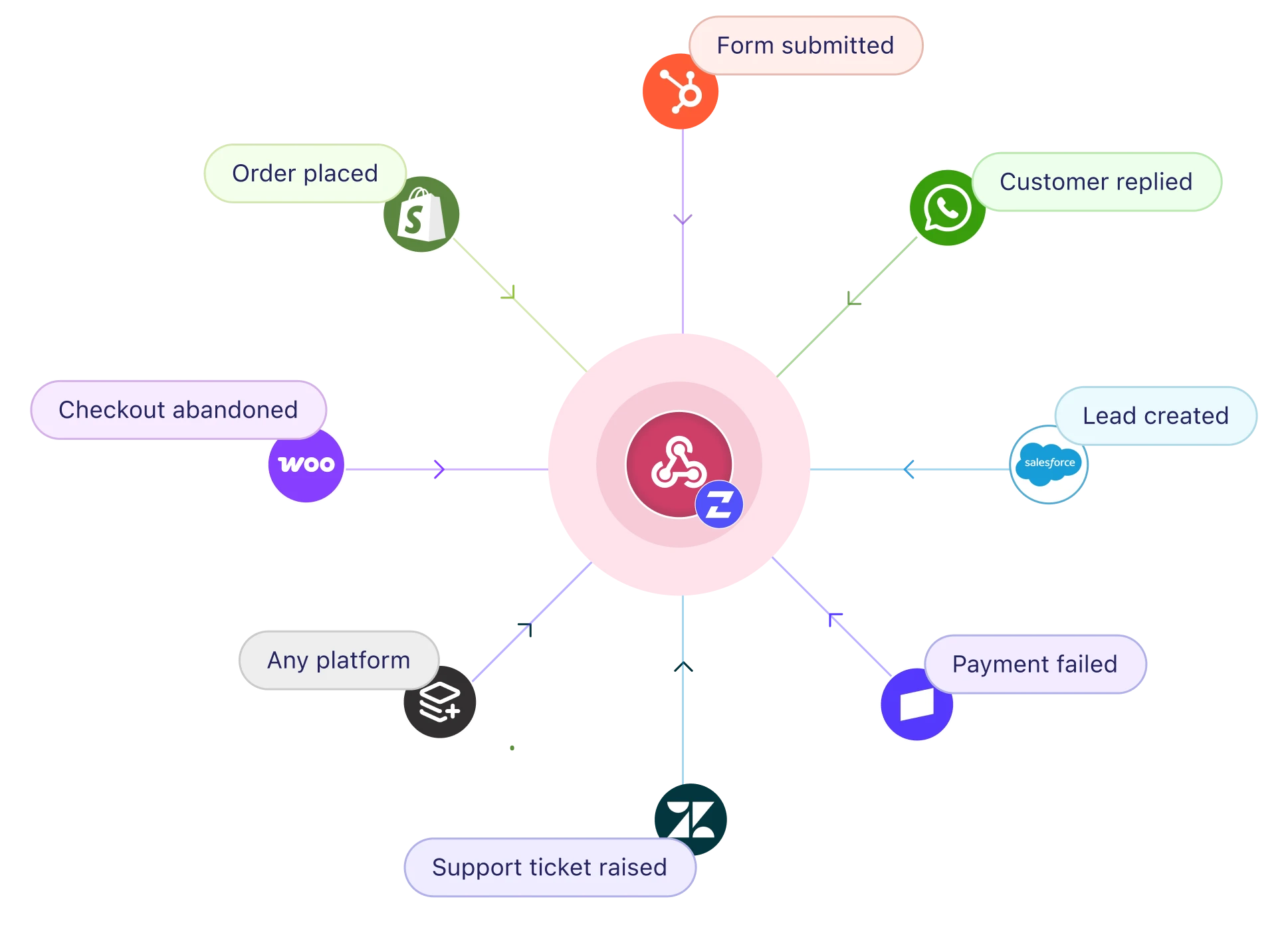
From failed payments to delivered orders, ZEPIC's inbound webhooks receive real-time events from Shopify, WooCommerce, and any tool in your stack—instantly.
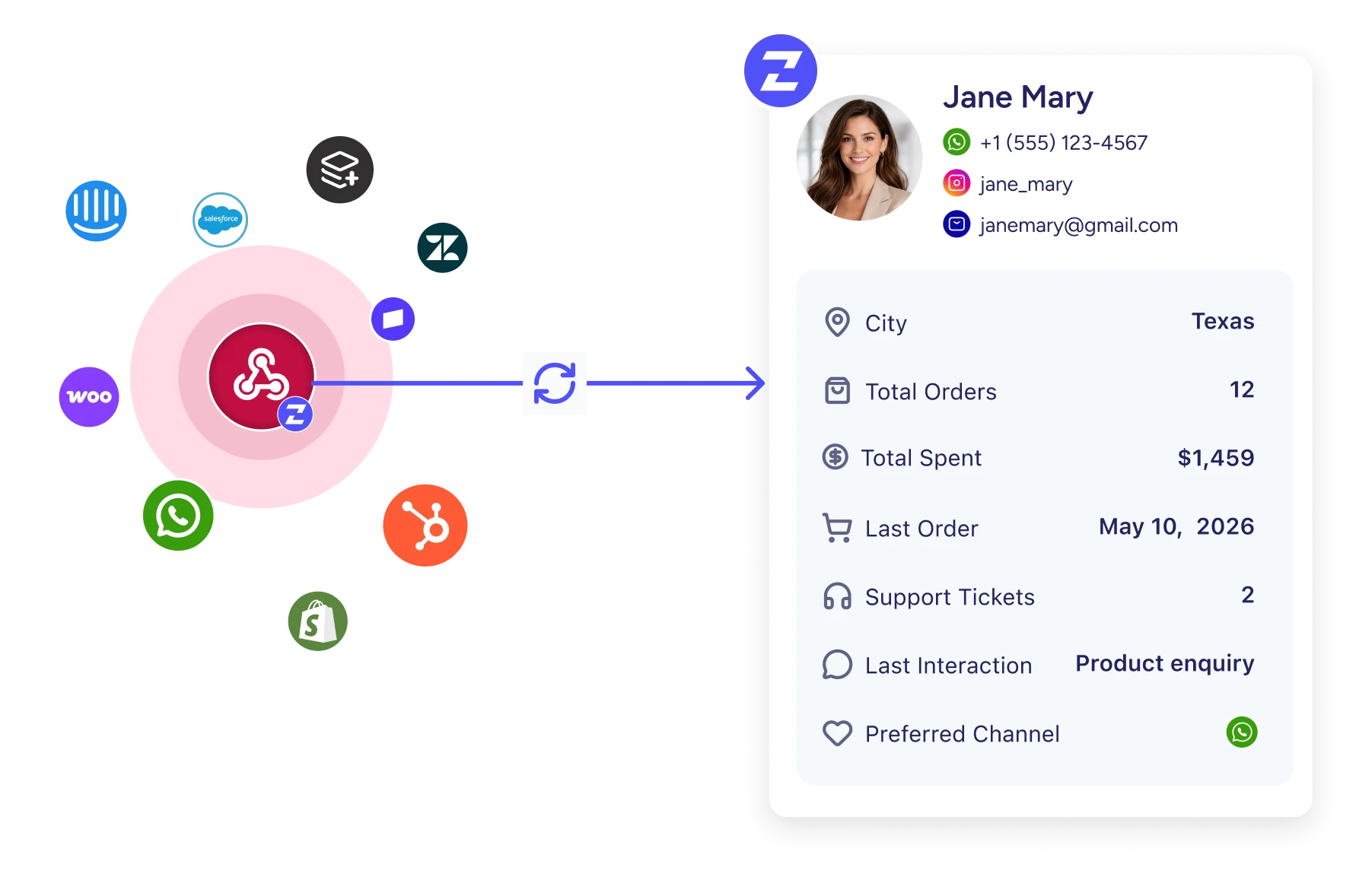
Match incoming webhook events with existing customer profiles to create a unified, 360-degree view before pushing data back out to your systems.
A return request goes to your helpdesk. A buying signal reaches your sales team. ZEPIC reads the intent behind every interaction and routes it to the right place
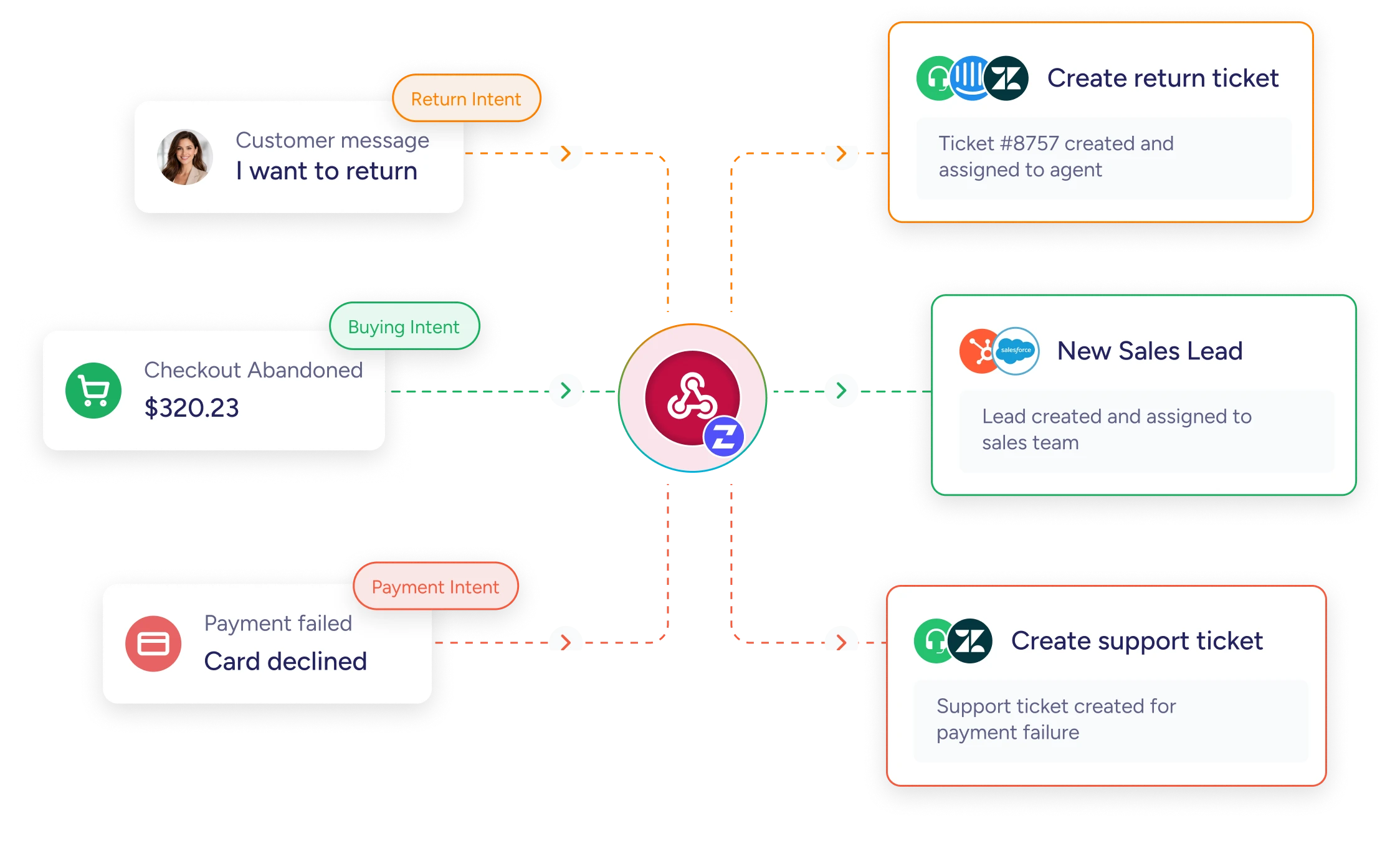
Every routed signal becomes the starting point for a personalized multichannel journey. ZEPIC connects the dots between what your customer did, what they meant, and what happens next.
USE CASE 1
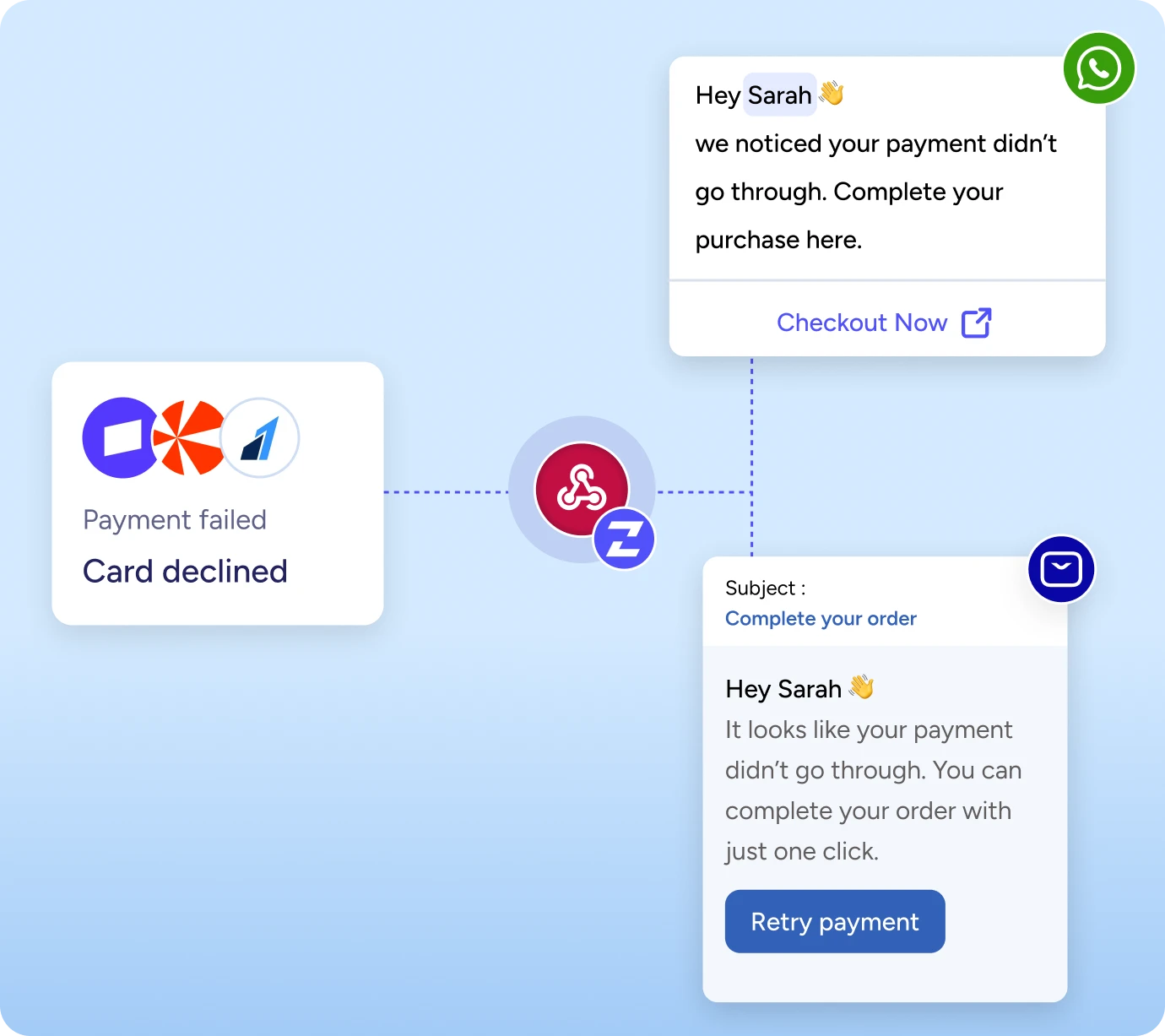
When your payment gateway fires a failed transaction event, ZEPIC catches it instantly and triggers a recovery message via WhatsApp or email, while the customer still wants to buy.
USE CASE 2
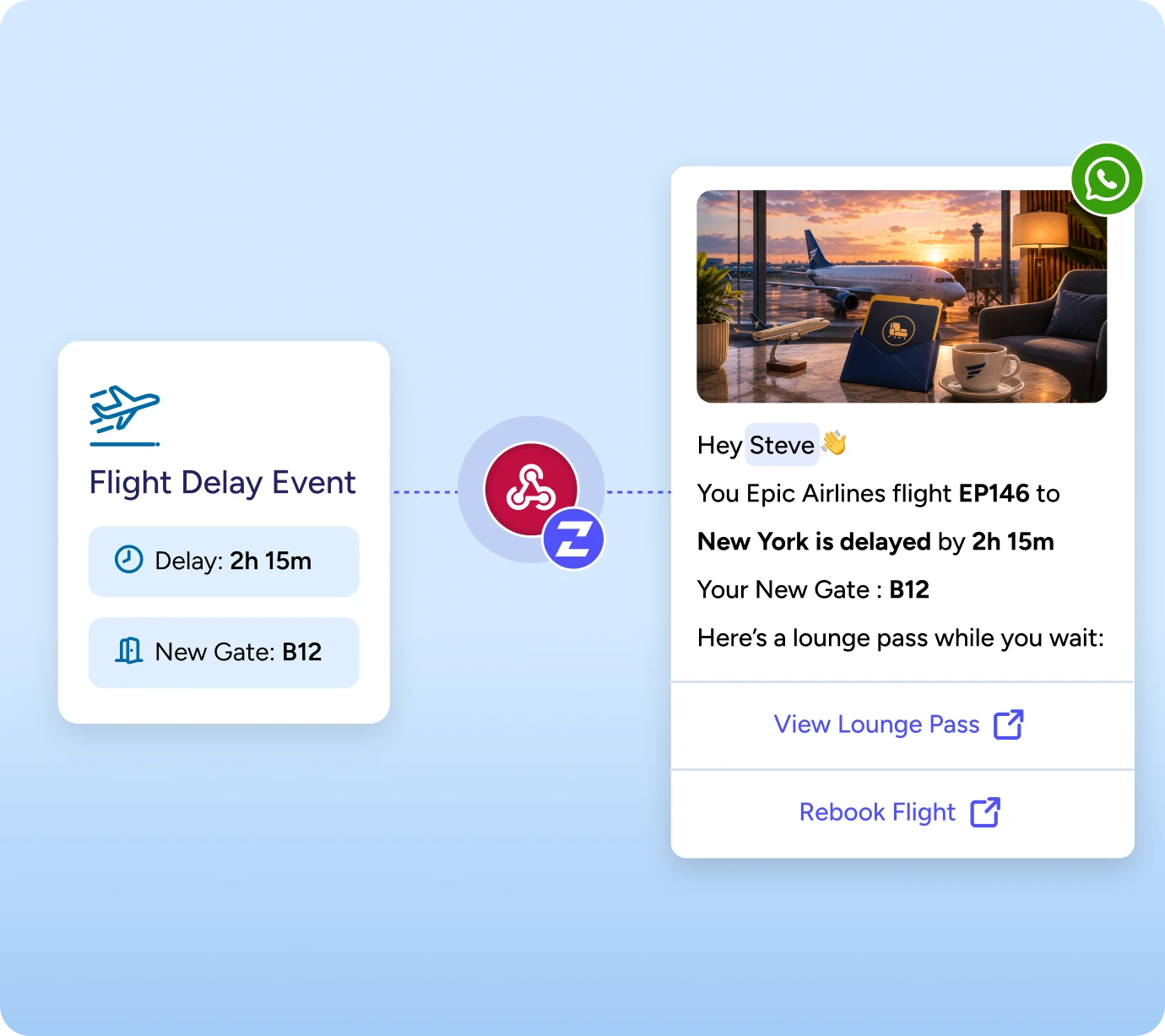
When your airline or rail partner fires a flight delay or gate change event, ZEPIC’s inward webhooks catch it instantly. ZEPIC then triggers a WhatsApp update to the traveler with a lounge pass or rebooking link.
USE CASE 3
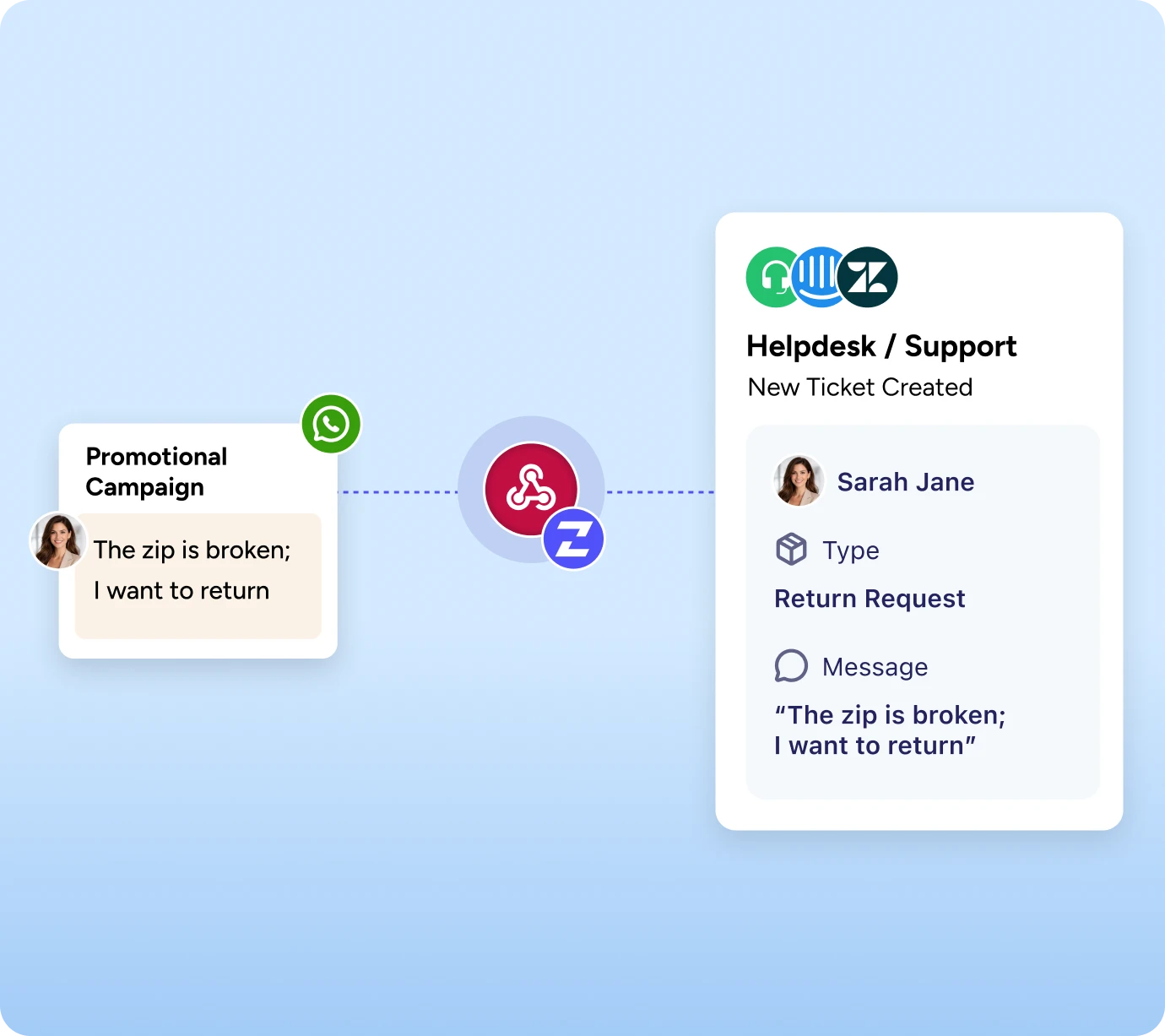
When a customer replies "The zip is broken; I want to return this," to a promotional campaign ZEPIC reads the intent and fires an outbound webhook to your helpdesk.
USE CASE 4
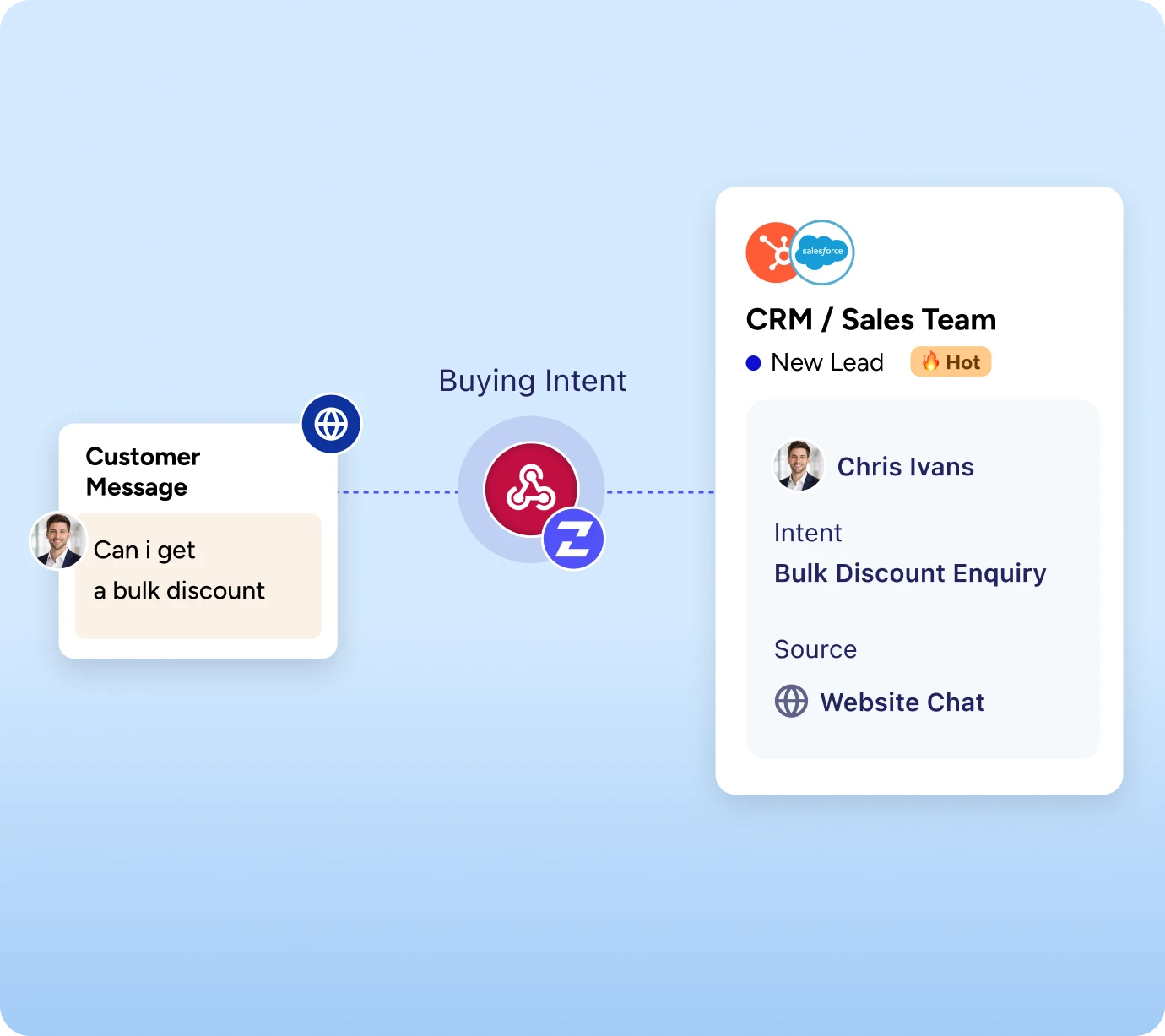
When a customer asks, "Can I get a bulk discount?" ZEPIC spots the intent and fires it straight to your sales team via your CRM while the lead is still hot.
If you’re looking for the shortest path to a unified stack, ZEPIC’s native connectors offer one-click integration. Skip the configuration and start syncing your most critical customer data in seconds.
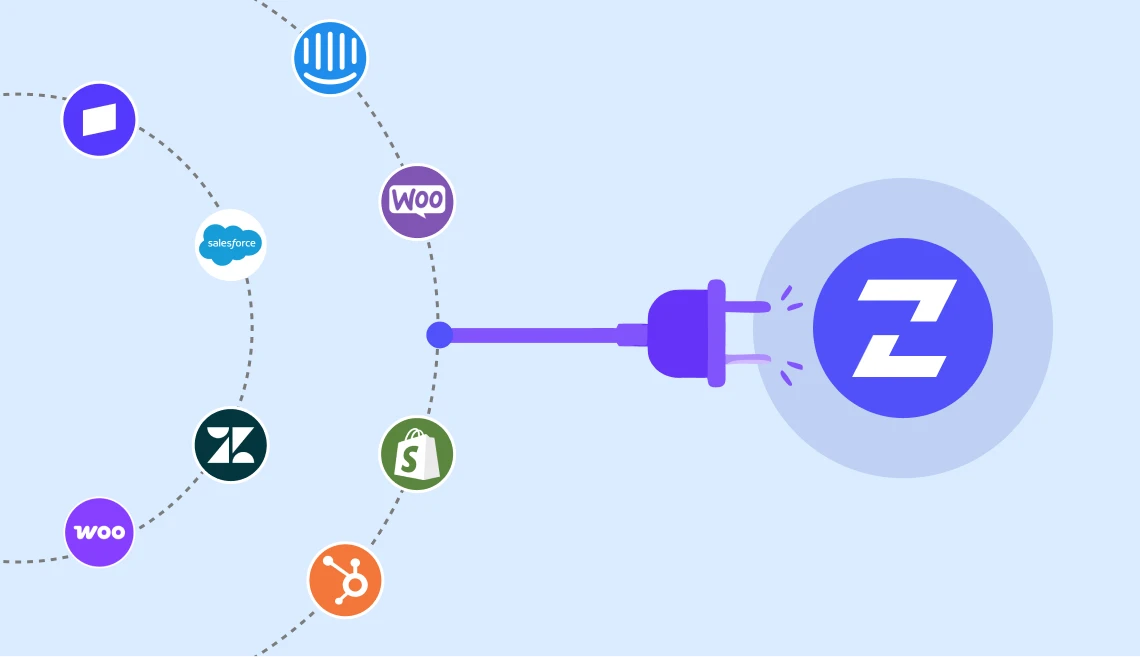
Connect e-commerce giants like Shopify and WooCommerce or CRMs like Salesforce and HubSpot without touching a single line of code.
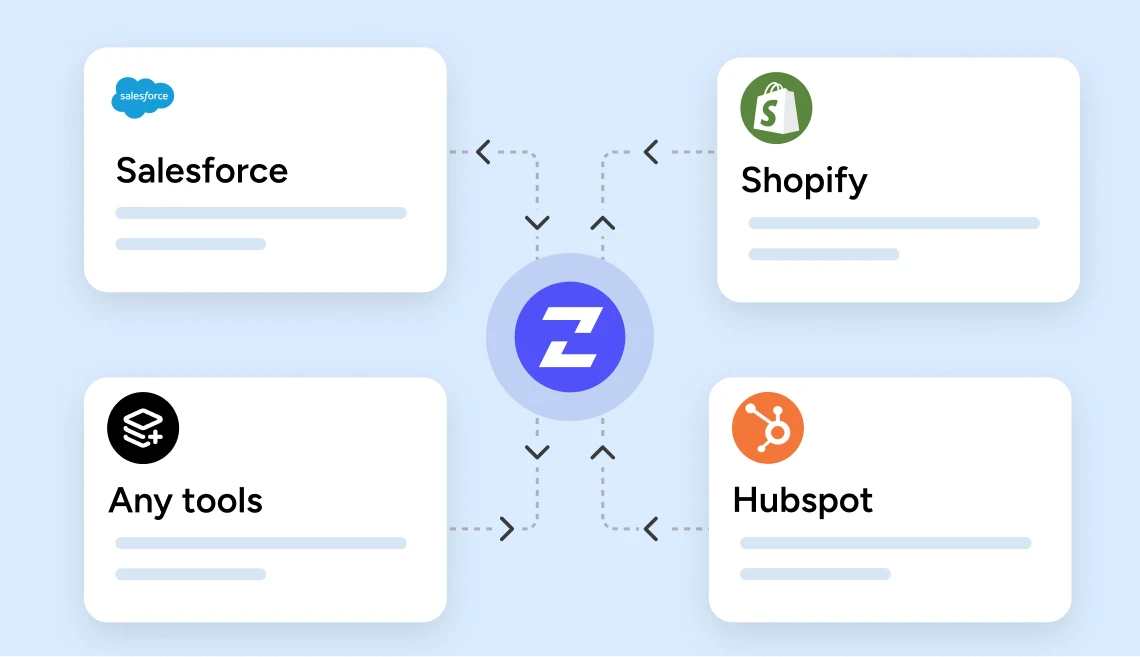
Don’t just pull data in—keep your systems in perfect harmony. ZEPIC’s native connectors ensure that when a customer’s profile changes in one place, it’s updated everywhere.
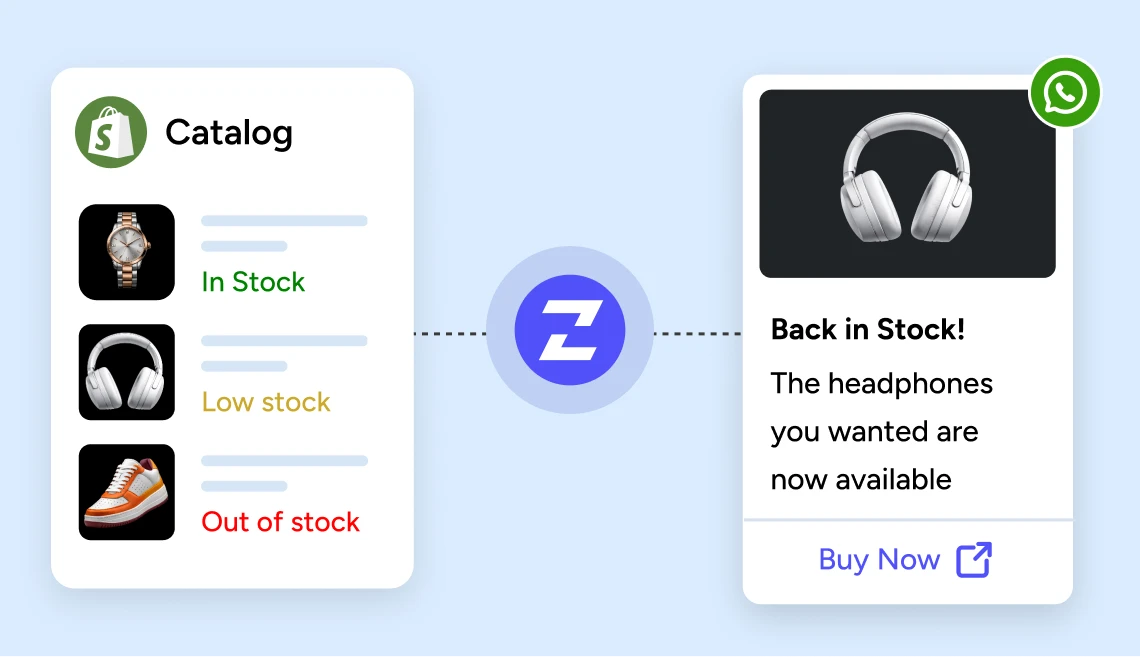
Native connectors go beyond just events; they sync your entire product catalog, allowing you to trigger WhatsApp messages based on specific inventory levels, price drops, or restock alerts.
From failed payments to buying signals, ZEPIC captures every store event and pushes the right context to every tool that needs to act on it — instantly.
See it in actionA destination webhook is an outbound webhook ZEPIC fires to an external tool, your CRM, helpdesk, or sales platform, when a customer takes a meaningful action or sends a reply with intent. Paired with inbound webhooks, it makes ZEPIC a live, two-way data channel between your store and your stack.
No. Navigate to Connectors > Sources > Webhook, generate your unique URL, paste it into your platform, and map your data fields when the first event comes through. The whole process takes minutes.
Any platform that can send a webhook, such as Shopify, WooCommerce, payment gateways, logistics providers, review tools, or custom internal systems. If it can send a POST request, ZEPIC can receive it.
Inbound webhooks bring events into ZEPIC— triggering flows, updating profiles, and starting journeys.
Outbound webhooks push enriched data from ZEPIC out to your CRM, helpdesk, or other tools.
ZEPIC supports both.
Yes. When a customer replies to a campaign with a return request, a product question, or a buying signal, ZEPIC extracts the intent and routes it to the appropriate team or system automatically.

%201.png)


