Meet

Neura HQ,
Your connected AI Agent Workforce Know more

WhatsApp has crossed 3 billion monthly active users, and for brands, it has become the highest-intent marketing and support channel available. The challenge is that managing conversations at scale without the right infrastructure means slower response times and missed revenue opportunities. WhatsApp chatbots solve this by enabling businesses to automate conversations, qualify leads, recover abandoned carts, and deliver personalized campaigns.
Today's best WhatsApp chatbots go well beyond simple keyword-triggered replies. Powered by the official WhatsApp Business API, they allow brands to build intelligent flows that handle FAQs, send behavior-triggered broadcast campaigns, and route high-intent customers to human agents without any friction.
In this guide, we have compared six leading WhatsApp chatbots: ZEPIC, ManyChat, WATI, AISensy, Gupshup, and Interakt.
To make that decision easier, we’ve compared five of the best WhatsApp Chatbot platforms—ZEPIC, ManyChat, WATI, AISensy, Gupshup and Interakt—so you can find the solution that fits your goals.








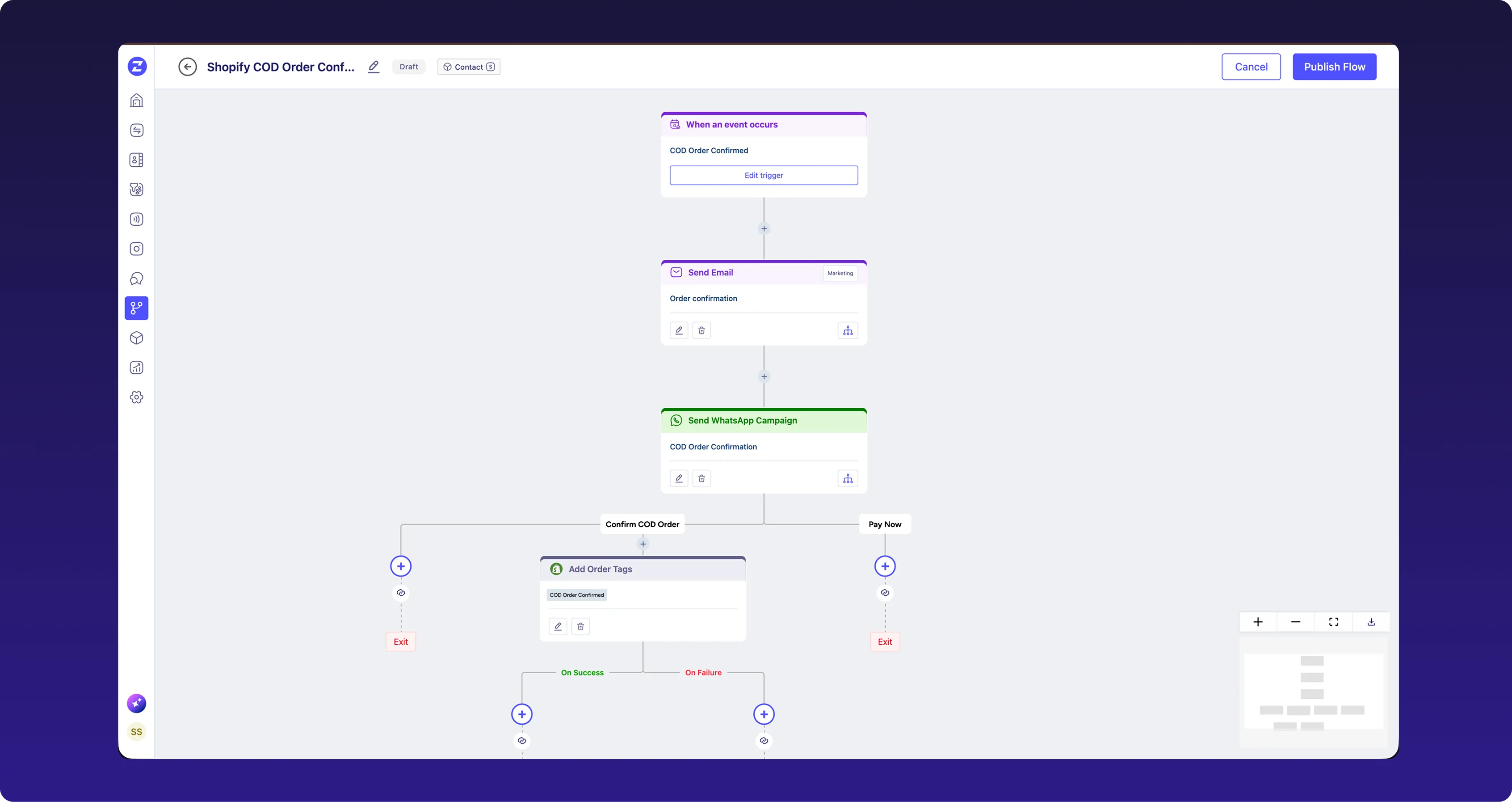
ZEPIC is the only WhatsApp Chatbot that converts WhatsApp conversations into actions across channels and systems. With a built-in Customer Data Platform (CDP) at its core, ZEPIC unifies your customer data from Shopify, CRMs, support tools, and campaigns into a single 360-degree profile, so every WhatsApp conversation is informed by the full customer context rather than just the current chat. ZEPIC’s AI-powered WhatsApp Chatbot creates entire campaigns from scratch and automates flows across WhatsApp, Instagram, and email without needing technical support.
.png)

The only platform that combines a full CDP with a WhatsApp chatbot in a single product.
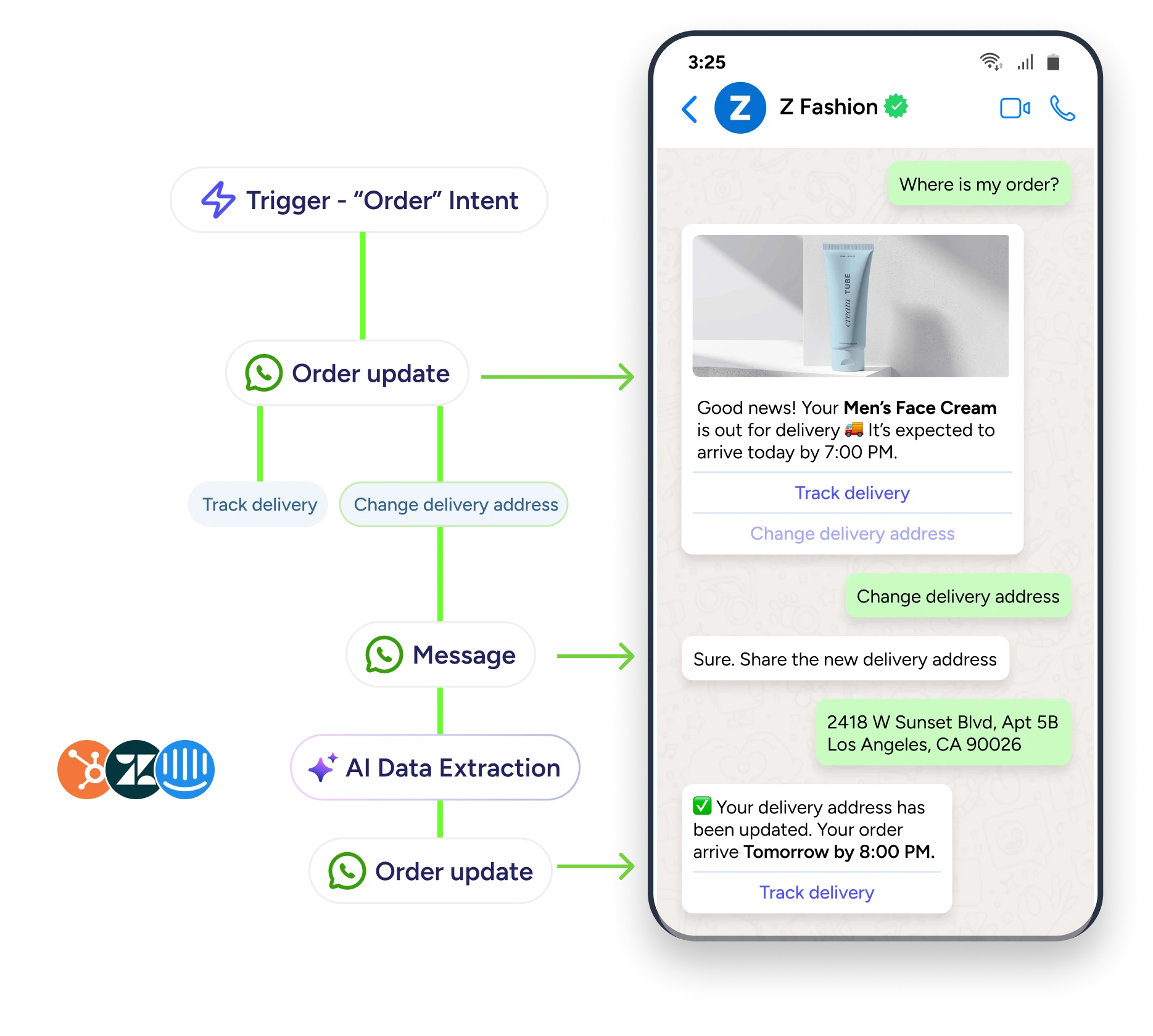
ZEPIC’s WhatsApp Chatbot identifies intent and offers appropriate responses.
Zenie AI dramatically reduces the time from idea to live campaign.
Onboarding in under 3 hours, no dev support required.
Pay-as-you-go pricing with no long-term contracts and a free trial.
Cross-channel flows (WhatsApp + Instagram + Email) managed from one platform.
.svg)
.svg)
A/B testing for flows is not yet available.
Newer platform; still expanding enterprise integrations and partner ecosystem.



Plans starting at $23/month
Flexible pay-as-you-go model
Free trial available, no credit card required
No long-term contracts required
.svg)
D2C and e-commerce brands
Travel & Hospitality companies
Customer support teams handling high-volume WA support tickets
Brands that cater to markets like India, LATAM, Southeast Asia, and the Middle East, where WhatsApp is prevalent
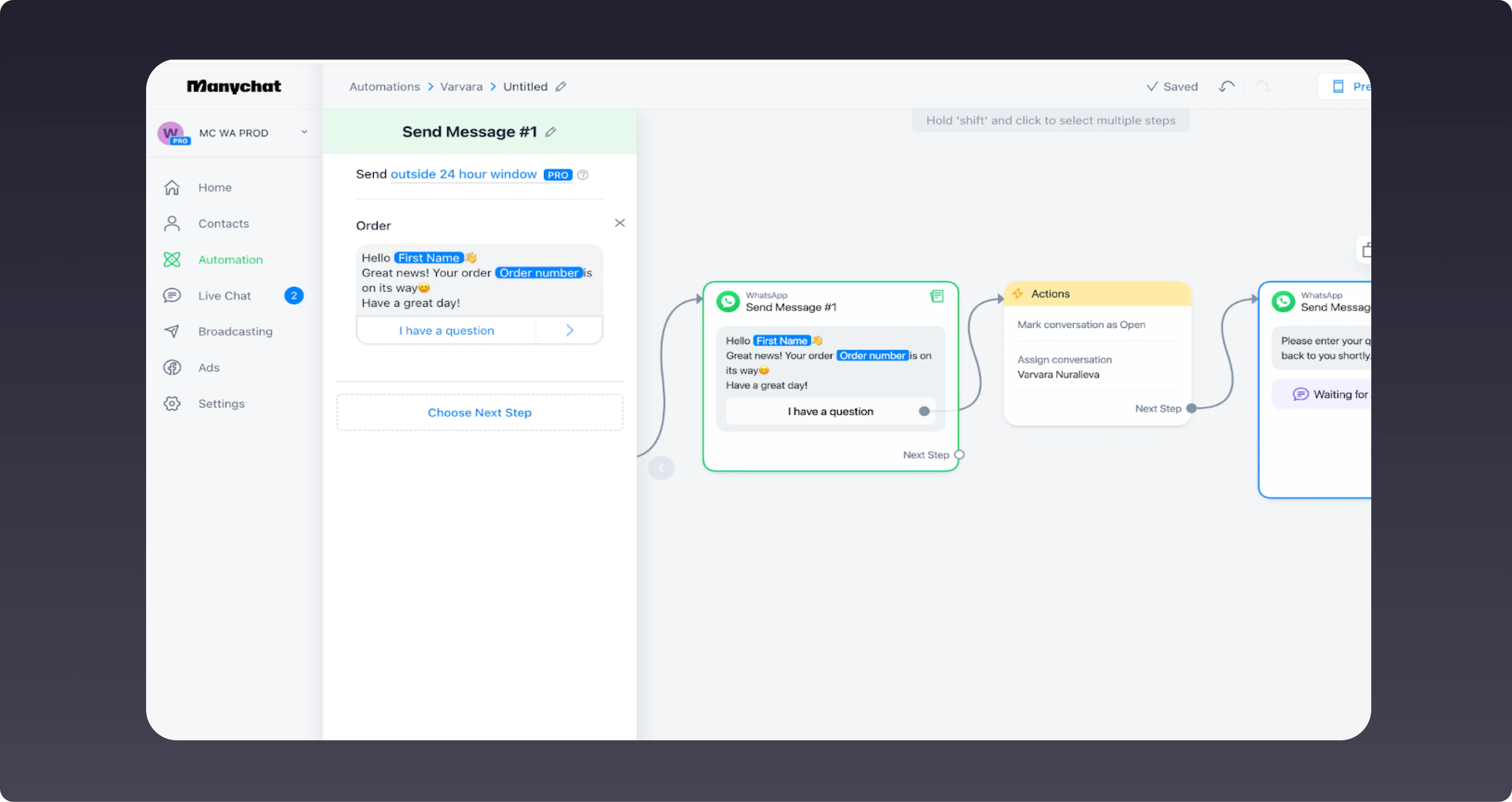
ManyChat is a multi-channel marketing automation platform best known for Instagram and Facebook Messenger automation, with WhatsApp added as an additional channel. Its visual flow builder is one of the most intuitive in the market, making it a popular starting point for small businesses and creators building their first chatbot flows. For WhatsApp specifically, ManyChat requires connecting a separate WhatsApp Business Account through Meta, and conversation fees are billed separately on top of the plan subscription.
Easiest flow builder for non-technical users.
Strong for social-first brands already using Instagram and Facebook automation.
A free plan is available for initial testing up to 1,000 contacts.
No built-in CDP; customer data is basic and limited to the current channel.
Total cost climbs quickly once contacts grow and WhatsApp conversation fees are added.
No team inbox for multi-agent WhatsApp support

Free plan: up to 1,000 contacts, basic features
Pro plan: starts at $15/month, scales with contact count
AI add-on: $29/month (included in Elite plan)
WhatsApp message fees are billed separately at Meta rates
Content creators
Small D2C brands already invested in Instagram or Facebook marketing want to extend to WhatsApp
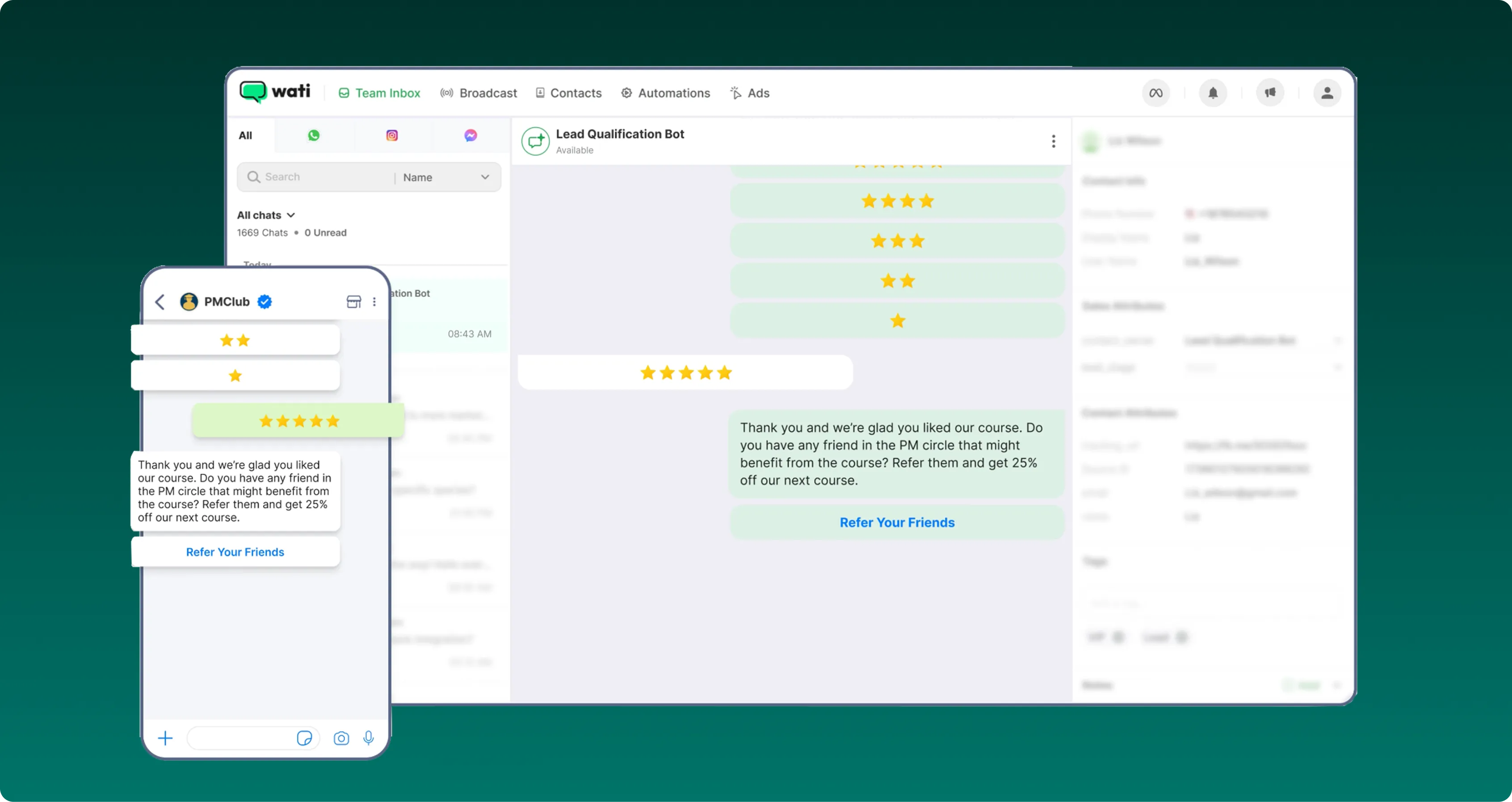
WATI is a WhatsApp-focused platform built on the official WhatsApp Business API, designed for small and medium-sized businesses that need a shared team inbox, a no-code chatbot builder, and broadcast campaigns in one place. Its three-tier plan structure (Growth, Pro, and Business) covers a range of use cases, though additional costs for users, chatbot sessions, and integrations like Shopify can push the total monthly spend significantly higher than the base plan price suggests.
Clean interface with fast setup for WhatsApp-only operations
Strong team inbox with multi-agent support
Good breadth of CRM integrations on higher plans
Chatbot capabilities are basic on the Growth plan; advanced features are exclusive to Pro and Business
No built-in CDP or omnichannel support beyond WhatsApp
Extra user seats cost additional fees on all plans


Growth: starts at ~$49/month (annual) or ~$65/month (monthly); 3 users
Additional users: $39-89/month depending on plan
7-day free trial available
Small and medium-brands
Support teams that operate primarily on WhatsApp
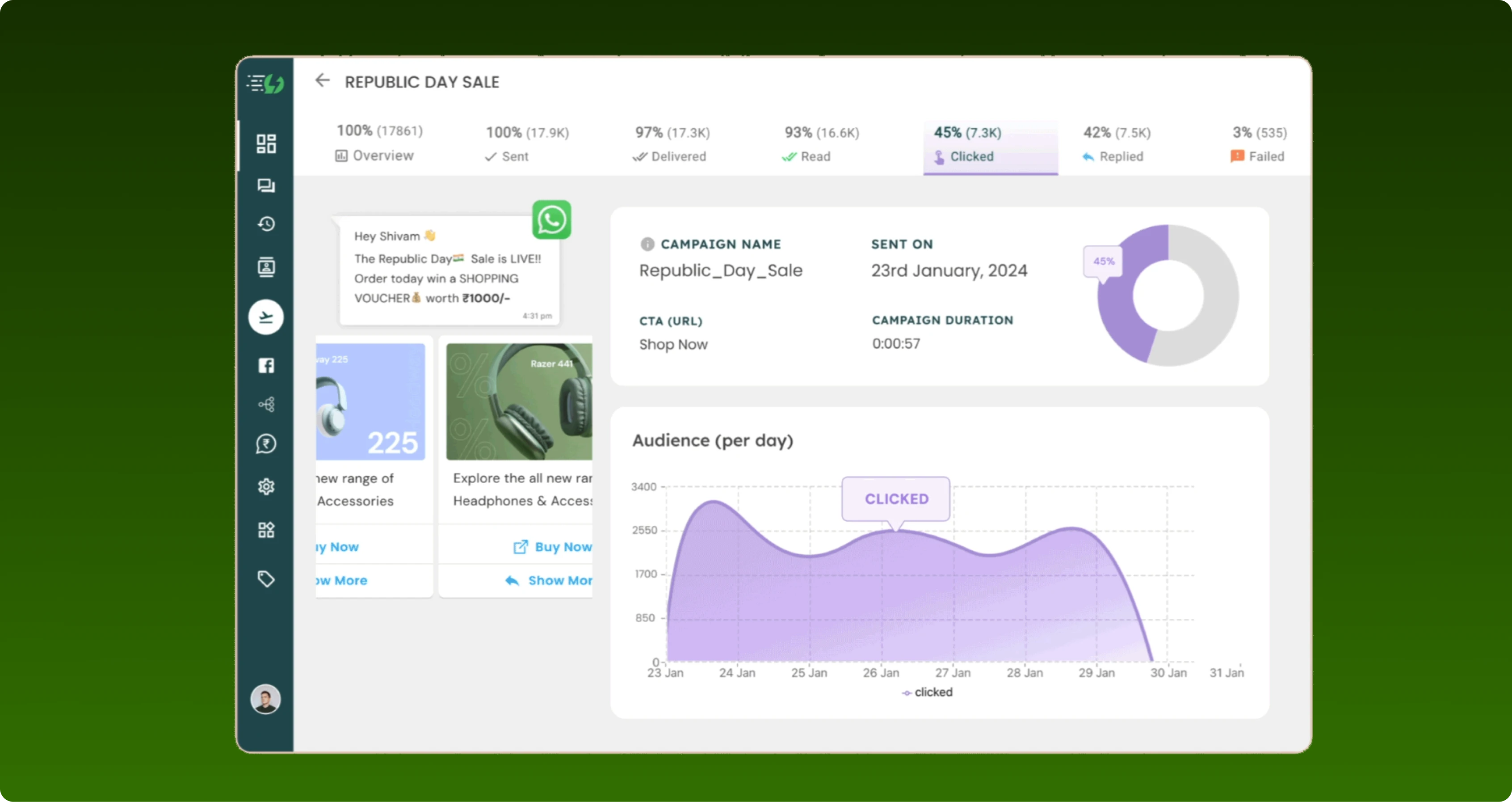
AISensy is a platform that targets small and medium businesses with a free-forever entry plan and a no-code chatbot builder. It is particularly popular in India for broadcast campaigns, live chat support, and Click-to-WhatsApp Ads. Genuine AI capabilities are limited to the Enterprise tier, where businesses can connect external AI models; the standard plans use rule-based chatbot flows. The chatbot builder itself costs an additional fee on top of subscription plans, which is an important consideration for budget-focused buyers.
Free forever plan lowers the barrier to entry for testing the WhatsApp API
Strong broadcast and Click-to-WhatsApp Ads capability
Transparent subscription pricing with no setup fees
Chatbot builder is a paid add-on separate from the main subscription
No native Shopify App Store integration; only basic e-commerce integration
No multichannel capabilities
Free plan: available with limited features
Additional agents beyond 5: $20/agent/month
Small businesses and startups focused on WhatsApp broadcast marketing and lead generation in India and similar markets
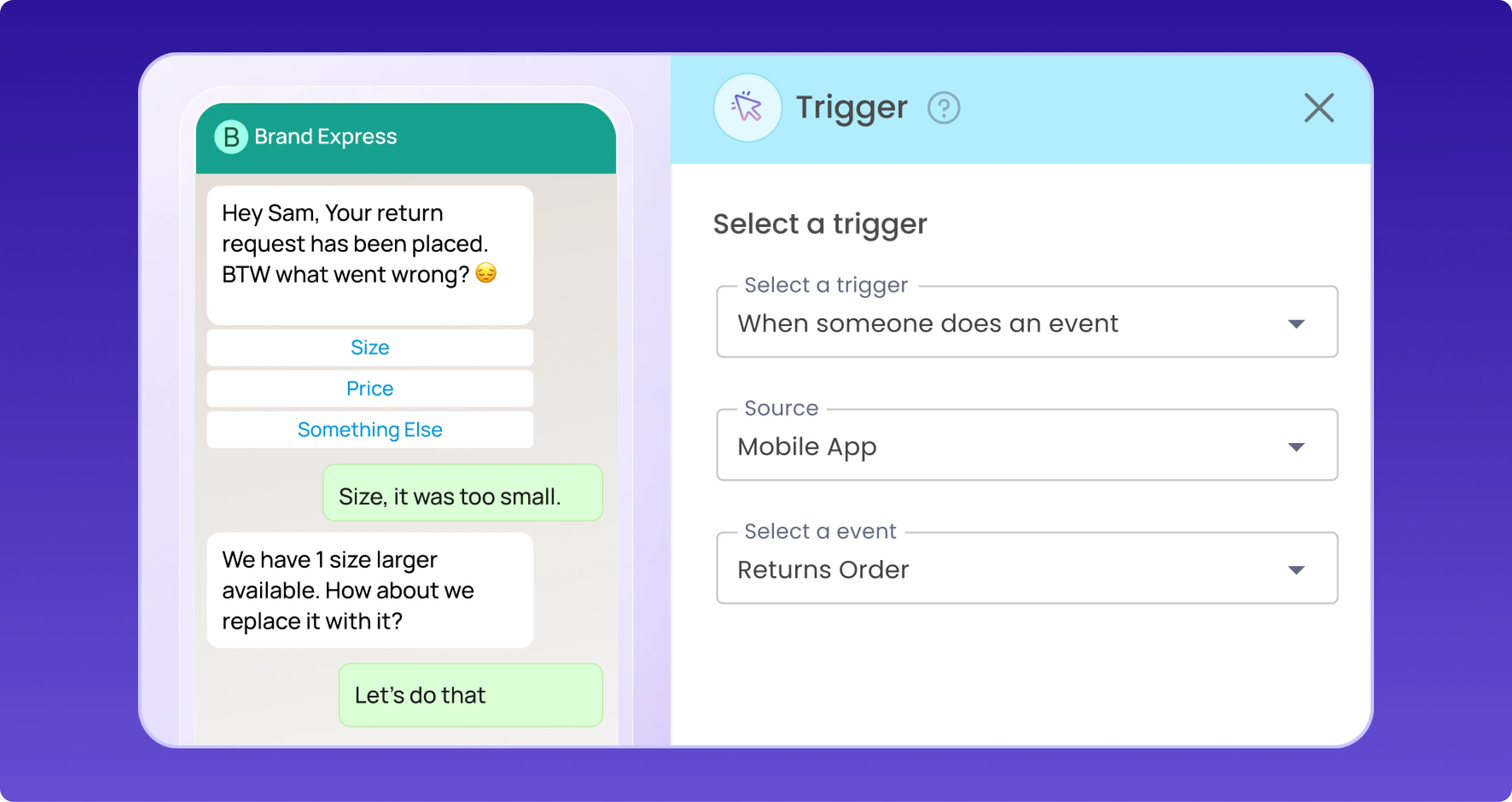
Gupshup is an enterprise-grade conversational AI platform that powers businesses requiring scale, custom API integrations, and advanced chatbot architectures. Its self-serve channel offers pay-as-you-go access, but building production-grade chatbot solutions typically requires technical teams or developer resources. For D2C brands without developer capacity, Gupshup's complexity can be a significant barrier.
Suitable for enterprises with 100M+ message volumes
Strong multi-channel coverage for complex enterprise architectures
No subscription fee for self-serve; pure pay-as-you-go
Requires technical knowledge to build and maintain chatbot flows
No plug-and-play solution for non-technical D2C marketers
No built-in team inbox or multi-agent support for marketing teams
Setup and onboarding complexity are high compared to alternatives

No subscription fee for self-serve access
Enterprise: custom pricing only (contact sales)
Enterprises and tech-savvy businesses with dedicated developer teams
Fintech, banking, or logistics use cases where custom workflows are essential
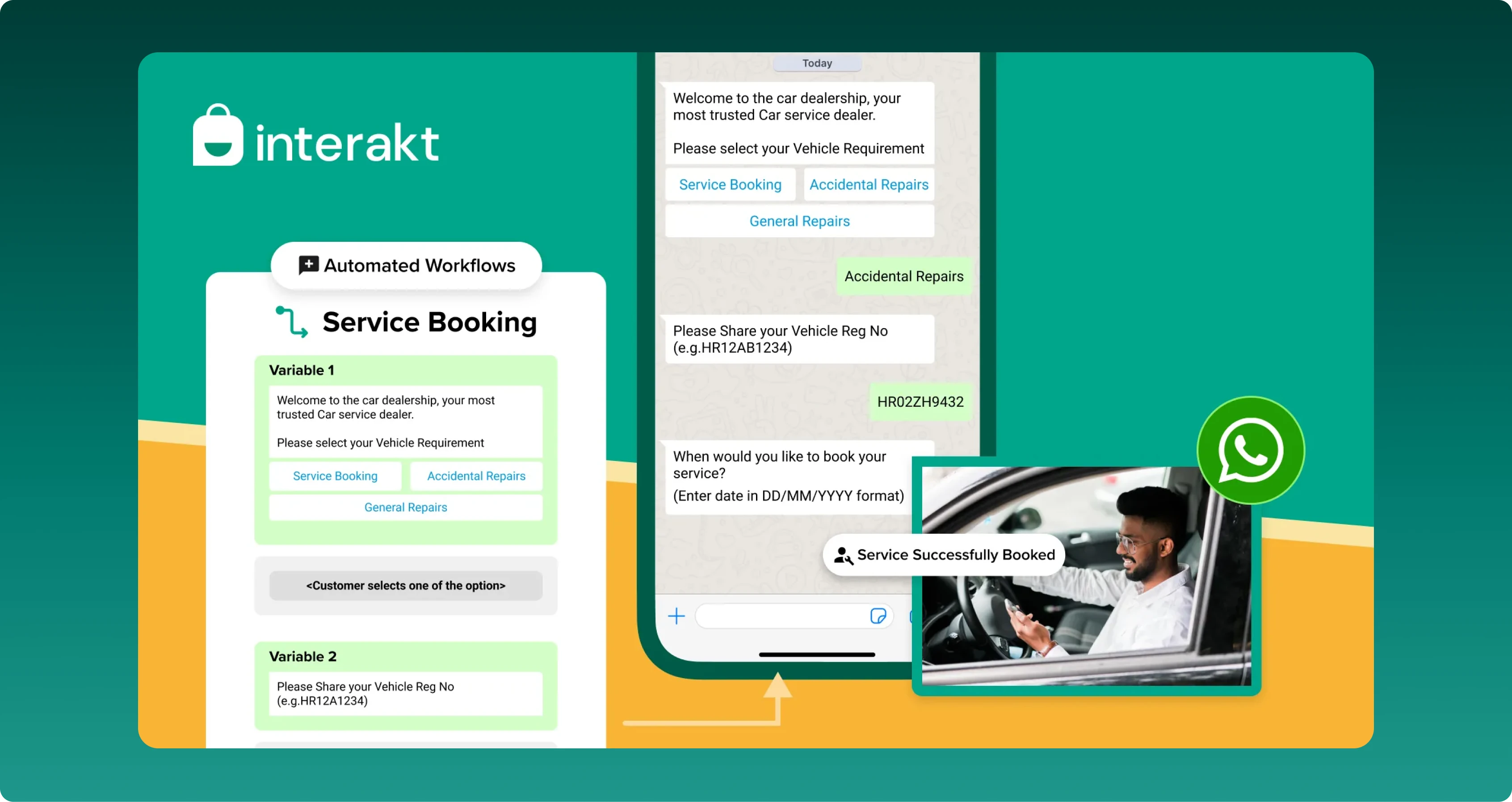
Interakt is a marketing platform built to support Instagram and WhatsApp for SMEs. It focuses on making WhatsApp accessible for small and mid-sized businesses with affordable subscription pricing, Shopify integration, and basic chatbot automation. In 2025, Interakt added Instagram DM and comment management, expanding beyond WhatsApp to cover both major Meta messaging channels. While it covers the essential use cases for WhatsApp marketing, advanced chatbot branching, and omnichannel flows beyond Meta platforms require the higher-tier plans.
Affordable entry-level pricing with a 14-day free trial
Strong Shopify integration for e-commerce automation out of the box
Coverage of both WhatsApp and Instagram on one platform
AI capabilities are powered by Haptik integration, not native; still maturing
Annual commitment required for best pricing; monthly plans cost more
Customer support responsiveness has received mixed reviews from users

Starter: $15/month (monthly) or equivalent quarterly/annual rate
14-day free trial available
All plans include per-message WhatsApp fees billed separately
Small to mid-sized D2C and e-commerce businesses in India and WhatsApp-first markets
.png)
WhatsApp chatbot platforms connect to the official WhatsApp Business API to automate conversations, trigger campaigns, and route customer interactions across your entire sales and support cycle. Here is how a typical flow works from first touch to conversion.

A customer reaches your WhatsApp number through a Click-to-WhatsApp Ad or other sources. The chatbot greets them with a pre-approved welcome template.

Based on the customer's reply, a keyword, or a button tap, the platform triggers a specific conversation flow.

The chatbot handles FAQs, guides product discovery, processes catalog inquiries, and collects information like shipping preferences or contact details.

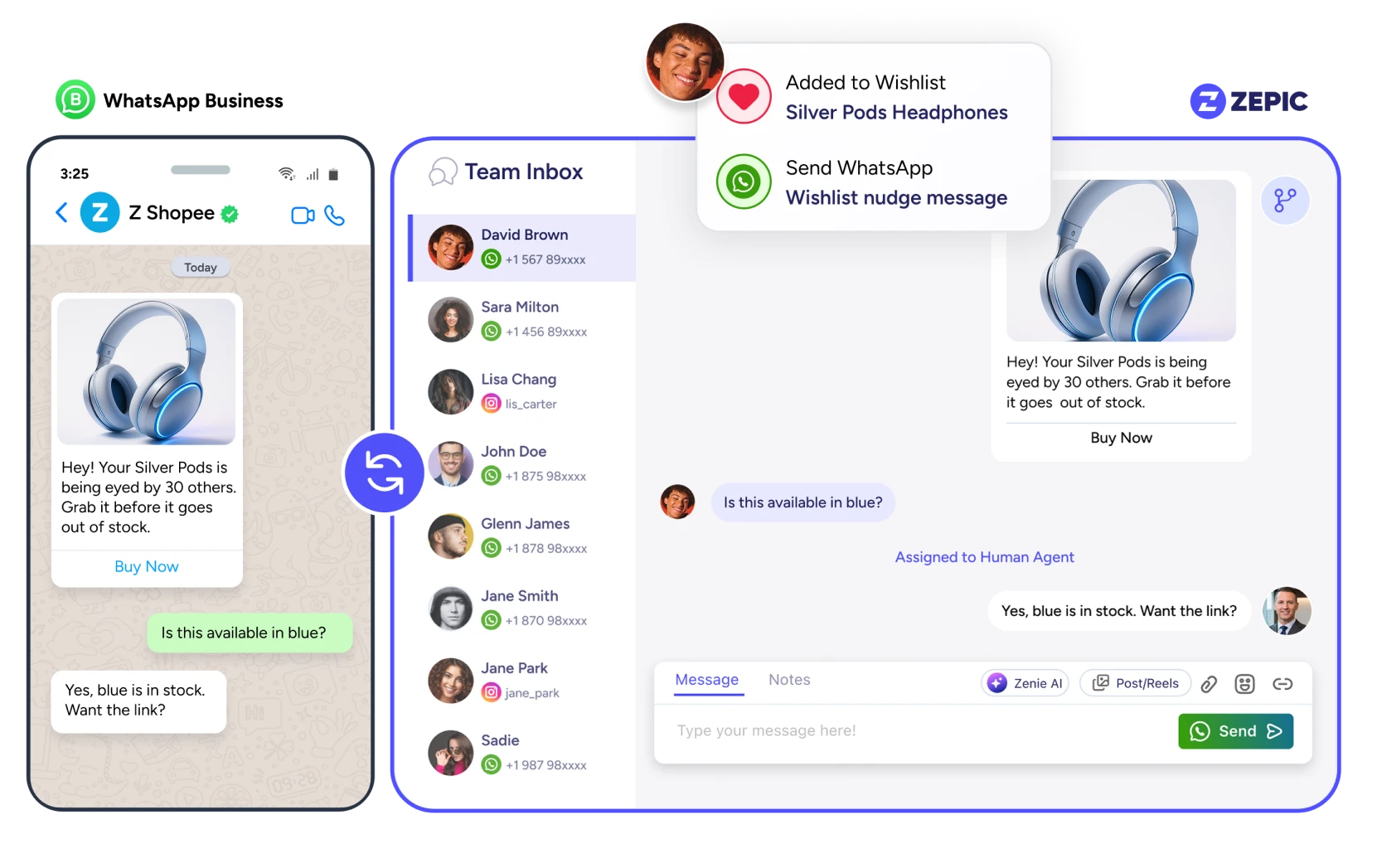
When a conversation requires human judgment, the platform routes the chat to the right agent in a shared team inbox.
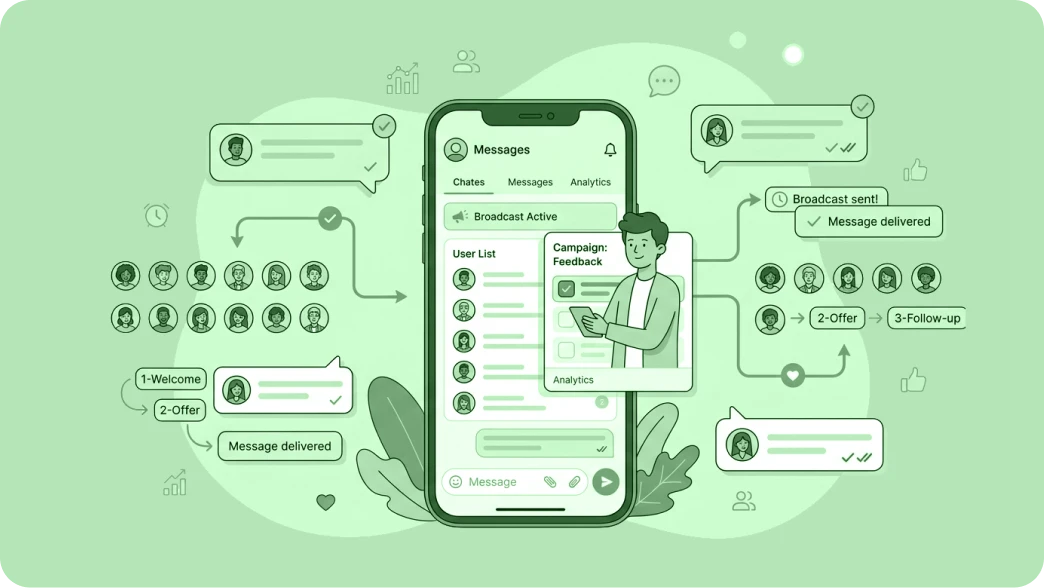
WhatsApp marketing platforms also allow you to send outbound broadcast campaigns to opted-in contacts.

The platform tracks delivery rates, read rates, click-through rates, and conversions for each campaign and flow.


With a wide range of chatbots available, evaluating them on the right criteria makes the difference between a tool that scales with you and one that you outgrow in six months.

Your platform should be an Official Meta Business Partner to ensure reliable API access, faster template approvals, and protection from policy changes.

Look for built-in tools that help you create, categorize, and submit message templates correctly to avoid rejection or misclassification.

Proper consent capture and unsubscribe handling are non-negotiable for compliance with WhatsApp's messaging policies.

A platform that connects to your customer data can personalize messages using purchase history, cart status, and lifecycle stage rather than generic templates.

The ability to create audience segments based on actions (viewed a product, made a purchase, abandoned a cart) rather than just demographics is essential for relevant campaigns.

Seeing the full customer profile inside your team inbox, including previous messages, orders, and support history, dramatically improves the quality of both automated and human responses.

A visual drag-and-drop builder lets marketers create and modify flows without developer dependency, reducing time to launch and iteration cycles.

Flows that adapt based on customer responses, attributes, or actions (if-then logic) handle real customer conversations far better than linear scripts.

Intent detection and AI-generated responses move beyond keyword matching to understand what a customer is actually asking and respond appropriately.

The ability to target specific customer segments with broadcast campaigns based on behavioral and purchase data improves engagement and reduces message fatigue.

Campaign scheduling with time-zone awareness ensures messages arrive when customers are most likely to engage rather than at random times.

Delivery rates, read rates, and click-through rates are baseline. Revenue attribution that connects WhatsApp campaigns to actual purchases is the gold standard.

A shared inbox that allows multiple agents to handle WhatsApp conversations simultaneously, with assignment rules and escalation paths, is essential as conversation volume grows.

Seamless transition from chatbot to human agent, with full conversation history preserved, ensures customers never need to repeat themselves.

Agents should be able to add notes visible to other team members within a conversation.

Native integrations that pull product catalog, order, and customer data into WhatsApp flows without manual export or technical setup.

Real-time triggers that fire a WhatsApp message when a cart is abandoned, with the customer's specific cart items included in the message

Automated transactional messages for order confirmation, shipping updates, and delivery confirmation reduce support load and improve post-purchase satisfaction.


Most platforms advertise a base subscription fee, but the actual monthly cost also includes per-message markups on Meta's conversation fees, additional charges per user or agent seat, chatbot session fees, and integration costs like Shopify connectors.

Evaluate the total cost of ownership before committing. Ask each vendor to show you a realistic monthly estimate based on your message volume, team size, and integration needs, not just the plan price.

Businesses that model full costs before signing contracts avoid budget surprises as they scale and can make cleaner comparisons between platforms.

Most WhatsApp chatbot platforms see only the current conversation. Without integration into your existing customer data, every chat starts from zero, making personalization surface-level at best.
Platforms with built-in CDPs or strong CRM integrations connect conversation context to the full customer profile, including the customer's last order, cart status, or loyalty tier automatically.
Personalized conversations increase conversion rates and customer satisfaction while reducing the volume of messages needed to achieve the same outcome.

Advanced chatbot flows with branching logic, conditional triggers, and multi-step sequences require time and technical understanding to build correctly.
Prioritize platforms with visual no-code builders, pre-built templates, and onboarding support that gets you live quickly without developer dependency.
Faster onboarding means faster time to first revenue from WhatsApp, which directly affects ROI calculations for the tool investment.

Meta's rules around message templates, opt-in requirements, and daily message limits are strict. Violations can result in template rejections, number restrictions, or account suspension.
Use platforms that are Official Meta Business Partners and provide template management tools with automated categorization review to reduce the risk of policy violations.
Staying compliant protects your WhatsApp number from restrictions and ensures your campaigns continue reaching customers without interruption.

Treating WhatsApp as an isolated channel misses the reality of how D2C customers move across touchpoints. A customer might discover you via Instagram, receive a cart recovery message on WhatsApp, and need a follow-up email after purchase.
Choose platforms that support multi-channel journey orchestration so that WhatsApp campaigns connect logically to email, Instagram, and other channels rather than existing in silos.
Multi-channel coordination increases the total reach of each campaign and prevents customers from receiving redundant messages on the same channel while being missed on others.

Open rates and delivery statistics tell you how a campaign performed as a message, but not whether it contributed to revenue. Many platforms stop at message-level metrics.
Platforms with attribution capabilities that connect WhatsApp campaign interactions to downstream purchases give marketing teams the data they need to justify spend and optimize campaigns.
Revenue attribution makes it possible to shift WhatsApp from a cost center to a measurable revenue driver with clear ROI justification for continued investment.
Most platforms advertise a base subscription fee, but the actual monthly cost also includes per-message markups on Meta's conversation fees, additional charges per user or agent seat, chatbot session fees, and integration costs like Shopify connectors.
Evaluate the total cost of ownership before committing. Ask each vendor to show you a realistic monthly estimate based on your message volume, team size, and integration needs, not just the plan price.
Businesses that model full costs before signing contracts avoid budget surprises as they scale and can make cleaner comparisons between platforms.
Most WhatsApp chatbot platforms see only the current conversation. Without integration into your existing customer data, every chat starts from zero, making personalization surface-level at best.
Platforms with built-in CDPs or strong CRM integrations connect conversation context to the full customer profile, including the customer's last order, cart status, or loyalty tier automatically.
Personalized conversations increase conversion rates and customer satisfaction while reducing the volume of messages needed to achieve the same outcome.
Advanced chatbot flows with branching logic, conditional triggers, and multi-step sequences require time and technical understanding to build correctly.
Prioritize platforms with visual no-code builders, pre-built templates, and onboarding support that gets you live quickly without developer dependency.
Faster onboarding means faster time to first revenue from WhatsApp, which directly affects ROI calculations for the tool investment.
Meta's rules around message templates, opt-in requirements, and daily message limits are strict. Violations can result in template rejections, number restrictions, or account suspension.
Use platforms that are Official Meta Business Partners and provide template management tools with automated categorization review to reduce the risk of policy violations.
Staying compliant protects your WhatsApp number from restrictions and ensures your campaigns continue reaching customers without interruption.
Treating WhatsApp as an isolated channel misses the reality of how D2C customers move across touchpoints. A customer might discover you via Instagram, receive a cart recovery message on WhatsApp, and need a follow-up email after purchase.
Choose platforms that support multi-channel journey orchestration so that WhatsApp campaigns connect logically to email, Instagram, and other channels rather than existing in silos.
Multi-channel coordination increases the total reach of each campaign and prevents customers from receiving redundant messages on the same channel while being missed on others.
Open rates and delivery statistics tell you how a campaign performed as a message, but not whether it contributed to revenue. Many platforms stop at message-level metrics.
Platforms with attribution capabilities that connect WhatsApp campaign interactions to downstream purchases give marketing teams the data they need to justify spend and optimize campaigns.
Revenue attribution makes it possible to shift WhatsApp from a cost center to a measurable revenue driver with clear ROI justification for continued investment.
WhatsApp automation helps brands close deals where customers already spend their time. These use cases show how to turn conversations into revenue by streamlining the bottom of your sales funnel.
Convert high-intent traffic from Meta ads or QR codes into direct sales chats.

.svg)
High drop-off on slow landing pages
Missing the window of peak interest
Lost leads from offline marketing touchpoints
No visibility into which carts convert.


Click-to-WhatsApp ad triggers for instant chat starts
Tailored welcome messages based on the specific ad clicked
QR code integration for physical-to-digital transitions
Let automation handle routine tasks while sales experts focus on closing high-value deals.
Multiple agents trying to use one phone number
Automation failing to answer complex sales questions
No visibility into agent performance or response times
Unified team inbox for multiple agents on one official number
Smart routing based on lead value or specific department
Seamless handoff from bot to human for complex queries
The period immediately after a purchase is the highest-intent moment to build loyalty, collect reviews, and introduce complementary products through WhatsApp.
Delivering order confirmations and shipping updates automatically without agent involvement
Requesting product reviews at the right moment after delivery, not just after purchase
Recommending complementary products based on what the customer just bought
Automated order status updates triggered by fulfillment events from Shopify
Review request sequences that fire 3-5 days after confirmed delivery
Personalized cross-sell recommendations based on the purchased product and customer purchase history from the CDP
Customers who expressed interest in a sold-out or expensive product are highly likely to purchase when conditions change, making WhatsApp alerts far more effective than email for this use case.
Capturing opt-ins from customers who want to be notified when specific products return or go on sale
Delivering alerts at the moment inventory or price changes.
Personalizing the alert with the specific product the customer showed interest in
Inventory change triggers connected to your product catalog that fire WhatsApp notifications instantly
Opt-in flows built into product pages that capture intent through WhatsApp
Personalized alert messages that include the product image, updated price or availability, and a direct purchase link
For brands selling in markets where Cash on Delivery is common, a WhatsApp chatbot can help confirm orders.
Getting customers to confirm COD orders before dispatching to reduce fake or impulsive orders
Collecting confirmation and any necessary order details like delivery slot preferences
Handling confirmation responses and updating order management systems automatically
Automated WhatsApp verification messages sent immediately after a COD order is placed
One-tap confirmation buttons that update order status in connected systems via webhook
Escalation to a human agent if the customer requests a change or cancellation during the verification window
A WhatsApp chatbot can automate common queries while maintaining smooth human escalation for complex issues, reducing cost without sacrificing satisfaction.
Handling high volumes of repetitive queries like order status, return policy, and delivery timelines without agent intervention
Routing complex or frustrated customers to human agents quickly, with full context passed along
Maintaining response speed during peak periods like sales or holiday seasons, when query volume spikes
FAQ chatbot flows that resolve the most common support queries automatically using approved response templates
Intelligent routing rules that escalate based on keywords, sentiment signals, or customer tier
Team inbox with full conversation history and CDP context so agents never start a support conversation blindWho Is WhatsApp Chatbots For?
Convert high-intent traffic from Meta ads or QR codes into direct sales chats.
High drop-off on slow landing pages
Missing the window of peak interest
Lost leads from offline marketing touchpoints
No visibility into which carts convert.
Click-to-WhatsApp ad triggers for instant chat starts
Tailored welcome messages based on the specific ad clicked
QR code integration for physical-to-digital transitions
Let automation handle routine tasks while sales experts focus on closing high-value deals.
Multiple agents trying to use one phone number
Automation failing to answer complex sales questions
No visibility into agent performance or response times
Unified team inbox for multiple agents on one official number
Smart routing based on lead value or specific department
Seamless handoff from bot to human for complex queries
The period immediately after a purchase is the highest-intent moment to build loyalty, collect reviews, and introduce complementary products through WhatsApp.
Delivering order confirmations and shipping updates automatically without agent involvement
Requesting product reviews at the right moment after delivery, not just after purchase
Recommending complementary products based on what the customer just bought
Automated order status updates triggered by fulfillment events from Shopify
Review request sequences that fire 3-5 days after confirmed delivery
Personalized cross-sell recommendations based on the purchased product and customer purchase history from the CDP
Customers who expressed interest in a sold-out or expensive product are highly likely to purchase when conditions change, making WhatsApp alerts far more effective than email for this use case.
Capturing opt-ins from customers who want to be notified when specific products return or go on sale
Delivering alerts at the moment inventory or price changes.
Personalizing the alert with the specific product the customer showed interest in
Inventory change triggers connected to your product catalog that fire WhatsApp notifications instantly
Opt-in flows built into product pages that capture intent through WhatsApp
Personalized alert messages that include the product image, updated price or availability, and a direct purchase link
For brands selling in markets where Cash on Delivery is common, a WhatsApp chatbot can help confirm orders.
Getting customers to confirm COD orders before dispatching to reduce fake or impulsive orders
Collecting confirmation and any necessary order details like delivery slot preferences
Handling confirmation responses and updating order management systems automatically
Automated WhatsApp verification messages sent immediately after a COD order is placed
One-tap confirmation buttons that update order status in connected systems via webhook
Escalation to a human agent if the customer requests a change or cancellation during the verification window
A WhatsApp chatbot can automate common queries while maintaining smooth human escalation for complex issues, reducing cost without sacrificing satisfaction.
Handling high volumes of repetitive queries like order status, return policy, and delivery timelines without agent intervention
Routing complex or frustrated customers to human agents quickly, with full context passed along
Maintaining response speed during peak periods like sales or holiday seasons, when query volume spikes
FAQ chatbot flows that resolve the most common support queries automatically using approved response templates
Intelligent routing rules that escalate based on keywords, sentiment signals, or customer tier
Team inbox with full conversation history and CDP context so agents never start a support conversation blindWho Is WhatsApp Chatbots For?

Those operating in markets like India, Southeast Asia, the Middle East, and Latin America, where WhatsApp is a major channel.

Companies with 5,000 to 500,000 customers that need to scale communication without proportionally scaling headcount.

Those managing 100 or more WhatsApp conversations per day and needing multi-agent inbox capabilities.

Brands delivering policy updates, payment reminders, KYC reminders, secure FAQs, and simple transaction alerts via WhatsApp.

Companies that use WhatsApp heavily for booking confirmations, travel promotions, and time-sensitive communications.

Agencies that rely on WhatsApp for lead capture, property details, virtual tour links, agent follow-ups, and appointment scheduling.
The WhatsApp Business App is a free mobile application for small businesses that supports basic auto-replies, a business profile, and manual conversations. It has a 256-contact broadcast limit and does not support chatbots, multi-agent inboxes, or marketing automation. The WhatsApp Business API is accessed through a Business Solution Provider (BSP) like ZEPIC, WATI, or Interakt, and enables unlimited broadcasts to opted-in contacts, automated chatbot flows, team inboxes, third-party integrations, and campaign analytics. The API requires a monthly subscription and per-message fees; the app is free.
The WhatsApp Business App is a free mobile application for small businesses that supports basic auto-replies, a business profile, and manual conversations. It has a 256-contact broadcast limit and does not support chatbots, multi-agent inboxes, or marketing automation. The WhatsApp Business API is accessed through a Business Solution Provider (BSP) like ZEPIC, WATI, or Interakt, and enables unlimited broadcasts to opted-in contacts, automated chatbot flows, team inboxes, third-party integrations, and campaign analytics. The API requires a monthly subscription and per-message fees; the app is free.
The WhatsApp Business App is a free mobile application for small businesses that supports basic auto-replies, a business profile, and manual conversations. It has a 256-contact broadcast limit and does not support chatbots, multi-agent inboxes, or marketing automation. The WhatsApp Business API is accessed through a Business Solution Provider (BSP) like ZEPIC, WATI, or Interakt, and enables unlimited broadcasts to opted-in contacts, automated chatbot flows, team inboxes, third-party integrations, and campaign analytics. The API requires a monthly subscription and per-message fees; the app is free.
Yes. You can connect your existing WhatsApp Business number to ZEPIC and continue engaging customers without switching numbers. All your tools—CRM, loyalty tools, and eCommerce platforms can plug into ZEPIC, so your bulk WhatsApp campaigns and personalized ones can run on unified customer data without messy migrations.

%201.png)