Meet

Neura HQ,
Your connected AI Agent Workforce Know more



Planning a powerful marketing strategy for 2026 begins today. With major global moments, including the FIFA World Cup and the 250th US Independence Day, next year is shaping up to be one of the most opportunity-rich periods for marketers in the last decade. Brands that prepare now will outperform competitors and launch campaigns that will increase revenue.
But 2026 will also usher in a shift in how content planning works because AI-assisted workflows, short-form video dominance, and multi-platform integration will become non-negotiable. To win, you need a content calendar that is mapped to funnel goals, market trends, and your broader brand narrative.
This guide gives you everything: key dates, month-wise ideas, global marketing opportunities, and a strategic foundation to build your most profitable year yet.

|
Month |
Key Dates
|
Campaign Ideas
|
|---|---|---|
|
January
|
•1st: New Year’s Day |
• New Year Resolution series (TOFU) • Productivity hacks using your product • Data privacy awareness (great for SaaS/Cybersecurity) • “Compliment Drop” reels & email campaigns |
|
February
|
• 14th: Valentine’s Day |
• Valentine’s bundles/gift guides • “Year of the Horse” ambition/energy-themed promotions • UGC love stories or customer spotlights |
| March |
• 4th: Holi |
• IWD employee features & donation-linked campaigns • Holi color-themed creative posts • Pi Day discounts (“3.14% off”) • Thoughtful Ramadan prep content |
| April |
• 1st: April Fool’s Day |
• Light, harmless April Fool’s prank • Easter pastel campaigns • Earth Day sustainability storytelling • Tax-prep countdown (Finance/Legal brands) |
| May |
• 1st: May Day |
• Mother’s Day multi-market gift guide • Emotional storytelling ads • Summer-prep checklists • Memorial Day long-weekend sales |
| June |
• Pride Month |
• Pride Month awareness or charity tie-ins • FIFA-themed content (“Best in the World” lists, predictions) • Summer launches (travel/fitness/beauty) • Father’s Day gift toolkits |
| July |
• 4th: 250th US Independence Day |
• Legacy/history storytelling campaigns • Emoji-themed Reels and engagement posts |
| August |
• 8th: International Cat Day |
• Solar Eclipse “moment marketing” • Back-to-school checklists & offers • Pet UGC drives (super high engagement!) |
| September |
• Labor Day (US) |
• End-of-summer clearance • Fall reset content (work-life, productivity) • Goal-setting challenges |
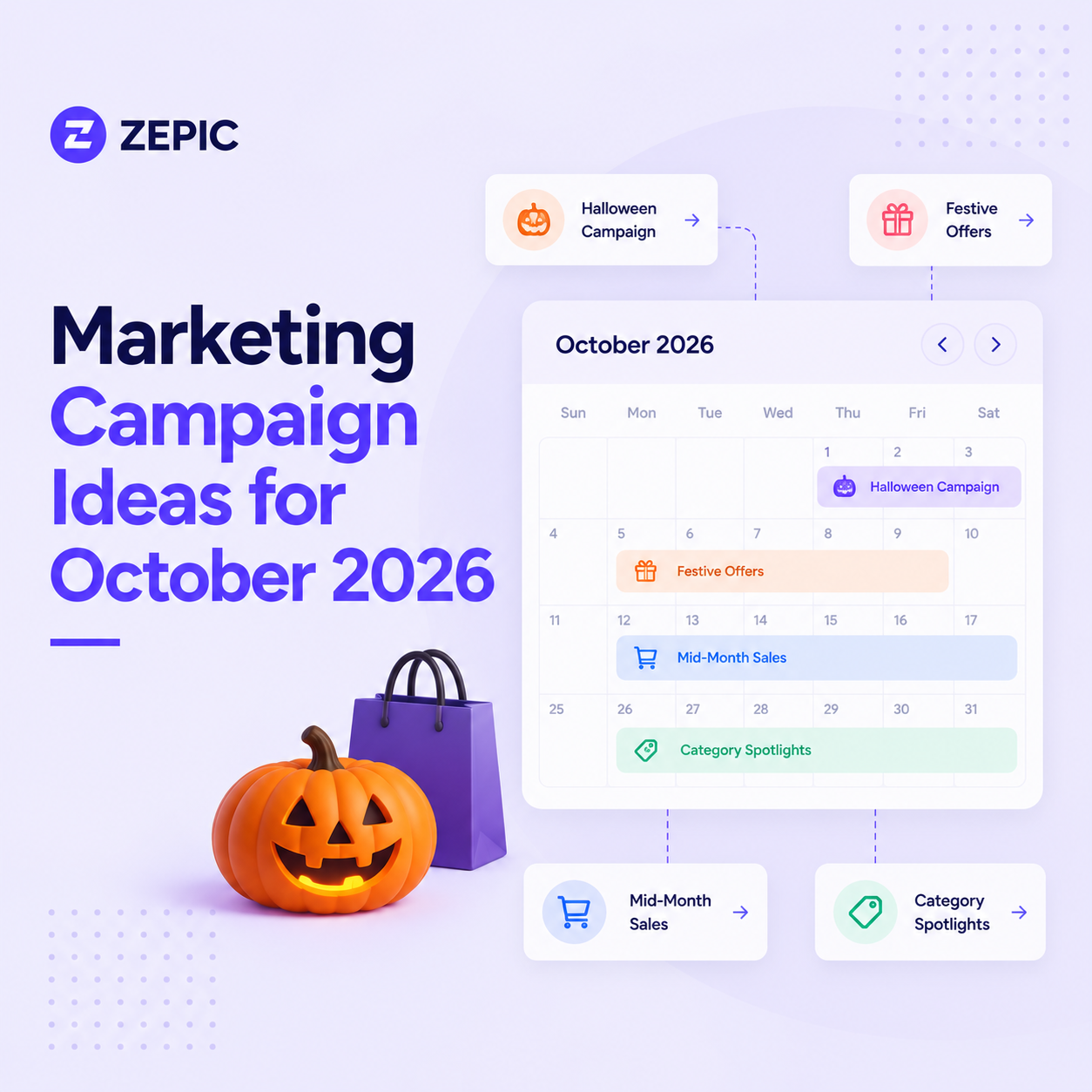
| October |
• 10th: World Mental Health Day |
• Mental health awareness or expert-led content • Spooky Savings campaign • Creator-driven costume or DIY content |
| November |
• 8th: Diwali |
•Diwali gifting series •Men’s Day Discounts •Early BFCM teasers (start early Nov) •Cart-recovery automation via Email & WhatsApp before BFCM weekend •VIP early-access BFCM deals |
| December |
• 1st: Giving Tuesday |
• “12 Days of Deals” campaign • Holiday gift guides • Year-end wrap-ups & gratitude notes • Last-minute shopping reminders |
Certain events in 2026 will command global attention. Use them strategically for maximum organic and paid traction.
This is a period with massive search volume, global engagement, 24/7 attention. You can use:
Perfect for brands in food delivery, travel, sports, gaming, and e-commerce.
Marketers must prepare 60–90 days in advance. Key strategies:
This is a once-in-a-generation storytelling moment. Use it to highlight:
Brands are planning earlier than ever. This is especially true for:
When you prepare your 2026 content calendar in Q4 2025 (or earlier), you ensure:
Several shifts are redefining content strategies:
Start by defining the strategy that will govern your content decisions throughout the year.
Your content calendar should guide users through the funnel:
1. TOFU (Awareness)
Use fun, high-volume dates like New Year, Holi, International Cat Day, and Women’s Day.
Examples: Trendjacking posts, memes, challenges, and educational content.
2. MOFU (Consideration)
Map content to months with moderate purchase intent (e.g., back-to-school season, pre-Diwali, pre-summer).
Examples: Deep-dive guides, comparison posts, case studies, and email sequences.
3. BOFU (Conversion)
Focus heavily on purchase-driven moments like BFCM, Christmas, Independence Day, Ramadan/Eid, etc.
Examples: Discounts, flash sales, retargeting ads, bundles, and WhatsApp broadcasts.
Pro Tip:
Create a three-layered content calendar:
B. Apply the 60/40 Rule
A high-performing 2026 content strategy must balance:
60% Evergreen / Brand Building
40% Conversion-Driven / Date-Based Content
This helps increase sustainable traffic (evergreen) and episodic spikes in revenue (seasonal)
|
Trend
|
How to integrate it in your calendar
|
|---|---|
|
Short-form video
|
Plan 3–5 reels per major date; create sequenced storytelling videos.
|
|
UGC
|
Allocate monthly creator partnerships; encourage audience submissions.
|
|
AI-assisted content
|
Automate repurposing: long-form → reel → email → carousel.
|
|
Community engagement
|
Monthly AMAs, polls, behind-the-scenes, and WhatsApp groups.
|
You’ve got the dates, the campaign ideas, and the strategic foundation to tackle 2026. The shift to AI, short video, and personalization is an opportunity to be more creative and more connected with your audience than ever before.
Remember, the best content calendar is the one that allows your team to collaborate smoothly and adapt quickly. Start with the big moments (like the World Cup!) and build your weekly rhythm around clear funnel goals.
Use ZEPIC to automate your campaigns, personalize your customer journeys, and scale your e-commerce growth with confidence. Check out our detailed 2026 marketing calendar.
Start with ZEPIC today and make 2026 your most profitable year.
Start planning in Q4 2025 for Q1 2026. For major events like the FIFA World Cup and BFCM, begin 12 months ahead.
The major trends include:
• AI-driven personalization
• Short-form vertical video
• Community-led content and UGC
• Commerce-integrated platforms (Instagram Shop, TikTok Shop)
Check the following sources:
• Industry conferences
• Trade shows
• Historical launch anniversaries
• Competitor calendars
• Manufacturer or brand announcements
Content Calendar: Day-to-day posts, themes, and formats.
Campaign Calendar: Large, goal-driven marketing events with multi-channel planning.
Small businesses can leverage big events through:
• Hyper-local content
• Narrow product focus
• Viewing parties or community events
• Creator partnerships
• Affordable micro-campaigns on Instagram or WhatsApp

%201.png)


.png)