Breathe. Your Braze account works exactly as it did last week.
Your inbox is filling up with "time to switch" emails. It's also weeks before BFCM. This guide is not one of those emails. It's a calm way to decide what, if anything, you should do next.
What actually happened?
Salesforce has agreed to buy Braze. The deal has not closed, and it won't for months.
What We Know
Detail
Announced
20 October 2026
Price
About $5.66 billion enterprise value, $47.50 a share in cash
Expected close
Salesforce's fiscal year 2028, which starts February 2027
Still needed
Braze shareholder approval and regulatory clearance
Until close
Braze runs as an independent public company
Braze's stated plan
CEO Bill Magnuson says the team will keep building as Braze
Where it lands
Marketing Cloud, connected to Data 360 and Agentforce
What nobody knows yet: a combined roadmap, pricing, or packaging. Salesforce hasn't published any of it.
No rush to switch. Start scouting.
The deal won't close before February 2027. Nothing about your setup changes before then.
BFCM comes first. Never migrate a messaging platform during peak. Protect the season you've already planned.
Your contract still stands. Renewal date, terms, and SLAs don't change because ownership might.
Panic decisions age badly. A switch made to escape uncertainty often swaps one problem for another.
You have time to think. Use the next few months to get clear on goals, not to sign with the loudest vendor.
But don't stand still. Every acquisition has repercussions. Who handles your account, how billing works, and where the roadmap goes can all change.
So start scouting now, quietly. Compare options, ask questions, and take notes. Switch only if and when it suits you.
What to watch before closing
Five questions will tell you whether this deal affects you. Ask your Braze team now and keep the answers on file.
Watch
Ask
Why It Matters
Roadmap
How will Braze sit alongside Marketing Cloud's email, mobile and journey tools?
Overlap means choices about which tools lead
Pricing and packaging
Will my renewal be repriced, bundled or moved to a Salesforce contract?
Bundles can raise cost for features you don't use
Composability
Will warehouse and non-Salesforce integrations stay first-class?
It matters most if your CRM and data live outside Salesforce
Account and support
Who owns my account after close? Will support tiers change?
Peak-season support is where teams feel change first
AI and agents
Will BrazeAI features move into Agentforce licensing?
AI you rely on today could sit behind a new SKU
If the answers come back clear and good, staying is a perfectly sound choice.
Start with your goals, not vendors
There are plenty of fish in the sea. Don't settle for the first one that emails you. Answer these first.
What's working? List the three journeys or channels that make you the most money today.
What's not? Where do your team lose hours to workarounds, data pulls or manual QA?
Where does your data live? Warehouse, CDP, CRM, commerce platform. Who owns each?
How many tools touch one customer? Count them. Then count how many actually share context.
What should AI do for you? Spot intent, recommend the next best action, or run whole journeys?
What does 2028 look like? New markets, channels or business models your stack must support.
When does your contract renew? That date, not the headline, sets your real timeline.
If you can't answer these, no vendor can help you yet. If you can, you already know what to look for.
Stay, prepare, explore or switch
There are four sensible paths. Pick the one your answers point to, not the one your inbox pushes.
Path
Choose It If
What to Do This Quarter
Stay
Braze meets your goals and you already run on Salesforce
Run BFCM. Get renewal terms in writing.
Stay and prepare
Braze works, but you're unsure about roadmap or pricing
Document journeys, data flows and integrations. Note your renewal date.
Explore
Gaps existed before the deal, or your data lives outside Salesforce
Shortlist two or three platforms. Request demos on your own use cases.
Switch
Your goals and Braze's direction have clearly split
Issue an RFP. Plan the move for after peak, with a parallel run.
Most teams will land on "stay and prepare" or "explore". Both are good outcomes.
Migration is real
Anyone who promises a painless switch is selling. A move takes planning, and it should.
What has to move
Area
What's Involved
Customer data
Profiles, events, attributes, history and identity rules
Consent
Opt-ins, preferences and suppression lists, per channel and region
Journeys
Canvases, triggers, branching logic and frequency rules
Content
Templates, content blocks, catalogues and personalisation logic
Channels
Email domains and IP warming, SMS sender IDs, WhatsApp numbers, push
App and web
SDKs, in-app messages and tracking events
Integrations
Warehouse syncs, commerce, CRM, analytics and webhooks
Reporting
Attribution models, dashboards and baselines to compare against
People
Training, permissions and new ways of working
How a good move runs
Audit: Map every journey, data flow and integration. Retire what no longer earns its keep.
Plan: Agree scope, owners, success metrics and a date after peak.
Build: Connect data, rebuild priority journeys, warm up sending.
Run in parallel: Keep both platforms live until results match or beat your baseline.
Cut over: Test the waters with whatever use cases matter first. Use POCs to your advantage.
Optimise: Only now switch on the things you couldn't do before.
Timelines depend on your volume, channels and data complexity. Ask every vendor for a written plan.
What to look for in what's next
If you do explore, judge every platform on the same six tests. Ask to see each one live on your data.
Context, not just records. Does it understand what a customer is doing now, across every touchpoint? Or does it store rows?
AI that's yours. Is the model trained on your signals and your business? Or is it the same recommendation your competitor gets?
One workflow. Do your tools and channels share context in one flow? Or do they pass data back and forth in batches?
Agents that finish the job. Can AI act end to end, with guardrails you set? Or does it only suggest?
Built for B2C. Does it handle millions of consumers, real-time events and retail-scale peaks by design?
An honest migration plan. Does the vendor name the hard parts, or skip them?
Where ZEPIC fits
If you're exploring, here's how ZEPIC answers those six tests. Built for B2C from day one
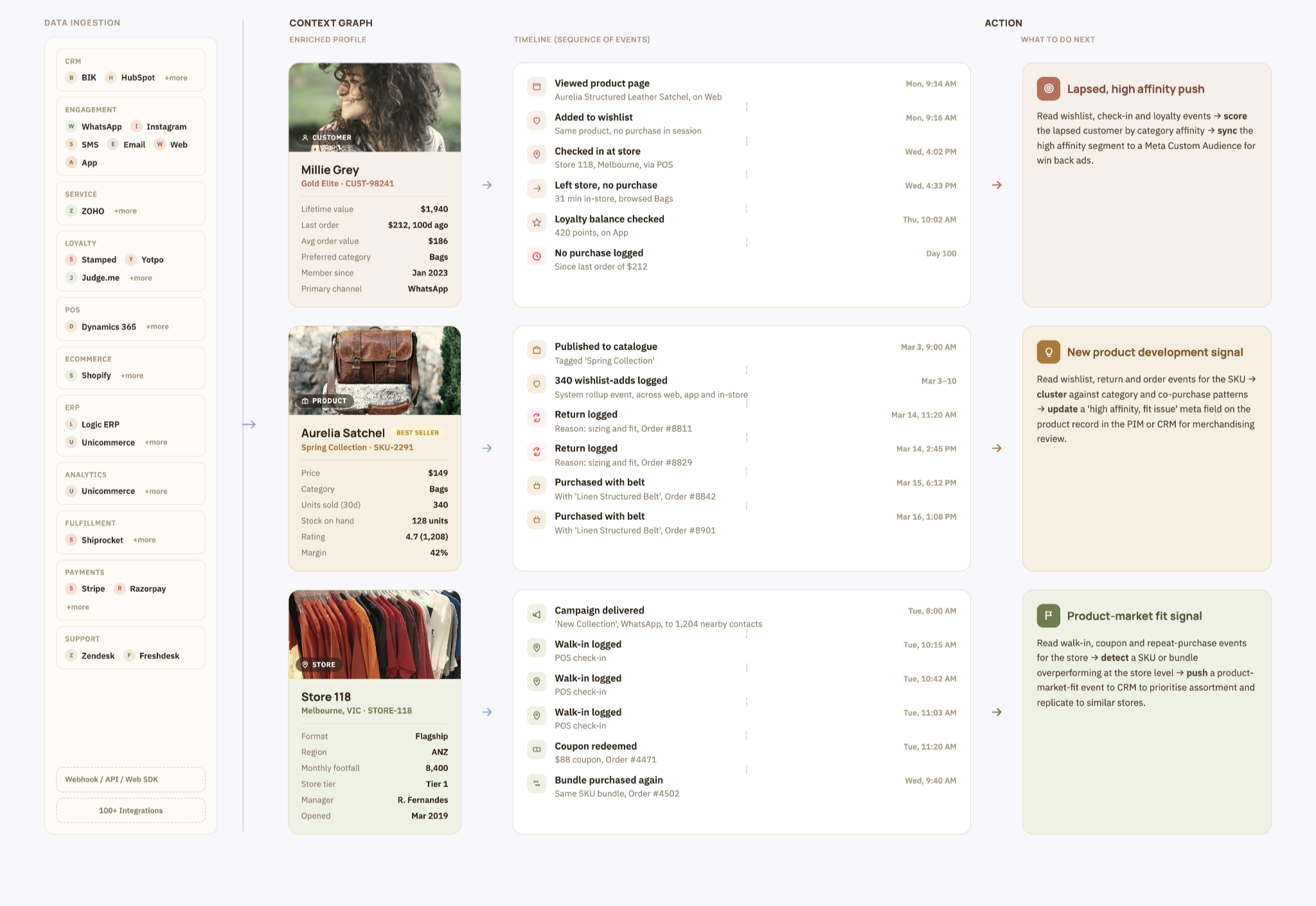
Context graph. Every customer, event and touchpoint in one connected view. Not a database of rows, a live picture of intent.
A custom AI engine. We build signal detection and recommendations around your business. Your competitor doesn't get the same answer.
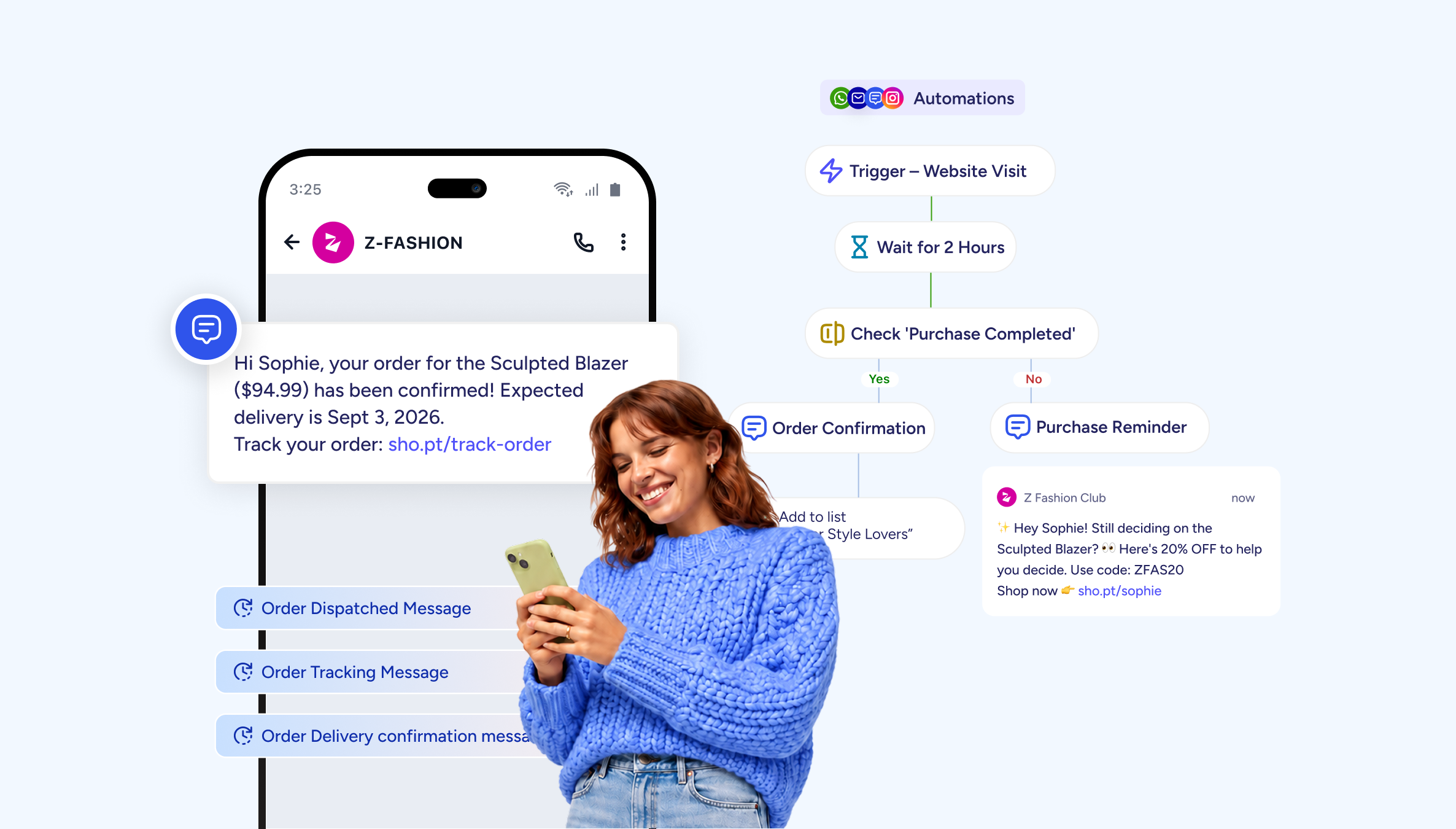
An end-to-end agent. It doesn't stop at suggestions. It plans and runs the work, within guardrails you set.
One workflow. Connect your tools and channels. They finally talk to each other.
To be fair: Salesforce and Braze may do great things together. Marketing Cloud has won and kept customers for over a decade. If you choose ZEPIC, choose it because it fits your goals better, not because you expect Braze to get worse.
And yes, moving to ZEPIC is still a migration. We'll show you the hard parts upfront but we are here to own it with you.
Your next step
Handover planning is coming either way. Start it on your terms.
Our switching RFP gives you the questions to ask any platform, ZEPIC included. Use it now to compare options. Use it in Q1 to run a proper evaluation.