Room upgrades, early check-in, and late check-out are among the most profitable upsells, with minimal incremental costs.
Food and beverage packages can generate additional revenue through breakfast bundles, arrival treats, and customized in-room offerings.
Wellness and convenience add-ons such as spa treatments, parking, airport transfers, and local experiences can increase total guest spend.
Segmentation is key to effective upselling, with offers tailored to business travelers, couples, families, and solo/workation guests.
Timing matters: send primary offers 5–7 days before arrival, logistics-focused offers 24–48 hours before, and last-minute options on the morning of arrival.
Use the right channel for the offer: Email works for detailed packages and upgrades, while WhatsApp and SMS are better for time-sensitive, operational offers.
Keep upsell messages simple and useful, with 2–3 relevant choices, clear pricing, and a focus on convenience rather than aggressive selling.
Automation and real-time PMS integration make the strategy scalable, connecting purchases to housekeeping, F&B, and front-desk workflows while tracking metrics like RevPAG, conversion rates, NPS, and CSAT.
Travel has become a top priority for people across the world. 40% of people plan to spend more on travel in 2026 than last year, and 74% of Millennials and Gen Z say travel is a 'non-negotiable' expense. This shift in the mindset has opened up many opportunities for hotels to drive incremental revenue beyond base room rates. Today, travelers are actively seeking tailored experiences and seamless flexibility throughout their journey.
With the right messaging strategy, hotels can capture high-margin revenue before guests even set foot on the property.
Pre-arrival upselling lets you offer relevant room upgrades and personalized ancillary services when guest purchase intent and excitement are at their peak.
We’ve put together a pre-arrival upsell playbook to help you increase your revenue.
Why the Pre-Arrival Window is Your Highest-Margin Revenue Opportunity
The period between booking and arrival is often called the anticipation phase. During this time, the guests are excitedly preparing for their trip.
The Psychology of Pre-Arrival Purchases
When guests book a room weeks or months in advance, the initial financial commitment is already made. As the travel date approaches, the perceived cost of add-ons drops relative to the overall budget. A guest who booked a $200 per night room three weeks ago is far more open to spending an extra $35 for early check-in or $50 for a room upgrade two days before arrival.
Boutique hotels see more than 20% conversions when offers land pre-arrival or during seamless digital check-in
Reducing On-Property Friction
Front-desk staff often face long lines and operational strain during peak check-in hours. Expecting agents to deliver structured, personalized upsell pitches to every guest during check-in leads to inconsistent execution and extended wait times.
Moving the offer to a pre-arrival digital channel has two main benefits:
Informed Decision Making: Guests review room upgrade options, dining packages, and amenity add-ons at their own pace without feeling pressured.
Operational Readiness: Housekeeping, food and beverage, and front-desk teams receive advance notice of early check-ins, special requests, and room changes, allowing for smoother resource planning.
How Top Hotels Drive Pre-Arrival Revenue
According to research and case studies featured on Hospitality Net, automated pre-arrival upselling transforms guest communications into consistent profit centers across both boutique properties and luxury chains.
1. Hotel Spero (San Francisco, CA)
Following a major renovation and repositioning, Hotel Spero focused on automated email workflows to capture incremental revenue before guest arrival.
When they sent automated early check-in and late check-out offers to arriving and in-house guests based on their stay details and guest segments, Hotel Spero generated an average incremental revenue of $3,500 each month. The property successfully boosted ancillary revenue while simultaneously reducing manual workload for front-desk teams.
2. 137 Pillars Hotels & Resorts (Thailand)
Luxury boutique operator 137 Pillars Hotels & Resorts leverages guest data to segment their audience and create custom pre-arrival campaigns featuring curated luxury experiences.
After aligning timing and intent, the brand achieved an average campaign open rate of 26% and generated over THB 28,000,000 in lifetime revenue, proving that personalization drives long-term brand loyalty alongside immediate revenue gains.
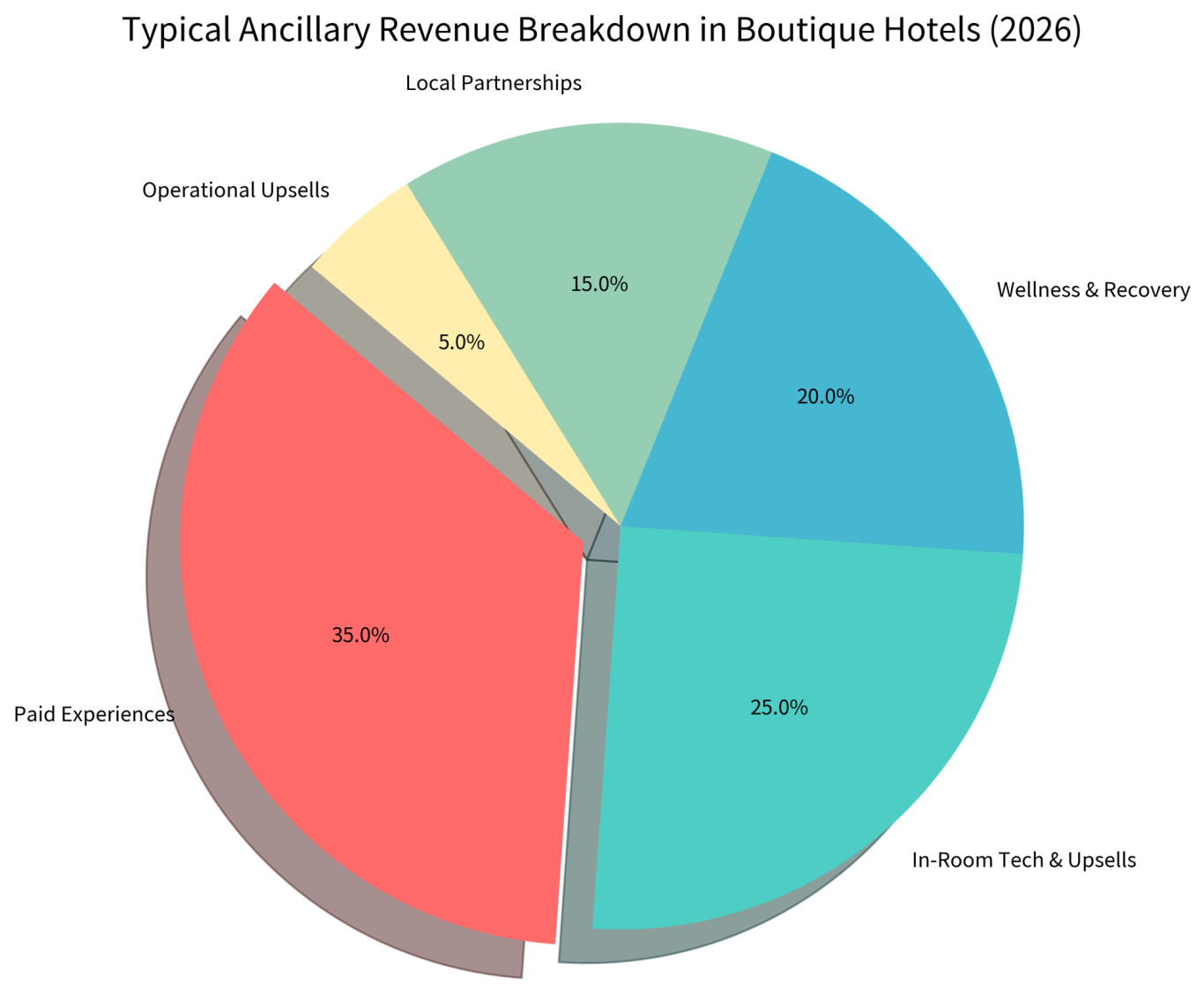
High-Profit Ancillary Services to Offer Before Arrival
Source: hoteliertimes.com
Ancillary services have a lot of profit potential when paired with effective guest segmentation. Rather than bombarding every guest with the same menu of options, properties see the highest return when aligning offers with specific guest profiles.
63% of global travelers express strong interest in purchasing personalized add-ons and room upgrades before their stay when communicated clearly through digital channels.
1. Room Upgrades and Stay Flexibility
Room upgrades are one of the highest-margin ancillary categories because the marginal cost to supply a higher-tier room is minimal compared to the price differential.
Category Jumps: Offering a suite or ocean-view upgrade at a discounted rate 3 to 5 days before arrival unlocks inventory that might otherwise go unsold.
Early Check-In and Late Check-Out: Guests traveling on morning flights or late-afternoon trains place high value on time flexibility. Monetizing guaranteed early room access or extended check-out hours delivers near-100% profit margins.
Specific Room Feature Guarantees: Charging a modest fee to guarantee high floors, quiet corners, or rooms near elevators appeals directly to specific guest needs.
2. Curated Food and Beverage Packages
In-room dining and arrival treats enhance the initial impression of the property while locking in dining revenue before guests arrive.
Arrival Refreshments: Sparkling wine, artisanal cheese boards, or fresh fruit platters ready upon room entry set a welcoming tone.
In-Room Mini-Bar Customization: Allowing guests to pre-select their preferred snacks or non-alcoholic beverage assortments creates a premium experience.
3. Wellness, Convenience, and Experience Add-Ons
Spa and Wellness: Pre-booking spa treatments or cabana rentals helps staff manage scheduling grids while securing early commitments.
Logistics and Parking: On-site parking permits, pet fees, and private airport transfers remove friction for arriving guests.
Local Activity Passes: Partnering with local tours, museum tickets, or curated city experiences builds total trip value and opens commission revenue streams.
Setting Up Your Pre-Arrival Upsell Engine
Building a reliable pre-arrival upsell strategy requires a structured framework that combines guest data, smart timing, and appropriate communication channels.
Step 1: Segment Your Guests
Sending a romantic champagne upgrade to a business traveler flying in for a single night is irrelevant. Effective upselling relies on simple, rule-based segmentation based on booking data.
Guest Segment
Primary Needs
Top Upsell Recommendations
Business Travelers
Efficiency, work setup, quick meals
Early check-in, high-speed Wi-Fi tier, express breakfast, late check-out
Couples & Leisure
Comfort, romantic experiences, relaxation
Room view upgrades, champagne on arrival, spa credits, late check-out
Co-working access, daily coffee passes, local tour add-ons
Step 2: Establish the Optimal Communication Timeline
Timing plays a decisive role in message open rates and conversions. Reaching out too early leads to forgotten messages; reaching out too late means guests have already finalized their plans.
T-minus 7 to 5 Days Out: Send the initial pre-arrival email or message focusing on primary room upgrades and high-value experience packages. This is when guests begin planning their daily itinerary.
T-minus 48 to 24 Hours Out: Send a tactical follow-up message focused on arrival logistics, such as early check-in, parking permits, airport transfers, and room access preferences.
Day of Arrival (Morning): Send a quick operational check-in reminder with last-chance options like guaranteed early room entry or late check-out.
Step 3: Choose the Right Channels
Combining communication channels ensures high visibility without overwhelming the guest.
Pre-Arrival Email: Ideal for visual presentation, detailed package descriptions, and room upgrade options.
WhatsApp and SMS Messaging: Excellent for time-sensitive, operational add-ons like early check-in, parking, and transportation updates. Open rates for SMS and messaging apps regularly exceed 90%, making them powerful channels for final-mile offers.
Crafting High-Converting Pre-Arrival Messages
The tone of your pre-arrival outreach determines how guests perceive your offers. Positioning upsells as helpful service enhancements rather than pushy sales pitches leads to higher conversion rates and happier guests.
Key Principles for Upsell Copywriting
Lead with Value and Convenience: Explain how the offer makes their stay easier, more comfortable, or more memorable.
Keep Choices Simple: Limit options to 2 or 3 curated choices per message to avoid decision fatigue.
Use Clear Pricing: State exact costs upfront so guests feel confident in their choices.
Sample Messaging Templates
Template 1: The Room Upgrade Offer (Sent 5 Days Out via Email)
Subject: Make your stay at [Hotel Name] extra special
Hi [Guest Name],
We are getting everything ready for your upcoming stay on [Check-in Date].
To help you make the most of your trip, we have reserved a few exclusive room upgrade options for your stay:
1. Junior Suite Upgrade: Enjoy double the living space and panoramic city views for an additional $[X]/night. 2.Executive Floor Upgrade: Gain access to our private lounge, complimentary evening drinks, and high-speed Wi-Fi for $[X]/night.
Simply click the link below to view these options and secure your upgrade in one tap: [Link: View Your Upgrade Options]
We look forward to welcoming you soon!
Warm regards, The Team at [Hotel Name]
Template 2: Arrival Logistics & Early Check-In (Sent 24 Hours Out via WhatsApp/SMS)
Hi [Guest Name]! We look forward to welcoming you tomorrow at [Hotel Name].
Arriving early? You can lock in guaranteed early check-in starting at 11:00 AM for just $[X]. Reserve your early check-in here: [Link] Reply to this message if you need assistance with parking or transportation options!
Operational Best Practices for Front Desk and Housekeeping Alignment
A pre-arrival upsell strategy only succeeds if the on-property team can fulfill what was promised digitally. Operational breakdowns, such as a guest paying for early check-in only to find their room unprepared, harm guest satisfaction scores.
1. Centralize Upsell Inventory in Real Time
Integrate your pre-arrival messaging tool directly with your Property Management System (PMS). Real-time inventory syncing prevents double-booking premium room categories or promising early access when rooms are unavailable.
2. Automate Task Creation for Housekeeping and F&B
When a guest purchases an add-on like an arrival fruit basket or guaranteed early check-in, the system should automatically generate a task ticket for the relevant department:
Housekeeping: Receives immediate priority flags for rooms tied to early check-in requests.
Food & Beverage: Gets automated daily reports showing arrival amenities required by room number and time slot.
Front Desk: Sees upgraded room assignments automatically reflected in the daily arrival manifest.
3. Empower Front-Desk Staff to Confirm and Delight
Digital pre-arrival messaging handles the initial sale, but front-desk staff delivers the human touch. When the guest arrives, front-desk agents should acknowledge purchased add-ons right away:
"Welcome, Mr. Smith! I see you opted for our Executive Suite upgrade and early check-in today. Your room is fully prepared, and your lounge key is activated."
This simple acknowledgment validates the guest's purchase decision and reinforces positive feelings about their choice.
Key Upsell Metrics Every Hotelier Should Track
1. Revenue Per Available Guest (RevPAG)
While RevPAR (Revenue Per Available Room) is a classic industry standard, RevPAG measures total spending across all guest touchpoints, including room revenue, dining, spa, and ancillary purchases. Tracking RevPAG helps you evaluate the true overall financial value of your guest base.
2. Conversion Rate by Channel and Offer Type
Monitor conversion performance across both email and messaging channels, as well as by individual product category.
High Conversion, High Margin (Focus Area): Early check-in and late check-out options typically yield the highest profit margins and conversion rates.
Low Conversion, High Interest: If room upgrades show high click-through rates but low final purchases, review the price differential to ensure it aligns with perceived value.
3. Guest Satisfaction Impact (NPS & CSAT)
Track Net Promoter Scores (NPS) and Customer Satisfaction (CSAT) ratings specifically for guests who purchased pre-arrival add-ons. Data consistently shows that guests who customize their stay experience report higher satisfaction levels because the property met their specific preferences before arrival.
Common Pre-Arrival Upselling Pitfalls to Avoid
Even well-intentioned upselling programs can falter if executed improperly. Steer clear of these common operational mistakes.
1. Overwhelming Guests with Too Many Options
Presenting a laundry list of twenty different add-ons creates decision paralysis. Keep pre-arrival messages clean and focused. Present a curated selection of 3 to 4 relevant offers based on guest segment rather than showing every available option.
2. Neglecting Mobile Optimization
Over 70% of pre-arrival emails and messaging links are opened on mobile devices. If your upgrade landing page is difficult to navigate on a smartphone screen, conversion rates will drop sharply. Ensure all landing pages load fast, display clearly on mobile devices, and offer one-click confirmation steps.
3. Static Pricing Across Peak and Off-Peak Periods
Pricing room upgrades or late check-outs at the exact same flat fee year-round misses out on potential margin during peak demand periods. Use dynamic pricing principles for upsells just as you do for base room rates. Raise upgrade pricing when premium occupancy is high, and offer competitive incentives during lower-demand periods.
Transform Your Pre-Arrival Phase into a Revenue Engine
The pre-arrival window is one of the most underutilized opportunities in hotel revenue management today. Moving beyond basic booking confirmations and using automated, personalized pre-arrival outreach allows properties to unlock high-margin revenue streams while delivering a tailored stay experience for every guest.
Take Control of Your Guest Journey with ZEPIC
Ready to automate your pre-arrival revenue strategy? ZEPIC unites your guest data across your PMS, CRM, and booking channels into a single source of truth. With ZEPIC’s visual drag-and-drop journey builder, you can effortlessly launch hyper-personalized email and WhatsApp campaigns that reach guests at the exact moment their purchase intent is highest.
Segment seamlessly: Target business travelers, families, and leisure guests with tailored upgrade offers.
Automate multi-channel outreach: Trigger timely emails and high-converting WhatsApp messages on autopilot.
Boost total RevPAG: Turn pre-arrival anticipation into predictable, high-margin ancillary revenue.
What is pre-arrival upselling in the hotel industry?
Pre-arrival upselling is the practice of offering guests room upgrades, stay extensions, and ancillary services during the window between initial booking confirmation and arrival on property. Hoteliers send these digital offers through automated email, SMS, or messaging channels to capture high-margin revenue when guest purchase intent is strong.
What are the most profitable ancillary services for hotels?
The most profitable ancillary services are room upgrades, early check-in, and late check-out. These services carry near-100% profit margins because they utilize existing room inventory and property infrastructure with minimal incremental cost. Other high-margin add-ons include parking passes, in-room food and beverage amenities, and spa package pre-bookings.
How far in advance should hotels send pre-arrival upsell messages?
The optimal window for sending initial pre-arrival offers is 5 to 7 days prior to check-in. This gives guests time to plan their stay and consider room upgrades. Tactical logistics offers—such as early check-in, parking permits, and airport transfers—perform best when sent 24 to 48 hours before arrival.
How can hotels upsell without annoying guests?
Hotels can avoid annoying guests by segmenting their outreach and keeping communications focused on genuine value and convenience. Sending personalized, relevant offers based on guest type—rather than generic mass blasts—feels like thoughtful service rather than an aggressive sales pitch. Limiting message frequency to 2 or 3 well-timed touchpoints prevents inbox fatigue.
How does automated pre-arrival upselling improve front desk efficiency?
Automated pre-arrival upselling moves room upgrade choices, arrival timing confirmations, and add-on selections to digital channels before the guest arrives. This reduces front-desk administrative work, speeds up check-in queues during peak arrival hours, and gives housekeeping and F&B teams advance notice to prepare requested amenities efficiently.
Desperate times call for desperate Google/Chat GPT searches, right? "Best Shopify apps for sales." "How to increase online sales fast." "AI tools for ecommerce growth."
Been there. Done that. Installed way too many apps. But here's what nobody tells you while you're doom-scrolling through Shopify app reviews at 2 AM—that magical online sales-boosting app you're searching for? It doesn't exist. Because if it did, Jeff Bezos would've bought (or built!) it yesterday, and we (fellow eCommerce store owners) would all be retired in Bali by now. Growing a Shopify store and increasing online sales isn’t easy—we get it. While everyone’s out chasing the next “revolutionary” tool/trend (looking at you, DeepSeek), the real revenue drivers are probably hiding in plain sight—right there inside your customer data. After working with Shopify stores like yours (shoutout to Cybele, who recovered almost 25% of their abandoned carts with WhatsApp automation), we’ve cracked the code on what actually moves the needle. Ready to stop app-hopping and start actually growing your sales by using what you already have? Here are four fixes that will get you there!
The Painful Truth: You're probably losing about 70% of your potential sales to cart abandonment. That's not just a statistic—it's real money walking out of your digital door. And looking for yet another Shopify app for abandoned cart recovery isn't going to fix it if you're not getting the fundamentals right.
The Quick Fix: Everyone knows you need multi-channel recovery that hits the sweet spot between "Hey, did you forget something?" and "PLEASE COME BACK!" But here's the reality—most recovery apps are a one-trick pony. They either do email OR WhatsApp, not both. And don't even get us started on personalizing offers based on cart value—that usually means toggling between three different dashboards while praying your apps talk to each other.
Enter ZEPIC: This is where we come in. With ZEPIC's automated Flows, you can: Launch WhatsApp recovery messages (with 95% open rates!) Set up perfectly timed email sequences (or vice versa) Create personalized recovery offers not just on cart value but based on your customer’s behavior/preferences Track and optimize everything from one dashboard
Fix #2: Reactivate past customers today
The Painful Truth: You're probably losing about 70% of your potential sales to cart abandonment. That's not just a statistic—it's real money walking out of your digital door. And looking for yet another Shopify app for abandoned cart recovery isn't going to fix it if you're not getting the fundamentals right.
The Quick Fix: Everyone knows you need multi-channel recovery that hits the sweet spot between "Hey, did you forget something?" and "PLEASE COME BACK!" But here's the reality—most recovery apps are a one-trick pony. They either do email OR WhatsApp, not both. And don't even get us started on personalizing offers based on cart value—that usually means toggling between three different dashboards while praying your apps talk to each other.
Enter ZEPIC: This is where we come in. With ZEPIC's automated Flows, you can: Launch WhatsApp recovery messages (with 95% open rates!) Set up perfectly timed email sequences (or vice versa) Create personalized recovery offers not just on cart value but based on your customer’s behavior/preferences Track and optimize everything from one dashboard
Offering light at the end of the tunnel is Google’s Privacy Sandbox which seeks to ‘create a thriving web ecosystem that is respectful of users and private by default’. Like the name suggests, your Chrome browser will take the role of a ‘privacy sandbox’ that holds all your data (visits, interests, actions etc) disclosing these to other websites and platforms only with your explicit permission. If not yet, we recommend testing your websites, audience relevance and advertising attribution with Chrome’s trial of the Privacy Sandbox.
Top 3 impacts of the third-party cookie phase-out
Who’s impacted
How
What next
Digital advertising and acquisition teams
Lack of cookie data results in drastic fall in website traffic and conversion rate
Review all cookie-based audience acquisition. Sign up for Chrome’s trial of the Privacy Sandbox
Digital Customer Experience
Customers are not served relevant, personalised experiences: on the web, over social channels and communication media
Multiply efforts to collect first-party customer data. Implement a Customer Data Platform
Security, Privacy and Compliance teams
Increased scrutiny from regulators and questions from customers about data storage and usage
Review current cookie and communication consent management, ensure to align with latest privacy regulations