Meet

Neura HQ,
Your connected AI Agent Workforce Know more



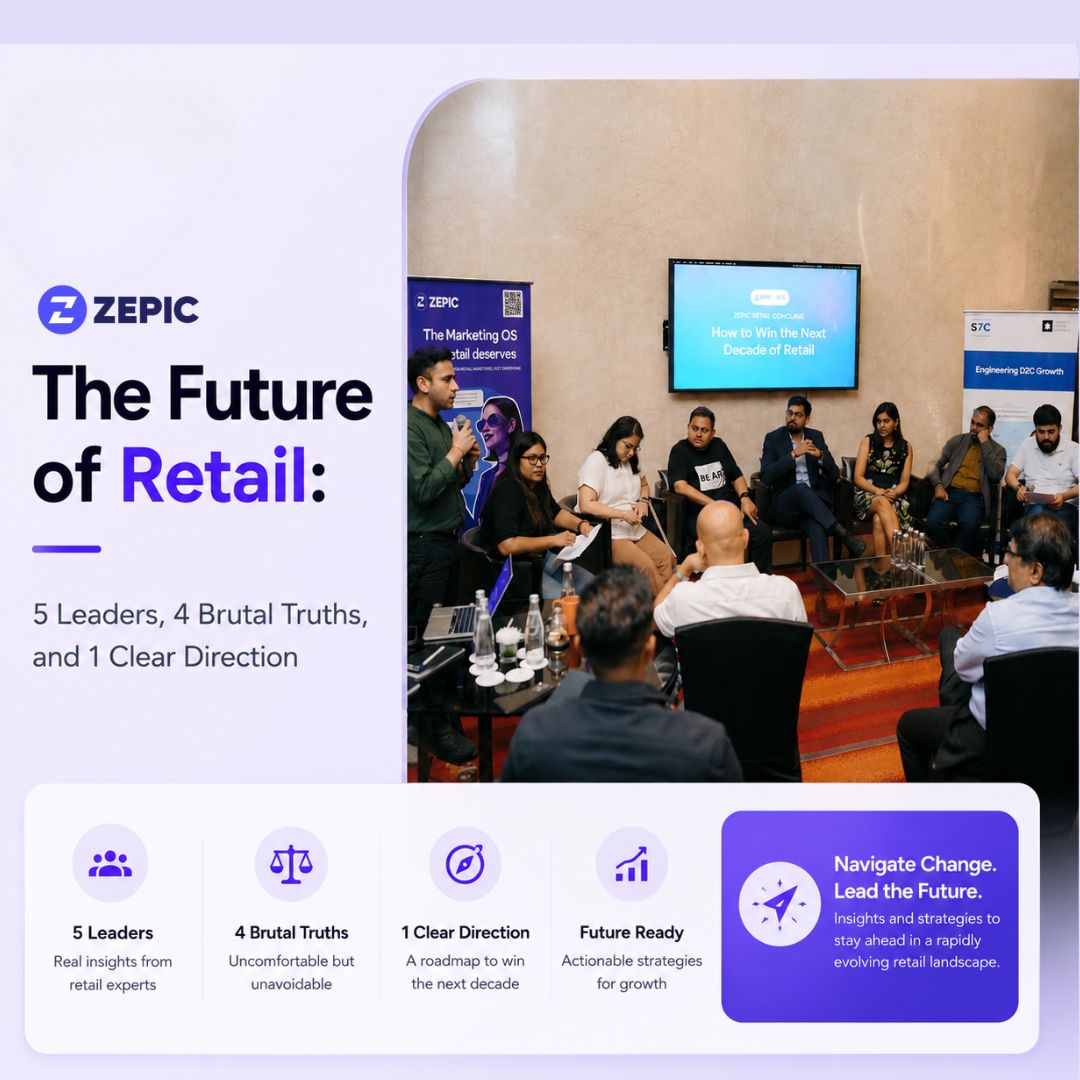
On the evening of 19th February 2026, five of the most interesting retail minds walked into a room at Sofitel BKC, Mumbai, and had an unusually honest conversation.
Leaders from Malabar Gold, Clovia, The Bear House, Mafatlal, and Style Union talked openly about what is changing, what is breaking, and what they are actually doing about it.
The event was the ZFC Retail Conclave, hosted by ZEPIC and Seventh Triangle, built around one question: How do you win the next decade of retail?
Though the consumer behavior and discovery touchpoints have changed over the years. What they want has always been the same: premium quality (Q1) at an accessible price point (P2).
But the challenge is that today’s shoppers are highly resistant to aggressive sales tactics. You can’t push a product into their inbox or feed and expect a sale. Because at least four other brands are doing the same. If you want to win over the customer, what you’re selling has to resonate with what they need at that moment. As Soumya Kant from Clovia puts it:
"Customers still want value. What’s changed is how they discover and evaluate brands. You cannot interrupt them anymore; you have to be relevant."
A decade ago, a customer might walk into the same store every year to buy a familiar brand of shirts or jewelry. The decision was simple because they were loyal to the brand.
But the new generation of shoppers operate in a very different environment. To them, thousands of brands are one search or scroll away. They also have the resources to instantly compare multiple products and find one that best fits their needs.
Rohit Kant noted that Gen Z, in particular, prioritizes the specific product over the brand name on the label.
"Loyalty today is intentional. It’s when a customer actively seeks you out, not when they discover you accidentally through an algorithm. Gen Z are being more attached to products than brands. So finding that product-market fit is a gamechanger."
Meena Bhatnagar added that,
“Customers are more informed and experimental. Sustaining loyalty means evolving with them, not assuming legacy trust is enough.”
Marketplaces now drive a massive share of business, which makes the customer journey harder to track. The panel discussed how omnichannel has become an important part of a legacy brand’s survival strategy.
For a brand like Mafatlal, the goal is to bridge decades of history with a digital-first mindset. Vikas Dwivedi explained that data provides the context needed to make this transition successful.
"Omnichannel for legacy brands is transformation. We are reinterpreting decades of trust for customers who now discover us digitally, and data and context stays at the centre of it."
Meena Bhatnagar from Malabar Gold highlighted that the digital experience is often the foundation of trust. Customers rarely visit a high-value store like a jeweler without doing extensive research first. If the digital journey is broken, the physical sale never happens.
"Digital plays a critical role in influencing trust today. Customers research deeply before they walk into a store. Capturing that journey is essential."
The traditional way of planning a decade in advance is losing its effectiveness. The speed of social media trends and market shifts means that being fast is now more important than being right about a long-term guess.
Alok Dharadhar from Style Union suggested that brands should stop trying to map out ten years in detail. Instead, they should build the muscle to react to what is happening right now.
"You can’t plan ten years in detail. You move full throttle based on the signals you see today instead of preparing for the decade ahead. Things are changing very fast."
The overarching theme of the conclave was that scale alone is no longer a competitive advantage. The winners of the next decade will be brands that use digital intelligence to build meaningful, real-time conversations.
Naveen, co-CEO of ZEPIC, concluded that the focus must move from simple data collection to being context-aware. And, it’s time for brands to move one step ahead of personalization by segmenting and thinking about timely resonance based on signals.
"In an era of brand infidelity and endless choice, relevance is the new competitive advantage. The brands that listen better and act faster will lead the next decade of Indian retail." — Naveen, co-CEO, ZEPIC
Quick Comparison: Reach vs. Resonance

%201.png)


.png)