Meet

Neura HQ,
Your connected AI Agent Workforce Know more



Since the dawn of time, brands have been trying hard to be noticed.
The Stone Age marketer probably carved “FIRE SALE” on rocks and threw them at unsuspecting passersby. Centuries later, scrolls, pigeons, and eventually radio jingles got the message out.
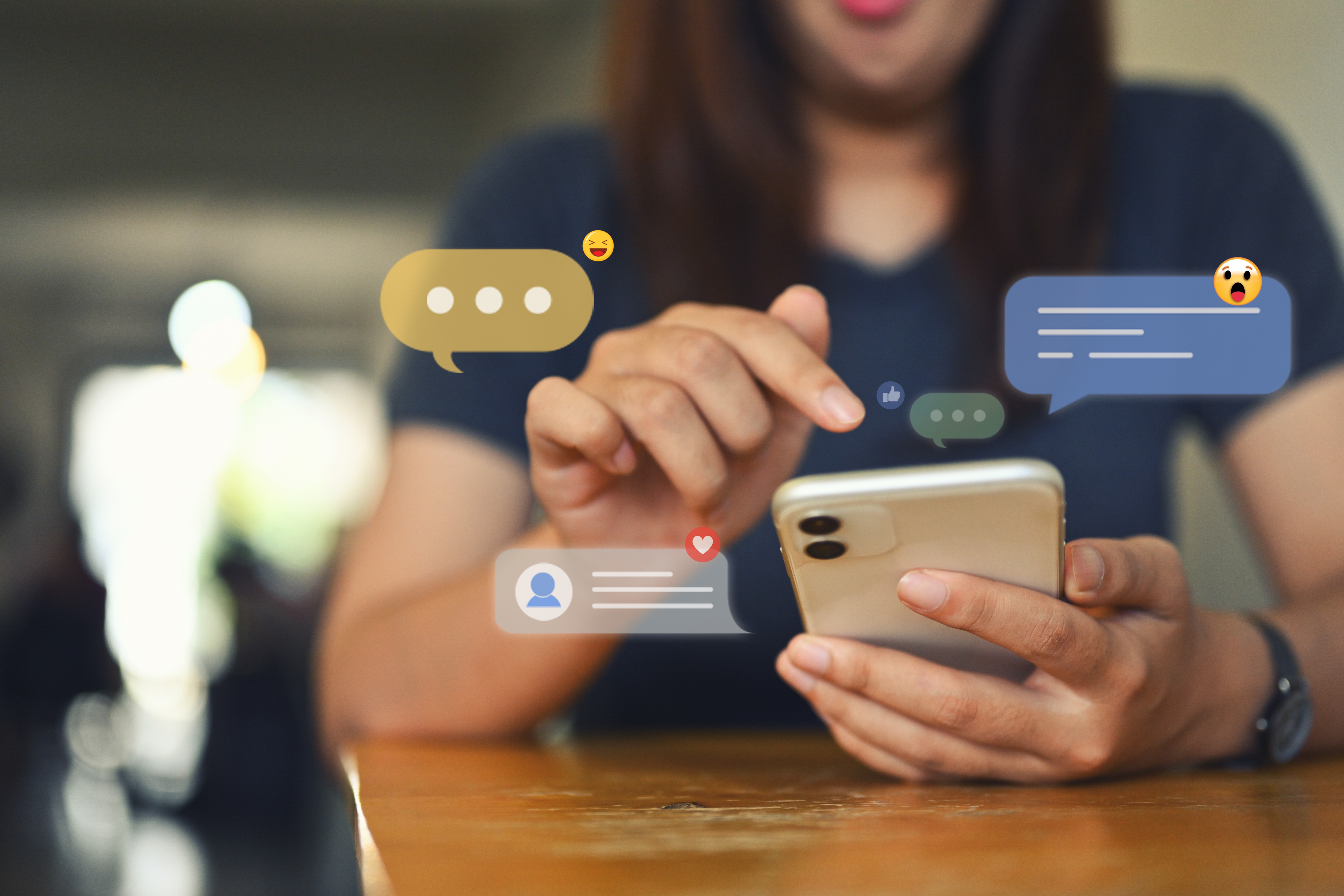
Now, in the era of smartphones and short attention spans, there is no shortage of messaging channels. But the million-dollar question is, “Do your customers see you?”
You could craft the catchiest copy and pair it with pixel-perfect visuals, but if you're not on the right communication channel, it's just another shout into the void.

SMS has been a reliable channel for two decades, and then in 2018, WhatsApp Business was launched. While these two channels have become staples in a marketer’s toolkit, there was a third one lurking in the corner, quietly plotting its epic takeover: RCS.
Though RCS was introduced in 2008, it stepped into the spotlight in 2020, thanks to Google’s rollout of RCS chat for all Android users.
Now, five years later, here we are, wondering which messaging channel D2C brands should bet on. Join us as we explore what’s special about these channels and what else is out there.
| SMS | RCS | ||
|---|---|---|---|
| Reachability | Global (works on all mobile phones, no internet needed) | Global (requires WhatsApp app and internet connection) | Growing reach (native on Android; iOS adoption started with iOS 18) |
| Character Limit | 160 characters |
Depending on the message type
WhatsApp API has a limit of 4096 characters Regular WhatsApp messages have a limit of 65,536 characters |
Up to 3072 characters |
| Price | Low per message, varies by region |
Charged per conversation with a 24-hour window.
Template-based pricing. Cost varies by category (utility, marketing, etc.) and the recipient's country. (From July 2025, WhatsApp will be switching to per-message pricing.) |
Competitive pricing depends on carrier agreements |
| Setup Complexity | Easy (just a phone number and SMS provider) | Moderate (requires WhatsApp Business Account, approval, templates) | Moderate (requires RCS messaging partner & Google’s Jibe or similar platform) |
| Media Support | Text only | Rich media: images, videos, PDFs, buttons, and more. | Rich media: images, videos, carousels, buttons, suggested replies |
| Secure Messaging | No encryption | End-to-end encryption | Encrypted between device and server; not always end-to-end. As of March 2025, the RCS standard now includes end-to-end encryption, but the implementation is still rolling out. |
| Branding | Minimal, can add dynamic shortened links | Brand logo, colors, and contact information can be added | Brand logo, colors, and contact information can be added |
| Analytics | Basic (delivery status if supported) | Advanced (read receipts, engagement metrics via WhatsApp Business API) | Advanced (delivery, engagement, suggested reply interaction via RCS platforms) |
| Top Regions | US, Canada, Australia, and parts of Europe | Latin America, Parts of Asia-Pacific, India, Brazil, Parts of Europe, the Middle East, and Africa | US, UK, parts of Europe |
| Delivery Confirmation | Sometimes (depends on carrier and provider) | Yes (delivered and read receipts available) | Yes (delivered and read receipts, typing indicators, read status) |
| Implementation Timeline | Immediate | 2-4 weeks of business approval | 4-8 weeks, requires platform integration |
| Business Verification | Basic phone number verification | Strict business documentation review | Verification through Google or carriers |
| User Opt-In Requirements | Explicit consent with an opt-out option | Prior relationship or explicit opt-in | Opt-in required with a clear opt-out option |
| Regulatory Compliance | Varies by country | Complex privacy requirements by region | Emerging standards, improving compliance framework |

Let’s start with a platform that’s been quietly getting the job done since Y2K: SMS.
Businesses began using SMS for marketing communication in the early 2000s. It’s been 25 years, and the veteran channel is yet to go out of style. The channel boasts an open rate of 98%, which is 3.7x more than email and 12.5x more than push notifications.
“Did you know?
95% of texts will be read within 3 minutes of being sent, with the average response time for a text being a mere 90 seconds.”
- Source: Viber
The open rates and response time for SMS are impressive, aren’t they? Here are some of the channel’s pros and cons.
In 2013, when Pizza Hut, UK, wanted to increase sales among existing customers, they combined SMS with geofencing. They used it to send Pizza Hut customers messages when they were within half a mile of the closest restaurant.
After 15 months of running the campaign, they identified that this strategy was 142% more efficient in increasing incremental sales, 4.4 times more effective than TV ads, and 2.6 times more effective than online ads.
This is an example of how timely, location-based SMS marketing can drive immediate action and outperform even the most traditional and digital advertising channels.

9 years after launching WhatsApp, the brand launched WhatsApp Business to generate more revenue. In a few months, they introduced WhatsApp Business API. Today, billions of businesses around the world use the channel to connect with their customers on a personal level.
Did You Know?
In 2023, WhatsApp Business reported having over 200 million monthly active users (MAU) worldwide.- Source: Statista
Like SMS, WhatsApp also has an open rate of 98%, and 58% of WhatsApp messages get a reply within a minute.
Are the response rates and open rates the only reasons WhatsApp is so popular? Dive into the pros and cons of the platform to find out.
In 2024, Powerade, Coca-Cola’s sports drink brand, set out to energize its presence in Brazil during the Summer Games. Instead of opting for traditional advertising, they turned to where their audience already was, WhatsApp.

Teaming up with the Brazilian Olympic Committee, Powerade launched an interactive WhatsApp experience called Time Brazil, a mobile-first hub designed specifically for Olympic fans. They offered a variety of features for Brazilian sports fans, including event schedules and results, an active medal tracker, athlete information, quizzes, an exclusive sticker pack, the ability to send and receive messages from their favorite Summer Games athletes, and more.
The campaign reached more than 90 million people and drove more than 165,000 unique users to Time Brazil. The brand also saw a 6-point lift in ad recall and a 4.9-point lift in top-of-mind awareness.

Meet the messaging channel that's been quietly rising to fame while everyone was distracted by the SMS vs. WhatsApp debate. Rich Communication Services (RCS) is Google's ambitious attempt to upgrade the humble SMS into a dynamic, app-like experience without a third-party app.
You could call it SMS 2.0—with rich media, branding, carousels, suggested replies, and even payment options—all inside your native messaging app.
In 2020, Google introduced the platform on Android devices; four years later, Apple made RCS available to devices with iOS 18.
Did You Know?
Research shows that Rich Communication Services (RCS) business messaging traffic will reach 50 billion messages globally in 2025.-Source: Juniper Research
Earlier this month, Google revealed that over a billion RCS messages are sent daily in the U.S. alone, based on a 28-day average. This surge in usage means more people can now share high-quality photos and videos and seamlessly add others to group chats without breaking the conversation or compromising on quality.
RCS promises to bridge the gap between traditional SMS and modern messaging apps, but like any emerging technology, it comes with both exciting opportunities and some challenges.
Subway, which had built a solid SMS subscriber base of nearly 6 million since 2015, sought a more engaging way to connect with customers. In 2018, they ran A/B tests in select U.S. cities, comparing standard SMS with rich, interactive RCS messages.
The campaigns promoted the same offers—a $11.99 sandwich deal and a $20 meal combo—but the RCS versions included branded visuals and clickable buttons.
The RCS implementation delivered exceptional performance improvements, with 140% higher conversion rates for the sandwich promotional offer and 51% higher conversion rates for the meal deal than traditional SMS.

With SMS character limits, Meta’s strict regulations, and RCS’ carrier dependency, blending all these channels together, and creating a unified customer experience will help you keep your customers in the loop and build a stronger relationship.
How can you do this effectively?
This is where omnichannel marketing platforms come into play. With ZEPIC, you can unify all your customer data in one place and send out hyperpersonalized emails and WhatsApp campaigns that convert into sales. Try ZEPIC for free today!
Now which channels should you be using as a Retail business? Apart from the obvious route of asking customers their preferred communication channel at the point of purchase or order, DTC brands should consider a range of strategic, operational, and behavioral factors when choosing between RCS, WhatsApp, SMS, or other channels like Email or Push.
Stay tuned for our next post on what to look for when choosing a messaging channel.

%201.png)


.png)