Meet

Neura HQ,
Your connected AI Agent Workforce Know more



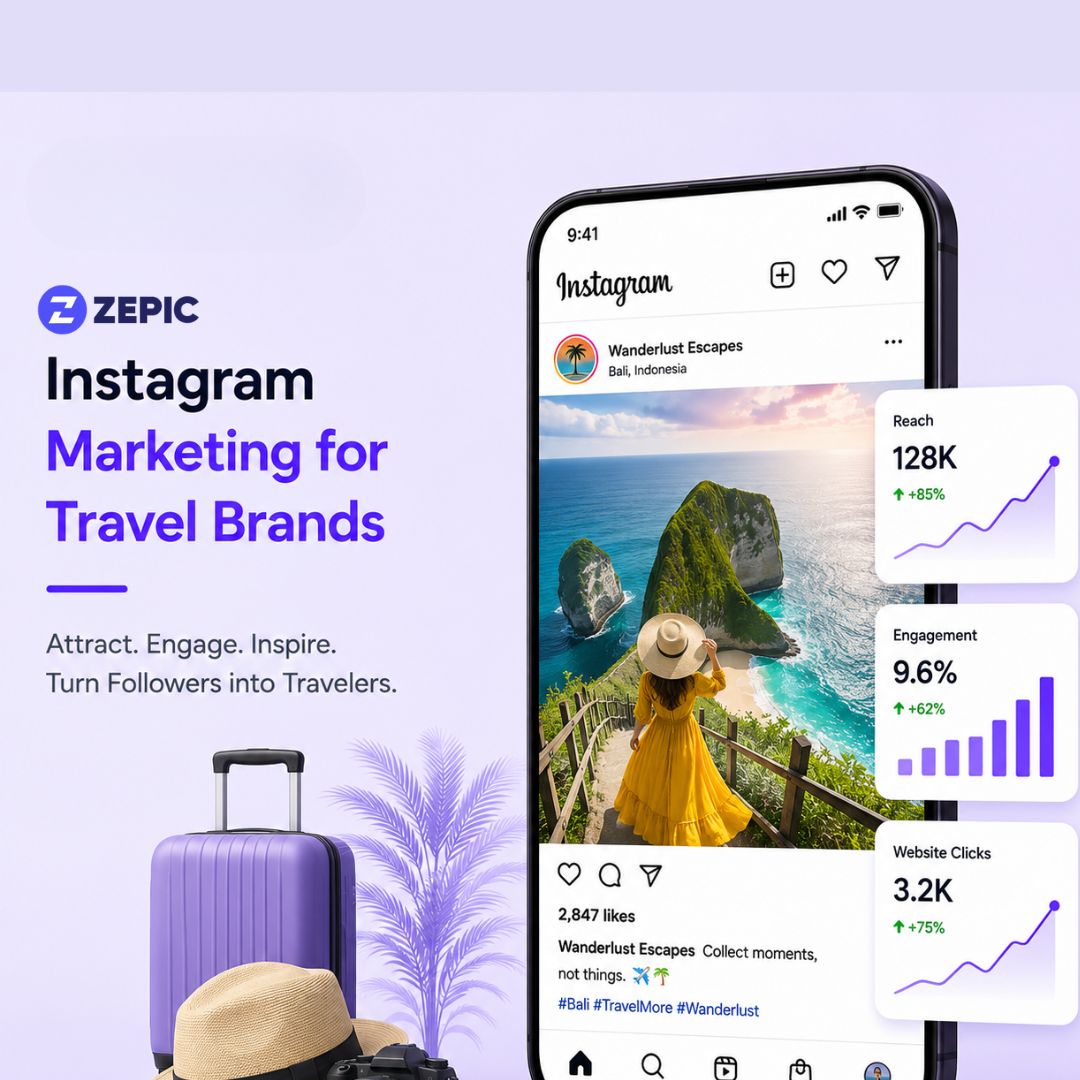
TL;DR: Instagram Marketing for Travel Brands
Let’s take a quick look at how travel discovery has changed in the past few years. Imagine a professional in London scrolling through her Instagram feed during a morning commute. She is not looking for a traditional advertisement or a generic book now button. She is looking for a feeling. She stops at a Reel showing the misty sunrise over a boutique eco-resort in the Azores. The sound of the wind is crisp: the caption explains how the property runs entirely on geothermal energy. Within three seconds, she has saved the post. Within ten seconds, she has sent it to her partner. Within two minutes, she is in the brand’s DMs asking about availability for the upcoming solstice.
This is how travel discovery happens in 2026.
Studies show that Instagram is the leading social media platform for trip planning among both Millennials and Gen Z travelers.
Their journey from inspiration to booking is no longer a linear path of clicking through a website. It is a series of micro-moments happening inside Instagram.
Read on for a full breakdown on how travel brands can use Instagram to increase bookings.
Unlike buying a pair of shoes, booking a trip involves high financial and emotional stakes. Travelers want visual proof of what their experience will look like before they commit. Instagram provides this proof through immersive video and authentic community reviews.
In the past few years, the platform has grown into an entire marketing funnel in one app. It builds awareness through Reels, nurtures interest via Stories, and handles conversion through Direct Messages (DMs).
Instagram also bridges the gap between digital research and real-world action. When a traveler saves your post, they are essentially creating a digital itinerary. When they share your Reel with a friend, they are starting a booking conversation. These actions are high-intent signals that modern travel brands must learn to capture and convert.
5 years ago, people used hashtags to find travel content, but today, Instagram operates like a search engine powered by Meta AI. If a user searches for "best boutique hotels in Tulum with high-speed internet," the algorithm analyzes caption text, spoken words in Reels, and even the text overlays on images to deliver results.
Instagram algorithm prioritizes content that satisfies a user's specific intent. That’s why Travel brands must optimize for Instagram search. This means using specific, long-tail keywords in your bio and captions. Instead of using generic tags like #travel, you should focus on terms like "luxury wellness retreat in Portugal" or "family-friendly eco-resort Bali."
The Explore page and Reels tab are driven by a recommendation engine that favors content retention. If a traveler watches your tour of a private villa until the very last second, the algorithm flags your brand as an authority.
In 2026, Instagram rewards session depth. This happens when your content keeps a user engaged with your profile, leading them to click your link or send a DM.
Surprisingly, Likes are not your main metric on Instagram. Here’s what truly matters for travel brands today:
Focus on the narrative of the location.
A hotel is a place to sleep, but the destination is the reason to travel. That’s why you need to share the local culture, the hidden morning markets, and the best time to see the sunset from your balcony.
Use carousels to tell a sequential story. Start with a hook like "How to spend 48 hours in Kyoto" and use the following slides to map out a perfect itinerary.
Travelers trust other travelers more than they trust brands.
Encourage your guests to share their raw, unedited videos. Reposting a guest's video of their morning coffee overlooking the ocean feels more real than a professional photo shoot.
UGC acts as social proof, showing potential bookers that the experience you promise is exactly what they will get.
Humanize your brand by showing the people who make the magic happen.
Introduce your head chef, the concierge who knows the best hiking trails, or the team preparing a room for a honeymoon. This builds a sense of familiarity. When a traveler arrives, they already feel like they know your staff, which reduces the friction of the booking process.
Reels are your primary tool for reaching people who don't follow you yet. In 2026, the trend has shifted toward micro-educational Reels. These are 7 to 10-second clips that offer a quick tip or a stunning visual hook. Use text overlays to explain exactly what the viewer is seeing.
For example, a Reel showing a hidden waterfall should have text saying "The secret trail to Blue Falls (Save for your 2026 trip)."
Create content that is meant to be referred back to.
In 2026, the traditional link in bio is only the first step.
High-converting brands use DMs to handle the entire inquiry process. When a user asks a question in the comments, the response should lead them to a private conversation where you can provide personalized pricing and availability. This 1:1 interaction builds trust far more effectively than a generic website.
Capture traveler data early. Offer a free digital guide or a "local's map" in exchange for an email address or a DM opt-in. This allows you to follow up with seasonal offers or early bird discounts. If someone expresses interest in a summer retreat in January, you can nurture that lead until they are ready to book in March.
Use Instagram Stories to highlight "last-minute cancellations" or "limited-time upgrades." Seeing that a popular suite has suddenly become available creates a sense of urgency. You can also create "Instagram-only" packages that are not listed on major booking sites. This rewards your followers and gives them a reason to keep their notifications on for your posts.
Instagram Automation is the secret weapon for travel brands that want to scale. You can set up triggers so that when a user interacts with your content, they receive an immediate, helpful response. This ensures that you never miss a lead, even if the inquiry comes in at 2:00 AM.
When you post a Reel about a specific tour or room, ask users to comment a keyword for more details. This moves the conversation from a public space to a private one.
Example: Tour Operator Strategy
Stories are where your most engaged audience lives. Use them effectively to gauge interest and trigger a follow-up.
Example: Boutique Hotel Strategy
Even the most beautiful profiles can fail if the strategy is flawed. Avoid these common pitfalls to ensure your marketing budget yields a return on investment.
In 2026, travelers are wary of "Instagram vs. Reality." If your photos are so heavily edited that the water looks neon blue and the sand looks white, guests will be disappointed when they arrive. Authenticity builds long-term loyalty. Use natural lighting and focus on the real textures and colors of your destination.
A comment is a conversation starter. If a potential guest asks about your pet policy or the distance to the beach and you don't reply for three days, they have already moved on to a competitor. Prioritize replying to every comment within the first hour of posting to keep the engagement momentum high.
Audio is a massive discovery signal on Instagram. Using original audio that is clear and high-quality is better than using a generic "trending" song that has nothing to do with your brand. If you are showing a peaceful forest retreat, the audio should be the sound of the wind and birds, not a high-tempo pop song.
Every piece of content must have a purpose. If you post a stunning photo of a sunset but don't tell the user what to do next, they will simply scroll past. Tell them to save the post, tag a friend, or click the link in your bio to see the view for themselves.
Use this checklist to ensure your daily and weekly activities align with a booking-focused strategy.
Instagram is a place for meaningful connections. Travel brands that stop trying to go viral and start trying to be helpful are the ones that will see their booking calendars fill up. If you focus on search-friendly content, authentic storytelling, and automated conversations, you can turn every scroll into a step toward a confirmed reservation.
ZEPIC’s Instagram automation is designed to help you seamlessly convert followers into customers. Book a demo and see it in action!
Instagram helps transform travel inspiration into real bookings. Travelers often discover destinations through Reels, save posts while planning trips, and then move to direct messages to ask about pricing or availability. This makes Instagram function as a full booking funnel from discovery to conversion.
Short-form Reels, itinerary-style carousels, guest-generated content, and behind-the-scenes videos tend to perform best. These formats help travelers visualize the destination and understand what their experience could look like, which naturally supports trip planning and booking decisions.
Keywords are becoming more important than hashtags for discovery. Including descriptive phrases such as “luxury eco-resort in Bali” or “family-friendly hotel in Dubai” in captions and on-screen text improves search visibility and helps Instagram understand the context of your content.
Consistency matters more than volume. A strong rhythm for travel brands is posting three to five Reels per week for discovery, one to two carousel posts with saveable travel tips, and daily Stories to maintain engagement and highlight real-time experiences.
Instead of focusing on likes, travel brands should track intent-driven signals such as saves, shares, watch time, and profile visits. These actions show that users are actively considering the destination or property rather than just casually scrolling.
Direct messages allow brands to provide personalized responses, tailored travel recommendations, and quick answers about pricing or availability. When combined with automation, every inquiry can be handled promptly, helping move travelers closer to booking.
Encourage guests to tag your property during their stay, run seasonal photo contests, and regularly repost traveler experiences. Authentic guest content builds trust and helps potential visitors see what the destination is actually like.

%201.png)


.png)