Instagram Marketing for Boutique Hotels and Restaurants
Anandhi Moorthy
Senior Content Marketer
August 26, 2026
TL;DR
Instagram is a powerful discovery and conversion channel for boutique hotels and restaurants, helping potential guests experience the brand before they book.
A strong Instagram strategy combines visual storytelling, Reels, UGC, local content, creator partnerships, and social proof to build interest and trust.
Instagram is increasingly part of the search journey, with public content from eligible professional accounts potentially appearing in search engine results.
Hotels and restaurants can reduce booking friction by optimizing their profiles, using direct booking links, and setting up Instagram DM automation for common inquiries.
Did you know?
67% of travelers use Instagram to find travel inspiration, and about 60% book a hotel after seeing it on Instagram.
The travel journey of your target audience is increasingly starting on social media platforms, particularly Instagram. Because the platform allows them to virtually experience everything you offer. Couple that with some reviews, and Instagram can influence almost every stage of the decision-making process from discovering to booking
For boutique hotels and restaurants, this is a massive opportunity. Unlike large corporate chains, independent properties thrive on character. Instagram provides the exact canvas you need to project that unique experience to a larger audience.
Though the platform has so much influence, very few hotel and restaurant brands use it effectively.
Let’s look at how you can tap into Instagram’s potential and get more reservations.
How Can Hotels and Restaurants Use Instagram to Increase Reservations
The answer lies in treating Instagram as more than a visual portfolio. Every element of your presence—from the content you publish to the information in your profile—should work together to move a potential customer closer to making a reservation.
The Conversion Journey
Visual Discovery: Captivating Reels, guest photos, or geotagged posts hook the potential visitor.
Emotional Connection: A distinct aesthetic, brand identity, and engaging bio turn interest into desire.
Frictionless Booking: Clear direct links and native action buttons make reserving a room or table seamless.
Visual Discovery and Search Intent
Many travelers routinely explore location tags, geotagged maps, and short-form video reels to evaluate a destination before visiting.
Visual Proof: Guests search for geotags to see candid, non-staged posts from real visitors, assessing the vibe in real time.
Search Behavior: Queries like "best cocktail bars in [City]" or "cozy boutique stay [Neighborhood]" happen inside social platforms just as frequently as on traditional engines.
The Rise of Answer Engine Optimization (AEO)
Search platforms and AI-driven answer engines actively scrape social metadata to deliver local recommendations. When AI tools generate responses for boutique dining or luxury lodging inquiries, they parse:
Instagram bio keywords and location tags.
Caption metadata and structured post context.
User engagement, consistency, and geotag volume.
Optimizing your Instagram presence ensures your property is indexed correctly across both traditional search and conversational AI discovery tools.
Instagram’s Influence on SEO
Instagram can now play a role beyond social discovery. Public content from eligible professional accounts can be indexed by search engines, meaning posts and Reels have the potential to appear when travelers search for hotels, restaurants, destinations, and local experiences.
For hospitality brands, this creates another opportunity to increase organic visibility. A well-optimized Instagram presence can complement your website and Google Business Profile by giving searchers an additional way to discover and evaluate your property.
To make your Instagram content more search-friendly:
Use relevant keywords: Include your property type, location, neighborhood, and relevant experiences naturally in your captions and profile.
Optimize your profile: Your Instagram name and bio should clearly communicate what you offer and where you're located.
Create location-focused content: Posts targeting searches such as “boutique hotels in [city]” or “best restaurants in [neighborhood]” can help align your content with local search intent.
Add context to visual content: Don't rely on images alone. Descriptive captions help search engines and potential guests understand what they're looking at.
The Experience Economy
Corporate hotel chains offer predictability, but boutique venues offer distinct stories. Instagram allows independent operators to show the texture of linen sheets, the morning light in a courtyard, or the sizzle of a signature dish in motion. It converts abstract hospitality into tangible visual moments.
Optimizing Your Profile for Discovery and Direct Conversions
Your Instagram profile functions as a digital concierge. If a user lands on your profile and cannot immediately determine your location, your aesthetic, and how to reserve a spot within three seconds, you risk losing that conversion.
Profile Grid Breakdown
Bio Section: Clear location details, opening hours, unique selling points, and a direct booking link.
Action Buttons: Native platform options like "Book Now" or "Reserve".
Highlights Rail: Categorized stories providing instant information on rooms, menus, local guides, and reviews.
Crafting a High-Converting Bio
Your bio needs to deliver immediate clarity and searchability. The "Name" field on Instagram is searchable, so it should contain key terms.
Optimized Name Field:The Oakmont | Boutique Hotel in Savannah or Lilia | Wood-Fired Pasta Williamsburg
Bio Copy: State your unique value proposition clearly. Mention signature details (e.g., "12-room eco-luxury hideaway in the heart of the arts district").
Essential Details: Include physical address, neighborhood, and operational hours or check-in guidelines.
Setting Up Direct Booking Integrations
Eliminate unnecessary steps between discovery and booking.
Native Action Buttons: Activate native integrations such as "Book Now" or "Reserve" via platform partners (e.g., SevenRooms, OpenTable, Resy, or direct booking engines).
Link-in-Bio Strategy: Use a clean link routing system that leads guests directly to customized landing pages, room availability calendars, or seasonal tasting menu reservations. Avoid cluttered link trees that distract from the primary call to action.
Instagram DM Automation
Not every potential guest is ready to click “Book Now.” They may want to know the room rate, availability, menu, dietary options, parking, or whether you accommodate a particular request. Instagram DMs can capture this intent and provide an immediate response, rather than leaving potential customers waiting for a reply.
With Instagram DM automation, hotels and restaurants can create simple conversational flows triggered by keywords, Story replies, comments, or direct messages.
For hotels:
“ROOMS” → Share room types, rates, and a booking link.
“AVAILABILITY” → Ask for check-in/check-out dates and direct the guest to availability.
“OFFERS” → Send current packages or seasonal offers.
“LOCATION” → Share directions, nearby attractions, and transportation information.
For restaurants:
“MENU” → Automatically send the latest menu.
“RESERVE” → Direct the customer to the reservation page.
Content Pillars That Drive Instagram Engagement and Reservations
A successful hospitality content strategy strikes a balance between polished visual production and raw, relatable authenticity.
Core Content Pillars
Sensory Media: Highlighting property interiors, room details, and plated dishes.
Short-Form Video: Capturing behind-the-scenes moments, chef prep, and real-time atmosphere.
Curated UGC: Showcasing guest stories, tagged photos, and unscripted social proof.
Sensory Photography
High-resolution images are essential, but overly processed studio shots can feel cold and detached. Focus on capturing atmospheric, natural moments.
Lighting: Use warm, natural light for breakfast spreads and soft, ambient lighting for dinner and night settings.
Detail Shots: Close-ups on textures. For instance, a hand-poured cocktail, steam rising from fresh bread, crisp sun-lit bed sheets, or custom ceramics.
Human Touch: Incorporate subtle human elements (a hand holding a glass, a guest reading in a chair) to help viewers imagine themselves in the space.
Short-Form Video (Reels) for Atmosphere
Reels are the primary driver of organic reach on Instagram. For hospitality, video provides the sensory depth that static images cannot match.
Property Walkthroughs: POV (point-of-view) videos showing the journey from arriving at the entrance to stepping into a suite or sitting at the chef's counter.
Behind-the-Curtain Moments: Brief clips of head chefs prepping seasonal ingredients, bartenders crafting signature cocktails, or staff setting up the dining room for evening service.
Neighborhood Culture: Short video guides highlighting nearby art galleries, scenic walking routes, or local markets, positioning your hotel as the ultimate base for exploration.
Leveraging User-Generated Content (UGC)
User-generated content serves as unscripted social proof. Prospective guests place immense trust in authentic posts from previous visitors.
Design for Shareability: Identify or create natural photogenic nodes across your property. It could be a unique neon sign, a courtyard archway, custom-printed coffee cups, or striking tableware.
Curation and Credit: Monitor tagged posts and geotags daily. Always request permission before reposting guest content to your main feed or stories, ensuring proper tagging and credit.
Hotels and Restaurants that Have Mastered Instagram
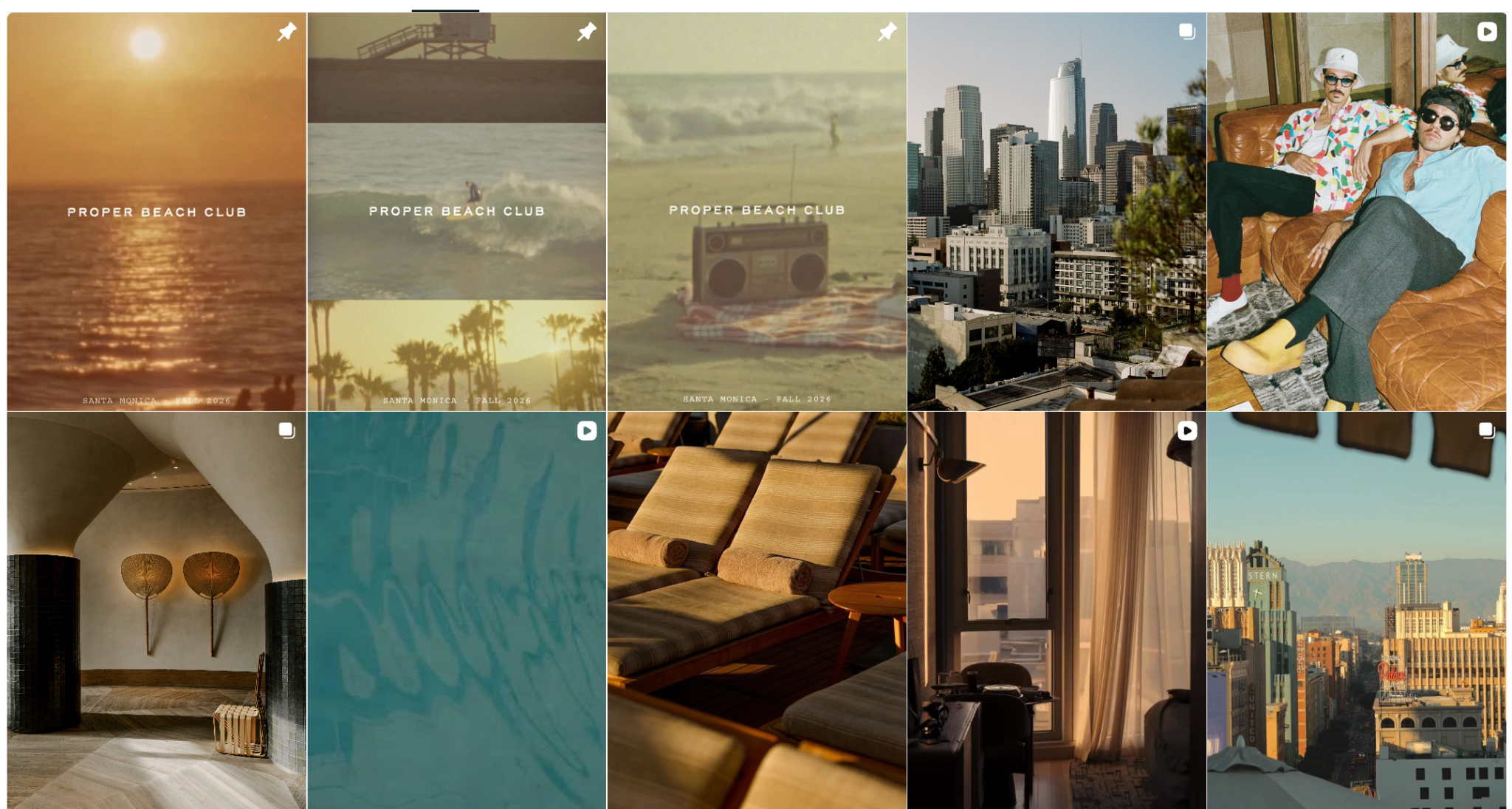
1. Proper Hotels
The Strategy: Proper Hotels focuses heavily on interior design narratives, local culture, and sophisticated lifestyle storytelling.
Execution: Their feed showcases high-design aesthetics alongside real guest interactions, neighborhood guides, and culinary partnerships. Rather than pushing room discounts, they market an elevated design-led lifestyle.
Key Takeaway: Treat your hotel property as a cultural hub. Highlight the design details, local artisans, and unique architecture that define your identity.
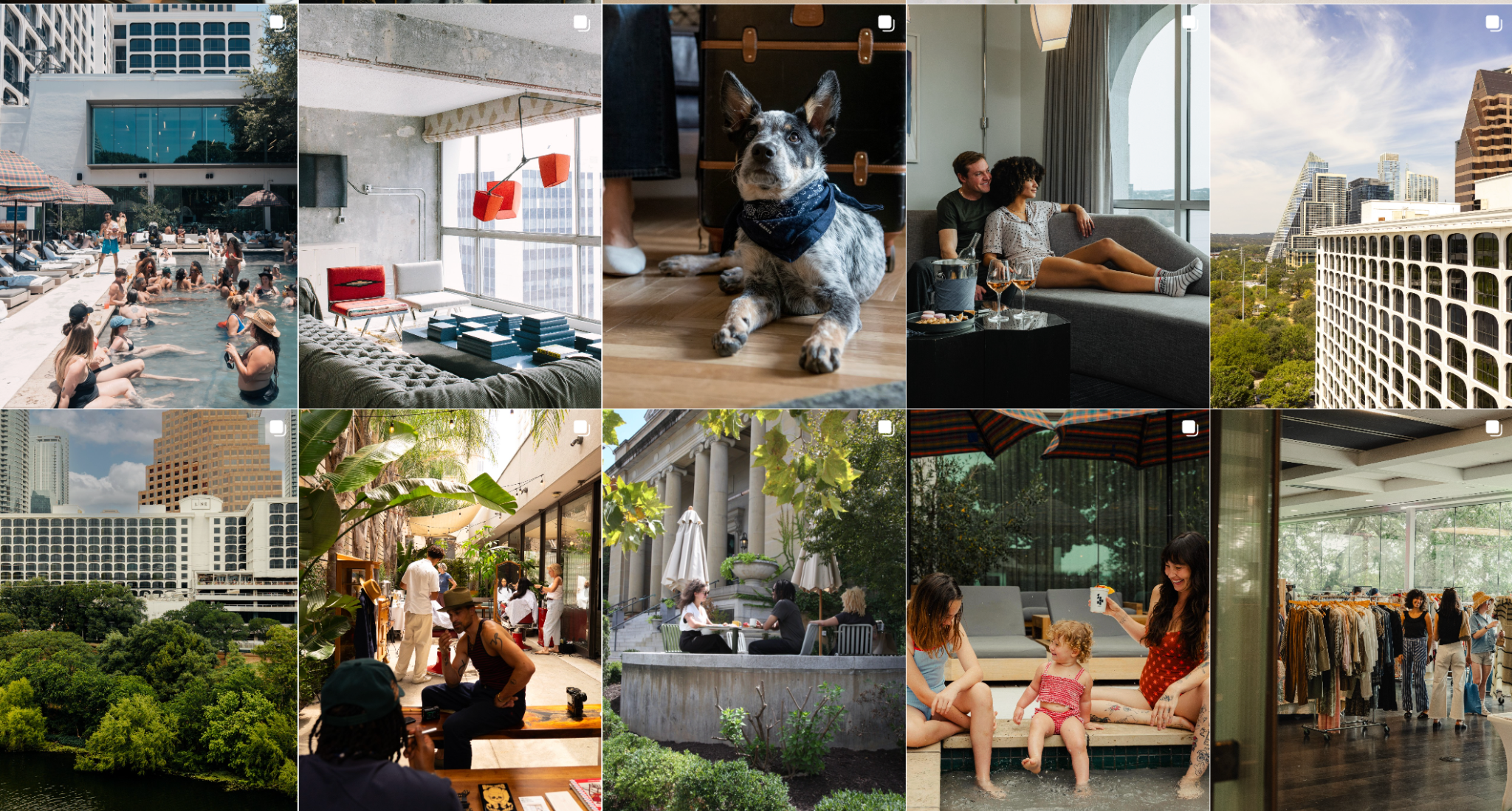
2. The Line Hotels
The Strategy: Community-first content that blends hospitality with local creative arts.
Execution: Their Instagram feed highlights local neighborhood figures, artists-in-residence, and neighborhood music events happening right on property.
Key Takeaway: Position your property as an authentic entry point to the city's local culture, making it attractive to both out-of-town travelers and local residents.
GRUPPOMIMO Restaurant
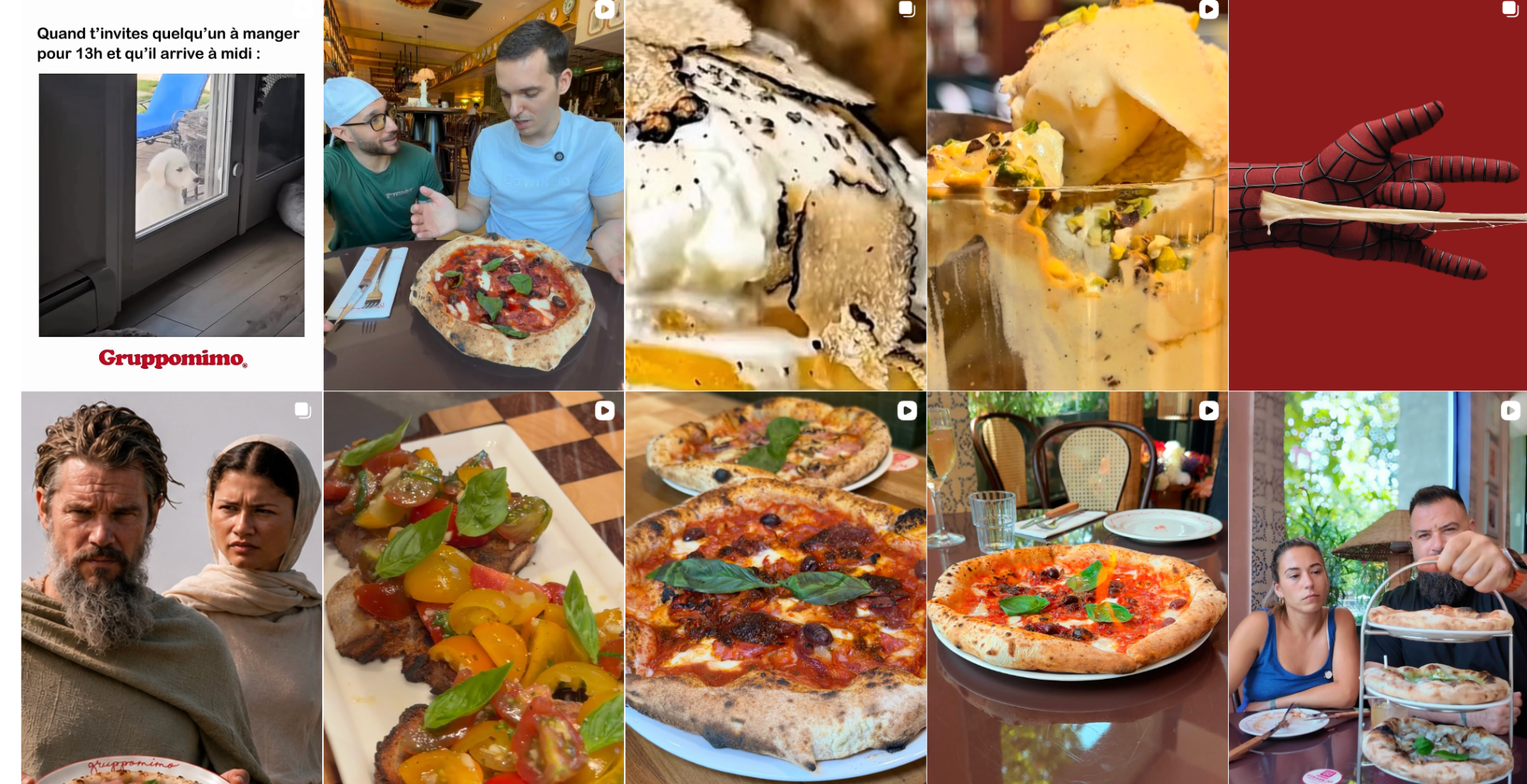
The Strategy: GRUPPOMIMO turns its restaurants into a lifestyle brand, combining Italian food with a playful, energetic personality. Its own brand story emphasizes food, nightlife, music, and the idea of turning customers into friends.
Execution: Rather than relying solely on food photography, the brand builds a recognizable world around its restaurants—pizzas and pasta, cocktails, music, humor, staff personalities, and the broader “Squadra” community. The brand also grew its Instagram following rapidly, reaching 100,000 followers within its first year.
Key Takeaway: A distinctive personality can turn a restaurant from somewhere people eat into somewhere they want to be part of.
MELT Slow-Smoked Barbecue
The Strategy: MELT builds its content around its strongest differentiator: the craft and theater of Texas-style barbecue. The brand emphasizes slow-smoking meat over oak wood, fresh ingredients, and the expertise behind its cooking.
Execution: Its visual storytelling lends itself naturally to Instagram, smoking meat, fire, slicing, texture, generous plates, and the people behind the kitchen. Instead of simply presenting finished dishes, the content can communicate the process and craft that make the food worth seeking out.
Key Takeaway:Turn your USP into visual content. If your product has a distinctive process, ingredient, craft, or ritual, make that process part of the experience you sell online.
Influencer and Local Creator Partnerships That Build ROI
Partnering with creators can expand your reach, but working with the wrong profile can burn marketing budgets without producing bookings
Creator Type
Micro-Influencers (2K - 20K)
Macro-Influencers (100K+)
Audience Alignment
Hyper-local, highly loyal audience
Broad, national/international awareness
Engagement Rate
High trust and direct interaction
Lower localized conversion rate
Best Used For
Independent venues & local restaurants
Major property launches & rebrands
Cost Model
Highly cost-effective / trade model
High cash investment required
Micro vs. Macro Influencers
For independent hotels and restaurants, micro-influencers (2,000 to 20,000 followers) frequently yield significantly higher return on investment than macro-influencers.
Hyper-Local Reach: Local micro-influencers hold genuine trust with residents in your city or region—the primary demographic for restaurant dining and weekend staycations.
Higher Engagement: Niche food and travel creators often maintain much higher comment-to-follower ratios and direct message interaction rates.
Vetting and Selection Criteria
Before offering a complimentary stay or dining experience, evaluate creator profiles for authentic alignment:
Audience Demographics: Ask for audience location metrics to confirm their followers match your target geographic market.
Engagement Quality: Examine their comments section. Look for genuine discussions about recommendations, dining, and travel, rather than generic emoji comments.
Content Quality: Ensure their visual style, color grading, and tone match your brand's standards.
Structuring Trade for Content
Instead of offering simple exchange stays, establish clear deliverable agreements:
Example Collaboration Agreement Structure:
Offering a two-night complimentary stay, including breakfast for two.
Deliverables expected from the influencer:
1 Instagram Reel (minimum 15-30 seconds, high-resolution original file shared with hotel)
3 Instagram Stories with direct link tags and location tags.
Full usage rights for the hotel to repurpose generated footage across paid and organic channels.
Local SEO and Geotagging Tactics
Instagram operates as a location-based discovery engine. Local optimization ensures your venue appears when travelers explore specific areas.
Geotagging Precision
Always add your exact geotagged business location to every post, Reel, and Story. Ensure your Google Business Profile and Facebook Page addresses are perfectly aligned so Instagram maps anchor your business at the exact physical location.
Collaborative Posts with Local Partners
Leverage Instagram’s "Collab" feature to co-author posts with complementary local businesses.
Hotel Collaborations: Partner with local boutique tour operators, artisanal coffee roasters, distilleries, or art galleries.
Restaurant Collaborations: Partner with local farms, wine importers, or guest chefs.
Benefit: The post appears simultaneously on both profile feeds, instantly doubling reach and introducing your brand to an established, relevant audience.
Niche and Localized Hashtag Architecture
Avoid overly generic hashtags like #hotel or #foodie that carry millions of posts and move too fast for discovery. Build a balanced hashtag set:
Tracking likes and generic follower counts provides vanity metrics. To measure true business impact, focus on metrics that align with revenue and direct reservations.
Funnel Stage
Key Metric
What It Indicates
Top-of-Funnel
Saves & Bookmarks
Users bookmarking your venue for future travel or dining plans.
Top-of-Funnel
DM Shares
Users sending content to friends/partners to plan group outings.
Bottom-of-Funnel
Profile Link Clicks
Intentional traffic moving from Instagram to your website.
Bottom-of-Funnel
Action Button Clicks
Direct attempts to book a room or reserve a table via app.
Bottom-of-Funnel
Booking Inquiries
Direct messages asking about availability or event hosting.
Top-of-Funnel Discovery Metrics
Saves and Bookmarks: High save rates indicate users are bookmarking your hotel or restaurant for future travel plans or dining outings.
Shares via DM: Measures how often users send your content directly to friends or partners to plan trips or group dinners.
Bottom-of-Funnel Conversion Metrics
Profile Link Clicks: Track clicks on your primary link using UTM parameters to monitor traffic inside Google Analytics.
Action Button Conversions: Track native "Book Now" or "Reserve" clicks inside professional dashboard insights.
Direct Messaging (DM) Inquiries: Track direct messages related to private event hire, group bookings, or room availability.
Turn Instagram Engagement Into Reservations
For boutique hotels and independent restaurants, Instagram is far more than a digital gallery—it is a full-funnel channel for brand storytelling, local engagement, and direct revenue generation. Treat your Instagram feed as the digital front door to your venue: curate it thoughtfully, keep it warm and welcoming, and make it effortless for guests to step inside.
Ready to turn more Instagram interactions into bookings and reservations? Explore how ZEPIC can help you build more connected customer journeys.
Frequently Asked Questions
How often should a boutique hotel or restaurant post on Instagram?
Consistency outweighs high frequency. Publishing 3 to 4 high-quality grid posts or Reels per week, paired with daily Instagram Stories, is ideal for keeping your audience engaged without overwhelming production resources. Stories maintain daily visibility, while feed posts serve as long-term discovery assets.
What is the most effective content format to drive direct hotel bookings?
Point-of-view (POV) walkthrough video Reels combined with clear, direct booking incentives yield the highest conversion rates. Showing the exact room layout, the view from the balcony, and the step-by-step experience demystifies the property and builds buyer confidence far more effectively than static room photos.
How can a small restaurant manage Instagram marketing on a limited budget?
Focus heavily on user-generated content, authentic short-form video recorded on a smartphone, and hyper-local micro-influencer trades. Highlighting daily blackboard specials, behind-the-scenes prep in the kitchen, and guest interactions requires zero external production budget while delivering strong authenticity.
Is professional photography still necessary, or do Reels perform better?
Both are necessary for different stages of the booking funnel. Reels drive top-of-funnel discovery, reach new audiences, and showcase atmosphere. Professional photography remains essential for profile grid aesthetics, official website listings, and converting visitors who visit your profile specifically to evaluate room design and dining ambiance.




.jpg)

%201.png)


.png)