Meet

Neura HQ,
Your connected AI Agent Workforce Know more



TLDR:
Joe was an ecommerce store owner who was eager to get new customers. So, he spent weeks and a lot of money on ads, influencers, and social media marketing. All of Joe’s hard work paid off, and shoppers flocked to his store. His sales numbers looked great, and the store was thriving.
However, the same customers never came back. So, every month, Joe had to spend more on ads just to hit the same revenue. He was running hard just to stay in place.
What did Joe do wrong?
After a customer brought a product, he sent the usual order confirmation and shipping update. He failed to keep in touch with his customers. With no follow-up and no reason to return, they simply forgot his store existed
Most ecommerce founders are like Joe; they miss the opportunity to nurture existing customers and keep them coming back.
Here's why you should take post-purchase seriously:
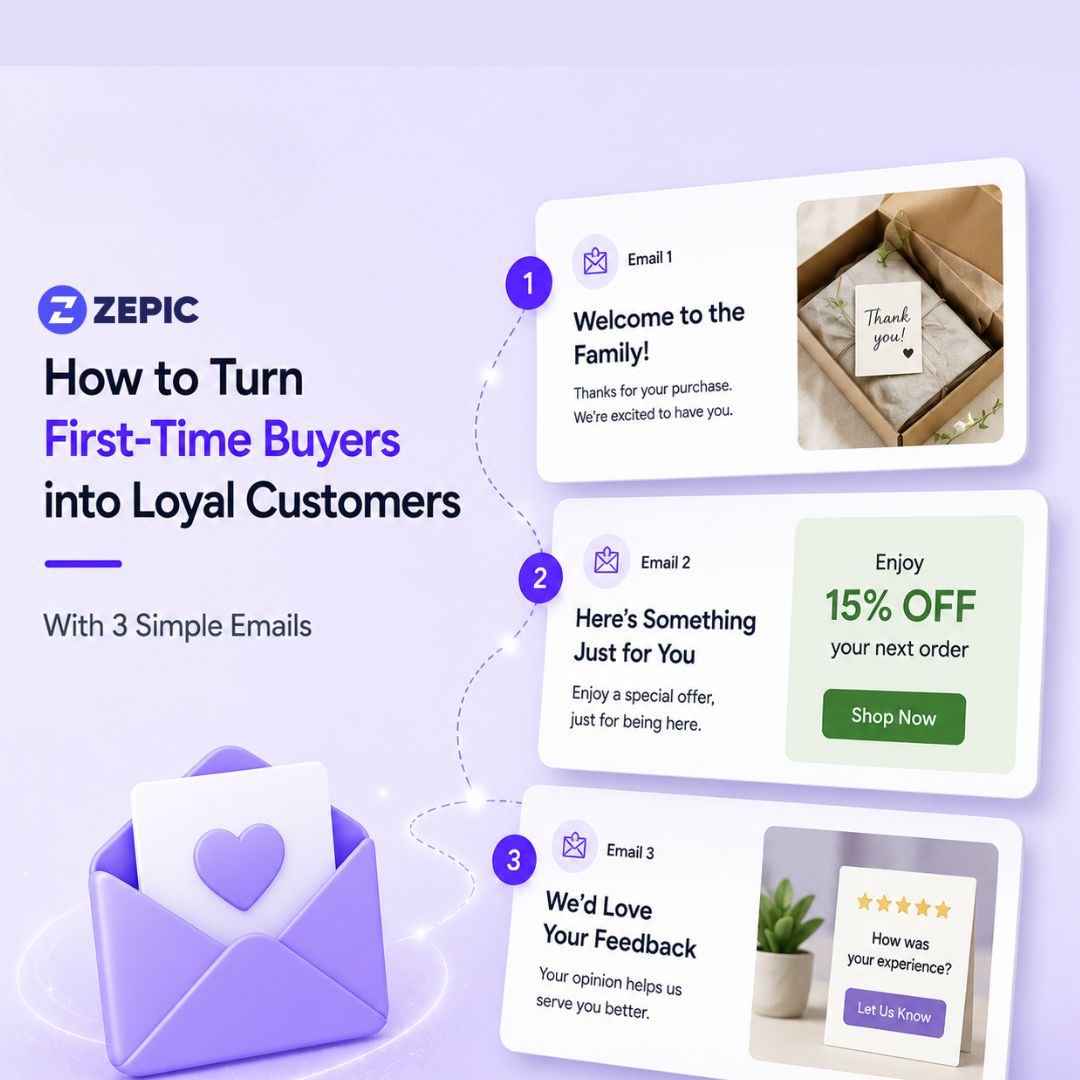
In this guide, we’ll explore three post-purchase email campaigns that’ll help you increase repeat purchases and build a loyal customer base.
A Product walkthrough campaign should be sent right after purchase, ideally timed around when the product is expected to arrive. At this stage, the customer is excited because the package is either in transit or just landed at their door. They are more receptive to your campaigns.
New buyers often don't know how to get the most from what they just bought. This is especially true for skincare, supplements, tech accessories, fitness equipment, or anything with a learning curve. When customers don't see results, they don't blame themselves for using it wrong; they blame the product. That leads to returns, negative reviews, and zero repeat purchases.
A well-timed walkthrough email does two things at once: it reduces friction, and it builds trust. When you proactively show someone how to get the best results, they feel supported. That feeling is what turns a transaction into a relationship.
Day 1: The Unboxing and Setup Guide
Send this as soon as the package is delivered. Include a short video or a simple 3-step graphic on how to set up the product. Focus on the quickest way to get started.
Day 3: The Pro-Tips Email
Highlight a feature that most people miss. For example, if you sell a skincare serum, explain the specific order of application for maximum absorption.
Day 5: The Success Check-in
Ask a simple question: "How is it going so far?" This is a great way to catch potential issues before they become negative reviews. It also provides an opportunity for the customer to ask questions.
Best Practices
The cross-sell should occur after the customer has had enough time to experience the value of their first purchase. Typically, this is 10 to 21 days after delivery, depending on the product’s usage cycle.
Most brands send generic "You might also like" emails that recommend random products. This feels like spam because it ignores the customer’s actual needs and past behavior. If a customer buys a pair of running shoes, they do not want an email suggesting a heavy winter coat the next day.
A strategic cross-sell uses data to suggest the logical next step. It solves a problem created by or related to the first purchase. If they bought a camera, they now need a bag or a memory card. These strategic recommendations can significantly increase your Average Order Value (AOV).
Step 1: The Complete the Set Email
Position the new product as a companion to the first. Use language like: "Your [Product A] works even better when paired with [Product B]." Explain the synergy between the two items.
Step 2: The Social Proof Follow-up
Send this 3 days later if they haven't purchased. Show a testimonial from a customer who bought both products together. "Many people who started with the [First Product] found that [Second Product] was the missing piece."
Step 3: The Low Friction Offer
If they still haven't converted, offer a small incentive. This could be free shipping on the second item or a small discount that expires in 48 hours.
Best Practices for Sending Cross-Sell Campaigns
A Loyalty program invite campaign is sent after the customer has made their second purchase or after a successful cross-sell. It can also be sent 30 days after the first purchase if the customer has shown high engagement with your walkthrough emails.
Customers often view brands as transactional entities. Without a loyalty or community element, nothing is stopping a customer from switching to a competitor for a lower price.
A loyalty program invite turns a customer into a member. It creates a sense of belonging and rewards the customer for their continued business. It also provides a structured reason for them to return to your site.
Members of loyalty programs typically have a 30% higher lifetime value than non-members. They provide a predictable stream of revenue.
A well-executed loyalty invite also encourages the customer to engage with the brand on other platforms, such as social media or through referrals.
Email 1: The Exclusive Invitation
Frame the loyalty program as a "thank you" for their recent purchase. Make it feel earned. "We noticed you’re a fan of [Brand Name], and we want to invite you to our inner circle."
Email 2: The "Immediate Benefit" Breakdown
Clearly list what they get. Use a simple bulleted list:
Email 3: The "Point Balance" Teaser
If they have already earned points from their first purchase, show them their balance. "You already have 50 points waiting for you. Join now to unlock your first reward."
These three campaigns work because each one prepares the customer for the next step. The walkthrough builds satisfaction and trust. The cross-sell deepens the product relationship and increases revenue per customer. The loyalty invite locks in long-term retention.
Here's how they fit as a system:
| Timeline | Phase | Campaign | Goal |
|---|---|---|---|
|
Day 1–14 post-purchase
|
Onboarding
|
Product Walkthrough
|
Drive satisfaction, reduce returns, build trust
|
|
Day 9–10 post-delivery
|
Expansion |
Cross-Sell
|
Increase revenue per customer, deepen adoption
|
|
After 2nd purchase
|
Retention
|
Loyalty Program Invite |
Convert repeat buyers into members, maximize LTV
|
A few things to remember:
Sequence matters. The walkthrough has to come first. You can't cross-sell to someone who doesn't feel confident about their original purchase yet. And you shouldn't invite someone to a loyalty program after their first order; the invite means more once they've shown repeated intent.
Segmentation prevents fatigue. Don't run all three campaigns to the same customer at the same time. Set clear triggers, exclusion rules, and spacing. Customers who are already in a cross-sell flow shouldn't also be receiving a loyalty invite that week.
Campaigns compound. A customer who received a helpful walkthrough is more likely to open your cross-sell email. A customer who bought through a cross-sell is more likely to respond to a loyalty invite. Each email improves the performance of the ones that follow.
Week 1—Start with the Product Walkthrough: This is your quick win. Set up a simple 2-email sequence triggered 1 day after purchase. Define your segments by product category. Write messaging that's specific to what the customer bought, not generic.
Week 2—Build the Cross-Sell Flow: Map your product catalog to identify natural companion products. Build the sequence starting 5–6 days post-delivery. Add exclusion logic so customers already in the walkthrough flow aren't hit simultaneously.
Week 3 — Add the Loyalty Invite: Define your enrollment trigger (purchase count or spend threshold). Pull real purchase data to calculate individual point estimates. Set up the 4-email sequence and exclusion rules for existing members.
Quick Win: If you can only do one thing this week, set up the product walkthrough. It's the fastest to build, has the highest engagement window, and directly reduces returns.
Product Walkthrough
Cross-Sell Campaign
Loyalty Program Invite
Most eCommerce brands are sitting on a retention opportunity they've never fully activated. The tools are there. The customer data is there. The emails are simple to write and straightforward to automate.
The only thing missing is a structured post-purchase system — and now you have one.
Start with the walkthrough. Add the cross-sell. Layer in the loyalty invite. Three campaigns, three moments in the customer journey, one compounding system that turns first-time buyers into the loyal customers your brand actually needs to grow.
Ready to build your post-purchase flow? Explore how ZEPIC's use cases make it easy to set up these campaigns with automation-ready templates and AI-powered segmentation
A standard and effective post-purchase sequence usually contains between three and five emails. This structure allows brands to guide the customer through setup instructions, reinforce brand storytelling, and introduce relevant cross-sell opportunities without overwhelming the recipient. Ultimately, the quality and usefulness of the content matters far more than the total number of messages.
The right timing depends on your product’s usage cycle. For many D2C brands, the optimal window is between 10 and 21 days after delivery. This gives customers enough time to experience the original product while keeping your brand top of mind when they are ready to consider complementary items.
Loyalty programs create a lock-in effect by rewarding continued engagement with your brand. As customers earn points or unlock exclusive tiers, they experience a sense of progress and recognition. This psychological motivation increases the likelihood that they will return to your brand rather than exploring a competitor.
Cross-selling involves recommending a complementary product—for example suggesting socks to someone who purchased shoes. Upselling, on the other hand, encourages the customer to choose a higher-tier or more premium version of the product they are considering. In post-purchase email flows, cross-selling tends to perform better because the original purchase decision has already been completed.
The most valuable metrics include:
• Repeat Purchase Rate: The percentage of customers who place another order after entering the sequence.
• Revenue Per Recipient: The average revenue generated by each email sent.
• Unsubscribe Rate: A spike here may indicate your timing is too aggressive or the messaging is not relevant.
• Time to Second Purchase: How quickly first-time buyers return to make their next order.
Focus on what the customer gains rather than what the brand gains. Use a celebratory tone and highlight that their recent purchase has already unlocked rewards or insider status. When the value proposition is clear and the sign-up process is simple, loyalty invitations feel more like a benefit than a promotion.
Most modern eCommerce email marketing platforms allow these automations to be configured easily. Once your store data is connected, the system can trigger emails based on events such as an order being delivered or a customer reaching a specific purchase milestone.

%201.png)


.png)