Meet

Neura HQ,
Your connected AI Agent Workforce Know more



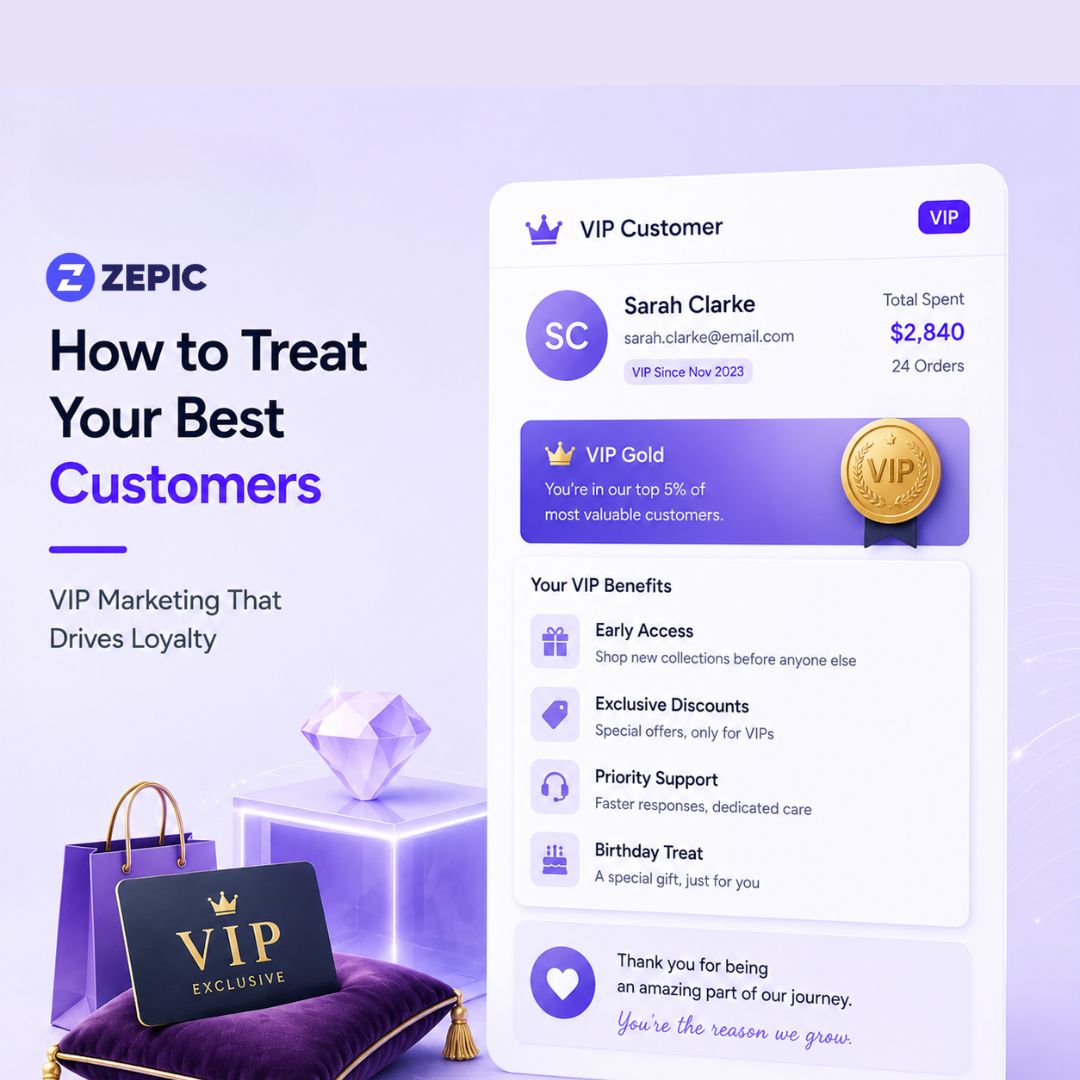
TL;DR: The VIP Marketing Playbook
Your best customers, those who have purchased 5, 10, or 15 times, are often being treated exactly like someone who just signed up yesterday.
And they can feel it.
Most D2C brands have some form of a loyalty program in place. These usually involve points for purchases and tiers with names like "Gold" or "Platinum." Perhaps there are some perks buried in the fine print of a rewards page. However, when it comes to actually making VIP customers feel valued, they fall short.
Many VIP programs are transactional instead of relational. The best customers do not feel special; they feel like everyone else, simply with a higher points balance.
This puts high-value customers at the risk of churn if competitors make them feel more valued.
If you’re a brand that spends money running loyalty programs but sees minimal impact on actual retention. You might have to rethink your strategy because your best customers are your most profitable. They have the highest average order value (AOV), the lowest customer acquisition cost (CAC) because you already acquired them, and the highest potential lifetime value (LTV).
A small investment in making them feel genuinely valued pays back exponentially in retention and advocacy.
This guide covers three VIP marketing campaigns that make your best customers feel recognized, motivated, and celebrated. This approach turns loyalty from a checkbox into a primary retention driver.
Acquiring a new customer costs 5 to 25 times more than retaining an existing one. In the current market, the returns from VIP customers are even more pronounced. The top 10% of customers often drive 30% to 40% of total revenue.
If this group feels ignored, the business faces a massive risk because high-value customers have options. If they do not feel valued, they will leave for a brand that recognizes their contribution.
Beyond the direct revenue, VIP customers also play the role of brand advocates and influencers. If you treat them right, they become your most effective unpaid sales force.
Before creating a loyalty program, you need to remember:
Now let’s look at three VIP moments that matter most.
During major sales events, brands often make the mistake of treating all shoppers equally. When a VIP sees a 30% off site-wide sale advertised to the public, they feel underappreciated. They have spent thousands of dollars, yet they are fighting the general public for inventory and shipping speeds.
Early access is your trump card to keep them engaged. This creates genuine exclusivity and strengthens the relationship with your best customers. VIPs get the first pick on limited products, you secure incremental revenue before the noise of a public sale starts, and exclusivity becomes a tangible reason to stay loyal.
VIP sale invite campaigns are effective because it offers a genuine early access window. However, a token two-hour head start is not enough; provide 24 to 48 hours to make the benefit real.
Use language that reinforces their premium status by using phrases like "As a VIP."
You can further enhance this by offering VIP-only products or deeper discounts alongside the early access. This makes them feel like insiders instead of just early shoppers.
Exclusivity is a stronger motivator than a standard discount for high-value customers. It provides a tangible benefit that justifies their status in your program. On the flip side, it creates a sense of "FOMO" (fear of missing out) for non-VIPs, which motivates them to spend more to reach that next tier.
A common problem in loyalty marketing is the "mid-tier stall." Customers reach a certain level and then stop striving for the next one because they do not realize how close they are to the next milestone. Progress motivation campaigns use gamification and progress tracking to drive incremental spend.
Specific dollar amounts are much more effective than percentages. Telling a customer they are "80% of the way there" is vague. Telling them they need "$50 more" makes the goal feel achievable and concrete.
Target users who are within 20% to 30% of the threshold. If the gap is too large, the spending feels unreasonable, and the email becomes annoying rather than motivating.
Highlight exclusive benefits of the next tier, such as free shipping or bonus points. This taps into completion psychology. People have an innate desire to finish what they started, and a progress bar or a "distance to goal" message triggers that drive.
Customers often do not realize how much they have engaged with a brand over time. Without recognition, loyalty can plateau.
Celebrating milestones creates positive reinforcement and an emotional connection that goes beyond the products themselves.
Immediate triggers work like magic when it comes to milestone marketing.
Send the notification the moment the milestone is reached to maximize the emotional impact. The rewards should feel exclusive to the achievement.
If you give the same 10% discount for a 5th order that you give to a first-time subscriber, the milestone feels cheapened.
The language should focus on celebration: "You've achieved something!" This taps into achievement psychology.
Recognition creates positive brand associations and reinforces the customer's special status. It also builds anticipation for the next milestone, creating a continuous loop of engagement.
These campaigns function as a "VIP experience stack." Each one addresses a different psychological need and business objective.
| VIP Moment | Campaign | Customer Feeling | Business Impact |
|---|---|---|---|
| Exclusive Access | VIP Sale Invite | “I’m special, I matter.” | Higher retention, incremental revenue |
| Progress Motivation | Tier Upgrade | “I’m progressing, almost there.” | Increased spend, deeper engagement |
| Achievement Celebration | Milestone Campaign | “I’m recognized, valued.” | Emotional loyalty, advocacy |
These moments compound. Exclusive access makes the VIP status feel valuable in the present. Tier upgrades motivate continued engagement for the future, and milestone celebrations reinforce positive behavior from the past.
Segmentation is important for this system to work. Do not overlap these messages.
Automation can make this simpler. You can set up triggers based on VIP status, spending thresholds, and order counts so that the system runs in the background while you focus on other growth initiatives.
Start by determining what qualifies someone as a VIP. Is it total spending, order count, or a mix of both? Define your thresholds clearly. For example:
Identify your next three major sales or launch events. Build a 24 to 48-hour early access window for your Gold and Platinum tiers.
Create specific messaging that emphasizes their status. Use a dedicated landing page if possible to make the experience feel different from the standard site.
Identify the customers who are just below your Silver or Gold thresholds. Create an automated email flow that triggers when they are within $50 of the next level. Highlight one specific benefit they are missing out on to make the upgrade compelling.
Define your milestones. The 5th and 10th orders are usually the most impactful for D2C brands. Create a "Surprise and Delight" reward that is only available through this campaign.
Quick win: Start with milestone celebrations since they are the easiest to implement, require minimal technical complexity, and create an immediate positive impact on your customer relationships.
To ensure your VIP marketing is a growth engine and not just a cost center, track the following metrics:
Your best customers are not looking for more generic discounts. They are looking to feel valued. These three VIP marketing campaigns—exclusive access, progress motivation, and achievement celebration—transform loyalty from a transactional points program into a relationship that drives real retention.
Investing in VIP marketing costs far less than customer acquisition. It targets your most profitable segments and drives retention at a high ROI.
In a competitive market, most brands still treat their VIPs like everyone else. The moment you start making them feel genuinely valued, you create switching costs that competitors cannot easily overcome.
Quick win for this month: Identify customers who have just hit their 5th or 10th order. Send them a personalized celebration email with an exclusive reward. Measure how many of them return within the next 30 days.
Your best customers are watching how you treat them. Are you making them feel valued, or are you treating them like everyone else?
Want to create impactful campaigns for your VIP customers, try ZEPIC today!
While often used interchangeably, they serve different purposes. A loyalty program is typically a broad-reach tool designed to capture data and encourage second purchases from the general customer base (for example, “Sign up for 100 points”).
VIP marketing is a specialized segment of that program. It focuses exclusively on your top-tier customers, usually the 10% who drive the majority of your revenue. While loyalty programs are often transactional (points for discounts), VIP marketing is experiential. It prioritizes:
• Exclusivity: Access that regular members cannot buy.
• Recognition: Public or private acknowledgement of their status.
• Service: Priority support or dedicated account management.
To identify your true VIP customers, evaluate a combination of the following metrics:
• Recency, Frequency, and Monetary (RFM) score: Customers who purchase often, recently, and spend the most.
• Engagement rate: Customers who consistently open emails, participate in surveys, and leave reviews.
• Advocacy potential: Customers who have referred at least two others or frequently tag your brand on social media.
Research shows that for high-value customers, exclusivity and convenience often matter more than discounts. While VIPs won’t reject a discount, a small percentage off does not create the same long-term loyalty as:
• Early access to new collections before they sell out.
• Free expedited shipping that removes waiting friction.
• Founders’ circles or private feedback opportunities on upcoming products.
Relying only on discounts can train your best customers to shop exclusively during sales, which ultimately erodes margins.
The most accurate way to measure VIP marketing ROI is by tracking the incremental lift generated by the segment. Key metrics to monitor include:
• Retention rate delta: Compare churn rates between VIP and non-VIP customers. A strong program typically keeps VIP churn at less than half that of the general customer base.
• Purchase frequency: Measure whether progress-based motivation campaigns reduce the time between orders.
• Program ROI formula:
(Total Revenue from VIPs − Cost of Rewards − Marketing Spend) ÷ Marketing Spend.

%201.png)


.png)