Meet

Neura HQ,
Your connected AI Agent Workforce Know more



The global travel and tourism industry has seen remarkable growth over the past three years. In 2024, international tourism nearly fully recovered to 99% of pre-pandemic levels, reaching 1.4 billion global arrivals, an 11% year-over-year increase.
Traveling for leisure has become popular among the millennial and Gen Z populations. In fact, 72% of Millennials say they would rather spend money on travel experiences than on physical possessions in 2025.
Are you wondering what this has to do with marketing automation?
The millennial and Gen Z cohorts want experiences that align with their interests, personalities, and values. They don’t want to go where everyone is visiting; they prefer meaningful journeys that feel personal.
This shift is pushing the travel industry to move beyond generic promotions and start delivering personalized experiences. That’s where marketing automation comes in.
Let's look at how leading brands are using it to create unique experiences.

“Customers have quite a different set of requirements when they’re there for the weekend than they may have when they’re there in the week for business… While Hilton has been using artificial intelligence for years in revenue-management systems, pricing algorithms and more, the most exciting near-term opportunities lie in personalized content.”
- Chris Silcock, Hilton’s president of global brands & commercial services
Hilton’s cloud-based Property Engagement Platform (PEP) and CRM system synchronize guest data across thousands of properties to create rich guest profiles. These profiles have various preferences, like favorite room types, pillow firmness, preferred check-in times, and dietary requirements.
This data can be accessed by Hilton branches worldwide. That’s how the hotel chain makes sure the customer experience is consistent, no matter which Hilton you book your stay at.
Whether it’s a pre-arrival offer for an upgrade, a post-booking dining recommendation, or a timely notification about loyalty rewards, automation triggers these communications across multiple channels—email, app push notifications, and SMS—meeting guests wherever they are.
Automated workflows steer guests through their journey, from booking confirmations and pre-arrival reminders to post-stay feedback and loyalty incentives.
Beyond automation, Hilton also uses AI-driven insights to predict guest needs. Their AI concierge, Connie, provides guests with information about the hotel, local attractions, and dining options.
Together, this sophisticated blend of marketing automation and AI-powered personalization makes Hilton a favorite among travelers worldwide.
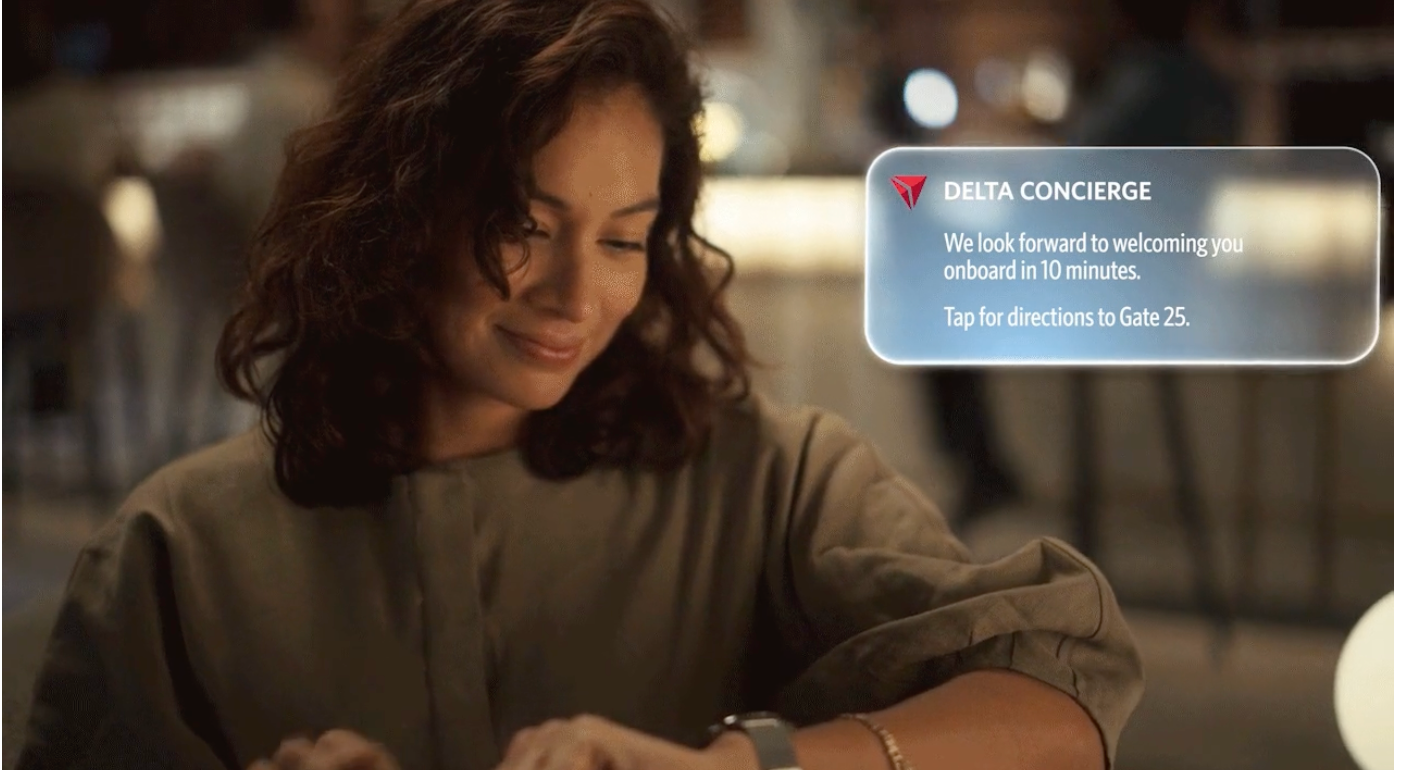
“Our vision for Delta Concierge is that it will serve as an AI-powered personal assistant that combines the context of who our customers are and how they like to travel with the deep knowledge and insights we’ve built as the world’s most reliable airline.”
-Ed Bastian, CEO, Delta Airlines
Earlier this year, Delta Airlines introduced Delta Concierge to deliver personalized insights that connect customers more meaningfully to their travel journey.
Using advanced generative AI, Delta Concierge automates and orchestrates timely, relevant messaging throughout the travel lifecycle. It continuously analyzes traveler data and context to trigger automated communications such as passport expiration reminders, visa alerts, and destination-specific notifications like weather updates.
These updates are delivered flawlessly across email, app push notifications, and SMS.
Delta Concierge is a sophisticated form of marketing automation where AI-driven personalization predicts needs, triggers communications, and delivers consistent experiences across channels.
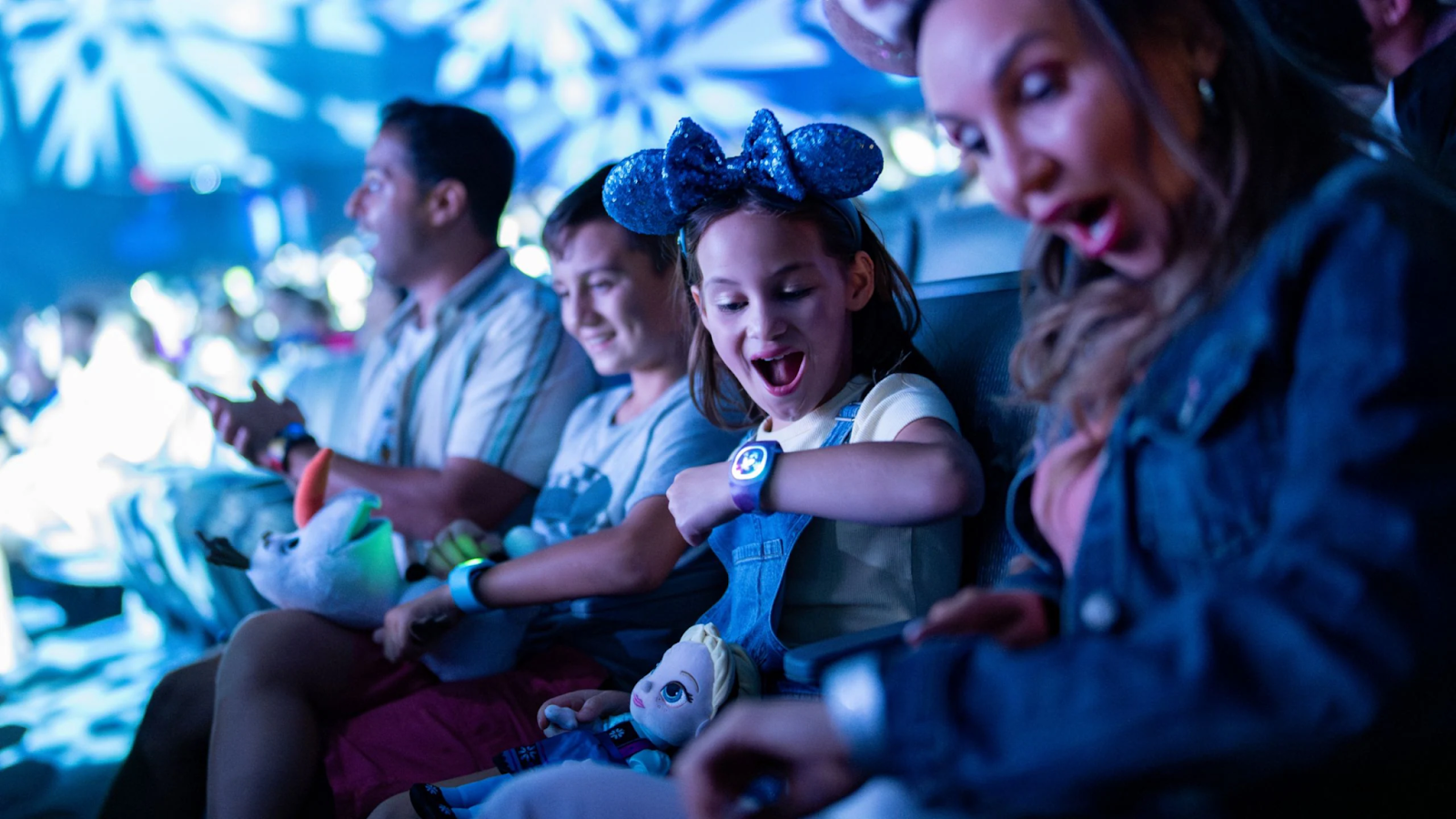
Disney World takes personalization to a whole new level with its IoT tech. Using wearable devices called MagicBands, Disney collects real-time data on guest locations, preferences, and interactions throughout the park.
This data feeds into an automated marketing system that sends contextually relevant messages and offers based on where guests are and what they like.
For example, if a guest enters a particular park zone, an automated message notifies them of nearby ride wait times, upcoming shows, or special dining promotions. This hyper-contextual approach keeps guests engaged and optimizes their experience by personalizing communications in real time.
Automated workflows integrate these insights across guests’ mobile apps, SMS, and Disney’s MyMagic+ platform.
Disney World’s strategy also reinforces loyalty by continually adapting offers based on changing guest feedback and behavior throughout their visit.
“Our ambition is to be the world’s leading digital airline.”
- Marvin Tan
George Wang, Senior VP, Information Technology at Singapore Airlines.
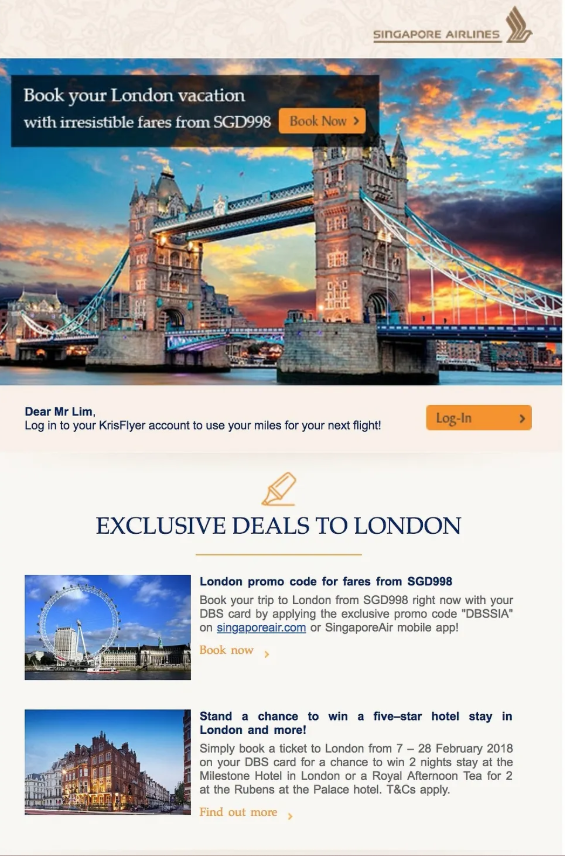
True to this vision, Singapore Airlines leverages marketing automation to create a personalized travel experience before passengers even step on board.
They use customer data to understand and customize meal options and service preferences for frequent flyers.
Travelers also receive personalized offers tailored to their past journeys, loyalty status, and travel behavior.
Singapore Airlines sends automated email campaigns, push notifications, and app messages to make sure travelers feel seen and valued. These marketing efforts reinforce brand loyalty while creating a seamless, stress-free travel experience.
One thing all these leading travel brands have in common is their foundation in data-backed marketing automation.
Every personalized email, timely push notification, and contextual offer stems from deep, data-driven insights into customer behavior.
Whether it’s Hilton syncing loyalty data across thousands of properties or Disney triggering real-time messages in the park, these brands thrive because their automation is powered by a single source of truth—customer data.
But is collecting data alone enough?
The answer is no.
The real magic lies in connecting that data across channels and using it to deliver experiences that feel effortless and intuitive. That’s why it’s crucial to choose a platform that brings data and marketing automation together seamlessly.
ZEPIC does exactly that. It helps travel brands unify customer engagement data across apps, websites, and various touchpoints, turning fragmented information into actionable insights. With ZEPIC, you can:
Build dynamic traveler segments based on interests, booking history, and behavior.
Automate personalized campaigns across email and WhatsApp
Track every customer journey and optimize campaigns with real-time analytics.
When data and automation work hand in hand, personalization becomes scalable—and every customer feels like a VIP.
Book a demo today and learn how ZEPIC can help you.

%201.png)


.png)