Meet

Neura HQ,
Your connected AI Agent Workforce Know more



TLDR
A decade ago, fashion brands relied on static websites and high-gloss lookbooks to drive sales. But today, the landscape has shifted toward a "Social-First" acquisition model where the journey from discovery to checkout happens entirely within the social ecosystem. The global social commerce market is valued at $1.63 trillion and is projected to grow at a CAGR above 30%, driven by in-app shopping and creator-led sales.
However, a huge engagement gap still exists for many labels. While fashion brands often have high follower counts on their Instagram accounts and millions of Reel views, it doesn’t translate into revenue because these followers are not moved further along the buyer journey.
This could be because of many reasons, like limited manpower, lack of timely replies, or high volume of comments and DMs on viral posts.
Instagram automation is the key to solving all these problems and converting a follower into a paying customer. It allows brands to handle a global consumer base 24/7 without increasing headcount.
In this guide, we’ll explore how Fashion brands can increase sales with Instagram Automation.
The modern fashion consumer does not "go shopping" in the traditional sense; they are always shopping.
Studies show that 82% of consumers use social media platforms to discover and research products, 40% of these customers are using Instagram to find a product.
For Gen Z, this behavior is even more pronounced, with 40% of the demographic starting their product searches on social platforms like Instagram and TikTok rather than on search engines or traditional marketplaces.
That’s why Time-to-Response (TTR) can make all the difference for fashion brands. In an environment where attention is the primary currency, a delay of even a few minutes can lead to a lost sale. Data indicates that brands responding to customer inquiries in under one minute see a 4x higher conversion rate than those that wait even ten minutes.
Modern consumers treat social media interactions as live retail experiences. If a boutique assistant on a physical shop floor ignored a customer’s question for an hour, that customer would walk out. Automation ensures your digital doors never close and your digital assistants never miss a beat.
For years, the "Link in Bio" was the go-to tactics for Instagram marketing. Unfortunately, this method is fundamentally flawed for modern acquisition.
When a user clicks a link in your bio, they are often redirected to a generic homepage or a cluttered link tree. This forces the consumer to search for the specific item they originally saw, creating attention residue where the initial impulse to buy fades under the weight of navigation.
Direct-to-DM Instagram strategy eliminates this navigation tax. Rather than asking a user to leave their current experience, automation allows you to bring the storefront to them. This involves using Contextual Deep Linking. When a user interacts with a post, the automation triggers a DM that sends a Shoppable Product Card for the exact item featured.
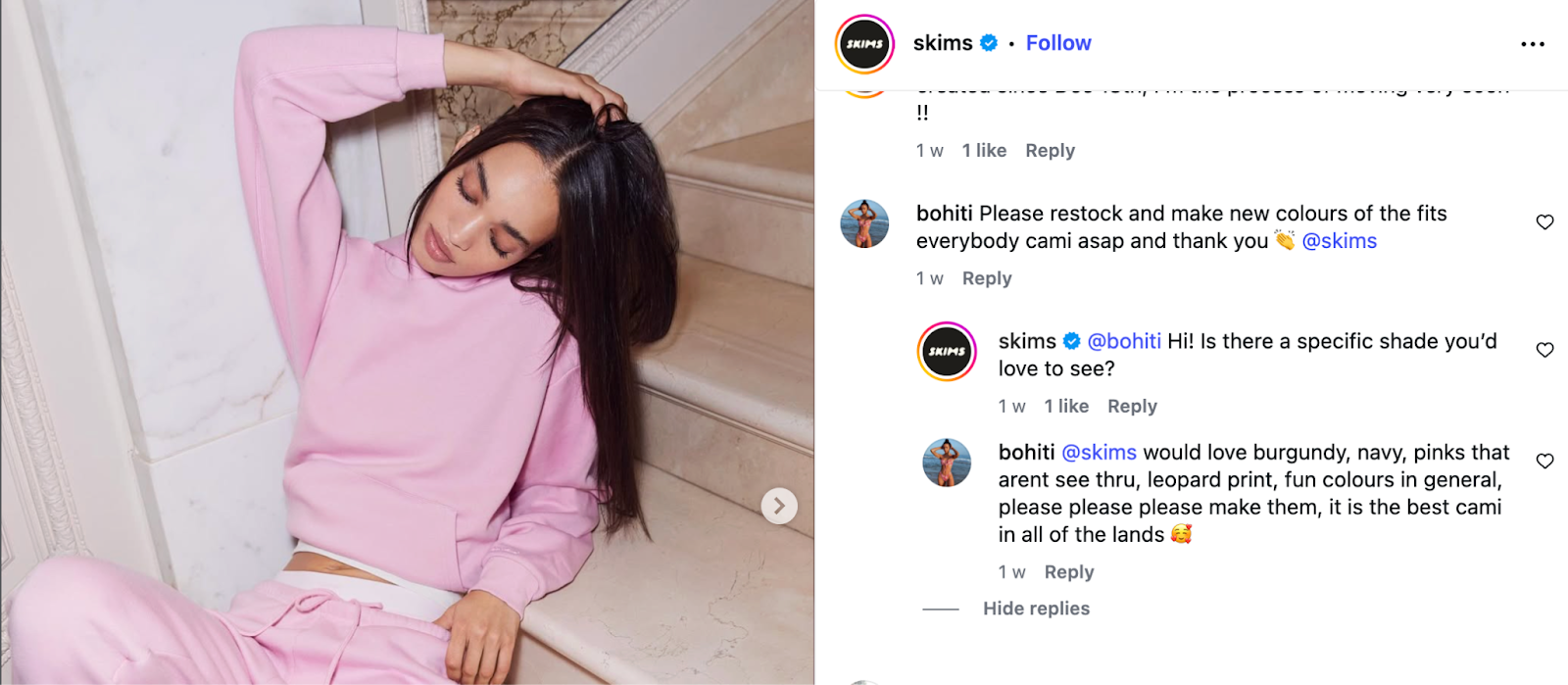
Imagine a high-end label posts a Reel featuring their new Mauve Silk Wrap dress. A follower comments, "Love this color! Is it in stock?" In a manual world, a social media manager might reply three hours later with "Link in bio!" However, with an automated Instagram workflow, the moment that the comment is posted, the user receives a private message.
This message goes beyond sending a link and shares a rich media card showing the dress in the Mauve color with a "Buy Now" button. This removes three to four steps from the traditional funnel, capturing the user at the peak of their intent.
The transition from basic keyword matching to intent-based automation has changed how brands interact with their community.
Old-school automation relied on rigid "keyword" triggers. If you told users to "Type DRESS for the link," and they typed "dres" or "I love that dress," the bot would fail to respond.
Even if the comment is negative, but has the keyword, the automation would trigger a standard response, irrelevant to the comment.
In 2026, Natural Language Processing (NLP) allows systems to recognize sentiment and intent. So, depending on the intention of the comment, AI models can now respond with the right response.
Luxury fashion has always been defined by the personal touch. The challenge for premium brands is maintaining that white-glove experience while scaling to millions of followers. This is where AI Virtual Stylists come into play. These are sophisticated automated flows that mimic the consultative approach of an in-store personal shopper.
The Three-Phase Stylist Workflow:
A million followers is a vanity metric if you do not know who they are. In 2026, the deprecation of third-party cookies has made "First-Party Data" (data you own) more valuable than ever.
Instagram DMs are the perfect environment for capturing this data. Instead of sending users to a complex web form, you can use automated chat flows to gather information:
After capturing an email address or a phone number within the DM thread, you can create a unified profile. This means even if the Instagram algorithm changes or your account faces issues, you still own the relationship. You have successfully moved the customer from a "borrowed" platform (social media) to an "owned" channel (your database).
You can then trigger email and WhatsApp campaigns to nudge the customers towards a sale.
Automation is the engine, but content is the fuel. To maximize customer acquisition, your content must be designed with social signals in mind. This means moving away from content that just asks for "Likes" and toward content that encourages specific interactions that trigger automation.
Use text overlays that address a specific pain point. For example, a video titled "The only 3 coats you need for sub-zero weather" identifies a problem and offers a solution. You can then invite users to comment "WINTER" to receive a personalized winter wardrobe guide via DM. This turns a passive viewer into an active lead in seconds.
Stories are one of the most underrated tools for acquisition. Let’s say you post an Instagram Story asking followers whether their aesthetic is minimalist aesthetic or maximalist. Immediately after they vote, they receive a DM: "We noticed you're a fan of the minimalist look! Here is an exclusive first look at our upcoming Minimalist Collection."
User-Generated Content (UGC) is the strongest form of social proof. In 2026, 56% of Gen Z and Millennials report making a purchase based on a creator or peer recommendation. You can automate a "Thank You" message and a unique discount code whenever a user tags your brand in their Story. This encourages more customers to share their purchases, creating an organic acquisition loop that requires zero manual effort from your team.
To execute these advanced strategies at scale, fashion brands need a platform that goes beyond basic bots. This is where ZEPIC differentiates itself as a leader in the Instagram automation space. Many tools on the market require you to set up automation for each post individually, which is time-consuming and not scalable.
ZEPIC allows for account-wide global automation. This means you can set universal rules for your entire Instagram presence. If a customer comments on a post from six months ago asking about shipping to the UK, ZEPIC’s system recognizes the intent and provides the answer instantly. This ensures that your entire content library remains "shoppable" forever, not just for the first 24 hours after posting.
Most automation tools struggle with the nuances of human language. Zenie AI, ZEPIC’s advanced AI, uses sophisticated Natural Language Processing to understand slang, typos, and nuanced inquiries. It understands that a comment like "Need this for my hols!" is a high-intent request for a vacation-wear link. It provides the same sales-focused response as it would for a formal inquiry, ensuring no opportunity is missed because of a typo or a casual tone. It also supports over 40 languages.
The most significant advantage of ZEPIC is its foundation as a Customer Data Platform (CDP). It does not just send messages; it connects identities. Once you use the automation to get their email ID and WhatsApp number, you can add them to a unified profile on ZEPIC. If a user tells your AI Virtual Stylist on Instagram that they prefer "boho chic," You can make sure that the next email or WhatsApp campaign that user receives is populated with boho-style products. With ZEPIC’s Team Inbox, you can see messages from both WhatsApp and Instagram in one place.
For high-volume fashion brands, this helps in setting up complex customer journeys—from initial discovery to automated order tracking—to happen entirely within the ZEPIC ecosystem. This provides a seamless, friction-free experience that modern shoppers demand.
|
Focus Area
|
Acquisition Tactic
|
Expected Impact
|
|---|---|---|
|
Discovery
|
Comment-to-DM Global Flows
|
25% Increase in Click-Through Rates
|
|
Selection
|
AI Virtual Stylist Carousels
|
15% Increase in Average Order Value
|
| Engagement |
Interactive Stories
|
3x Increase in Lead Capture
|
|
Management
|
ZEPIC Intent-Based Automation
|
80% Reduction in Customer Support Hours
|
The future of fashion acquisition is conversational, automated, and deeply personal. As we navigate the complexities of the 2026 retail market, the brands that win will be those that prioritize the customer’s time and ease of purchase. By removing the friction of the "Link in Bio," leveraging the power of AI stylists, and utilizing a robust Instagram automation platform like ZEPIC, your brand can turn every social interaction into a measurable growth asset.
The technology exists to make every follower feel like they have a personal shopper in their pocket. The only question is how quickly you will implement it to stay ahead of the curve.
Book a demo today to convert your followers into customers.
A common misconception is that automation makes a brand feel robotic. In practice, modern AI-driven systems enable a high level of personalization. Authentic engagement is driven by relevance and speed. If a customer asks a question at 2:00 AM, an instant, helpful automated reply often feels more authentic than a delayed human response. To maintain brand voice, automated messages should be written using your brand’s specific tone, language, and vocabulary.
Safety depends on using tools that integrate through the official Meta Instagram Graph API. Avoid any software that requires your Instagram password or relies on scraping. Approved platforms follow Meta’s strict rate limits and usage policies. In addition, focus automation on inbound actions such as comments, Story replies, and direct messages rather than outbound mass messaging. This keeps your account compliant while engaging users who have already shown intent.
Yes. For high-ticket products, automation should support, not replace, human sales teams. Automation can qualify leads and deliver instant value, such as allowing customers to book a private in-store appointment or access a high-resolution digital lookbook. This creates a white-glove experience delivered at digital speed.
Start by switching your Instagram profile to a Business or Creator account. Next, connect your Instagram account to your Facebook Page and configure your product catalog in Meta Commerce Manager so automation can access real-time product data. Choose a Meta-approved automation platform that uses the official API. Define your triggers, such as comment intent, Story replies, or new followers. Build message flows using a visual builder, include rich media and clear calls to action, and always set up a human handoff option for complex queries. Finally, test thoroughly and monitor conversation-to-cart performance to continuously refine your flows.
Key performance indicators include Conversion Rate (CVR), which measures the percentage of automated DM conversations that result in a purchase. In 2026, typical social CVR ranges from around 0.7% for luxury brands to 3.6% for mass-market apparel. Time-to-Response (TTR) tracks how quickly users receive replies and should fall below 60 seconds with automation. Customer Acquisition Cost (CAC) often drops by 30–50% because automation scales without increasing headcount. Another critical metric is First-Party Data Capture Rate, which measures how often email addresses, phone numbers, or preferences are successfully collected for your CRM.

%201.png)


.png)