Meet

Neura HQ,
Your connected AI Agent Workforce Know more



TLDR:
WhatsApp has moved far beyond a simple messaging app and has become the most powerful direct-to-consumer communication channel available. With open rates often exceeding 90 percent, businesses are moving away from crowded email inboxes and focusing their efforts where customers actually spend their time.
Choosing the right WhatsApp marketing software is a necessity for modern D2C brands. The right tool allows you to send bulk messages without getting banned, automate customer journeys, and provide instant support through a shared team inbox.
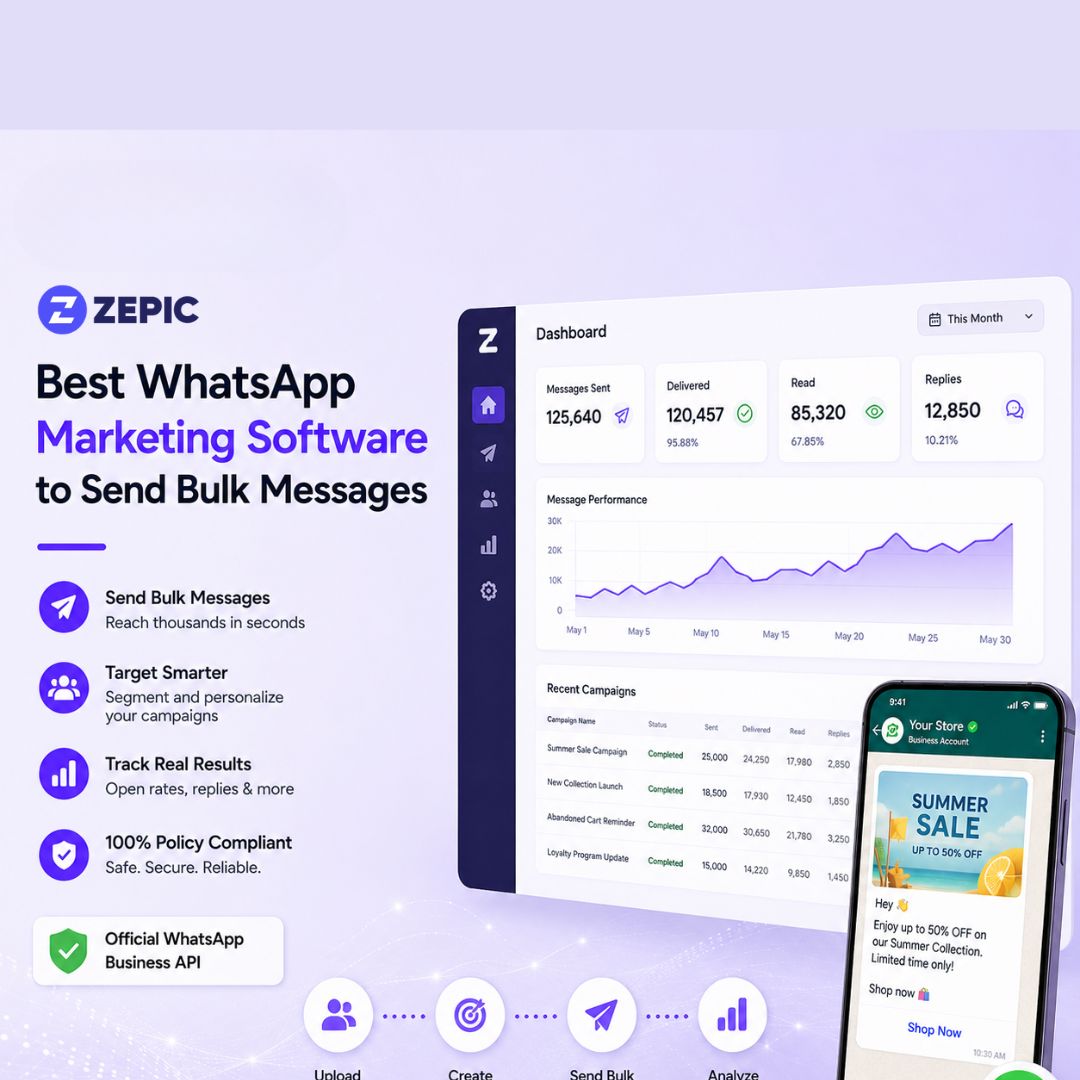
In 2026, bulk WhatsApp messaging is strictly regulated by Meta to prevent spam. Sending thousands of messages from a personal phone number will result in an immediate ban. That’s why professional marketers use the WhatsApp Business API.
The process typically follows these steps:
| Tool | Key Features | Other Channels | Best Suited For |
|---|---|---|---|
| ZEPIC | Zenie AI campaign creator, WhatsApp Coexistence (App + API), Unified Customer Data Platform (CDP), WhatsApp chatbot with intent-based automation, and webhook integrations. | Email, Instagram | Data-driven Ecommerce & D2C brands needing deep personalization. |
| Wati | No-code chatbot builder, shared team inbox, automated broadcasts, and AI support agents. | Instagram, Facebook, Web Chat | SMBs looking for easy automation and customer support scaling. |
| Interakt | Native Shopify integration, product catalog sync, automated cart recovery, and Blue Tick support. | Shopify merchants focused on sales and transaction automation. | |
| AiSensy | No-code workflow automation, multi-agent dashboard, and smart campaign manager. | WhatsApp (Native) | Small businesses needing a simple, automation-first approach. |
| ManyChat | Visual drag-and-drop flow builder, keyword triggers, and AI-powered intent recognition. | FB Messenger, Instagram, SMS, TikTok | Marketers focused on lead generation and interactive chatbots. |
| Twilio | Robust developer APIs, WhatsApp Voice Calling, and global high-volume infrastructure. | SMS, Voice, Video, Email | Enterprise companies with dedicated engineering teams for custom builds. |
| Bird | Omnichannel flow builder, real-time data management, and enterprise-grade security. | SMS, Email, Voice, Instagram | Large organizations requiring unified omnichannel communication. |
| Brevo | All-in-one CRM, unified contact lists, and coordinated Email/SMS/WhatsApp workflows. | Email, SMS, Web/Mobile Push, Live Chat | Growth-stage businesses wanting to manage all marketing in one CRM. |
| Gallabox | AI Copilot for sales, WhatsApp native payments, and collaborative shared inbox. | Sales-driven teams and service businesses (especially in the Indian market). | |
| DelightChat | Omnichannel helpdesk, automated COD verification, and Shopify-specific support tools. | Instagram, Facebook, Email, Live Chat | D2C founders managing high-volume support and retention on Shopify. |
ZEPIC stands out as the most intelligent option for brands that value data-driven marketing. It is a comprehensive Marketing Operating System that combines a built-in Customer Data Platform (CDP) with powerful WhatsApp automation.
ZEPIC unifies your data from every source: your website, your POS system, and your support tools. This creates a 360-degree view of every customer. Instead of sending a generic broadcast, you can send hyper-personalized messages based on specific purchase history or browsing patterns.
Key Features:
Best For: Ecommerce and D2C brands that want to move beyond basic messaging and start using sophisticated, data-backed automation.
Wati is a popular choice for small to medium-sized businesses focusing primarily on customer support and basic marketing. It is built on the WhatsApp Business API and offers a very clean, user-friendly interface.
Key Features:
Interakt is specifically designed for businesses using Shopify. It focuses on turning WhatsApp into a sales channel by integrating directly with your store's product catalog.
Key Features:
Best For: Small Shopify merchants who need a straightforward way to handle orders and simple broadcasts.
Aisensy is a no-code platform that prides itself on its simplicity. It offers a transparent pricing model where you pay for the platform, and your Meta conversation charges without hidden markups.
Key Features:
While ManyChat started as a Facebook Messenger tool, it has become a powerhouse for WhatsApp automation. It is famous for its visual "flow builder" that allows for highly interactive chat experiences.
Key Features:
Best For: Marketers who want to build complex, interactive chatbots to qualify leads.
Twilio is the preferred choice for companies with large engineering teams. It is not a plug-and-play software but rather a set of APIs that allow you to build your own custom WhatsApp solution.
Key Features:
Bird is an omnichannel platform that handles WhatsApp, SMS, and Email. It is built for larger organizations that need to coordinate messaging across several different countries and channels.
Key Features:
Best For: Large enterprises that need a single provider for all their communication needs.
Brevo has expanded from an email-first platform into a full CRM that includes WhatsApp marketing. This is a great choice if you want to manage your email newsletters and WhatsApp broadcasts from one dashboard.
Key Features:
Best For: Businesses that want to keep their email and WhatsApp marketing under one roof.
Gallabox focuses heavily on the collaborative aspect of WhatsApp. It is designed for sales and support teams that need to work together on customer conversations.
Key Features:
Best For: Service-based businesses and sales teams in the Indian market.
DelightChat is an omnichannel support tool built for D2C brands. It simplifies the process of managing customer queries from WhatsApp, Instagram, Facebook, and Email in a single view.
Key Features:
Best For: D2C founders who are currently overwhelmed by customer support messages across different apps.
When you are evaluating different WhatsApp marketing software for bulk messaging, look beyond the basic ability to send a message. Consider these:
Your software should let you group customers based on their behavior. If a customer abandoned their cart on your website, they should receive a different message than a loyal customer who has purchased five times.
The tool must talk to your existing tech stack. Look for native connections to Shopify, WooCommerce, or your CRM. This ensures your WhatsApp campaigns are triggered by real-world actions like a new order or a support ticket.
As you send more bulk messages, you will receive more replies. A shared inbox allows multiple agents to respond to queries simultaneously. Look for features like internal notes, chat tagging, and agent assignment.
Modern tools include AI assistants that help draft message copy or suggest replies to customer questions. Automation builders should be visual and easy to use, allowing you to create complex "if-this-then-that" journeys without writing code.
Selecting a platform is a long-term decision. Switching providers later can be difficult because you may lose your chat history and automation logic. Use these criteria to make your choice:
If you have a developer team, Twilio might be the right fit. However, if you are a marketer who wants to launch a campaign this afternoon, a no-code platform like ZEPIC or Wati is much better.
Does the software sync with your store? If you use Shopify, ensure the tool has a deep integration. It should be able to see when a customer buys a specific product, so you can send them a "How-to" guide automatically.
A tool that works for 1,000 contacts might become very expensive or slow when you have 100,000. Look for pay-as-you-grow pricing models that charge based on usage rather than the number of contacts you store.
Marketing and Support are two sides of the same coin on WhatsApp. Ensure the tool provides a high-quality team inbox. If a customer replies to your marketing broadcast with a question, your support team must be able to see it and respond immediately.
Ecommerce brands have specific needs that generic messaging tools often overlook. In 2026, successful D2C brands use WhatsApp for the entire customer lifecycle:
ZEPIC's WhatsApp marketing is particularly effective here because it understands the context of these interactions. It knows that a customer who just bought a pair of shoes doesn't need a discount code for those same shoes an hour later. Instead, it can suggest a complementary product like socks or cleaning kits.
Many businesses make the same errors when they first start with WhatsApp marketing. Avoiding these will save you time and protect your brand reputation.
Some grey market tools claim to let you send unlimited messages for a one-time fee. These tools work by scraping WhatsApp or using unofficial browser extensions. Using these is a guaranteed way to get your phone number permanently banned by Meta. Always use an official WhatsApp Business API provider.
Because open rates are so high, it is tempting to send messages every day. This is the fastest way to get blocked. Treat the WhatsApp inbox as a sacred space. Only send messages that provide genuine value, such as order updates, exclusive deals, or helpful content.
In 2026, Meta requires every marketing message to have a clear way for the user to stop receiving updates. If your software does not make it easy for users to opt out, your "spam report" rate will climb, and Meta will lower your messaging limits.
If your WhatsApp tool doesn't know what your email tool is doing, you will annoy your customers. You might send them an email discount and then a WhatsApp reminder for the same thing ten minutes later. Choose a platform like ZEPIC that unifies these channels so your messaging is coordinated.
WhatsApp marketing in 2026 is about more than just sending bulk messages. It is about creating a personalized, conversational experience for every customer. The gap between "batch and blast" marketing and "1:1 personalization" is closing, thanks to AI and integrated data platforms.
If you are a growth-focused brand that wants to leverage data for higher ROI, a comprehensive solution like ZEPIC is the smarter choice.
By unifying your customer data and using AI to handle the heavy lifting of campaign creation, you can turn WhatsApp from a simple chat app into your most profitable sales channel. Start by defining your goals: is it better support, more sales, or higher retention? Once you know your goal, pick the tool that makes achieving it as simple as possible.
Ready to try ZEPIC? Book a demo today!
Yes — but only when done through the WhatsApp Business API with verified business accounts and customer opt-in consent. Sending unsolicited bulk messages from personal numbers can result in permanent bans.
The WhatsApp Business API enables companies to send approved message templates, automate customer journeys, and manage conversations at scale. It ensures compliance with Meta policies while supporting large-volume messaging.
Yes. Use an official API provider, send messages only to opted-in users, follow template approval rules, and maintain low spam complaint rates to protect your messaging limits.
Costs vary by provider and usage. Businesses typically pay:
● Platform subscription fees
● Meta conversation charges (per 24-hour conversation window)
● Optional automation or AI add-ons
Pricing scales with messaging volume and features.
Platforms such as ZEPIC, Interakt, DelightChat, and Gallabox are well-suited for ecommerce, offering cart recovery automation, order updates, personalized recommendations, and customer lifecycle messaging.
Meta assigns messaging tiers based on quality and engagement. Limits typically grow from 1,000 to 10,000, 100,000, and eventually unlimited messaging as trust improves.
Yes. Most modern tools integrate with e-commerce platforms, CRMs, and support systems to trigger automated messages based on purchases, support tickets, or customer behavior.
Yes. Businesses must obtain explicit consent before sending promotional messages. Opt-in can be collected through website forms, checkout checkboxes, or Click-to-WhatsApp ads.
Send relevant and personalized content, avoid excessive messaging, provide clear opt-out options, and focus on value-driven communication such as order updates, exclusive offers, and helpful reminders.

%201.png)


.png)