Meet

Neura HQ,
Your connected AI Agent Workforce Know more



.png)
If you run an online store, you’re no stranger to cart abandonment: the frustrating moment when a customer adds items to their cart, then walks away without purchasing. It happens to everyone, everywhere, and accounts for nearly 70% of all online shopping carts.
That means a huge chunk of potential revenue is just slipping away, often for reasons you can’t fully control. But it’s not all bad news; cart abandonment emails are your trump card to turn those “almost” buyers into actual buyers. And getting them right is all about a few smart, strategic moves.
Read on to learn more about some best practices for creating cart abandonment emails.
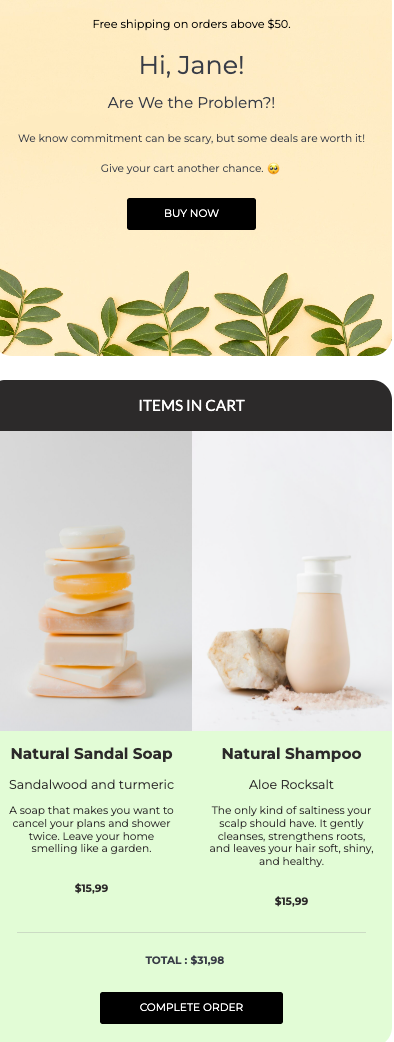
Cart abandonment represents real, valuable customers who got cold feet before checkout. Shoppers who leave after adding items to their cart have already shown serious interest. They spent the time browsing through the catalog and selecting the products they wanted. Their actions essentially indicate a desire to buy, but something stopped them. Maybe it was high shipping costs, slow delivery estimates, or they were just distracted. Whatever the reason, your cart abandonment emails are your chance to step in, re-engage, and close the deal.
Statistics show you can recover anywhere from 16% to 20% of these abandoned transactions with the right follow-ups.
A blanket approach—slapping the same discount on every abandoned cart—can desensitize customers and affect your revenue. Instead, think strategically about who gets what message and when.
You can segment them based on:
When you send your cart abandonment email can make or break your cart recovery. Here’s what you can do:
First email: Send it 1 to 4 hours after abandonment. This is when shoppers are likely still thinking about their cart but have been distracted.
Follow-ups: Send a second email 24 hours later and a third around 48 to 72 hours after that. Each email nudges them closer to purchase without overwhelming their inbox.
Remember to stop sending emails once the purchase is complete to avoid annoying loyal customers.
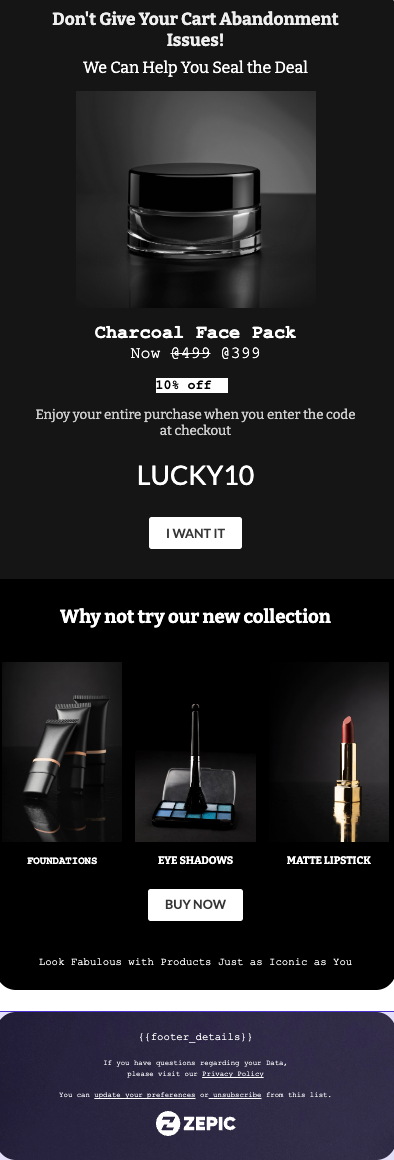
Your email copy needs to be compelling and clear to close the sale. You can start by:
Crafting compelling subject lines is an important element in increasing open rates for cart abandonment emails. These subject lines must immediately catch attention and evoke urgency.
Effective Cart Recovery Subject Line Strategies
Test your email subject line to make sure your cart reminder emails have a fighting chance.
Sometimes, a little incentive is just the push your customers need. Whether it’s a discount, free shipping, or a bonus gift, incentives nudge hesitant buyers to convert.
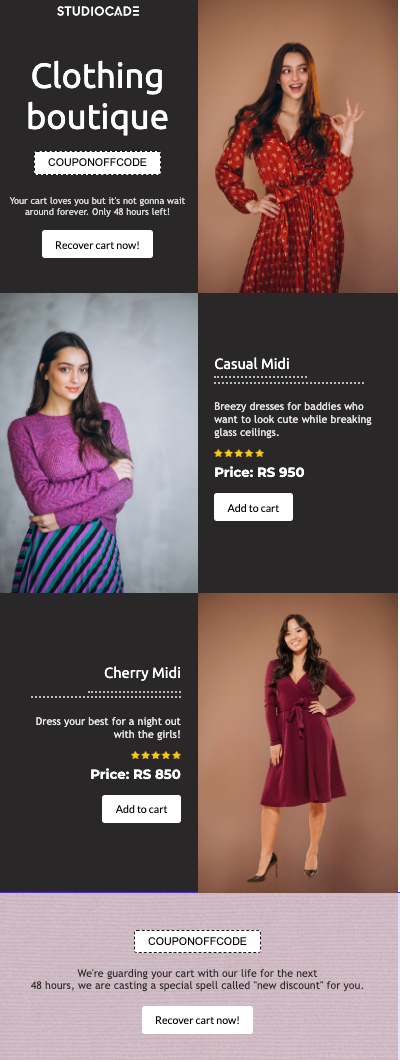
Timely Discounts: Offer a percentage off or a fixed amount if they complete their purchase within a limited window. Send them coupon codes in the cart recovery email to simplify the process.
Free Shipping: Often, shipping costs are the biggest culprit in cart abandonment. A free shipping offer at checkout can tip the scales.
Exclusive Bonuses: Loyalty points, early access, or freebies can provide added value without eroding margins too much.
Personalization is a foundational element of effective cart abandonment emails. Beyond inserting the customer’s name, emails should dynamically reflect the exact products left behind, including images, descriptions, and prices.
You can make it more sophisticated with customized content based on previous purchase history, browsing behavior, and engagement metrics.
This level of relevance shows customers you know their preferences and increases both open rates and click-throughs.
Most shopping happens on phones today, so your cart abandonment emails need to look good on small screens. Use high-quality images, bold buttons, and concise copy. Your CTA should be large and easy to click.
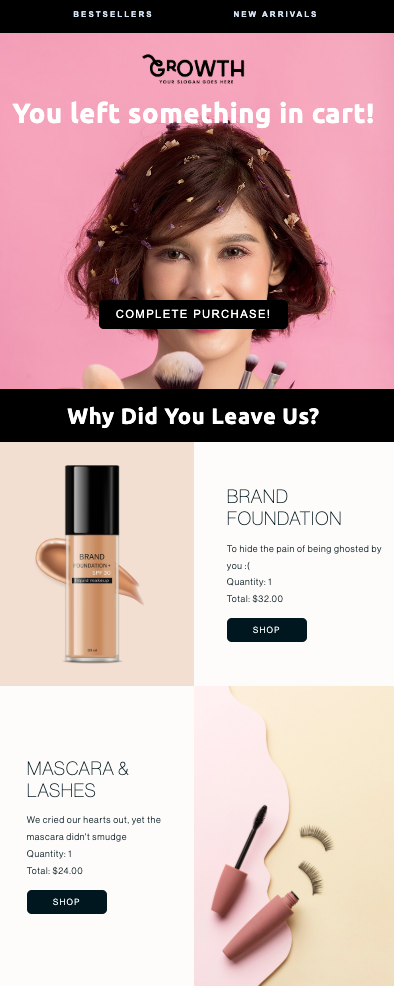
Minimalist layouts work well. So go for clean and uncluttered layouts. If your email looks good and loads fast on a smartphone, your chances of cart recovery go up.
Once you set your campaigns live, monitor performance closely. Metrics to track:
And don’t forget A/B testing. Try different subject lines, timings, incentives, and designs to find what works best.
Combine WhatsApp with traditional cart recovery emails for a multi-channel approach. Start with a timely WhatsApp message shortly after abandonment, followed by a series of personalized emails. This layered approach increases the chances of engaging customers on their preferred platform and recovering sales.
When it comes to executing sophisticated cart abandonment campaigns, the platform you use can make all the difference.
Unified Customer Data: ZEPIC’s built-in Customer Data Platform (CDP) consolidates fragmented data from your e-commerce store, CRM, and other touchpoints into a single 360-degree customer view. This means your cart recovery messages—across email, WhatsApp, and beyond—are always relevant and personalized.
AI-Driven Automation: With its Zenie AI assistant, ZEPIC automates campaign creation, segmentation, and optimization. You get smart workflows that adjust based on real-time customer behavior, without relying on a technical team.
True Omnichannel Engagement: ZEPIC seamlessly integrates email and WhatsApp cart recovery flows to capture customers wherever they prefer to engage.
User-Friendly Interface: Whether you’re a solo marketer or part of a growing team, ZEPIC’s intuitive platform makes setting up, tracking, and optimizing automated campaigns painless. No steep learning curve or confusing dashboards.
Cart abandonment recovery is all about timing, personalized messaging, multi-channel reach, and ongoing optimization.
ZEPIC bundles all these capabilities into one platform, helping you reclaim lost revenue at scale while keeping your campaigns smart, agile, and customer-centric. Book a demo today!

%201.png)


.png)