Meet

Neura HQ,
Your connected AI Agent Workforce Know more



TL/DR:
“To travel is to evolve.” – Pierre Bernardo
The travel industry has always been about the "dream" of sun-drenched beaches and misty mountain peaks. But behind those glossy brochures and Instagram reels, it's a whirlwind of manual emails, endless phone tags, and frantic spreadsheet juggling.
Enter AI agents. While the industry spent the last decade flirting with basic chatbots that handle simple requests, 2026 marks the era of the Agentic Traveler Journey. Unlike their predecessors, AI agents can now reason and navigate complex APIs to help travelers book flights, tweak itineraries, or chase refunds—all without breaking a sweat or needing a human handoff.
Let’s dive into some transformative use cases where AI agents are turning the travel dream into a frictionless reality across marketing, sales, and customer service.
Think of an AI agent as a digital concierge with a PhD in your specific business operations. While a standard chatbot follows a rigid "if this, then that" decision tree, an AI agent uses generative intelligence to understand intent. In fact, research suggests that over 70% of customer service managers are using generative AI to analyze customer sentiment.
In the travel & hospitality industry, this means an agent can look at a customer’s previous trips, check real-time weather patterns in the Maldives, cross-reference flight availability, and suggest a personalized itinerary—all in one conversational flow. They are autonomous entities capable of executing tasks across different platforms, whether that’s updating a CRM, sending a WhatsApp confirmation, or triggering a personalized discount code.
The Amazon effect has officially hit tourism. Modern travelers expect instant gratification. However, with global passenger traffic projected to hit record highs this year, brands can't rely on humans alone to keep up—response times have shrunk to seconds, and AI agents deliver just that.
Generative AI could unlock between $2 trillion and $4 trillion in annual value across global industries
Travel brands are pivoting to agents because:
“Tourists don’t know where they’ve been, travellers don’t know where they’re going.” – Paul Theroux
Adding Marketing in travel is all about sparking wanderlust, but AI agents make it stick by turning casual scrolls into committed clicks.
Did you know that around 25% of consumers want brands to use AI to personalize their experience?
Instead of showing a generic "Summer Deals" banner, AI agents analyze real-time behavior. If a traveler spent ten minutes reading your blog about "The Best Hidden Treks in the Himalayas," the agent can proactively suggest a bespoke trekking package via a website overlay or a WhatsApp message. It’s not just an ad; it’s an answer.
AI agents can segment your audience dynamically. If someone clicks a link about "family-friendly resorts," the agent notes this intent and ensures every subsequent touchpoint (from social ads to email headers) features kids' clubs and kiddy pools rather than candlelit dinners.
We’ve all window-shopped for flights. A smart AI agent can trigger a helpful, witty follow-up: "Still dreaming of Kyoto? The cherry blossoms won't wait forever, and neither will this 10% discount." It keeps the conversation alive without the "spammy" vibe of a traditional drip campaign.
Agents can scan social engagement to see which influencers' content is driving the most actual booking intent. By connecting your social data to your CRM, an AI agent can identify "high-intent" followers and send them a personalized invitation to book, bridging the gap between a "like" and a "check-in."
“Travel is like a giant blank canvas, and the painting on the canvas is only limited by one’s imagination.” – Ross Morley
Sales in travel is often a game of "hurry up and wait." AI agents remove the "wait," turning curiosity into a confirmed reservation.
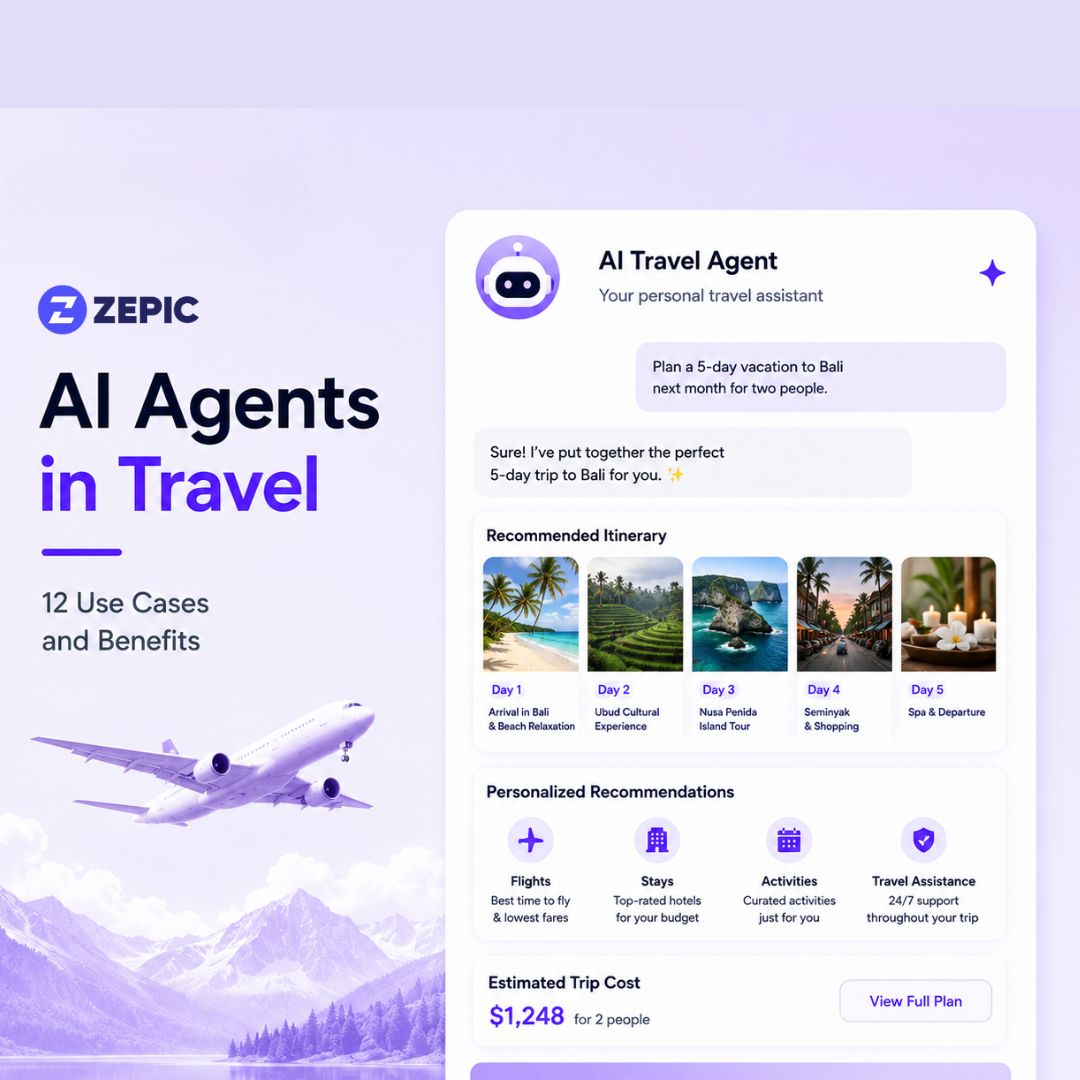
Research suggests that around 85% of travelers want to create their own travel plans. AI agents are perfect to satisfy this need. Instead of a generic search query ("I want a 4-day trip for two, budget-friendly, involving nature") providing 500 overwhelming options, an AI agent can build a bespoke itinerary. It’s like having a travel agent in your pocket who never needs a sleep break or a coffee refill.
Once a plan is discussed, the AI agent can instantly generate a mobile-friendly link with the full breakdown—including photos, maps, and live pricing. No more "I'll email that to you by the end of the day." By the time the traveler finishes their call, the plan could be in their inbox.
"Is the pool open in March?"
"Is there a room with a balcony available for these dates?"
AI agents pull this data directly from your Property Management System (PMS). They can even offer dynamic "nudge" pricing to keep the deals fresh. For example, a hotel can offer a slight dip in its pool for last-minute beach lovers dodging a storm back home. These timely whispers can result in booking spikes.
From cart abandonment to final confirmation, agents step in seamlessly. A simple reminder for a traveler hesitating on add-ons will nudge them with options like "Add travel insurance for just $5 more—peace of mind included?" They handle payment hiccups, verify details, and confirm bookings across channels, slashing abandonment rates by keeping the momentum alive. One hotel chain saw a 15% uptick in conversions just by letting agents manage the final push.
This is where AI agents truly earn their stripes—turning potential crises into "wow" moments that build lifelong loyalty.
Travelers bombard teams with basics: "Do I need a visa?" or "What's the baggage limit?" Agents draw from policy docs, flight data, and past queries to deliver instant checklists right on Instagram DMs. Picture a backpacker getting a full packing list, visa links, and weather alerts in one chat—handled 24/7 without a yawn.
A trip can go from a dream to a headache in a single flight delay. This is where AI agents transition from helpful assistants to absolute lifesavers. Instead of making the traveler hunt for a flickering departure board, the AI agent pushes a proactive notification: "Your flight to Paris is 40 minutes late, but don't worry—your airport transfer has already been notified and will wait for you at the arrivals gate." This level of foresight turns a stressful delay into a minor footnote.
Travel happens, and so do changes. Traditionally, canceling a trip meant navigating a labyrinth of pressing numbers and connecting with agents. AI agents automate this tedious process by instantly checking policy rules, calculating fare differences, and processing the change. They can even offer credit vouchers or alternative dates in real time, resolving the issue before the traveler’s blood pressure has a chance to rise.
Travel is a global language, but your staff might not be. AI agents can communicate fluently in dozens of languages, ensuring a traveler from Tokyo feels just as understood by a boutique hotel in Rajasthan as a local guest would. This isn't just about translation; it's about cultural nuance and providing a welcoming experience that transcends borders.
AI agents don't silo themselves—they weave through the entire path, from wanderlust spark to loyalty lock-in. A marketing nudge leads to sales chats, service smooths bumps, and post-trip insights fuel the next dream.
Let’s piece it all together. Imagine a traveler, Sarah, who spots a reel of a secluded beach resort.
No hold music. No "let me check with my manager." Just a seamless flow from inspiration to execution.
| Benefit | For the Travel Brand | For the Modern Traveler |
|---|---|---|
| Speed | Massive lift in conversion rates; no lead left cold. | Instant gratification; no "24-hour" wait times. |
| Data | Deep, actionable insights into traveler intent. | Highly relevant offers that don't feel like spam. |
| Cost | Drastically reduced overhead for repetitive tasks. | Better service without a "luxury" price tag. |
| Loyalty | Transforms one-time bookers into life-long fans. | Feels "seen" and valued at every touchpoint. |
You don't need to rebuild your entire tech stack overnight. The best way to start is by identifying your biggest bottleneck.
Is your sales team losing leads because they can't respond fast enough? Start with Sales Enablement.
Is your support team drowning in "Where is my booking?" queries? Start with a Service Agent.
Our team at ZEPIC understands that the real magic happens when your marketing data, sales goals, and customer service history live in one place. When your AI agent knows that a customer had a flight delay last month, it can lead with an apology and a special "stress-free" upgrade this month.
The future of travel isn't just about where we go; it's about how effortlessly we get there. By putting AI agents at the heart of your strategy, you aren't just selling a destination—you're selling a frictionless experience.
An AI agent in the travel industry is an autonomous system that can reason, make decisions, and take action on behalf of a user. Unlike simple bots, AI agents can check flight APIs, personalize itineraries, adjust recommendations in real time, and complete multi-step tasks without constant human input. They enable travel brands to handle complex traveler needs 24/7.
Traditional chatbots follow predefined scripts and respond based on fixed rules. AI agents use generative AI to understand intent, execute multi-step workflows, and integrate with external systems such as CRMs or dynamic pricing engines. In real-world scenarios, this intelligence can improve operational efficiency by 50–70%.
AI agents deliver faster response times, which can increase conversion rates by 15–30%. They scale instantly during seasonal peaks without requiring additional staff and generate actionable data insights that help turn first-time browsers into repeat guests. This combination unlocks stronger customer loyalty and long-term revenue growth.
Yes. Many startups begin with no-code AI platforms focused on a single use case, such as handling FAQs or qualifying inbound leads. Modern tools have reduced costs significantly, allowing brands to achieve quick ROI through lower support costs and higher booking conversions before scaling further.
Reputable AI agent platforms use enterprise-grade encryption, GDPR-compliant data handling, secure API connections, and audit trails to protect user information. Data isolation and strict access controls help ensure safe booking transactions and build traveler trust.
Start by identifying high-friction pain points, such as delayed responses to booking inquiries. Choose a primary channel like WhatsApp or website chat, integrate your core data sources, and run a focused pilot program. Once validated, expand to additional use cases. Platforms like ZEPIC provide plug-and-play implementations that accelerate deployment.

%201.png)


.png)