2025 was the year ZEPIC hit its stride. Not just as a platform, but as a system built for the way marketing actually works today—across channels, objects, and outcomes that legacy marketing automation tools were never designed to handle.
We started the year with a clear mission: help brands understand their customers better, automate with context, and create experiences that actually drive business outcomes—not just engagement metrics. What followed was a year of focused building—bringing your data together, giving you smarter ways to use it, and keeping it simple for marketers.
And the results speak for themselves. 70+ features released, 12× customer growth, expansion into 10+ new markets, over 100 million customer interactions captured, and automations that delivered 45% higher results than one-time campaigns.
Here are the biggest features we shipped in 2025.
Building the Operating System
2025 laid the foundation for how ZEPIC operates as a unified system.
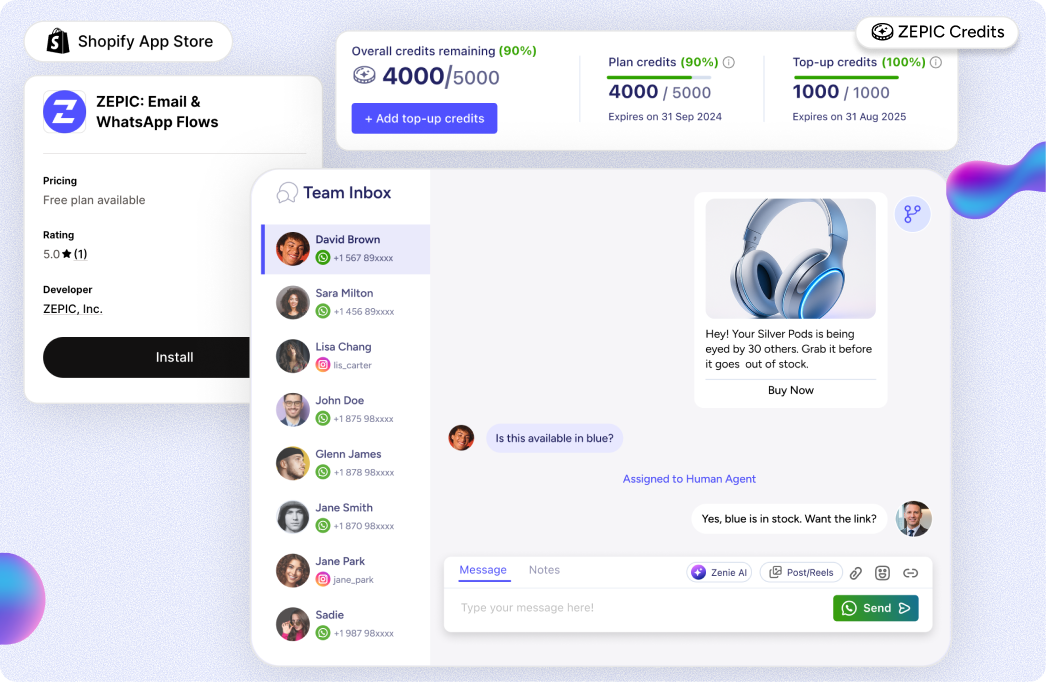
Credits System - Universal Marketing Currency: We unified all marketing activities—email campaigns, WhatsApp messages, and flow executions under a single credit system. Credits are consumed based on Meta's regional pricing for WhatsApp and email volume for campaigns, creating transparency and a single operating currency across all your marketing activities.
Team Inbox 2.0: Team Inbox evolved from a message viewer into a complete conversational engagement layer. We introduced business hours configuration, a full suite of auto-replies (Away, Welcome, Response Delay, Conversation Reminders), the ability to restart expired conversations with template messages, a rich content editor with Zenie AI assistance, global conversation search with filters, and visual indicators for different message types. Managing customer conversations at scale became possible.
Shopify App Marketplace Entry: ZEPIC entered the Shopify App Marketplace, opening to the largest eCommerce ecosystem. 447 Shopify merchants integrated ZEPIC in 2025 alone, with over two-thirds actively using it to power their email, WhatsApp, and hyper-personalized engagement.
Making Marketing Measurable
We shifted focus from tracking activity to measuring real business outcomes.
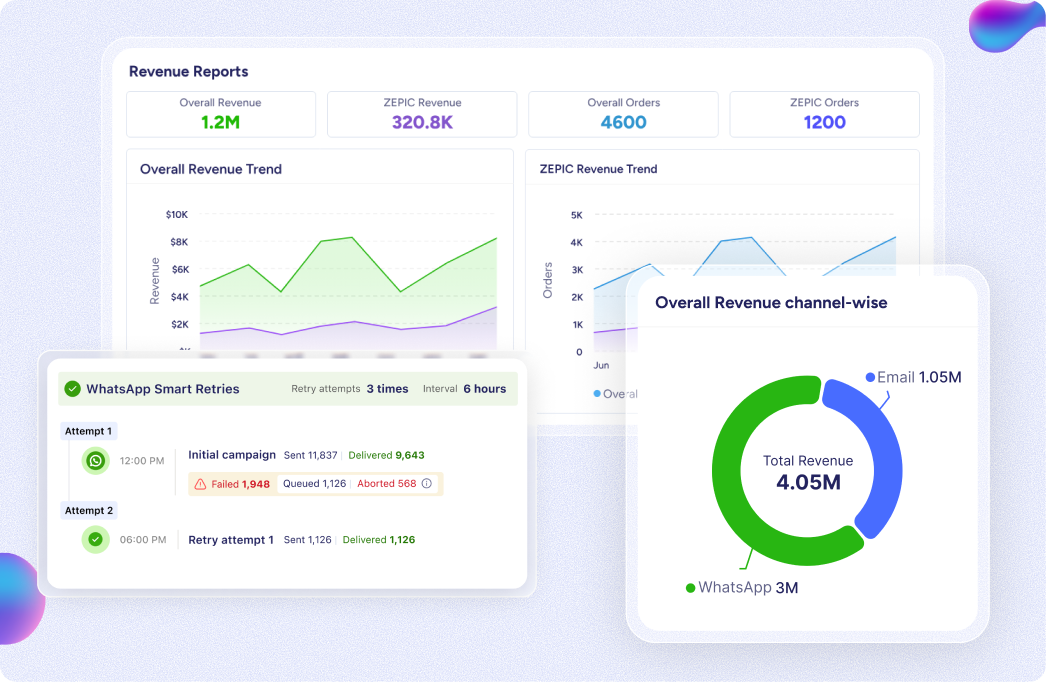
Revenue Attribution & Reports: Track which campaigns actually generate revenue by monitoring purchases up to 30 days after someone opens an email or reads a WhatsApp message. View revenue and orders directly in your ZEPIC dashboard and compare marketing-driven revenue against total revenue, so you know which channels and campaigns deserve your budget—not just which ones get clicks.
Full Analytics Module: We launched comprehensive analytics infrastructure with deep metrics for email (sent, delivered, opens, clicks, bounces, trends, device breakdowns, geographic data), WhatsApp (sent, delivered, replied, read, failed, engagement trends), and Flows (enrolled, exited, dropped out, email and WhatsApp engagement). For Shopify accounts, the dashboard displays Revenue and Orders alongside Contacts and Campaign Reach—the foundation for measuring what actually matters.
Smart Retries for WhatsApp Campaigns: When bulk WhatsApp campaigns hit Meta's sending limits, ZEPIC automatically retries delivery over the next 24-48 hours. You set the number of retry attempts, and the system handles the rest, significantly improving delivery rates without any manual intervention.
Beyond Customer Data - Building a complete data platform
We expanded what you can market with—moving beyond customer profiles to products, lists, and industry-specific data.
Shopify Product Object: We added full product data sync for Shopify accounts—all your product fields now live in ZEPIC alongside customer and order data. This means you can build segments based on product information (like "customers who bought running shoes") and personalize campaigns with product details, making your marketing more targeted and relevant.
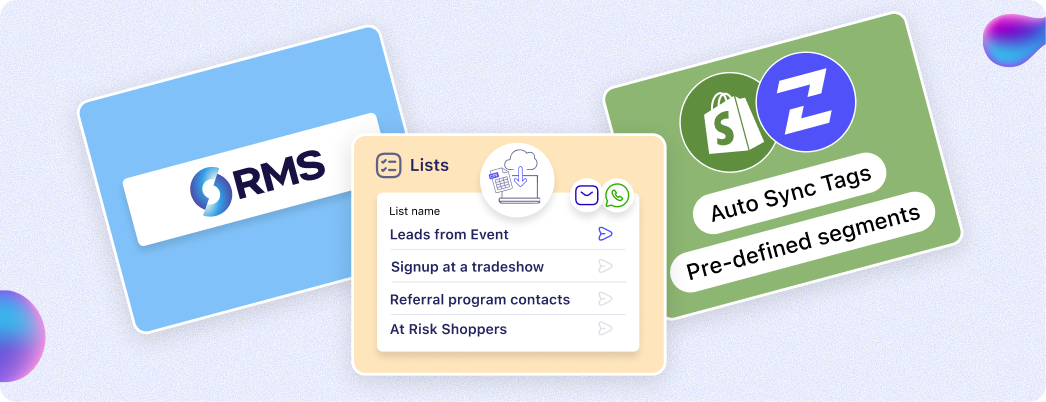
Marketing Lists in Campaigns + Flows: Lists became a core part of how you target and automate. Send email and WhatsApp campaigns directly to lists, combine up to 5 lists and segments per campaign for precise targeting, trigger flows when contacts are added to or removed from specific lists, use "Is in List" conditions to branch automation paths, and dynamically add or remove contacts from lists within automated workflows.
RMS Cloud Connector for Hospitality: Hotels and accommodation providers can now sync guest data, reservation information, rate plans, and availability directly into ZEPIC. This enables hospitality businesses to create targeted campaigns based on guest profiles, booking lifecycles, and behaviors like reservation confirmations, arrival reminders, and anniversary campaigns.
Omnichannel & Accessibility
This was a year of scale. We opened up new channels, made ZEPIC accessible to larger teams, and democratized powerful capabilities.
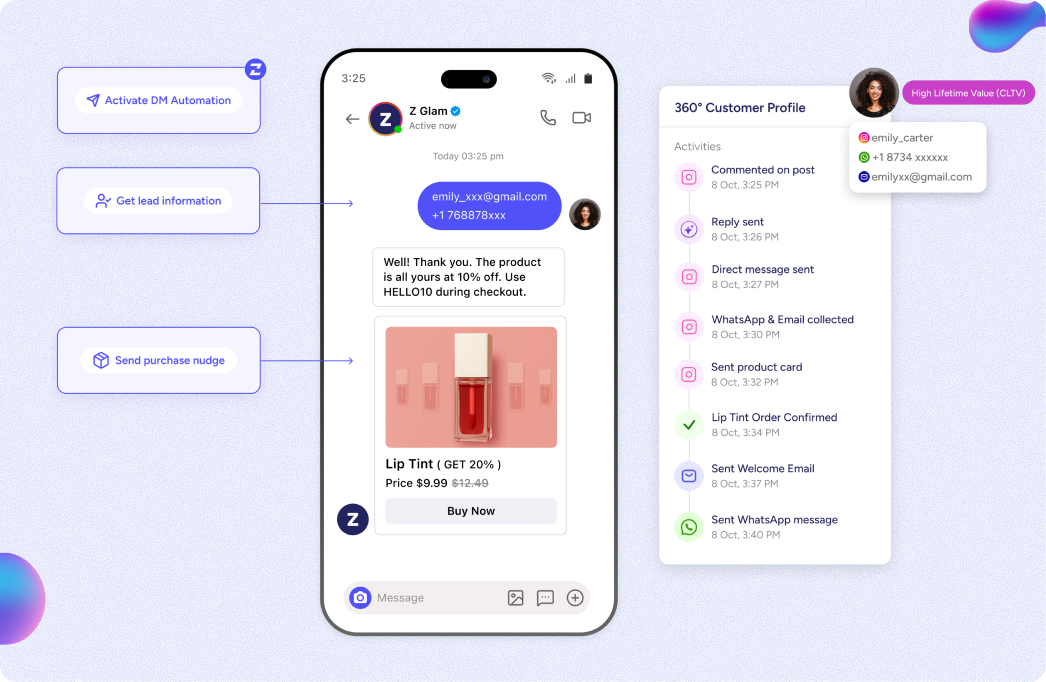
Instagram Automation with AI-Powered Intent Detection: ZEPIC now supports Instagram Business accounts with comprehensive automation for comments and DMs across posts, reels, and stories.
The standout feature is Zenie AI's intent detection—when someone comments, the AI analyzes whether it's a pricing inquiry, buying interest, or a custom intent you define, then executes the right automation. You can reply to comments, send personalized DMs, collect contact information, and send product details directly in DMs.
Instagram DMs are fully integrated into Team Inbox alongside WhatsApp, and three new trigger and action blocks in Flows let you build multi-channel workflows that combine Instagram engagement with email and WhatsApp follow-ups.
The reception was immediate: Instagram automation adoption reached ~95% in the first 30 days among connected accounts. Nearly every brand that integrated Instagram put it to work.
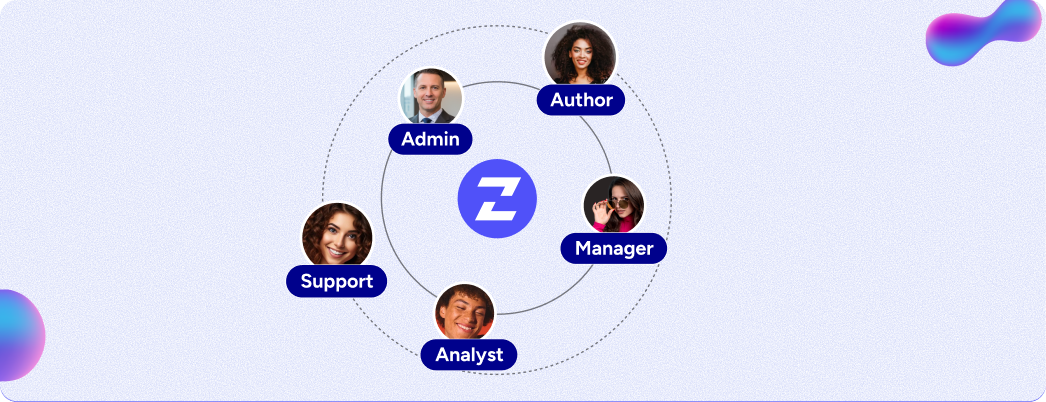
Role-Based Access Control: We introduced five user roles—Admin, Manager, Author, Analyst, and Support, so you can give team members the right level of access without overwhelming them with features they don't need. This is particularly valuable for agencies managing multiple team members or businesses with distributed marketing teams, where content creators and analysts need focused access without administrative complexity.
Enhanced Shopify Integration + 8 Pre-Built Segments: Shopify integration got deeper with automatic syncing of customer tags, email and SMS marketing consent preferences, and order fulfillment status. New Shopify users now get 8 ready-to-use segments at signup—Abandoned Checkouts, Repeat Customers, Recently Purchased Customers, Inactive Customers, New Customers, Browsed but Not Purchased, and First Time Buyers. Launch targeted campaigns with out-of-the-box segments immediately without manual setup.
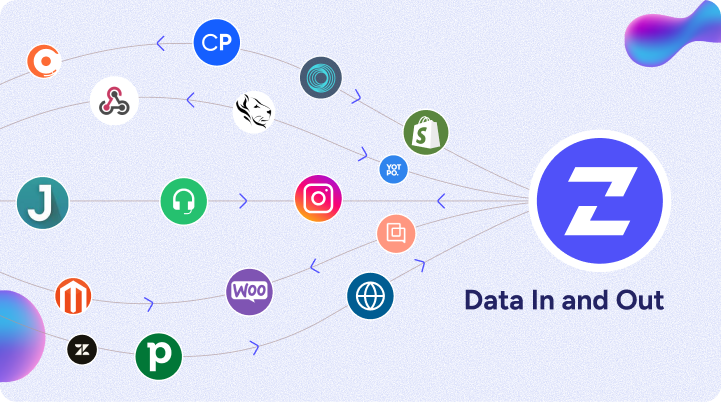
Web SDK on All Plans + Destination Blocks: Website tracking became available on every plan, including Free. Capture visitor behavior, track anonymous visitors and known contacts, monitor form submissions, custom events, and content downloads. We also introduced destination blocks in connectors—you can now export data from ZEPIC into any external tool, completing the data flow in both directions. Your data isn't locked in ZEPIC; it works with your entire stack.
Looking Forward
2025 was a year of building—some features that fundamentally expanded what ZEPIC can do, and others that simply made the platform better to use every day.
The big shifts were real: revenue attribution that connects marketing to actual business outcomes, product objects that let you market beyond just customer profiles, Instagram as an entirely new engagement channel with AI-powered intent detection, and data portability in both directions through APIs and destination blocks.
But we also shipped dozens of improvements that don't fit a grand story—they just make your work easier. Faster search. Clearer errors. Pre-filled fields. These matter just as much.
As we look ahead, we're focused on a bigger question: what does marketing infrastructure need to look like for brands operating across marketplaces, social channels, conversational platforms, and their own stores? We're calling it a Marketing OS, and we'll soon explain why and what it means.
2025 was about shipping what you needed. 2026 is about where this all goes next.






%201.png)


.png)