


8. 5 Best SMS Marketing & Automation Software: A Comprehensive Guide
 Ask AI

Ask questions about this page


Choose the modern way to SMS
Switching SMS platforms doesn't have to mean starting over. Bring your own provider, mix providers across regions, and manage it all from one modern platform.
Book a demo
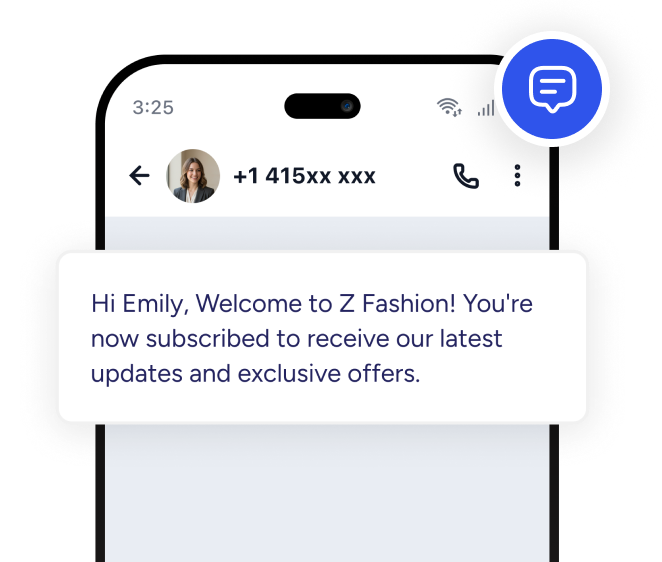
The need for SMS marketing & automation Tools
SMS marketing has evolved far beyond sending basic bulk notifications. Today, it is one of the highest-converting channels for driving revenue and running two-way automated conversational experiences. However, many growing brands struggle to scale their text marketing due to a massive bottleneck: legacy SMS platforms bundle software with heavily marked-up carrier costs.
An SMS marketing automation software should give you complete control over your delivery infrastructure, deep automation capabilities, real-time data tracking, and much more without draining your margin. Top-tier text automation tools now use advanced intent detection to listen to what customers say when they reply, enabling intelligent data collection and frictionless opt-outs. Let’s look at the best in the business so you can map out which will be the best fit for you.
8.1 Top 5 SMS marketing & automation software
We’ve put together a detailed comparison of the best SMS marketing automation platforms, including ZEPIC, Klaviyo, Attentive, SimpleTexting, and Textmagic.
Head-to-head comparison
Key Features
ZEPIC
Klaviyo
Attentive
SimpleTexting
Textmagic
Bulk SMS
Two-Way SMS Conversations
Bring Your Own Provider
No stated limits
Limited options
(Twilio, Vonage, Sinch, Bandwidth)
Multiple Sending Numbers per Account
One default number per country
Handled via enterprise onboarding
Intent Detection / Keyword-Based Flows
Keyword
opt-ins mainly
AI Concierge
Keyword &
sub-keyword triggers
Keyword &
rule-based
AI-Powered Segmentation
Built-In CDP
Collect Data via SMS Reply (e.g., leads generated)
Limited
Limited
Limited
Webhook Connector to Shopify/eCommerce
Via Zapier
Via Zapier/API
Omnichannel Team Inbox
Tracked
Concierge-managed
SMS Opt-Out / TCPA Compliance Tools
AI Content Generation
for SMS
Channels Available
Email, WhatsApp,
SMS, Instagram
Email,
SMS/MMS, Push
SMS, MMS, RCS,
Email, Push
SMS, MMS
SMS, Email, WhatsApp, FB
Pricing
Starts at
$44/month
$35/mo + SMS credits (~$0.01/msg US)
Custom pricing
$39/mo
(500 credits)
Pay-as-you-go, ~$0.049/msg




1. ZEPIC
ZEPIC is an SMS marketing and automation engine that comes with an in-built CDP and supports email, Instagram, and WhatsApp. Instead of limiting your options, ZEPIC lets you bring your own provider. The platform also allows you to bring in multiple providers and multiple numbers. Two-way texting is available depending on which provider you choose. You can set up workflows for every SMS campaign. ZEPIC’s Zenie AI is programmed to detect intent and keywords. It can also prompt the customer for more data (like collecting an email address), which is then logged into the customer’s profile, giving you a 360-degree view. You can go a step further and route this data to any other platform through ZEPIC’s webhooks.
Key features
- Bring your own provider
- Two-way SMS conversations (availability depends on connected provider)
- Zenie AI-assisted SMS content creation
- Flows triggered by customer’s intent or keywords
- Webhook connector to push conversation and event data to Shopify and other systems
- Team Inbox with 360° customer view and full activity tracking
Strengths

Ability to connect multiple numbers
Flexibility to connect multiple providers
Omnichannel inbox
Webhook-first architecture makes it straightforward to sync SMS activity into Shopify or other systems
Weaknesses

Two-way texting capability depends on which provider you connect, so it's worth confirming support during setup
Newer to dedicated SMS-first buyers
Ratings & Reviews


4.5/5


4.5/5
Pricing
$44
per month
Any 1

$69
per month
Any 2 channels
$89
per month
All channels

No long-term contracts required
Best suited for
1
Brands that want an SMS platform with a CDP and multiple channels
2
Teams that want to bring their own SMS provider instead of being locked into one carrier
3
Brands running reply-driven flows
2. Klaviyo
Klaviyo is popular in the e-commerce space, known predominantly for unifying email marketing and SMS marketing. Its strength is segmentation; you can build audiences based on predicted lifetime value, churn risk, and next-order-date forecasts. However, Klaviyo locks you into its own carrier infrastructure. You buy bundled text credits directly from Klaviyo, which subjects your brand to platform-dictated markup pricing rather than true wholesale carrier rates.
Key features
- Two-way SMS and MMS integrated into the same Flow builder as email
- AI-assisted flow and segment creation (Composer, Marketing Agent)
- Predictive segmentation using CLV, churn risk, and next-order-date modeling
- Deep native Shopify, BigCommerce, and WooCommerce integrations
- 350+ pre-built integrations feeding the same customer profile
- RCS and WhatsApp available alongside SMS on higher tiers
Strengths
One platform for email and SMS, with a deep flow builder and predictive segmentation
Strong Shopify/WooCommerce integration and revenue attribution
Free plan available to test SMS alongside email at no cost
Weaknesses
SMS is billed on a separate credit system, and costs scale quickly at volume. Emoji use or longer messages can multiply the credit cost of a single text
You're on Klaviyo's carrier infrastructure and country list, with no provider flexibility
No dedicated omnichannel team inbox; replies live inside flows and reporting rather than a shared conversation view
Ratings & Reviews
4.6/5
4.3/5
Pricing
Free
plan
Up to 250 profiles,
150 SMS/MMS credits/month
$35
per month
251-500 contacts
(1,250 SMS ,credits included)
Scales
by tier
Additional SMS credits billed separately
Email + SMS plan starts at $35/month
Best suited for
1
E-commerce brands are already using Klaviyo for email and want SMS in the same system
2
Teams prioritizing predictive segmentation and unified email/SMS attribution over deep SMS-specific conversation tooling
3. Attentive
Attentive is an enterprise-level platform focused purely on SMS and mobile marketing. It has an incredibly fast list-growth system featuring two-tap sign-up forms designed for mobile shoppers. While its personalization triggers are deep, its pricing structure is notoriously premium, often utilizing revenue-share or expensive volume commitments. Furthermore, it operates as a closed garden, meaning you cannot bring your own SMS provider.
Key features
- Two-tap sign-up units and QR/text-to-join for fast list growth
- Attentive Concierge™ for AI-assisted and live-agent two-way conversations
- RCS Business Messaging with product carousels and suggested replies
- Built-in compliance tools that add automated compliance language to sign-up forms and handle opt-out management for merchants
- 100+ native integrations, including Shopify, Klaviyo, Salesforce, Zendesk, Recharge, and Snowflake
Strengths
Best-in-class list-growth mechanics and two-way conversational commerce
Built-in TCPA compliance, quiet-hours enforcement, and carrier-level deliverability optimization across 20+ countries
Strong support and onboarding reputation among enterprise brands
Weaknesses
Early cancellation can trigger penalties; several reviewers cite rigid contract terms
Very expensive pricing entry point; often prohibitive for mid-market margins
Ratings & Reviews
4.5/5
4.5/5
Pricing
Custom
pricing
Quote-based pricing with base fee plus per-message rates
No
free trial
Not available; requires commitment upfront
Annual
contract
Requires an annual or half-yearly commitment
Custom, quote-based pricing; no free trial available
Best suited for
1
Established DTC and enterprise brands where SMS is already a primary revenue channel
2
Teams that want dedicated account support and are comfortable with contract minimums
4. SimpleTexting (by Sinch)
SimpleTexting is an approachable, user-friendly software designed primarily for businesses that want straightforward mass text blasts and simple two-way customer communication. It offers a clean, shared team inbox for sales or support reps to answer texts manually, alongside standard keyword-based automated replies. It lacks the advanced customer journey mapping, deep webhook ecosystem, and unified CDP components.
Key features
- Mass SMS/MMS campaigns with contact segmentation and tagging
- Two-way business texting through a shared inbox with templates and internal notes
- Autoresponders, keyword triggers, and scheduled/recurring campaigns
- AI-assisted reply suggestions
- Toll-free and local number support with unlimited keywords on every plan
- Rollover credits so unused volume carries into the next month
Strengths
Very easy to set up and use, with a short learning curve for new team members
Feature parity across all pricing tiers
Rollover credits help absorb seasonal volume swings
Weaknesses
SMS-only platform doesn't support other channels
Lacks complex automated workflow logic (cannot natively capture data like email into a profile during a flow)
Per-user and overage fees can add up for larger teams
Ratings & Reviews

4.7
Pricing
$29
per month
Toll-free number, 500 credits included
$39
per month
Local number, 500 credits included
Scales
by tier
Enterprise 50,000+ messages from $909/month
One-time $4 carrier registration fee for 10DLC compliance
Best suited for
1
US/Canada small-to-mid businesses that want a dedicated, easy-to-use SMS tool without a broader marketing platform
2
Nonprofits, healthcare, retail, and local service businesses with predictable, moderate SMS volume
5. Textmagic
Textmagic is an established, utilitarian bulk text messaging platform built mostly for transactional communications, quick text alerts, and operational updates. While it does provide an API and a desktop/mobile app to send texts, it functions strictly as a point solution rather than a conversion-focused marketing automation ecosystem. It supports other channels like email, Facebook, and WhatsApp.
Key features
- Bulk SMS and two-way conversations with dedicated local, toll-free, and 10DLC numbers
- MMS support (US/Canada) and text-to-speech/voice broadcast
- Inbound SMS chat options and a multi-user team inbox.
- Basic email-to-SMS routing capabilities.
- Text automation templates for simple alerts and appointment reminder
Strengths
Great for no-frills transactional messaging (shipping alerts, operational notices).
Simple pay-as-you-go credit scheme with no heavy monthly software overhead.
Option to bring your own carrier
Weaknesses
Lacks advanced automations for customer journeys or behavioral flow structures.
No native CDP, intent detection, or deep webhooks for cross-channel marketing stacks.
Ratings & Reviews

4.2/5
Pricing
Pay-as-you-go
flat
$0.049 per SMS for two-way texting in the US, no monthly fee
Volume
plans
Discounted rates for US, UK, Canada, and Australia
Inbound
SMS
Free in all markets
Free trial available, no credit card required
Best suited for
1
Small businesses that need operational texting (reminders, alerts, shift updates) as much as marketing campaigns
2
Teams that want a unified inbox across SMS, email, WhatsApp, and social DMs without per-seat pricing
Personalize your
bulk SMS campaigns
Book a demo
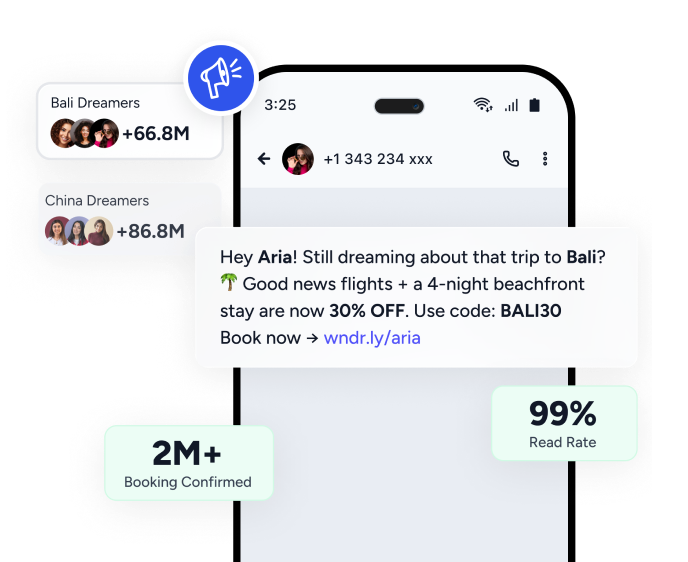
8.2 How SMS marketing & automation software works
Behind every well-timed text is a system deciding what to send, when to send it, and what happens next. Here's what actually happens under the hood, from getting a number set up to reporting on what drove revenue.
1
Provider & number setup
Connect a provider, either the platform's built-in infrastructure or your own, and register local, toll-free, or short-code numbers under 10DLC rules before sending a single message.
2
List building & compliant Opt-In
SMS marketing tools capture consent through web forms or two-tap sign-up units and log opt-in/opt-out status so every send stays TCPA-compliant.
3
Segmentation & personalization
Many SMS automation platforms allow you to use customer data to decide who gets which message and add dynamic fields like name, product, or discount code.
4
Two-way conversation handling
Replies route into a shared inbox where routine questions get an automated response and anything complex is handed off to a live agent.
5
Delivery & compliance monitoring
Delivered/failed status, quiet-hours enforcement, and opt-out handling run in the background so campaigns stay both effective and compliant.
6
Reporting & attribution
Dashboards track sends, deliverability, and clicks, ideally alongside email and other channels, not in isolation.
8.3 How SMS marketing tools transform business operations

Saves time & Improves efficiency
- Automates reminders, confirmations, and follow-ups that would otherwise need manual sends
- Cuts response time on routine customer questions

Redefines customer engagement
- Reaches customers on a channel they check within minutes, not once a day
- Supports timely, behavior-triggered follow-ups instead of static blast schedules

Scalable communication
- Sends campaigns to thousands of contacts simultaneously
- Routes replies to the right team or workflow automatically

Data-driven insights
- Shows how many messages were delivered, so you can evaluate campaign effectiveness
- Flags where message fatigue or opt-outs are climbing before they become a deliverability problem

Revenue growth opportunities
- Recovers abandoned carts and lapsed customers automatically
- Supports flash sales and time-sensitive offers that email alone would miss

Improves customer loyalty
- Delivers fast, relevant updates (shipping, appointments, restocks) that reduce support volume
- Two-way texting lets customers reply instead of only receiving
8.4 What features to look for in an SMS marketing & automation tool
Choosing the right SMS platform is less about the flashiest features and more about how well it fits your existing data and channel mix. Let’s look at what actually matters.

Sending Flexibility
1. Bring Your Own Provider
Connect Twilio, Infobip, or another provider directly so you control sending relationships and rates instead of being locked to one vendor.
2. Two-Way Conversations
Let customers reply - and have those replies do something, whether that's an autoresponder, a routed flow, or a human handoff.
3. Compliance Built In
Look for native opt-out handling (like an "Enable SMS Opt-Out" control), 10DLC/TCPA registration support, and quiet-hours enforcement.

Automation & Intelligence
1. Intent & Keyword Detection
The platform should detect both keywords and intent behind a message, so it's easier to upsell or take the right action.
2. Flows With Custom Logic
Branching flows with conditional logic and time delays let you build a sequence once instead of manually sending every follow-up.
3. AI-Assisted Content & Segmentation
AI that drafts on-brand SMS copy and builds segments from behavioral data, cutting setup time significantly.

Data & Integration
1. Built-In CDP or Unified Profile
A single customer record that ties SMS activity to email, purchases, and web behavior, so you get the full context.
2. Webhook & E-commerce Connectors
Native connections to Shopify or similar platforms so SMS events (a reply or a conversion) sync into the rest of your stack automatically.
3. Segment Conditions on Delivery Status
Ability to segment or trigger based on delivered/failed message status, not just opens or clicks.

Team & Reporting
1. Omnichannel Team Inbox
One inbox for SMS (and ideally other channels) with a 360° customer view and activity tracking, so support and marketing aren't working from different screens.
2. Subscription Management
Ability to track opt-outs and remove those customers from the list. This helps keep every list audit-ready.
3. Send Reporting
Clear visibility into messages sent and channel-level attribution. Shows delivered vs. failed sends at a glance, so you can catch carrier issues early.
8.5 SMS marketing challenges: What businesses struggle with
List growth without annoying customers

Challenge
Repeated opt-in requests or clunky sign-up flows suppress conversion.

Solution
Use two-tap sign-up units, keyword opt-ins, and web forms that capture consent in one step.

Business impact
Faster list growth without frustrating potential subscribers.
Compliance risk
Challenge
TCPA, 10DLC, and quiet-hours rules carry financial penalties for non-compliance.
Solution
Choose a platform with built-in opt-out handling, registration support, and consent logging.
Business impact
Avoids fines and carrier blocking while protecting sender reputation.
Siloed SMS data
Challenge
SMS activity that lives in its own platform, disconnected from email and purchase history.
Solution
Use a platform with a built-in CDP or webhook connectors that sync SMS events into the rest of your customer data.
Business impact
Increase in conversions because of cross-channel marketing and context-rich campaigns.
Replies that go nowhere
Challenge
Two-way texting without intent detection means replies pile up unread or get generic autoresponses.
Solution
AI that detects intent and keywords to route the messages to the right team or send automated responses.
Business impact
Higher resolution speed and fewer missed sales opportunities.
Rising costs at scale
Challenge
Credit-based and per-message pricing can balloon unpredictably as volume and message length grow.
Solution
Model your expected volume against flat-rate, credit, and BYOP pricing before committing.
Business impact
Predictable SMS spend that scales with revenue, not against it.
8.6 SMS marketing use cases and solutions
See how SMS automation handles real scenarios end-to-end, from recovering abandoned carts to re-engaging dormant customers.
1. Abandoned Cart Recovery
Win back shoppers who added to cart or browsed but didn't buy before they forget why they wanted it.

Key challenges
- Email reminders get buried or ignored
- Narrow window before purchase intent fades
- Manual follow-up doesn't scale past a handful of carts
- No clear line from a text to a completed order

Solution features
- Trigger-based SMS the moment a cart or browse session is ended
- Personalized product details and direct checkout links
- Revenue attribution tied to the specific triggered send
2. Flash Sale and Restock Alerts
Reach your full list instantly for flash sales, restocks, and new product lines.
Key challenges
- Email campaigns might not be opened within the short sale window
- Manual texts can't reach a full list fast enough
- Uneven delivery timing undercuts urgency
- Hard to know which segment actually converted
Solution features
- Bulk SMS with scheduled, segment-based sends
- Real-time delivery tracking during high-traffic windows
- Segment-level reporting on what drove the sale
3. Order Status Updates
Keep customers informed after checkout without flooding their email or your support queue.
Key challenges
- Customers can't easily check order status themselves
- Generic confirmation emails go unread
- Support tickets pile up asking "where's my order"
- Delivery exceptions surface too late
Solution features
- Transactional SMS triggered by order and shipping events
- Personalization pulling live order and delivery data
- Two-way replies for delivery questions without a ticket
4. Appointment Reminders
Cut no-shows for service and healthcare businesses with reminders customers actually see.
Key challenges
- Email reminders are easy to miss or ignore
- Manual reminder calls don't scale with volume
- No-shows cost revenue and staff time
- Rescheduling requires a phone call
Solution features
- Scheduled and triggered SMS reminders ahead of appointments
- Two-way confirmation replies (yes / no / reschedule)
- Autoresponders that handle rescheduling without a call
5. Re-Engage Customers
Reach inactive segments on a channel they still check, even after they've stopped opening email.
Key challenges
- Lapsed segments stop opening email entirely
- Manual win-back campaigns take too long to build
- No clear trigger for when someone counts as lapsed
- Generic offers underperform against real inactivity signals
Solution features
- Behavior-triggered SMS journeys targeting lapsed segments
- Time-limited offers tied to inactivity thresholds
- Attribution showing which win-back sends drove repeat orders
8.7 Who is SMS marketing & automation software for?

E-commerce Brands
Ideal for automating cart recovery, shipping updates, and flash-sale alerts tied directly to store data.

D2C & Subscription Businesses
Perfect for win-back campaigns, replenishment reminders, and two-way conversations that build repeat purchases.

Travel & Hospitality
Helpful for booking confirmations, itinerary updates, and real-time traveler support over SMS.

Retail & Multi-Location Businesses
Suited for location-specific promotions and appointment or pickup reminders.

Support & Service Teams
Useful for two-way conversations that resolve order issues or questions without a phone call.

Growing Marketing Teams
Suitable for teams that want SMS unified with email and other channels under one customer view, rather than managed in a separate silo.
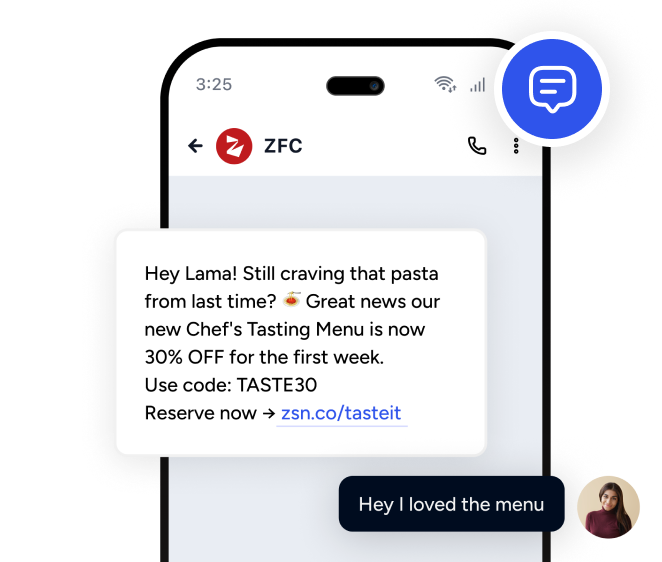
Turn Every Text Into a Two-Way Conversation
Let customers reply to your campaign and address their queries without routing them to a different channel.
Book a demo
8.8 FAQs
1. Is SMS marketing still effective in 2026?
Yes. SMS open rates remain around 98%, and most messages are read within minutes, making it one of the fastest channels for time-sensitive offers and reminders. Effectiveness depends heavily on compliant list-building and relevant, well-timed sends rather than the channel itself.
2. Do I need a dedicated SMS platform if I already use an email tool?
It depends on how central SMS is to your revenue. If SMS is a supporting channel, a platform that unifies SMS with email and other channels under one customer profile (like ZEPIC or Klaviyo) usually reduces complexity. If SMS is a primary revenue driver at high volume, a dedicated SMS-first platform like Attentive may justify the added cost and complexity of running two systems.
3. What compliance requirements should I look for?
At minimum, a platform should support TCPA-compliant opt-in/opt-out handling, 10DLC registration for US numbers, and quiet-hours enforcement. Regulations continue to tighten, so confirm how a platform handles consent logging before committing your subscriber list.
4. Can SMS platforms integrate with Shopify and other e-commerce tools?
Most platforms on this list offer some form of Shopify integration, either natively (ZEPIC, Klaviyo, Attentive) or via Zapier (SimpleTexting, Textmagic). Native webhook connectors generally sync data more reliably and in real time than Zapier-based integrations.


