TL;DR
- Stolen/compromised credentials cause 22% of confirmed breaches (Verizon DBIR 2025), making a strong second authentication factor like OTP essential.
- SMS OTP is universal. It works on any mobile device without internet and has decades of user trust behind it.
- SMS OTP's biggest weaknesses: vulnerable to SIM swapping, SS7 network interception, and "SMS pumping" fraud that can inflate telecom bills fast.
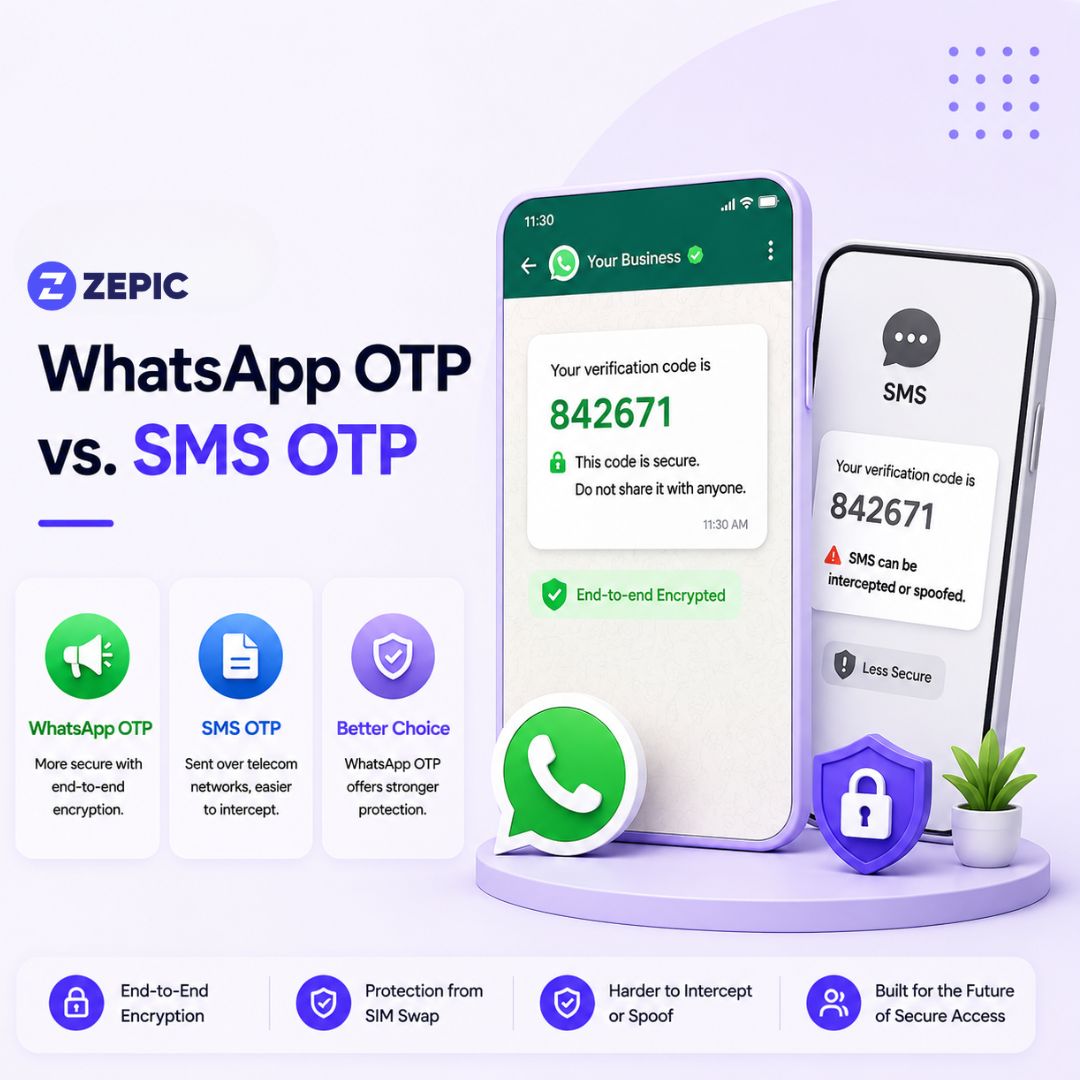
- WhatsApp OTP uses end-to-end encryption (Signal Protocol), making it immune to SS7-style interception and much harder to exploit via SIM swaps.
- WhatsApp's closed, Meta-monitored ecosystem also protects against automated traffic-pumping fraud that plagues SMS.
- WhatsApp's downsides: it needs an active data/Wi-Fi connection and app installation, and adoption varies heavily by region (strong in India, Brazil, and Europe; weaker in the US).
- Regulators worldwide (UAE, Philippines, India, Singapore, Malaysia, EU, US, Vietnam, Saudi Arabia) are restricting or phasing out standalone SMS OTP for financial transactions due to encryption and fraud risks.
- The best practice is intelligent routing: WhatsApp as primary where adoption is high and SMS as an automatic fallback when data isn't available.
- Businesses should also layer in threat defenses (bot detection, device fingerprinting) to block pumping and fraud on both channels.
Protecting customer identity has always mattered to brands, but by 2026, the standards around it have gotten a lot less forgiving.
Stolen or compromised credentials remain the single biggest way attackers get in, accounting for 22% of confirmed breaches, per Verizon's 2025 Data Breach Investigations Report. That's exactly why a second layer of verification, like an OTP, matters so much. But which channel should carry that OTP?
For over a decade, sending a one-time password via text message was the default choice for businesses. However, the rapid expansion of instant messaging platforms has introduced powerful alternatives like WhatsApp.
Let’s look at a detailed comparison between WhatsApp OTP and SMS OTP to help you make the right choice.
WhatsApp OTP vs SMS OTP: A Brief Comparison
| Evaluation Metric |
SMS OTP Authentication |
WhatsApp OTP Authentication |
| In-Transit Encryption |
None (Cleartext over cellular bands) |
Full End-to-End Encryption (Signal Protocol) |
| Primary Network Dependency |
Cellular voice/signal towers (SS7) |
Mobile internet data or Wi-Fi networks |
| Vulnerability to SIM Swapping |
High (Relies purely on carrier identity checks) |
Low (Tied directly to the active app instance) |
| Risk of Artificial Traffic Inflation |
High (Susceptible to cross-border bot pumping) |
Low (Protected by Meta app rate limits) |
| Global User Setup Requirements |
Pre-installed on 100% of mobile hardware |
Requires active app installation and profile setup |
| Visual Verification Identity |
Sender IDs can be spoofed or alpha-tagged |
Official verified green checkmark profile badge |
| Delivery Telemetry |
Basic carrier delivery receipts (unreliable) |
Real-time sent, delivered, and read confirmations |
SMS OTP: Strengths and Weaknesses
The standard SMS protocol relies on the telephony architecture established decades ago. Understanding how this traditional framework performs helps clarify its enduring role and its modern limitations.
The Clear Advantages of SMS Verification
- Universal Global Accessibility: The main advantage of text-based authentication is its ubiquity. SMS uses the global Signaling System 7 (SS7) cellular network, meaning it operates on every active mobile device without requiring internet connectivity or specific application downloads. A consumer using a legacy feature phone in a remote region can receive an OTP instantly.
- Low Onboarding Friction: Users are deeply accustomed to text alerts. The Yubico Global State of Authentication Survey notes that 41% of consumers still trust SMS-based authentication despite its widely publicized security gaps. This deeply embedded consumer trust means that platforms using text-based verification experience minimal drop-off during user registration and login cycles.
- Independent Network Architecture: Because text messages do not rely on a centralized private data network, they remain functional even if a specific application ecosystem encounters a server outage or architectural downtime.
The Crucial Vulnerabilities of SMS OTPs
- Susceptibility to SIM Swapping: SIM swap attacks involve malicious actors using social engineering or bribing telecom personnel to reassign a victim's mobile number to a rogue SIM card under the attacker's control. Once complete, the attacker receives all incoming verification codes directly, bypassing the platform password layer entirely. The FBI Internet Crime Report continues to document tens of millions of dollars in direct corporate and individual losses because of coordinated SIM swap campaigns.
- Infrastructural Interception via SS7 Exploits: The cellular routing protocols carrying standard text messages lack modern cryptographic protections. Sophisticated threat groups can exploit vulnerabilities within the SS7 framework to intercept text traffic remotely without ever touching the user’s physical device. Incidents like the Salt Typhoon cyber campaigns showed that advanced persistent threat groups could compromise major telecommunications providers to view unencrypted call records and text data directly from carrier routing hubs.
- Exposure to SMS Pumping Fraud: Also known as Artificially Inflated Traffic (AIT), this highly automated attack strategy exploits public authentication endpoints like signup forms and password reset portals. Cybercriminals utilize automated bot networks to trigger massive volumes of verification messages toward premium-rate international phone numbers that they control or influence. The Communications Fraud Control Association estimated that global telecom fraud losses reached $41.82 billion, with SMS pumping representing one of the fastest-growing financial vulnerabilities for online applications. A single unmonitored text pumping exploit can inflate an enterprise's monthly telecommunications bill by hundreds of thousands of dollars within hours.
WhatsApp OTP: Advantages and Limitations
Delivering authentication codes through an internet-based messaging application like WhatsApp introduces a modern, software-driven architecture to user verification.
The Security and Operational Benefits of WhatsApp Verification
- Native End-to-End Encryption: Unlike SMS that travel through multiple telecom routing stations in cleartext, a WhatsApp OTP is secured using the Signal protocol from the application server until it hits the recipient's device. This cryptographic protection ensures that the transmission cannot be skimmed or read by network interceptors, completely neutralizing the risk of SS7-level wiretapping.
- Mitigation of Telecom Fraud and Pumping: WhatsApp operates within a closed, heavily monitored environment controlled by Meta. The platform enforces strict rate-limiting on automated endpoints. Rogue actors cannot easily use public sign-up pages to generate automated traffic toward high-cost international lines, eliminating the threat of unexpected SMS pumping expenses.
- Visual Trust Indicators via Verified Profiles: Meta permits enterprises utilizing the WhatsApp Business API to establish verified corporate profiles complete with a green checkmark badge. This official verification helps users distinguish authentic security codes from phishing attempts or spoofed senders, improving user confidence during the login process.
- Enhanced Delivery Monitoring: The application provides real-time status updates,, including sent, delivered, and read confirmations. This granular telemetry allows product engineering teams to accurately measure authentication performance, identify local delivery blockages, and optimize system responsiveness.
The Operational Challenges of WhatsApp Verification
- Dependence on Data Networks and App Installation: WhatsApp requires an active mobile data or Wi-Fi connection and the installation of the specific smartphone app. If a user travels to an area without an active data signal, or if they prefer not to install third-party messaging apps, the delivery loop fails.
- Geographic Fragmentation: WhatsApp has a dominant market presence in specific economic corridors, such as India, Brazil, and multiple European nations. However, adoption rates are lower in markets such as the United States, where SMS and platform-specific alternatives remain the primary communication tools for the majority of the population.
- Strict Operational Compliance Rules: To prevent spam, Meta maintains strict guidelines regarding message templates and broadcast behavior. If a business account accidentally triggers automated anti-spam algorithms, the verification profile faces temporary suspension or restriction, creating a single point of failure for core authentication workflows.
Shifting Global Compliance Standards
Many countries across the globe are either restricting SMS OTPs or adding an additional requirement for an alternative verification method. This is mostly because SMS is not protected by end-to-end encryption, making it hard for financial institutions to trust the channel.
| Market |
Regulator |
Is SMS OTP "Banned"? / Current Stance |
| UAE |
CBUAE |
Yes: Full phase-out for all licensed financial institutions. Banks carry total financial liability for fraud if they continue using SMS OTP. |
| Philippines |
BSP |
Yes: Phased out for high-risk transactions and account modifications. Permitted only for verifying the existence of a mobile number. |
| India |
RBI |
Restricted: SMS OTP is permitted but can no longer serve as a standalone factor. At least one authentication factor must be uniquely and dynamically generated per transaction. |
| Singapore |
MAS / ABS |
Phased Out: Discontinued for major bank logins involving digital token users. Regulators openly treat standard text codes as near obsolete due to automated AI and SIM swap risks. |
| Malaysia |
Bank Negara Malaysia |
Restricted: Explicitly marked as non-compliant when used as a standalone second factor for financial transactions. |
| EU |
EBA |
Restricted: Heavily regulated under upcoming Strong Customer Authentication rules to limit interception, though not hit with an outright ban across all consumer platforms. |
| United States |
NIST (+ FINRA, USPTO, FCC) |
Restricted: Formally classified as a restricted delivery channel because of vulnerable cellular carrier routing protocols. |
| Vietnam |
State Bank of Vietnam |
Restricted: Replaced by mandatory biometric matching (facial/fingerprint) for all transactions that breach specified financial thresholds. |
| Saudi Arabia |
SAMA |
Phasing Out: Moving financial platforms away from cleartext delivery toward FIDO2 standards and device-bound cryptography. |
These global shifts show that relying on a single channel is becoming a regulatory risk. Security teams must adapt by building flexible architectures that comply with local mandates while keeping the user experience seamless.
Strategic Implementation: Designing a Resilient Login Architecture
Choosing between these two channels is rarely a binary decision. For the majority of growing enterprises, the most secure and cost-efficient path involves building an intelligent, multi-layered authentication workflow that leverages the strengths of both systems.
1. Implement an Intelligent Routing Model
Set your authentication system to default to the most secure, cost-effective channel based on the user's geographical location and device capability. For users located in high-density messaging regions like Latin America, Southeast Asia, or Europe, make WhatsApp the primary OTP delivery channel.
2. Establish a Secure Fallback Protocol
Keep SMS OTP active as a secondary, fallback mechanism. If the system detects that a verification message has not been delivered via data channels within twenty seconds due to network unavailability, trigger a standard text-based fallback token to ensure the login flow continues without interrupting the user experience.
3. Deploy Upstream Threat Defenses
To protect your infrastructure against automated cost-inflation scams on both channels, integrate modern firewalls and device fingerprinting defenses directly on your signup and login forms. Use tools that evaluate network reputation, block residential proxy networks, and require behavioral verification before any verification request is processed.
The Verdict
There's no universal winner between WhatsApp OTP and SMS OTP, there's only the right combination for your users, your markets, and your risk tolerance. SMS still earns its place as a dependable fallback for offline or low-connectivity moments, while WhatsApp brings encryption, fraud resistance, and visual trust that cleartext text messages simply can't match. As global regulators keep tightening the rules on standalone SMS authentication, the smartest move for 2026 is building an authentication stack that routes intelligently between both.
The challenge, of course, is execution. Manually managing two delivery channels, monitoring fallback logic, and keeping templates compliant across markets can quickly turn into an engineering burden.
That's exactly the gap ZEPIC's AI-infused customer engagement platform closes. ZEPIC lets you secure transactions and logins with fast, reliable OTP delivery via both email and WhatsApp, building trust and preventing fraud while keeping the experience smooth — with intelligent routing and fallback logic handled for you, not stitched together in-house. Once your WhatsApp Business number is verified and connected, your sender is active and ready for authentication flows and campaigns alike.
Ready to build a resilient, regulation-proof OTP strategy? Book a demo with ZEPIC and see how easy it is to move from a single-channel gambit to a secure, multi-channel authentication flow.
Frequently Asked Questions
Is WhatsApp OTP safer than SMS OTP?
Yes. From a technical perspective, WhatsApp OTPs provide stronger security than traditional SMS OTPs because WhatsApp uses end-to-end encryption to protect messages during transit. Unlike SMS, WhatsApp messages are not vulnerable to common telecom attacks such as SS7 interception. However, no authentication method is completely immune to threats, and users should still protect their devices and accounts from phishing and malware.
Why are international financial regulators moving away from SMS verification?
Many regulators are encouraging stronger authentication methods because SMS relies on traditional telecommunications infrastructure, which is more susceptible to attacks such as SIM swap fraud, phishing, and network interception. Organizations are increasingly adopting more secure authentication channels that offer encryption and stronger identity verification.
Can a verification token sent via an instant messaging app be intercepted?
End-to-end encryption protects verification messages while they are transmitted between sender and recipient, making network interception extremely difficult. However, verification codes can still be compromised if a user's device is infected with malware or if the user unknowingly enters the code into a sophisticated phishing website designed to mimic a legitimate login page.
What is SMS pumping fraud and how does it impact software platforms?
SMS pumping fraud is an abuse technique in which automated bots repeatedly trigger SMS verification requests to premium-rate phone numbers controlled by fraudsters. As businesses pay for every verification message sent, attackers generate fraudulent telecom charges while receiving a share of the routing revenue. This can result in significant financial losses for software platforms that rely heavily on SMS-based verification.
Does a data-based verification message work if a user lacks an internet connection?
No. Internet-based messaging services require either a Wi-Fi or mobile data connection to send and receive messages. If a user is completely offline or does not have access to data while traveling, businesses should provide an SMS fallback option to ensure verification codes can still be delivered successfully.





%201.png)


.png)