Meet

Neura HQ,
Your connected AI Agent Workforce Know more



TLDR
Your customer acquisition cost (CAC) can often be around $50, but the average first order value (AOV) from new customers might only be $45.
Sound familiar?
With rising ad costs, increased competition, and shrinking attention spans, most brands lose money on the first purchase. The first sale has effectively become a paid trial rather than a profit-generating moment.
The solution to this problem is not cutting ad costs or pushing heavier discounts. Those tactics only shrink your margins further and temporarily mask a deeper issue.
So how can you increase margins?
It starts with understanding that your profitability doesn’t come from the first purchase; it comes from the second, third, and fourth. That’s why you need to focus on building systems that drive repeat purchases and create predictable revenue rather than relying solely on new customer acquisition.
This comprehensive guide will walk you through various strategies, including second-purchase nudge, replenishment reminders, cross-selling, and upselling, to help you turn one-time buyers into loyal repeat customers. Let’s dive in
For many D2C brands, the first purchase from a new customer is a financial loss or, at best, breakeven. This is due to the high customer acquisition cost (CAC) combined with the relatively low average order value (AOV) of that initial sale.
Typical CACs for D2C brands hover around $40-$50, driven up by rising advertising costs, intense competition for attention, and complex multi-channel customer journeys. At the same time, new customers tend to make smaller purchases initially as they test the product or brand.
In addition to CAC, brands must absorb costs of goods sold (COGS), fulfillment, shipping, returns, and payment processing fees. For example, if the AOV is $45 with a 35-40% gross margin, then after subtracting all related costs plus CAC, there is little to no profit left on that first transaction.
The transition from a single purchase to a repeat purchase is where the scales tip in your favor.
Psychologically, the first purchase triggers an initial emotional investment, but buyers are often still comparing you with alternatives. When customers come back for a second purchase, it reflects a positive reinforcement loop. They are satisfied with the quality, delivery experience, or service that convinces them of the brand’s reliability. So, they are likely to buy again. Typically, habits are built within 10 to 30 days after the initial action, matching the common repeat purchase window in e-commerce.
Once this early habit forms, the likelihood of future purchases increases dramatically.
Studies show that after a first purchase, 45% of customers make a second order. This jumps to 62% for a third order and reaches 81% by their fourth or fifth order.
Customers who make repeat purchases are nine times more likely to continue buying, transforming their buying behavior into a habit and a loyalty loop.
This shift from a one-time buyer to a habitual customer is where profitability really begins.
Every additional purchase compounds the customer’s value while reducing your dependency on paid acquisition. That’s why the difference between a struggling and a thriving D2C brand often isn’t the number of new customers acquired—it’s how many come back.
|
Industry
|
Average Repeat Purchase Rate
|
|---|---|
|
Apparel & Fashion
|
% of customers buying again
|
|
Health & Beauty
|
Clicks, opens, interactions
|
|
Electronics & Technology
|
Avg lifetime value over 6–12 months
|
| Food & Beverage | ~50% |
| Toys & Games | ~20–30% |
|
Jewellery & Accessories |
~32–55% |
| Pet Products | ~50–54% |
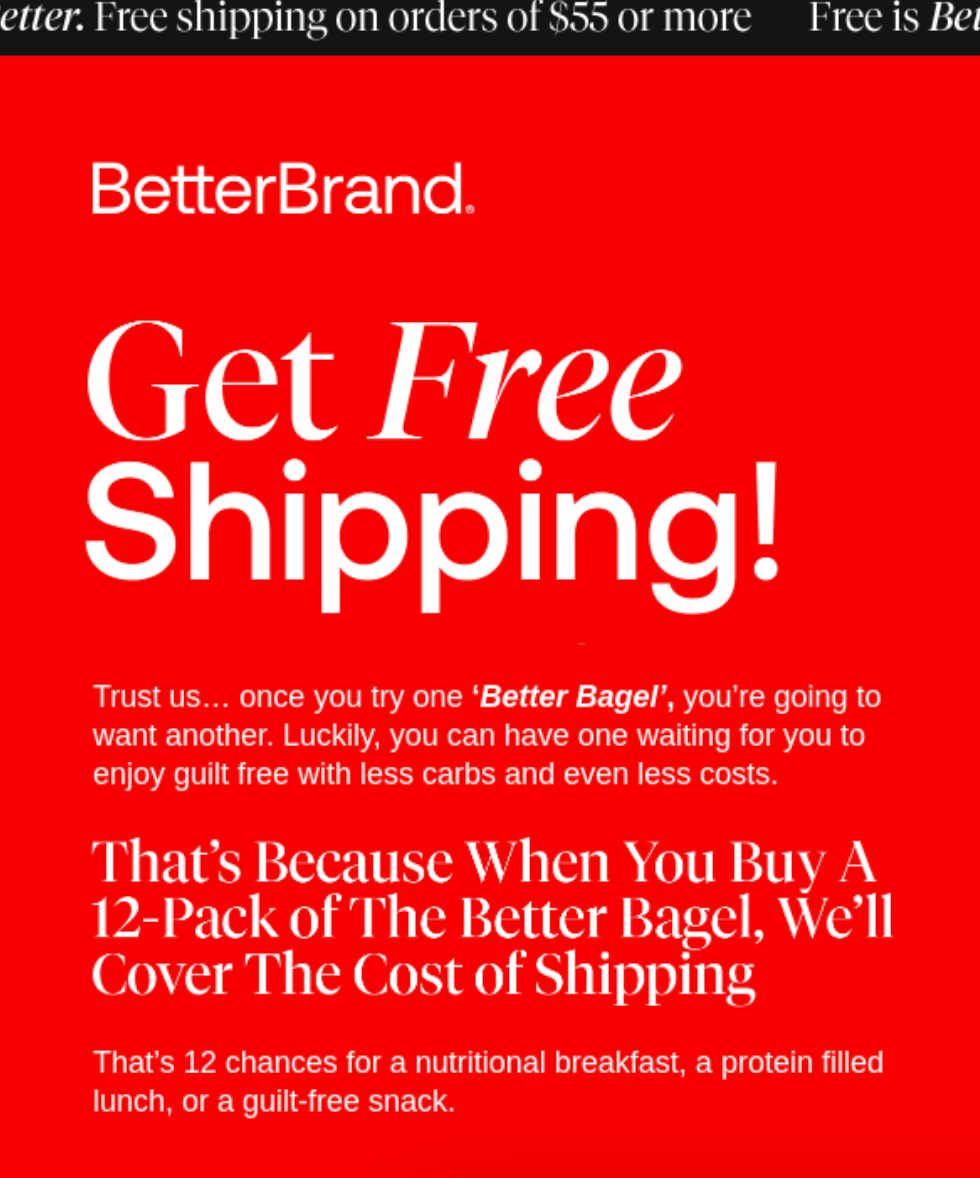
The second purchase is the moment your customer stops “trying” your brand and starts trusting it. It shows that they liked their first experience enough to come back, and once they do, the chances of future purchases rise dramatically.
The highest-impact moment to nudge a repeat purchase is 10 days after the first order arrives.
Why 10 days?
After 21–30 days, the emotional momentum fades. Wait too long, and you’ll essentially need to “re-acquire” the customer with heavier incentives.
Use this four-step sequence to systematically nudge customers toward their second order:
Subject: Your next fave is waiting 😊
Focus on bestsellers or complementary items. No discount needed.
Subject: Back for more? Here’s 10% off
A modest offer works best, so send a 10–15% offer.
Curate products based on what they bought.
Example: Bought shampoo → recommend conditioner + serum.
Subject: Final nudge: your bonus expires soon
Create urgency without sounding desperate.
Not all customers should receive the same second-purchase messaging. Tailor your nudges:
1. High AOV First Purchasers: Emphasize quality, craftsmanship, or premium ingredients. Use messaging like “Complete your elevated routine.”
2. Low AOV First Purchasers: Promote bundles or low-friction add-ons. Use messaging like “Bundle & save on your essentials.”
3. Category-Specific Personalization:
Curate complementary items:
Brands that implement second-purchase nudges within the 10–21-day window typically achieve:
Replenishment campaigns are one of the most reliable ways to drive recurring revenue, especially for consumable products. Unlike first- or second-purchase nudges, replenishment flows tap into necessity, habit, and product usage cycles, making them one of the strongest levers for boosting retention and stabilizing monthly revenue.
Consumable products like skincare, supplements, or pantry staples need different retention tactics than durable goods, which may only need replacing after months or years.
Replenishment campaigns work best with consumables due to their finite usage cycles. This lets you anticipate when customers will run out and need to reorder.
Cross-sell or upsell strategies work well for durable products rather than replenishment, since repeat purchase intervals are much longer and less predictable.
A successful replenishment strategy depends on understanding how long different products last for an average customer. Accurate usage cycle calculations let you time restock nudges perfectly—early enough to be helpful, but not so soon as to annoy.
Here’s a common usage cycle framework to guide timing:
Using purchase history, customer feedback, and market data helps tailor these cycles even more precisely for your audience.
To maximize effectiveness, structure your campaign flow around key timing milestones:
This sequence balances attention without overwhelming, keeps your brand top of mind, and encourages timely reordering.
When executed correctly, replenishment campaigns can deliver:
Cross-selling is an effective way to increase customer lifetime value without relying on heavy discounts or new customer acquisition. Instead of convincing someone to try your brand for the first time, you’re helping an existing customer discover products that complement what they already bought. This strengthens their relationship with your catalog and boosts average order value (AOV).
Although cross-sells and upsells often get grouped together, the timing and psychology behind them are very different.
Cross-selling thrives on real-world usage. Once the customer interacts with your product, they naturally begin imagining what else they might need, which creates a powerful window to expand the relationship.
The post-delivery window is the "sweet spot" for cross-selling campaigns. Customers who have just received their order are more receptive to recommendations for accessories, care products, or complementary items that enhance their use or enjoyment.
A typical campaign sequence looks like this:
Effective cross-selling requires careful mapping of product relationships based on purchase data and customer behavior insights. Common pairing strategies include
A well-structured cross-sell strategy can deliver:
Upselling is one of the most powerful and underused ways to increase customer lifetime value (LTV). While cross-selling introduces new product categories, upselling focuses on helping customers upgrade to a higher-value version of what they already want. It’s not about pushing more; it’s about helping buyers get a better overall experience.
Upselling works best before or shortly after delivery, when purchase intent is still high and the customer is excited about their order.
Upsells should be positioned as premium, value-adding offers. Emphasize the benefits customers gain from upgrading, better quality, enhanced features, or improved experience. This framing makes customers feel their investment is worthwhile rather than feeling pressured to spend more.
A successful upsell campaign typically follows this timeline:
Upselling can follow several models depending on your product mix:
In this playbook, we explored four proven retention levers that consistently increase customer lifetime value and help brands generate 40% or more of their revenue from existing customers:
Each of these tactics works on its own, but they become more powerful with their compound effect. When combined, they create a seamless post-purchase experience that increases order frequency, builds stronger habits, and steadily grows LTV month after month.
If you’re just getting started, begin with second-purchase nudges; they are the easiest and fastest way to see meaningful results. Once that foundation is in place, layer in replenishment flows, cross-sells, and upsells based on your product catalog and customer behavior.
Retention isn’t a one-time tactic; it’s a system. And when you build it right, it becomes the engine that powers sustainable, profitable growth for your brand.
If you’re ready to turn one-time buyers into loyal customers, ZEPIC is the fastest way to do it. Book a demo today!

%201.png)


.png)