Meet

Neura HQ,
Your connected AI Agent Workforce Know more



TLDR
Every November, brands spend aggressively to acquire thousands of new customers. In 2024 alone, digital ad spend in the U.S. reached $34 billion, a 9% increase from the previous year, while global ad spend was projected to rise by 10.7% to over $1 trillion. CACs surge during BFCM, and you willingly pay a premium because they assume, “It’s worth it. We’ll make it back later.”
But will you?
The average repeat purchase rate is just 28.2%, meaning nearly three-quarters of new customers never return after their first order.
This gap between acquisition and retention is where many brands lose money.
Most BFCM shoppers are motivated by discounts rather than loyalty. They’re not emotionally connected to your brand yet.
So, unless you engage them immediately after their purchase, the post-sale silence becomes expensive.
What does that silence cost you?
This is why the 30 days after BFCM matter more than the BFCM weekend itself.
During this period, your new customers are still curious, open to building a habit, and evaluating whether your brand deserves a place in their routine.
If you play your cards right, these 30 days can become a revenue-generating engine for all your upcoming sales.
This guide walks you through a three-phase post-BFCM framework—Educate, Remind, Recover—that transforms seasonal shoppers into year-round customers.

Shifting your mindset to think beyond the black Friday weekend revenue is important to unlocking BFCM's true potential.
Instead of just celebrating a revenue spike, focus on the percentage of BFCM buyers who return for a second purchase within 90 days because this is a key metric that predicts long-term growth.
Studies show that increasing customer retention rates by just 5% can increase profits by 25% to 95%, and every percentage point increase in your repeat purchase rate compounds into disproportionate profit. Even a 20% improvement in BFCM cohort retention can fund most of your Q1 targets.
But the catch is, you don’t have forever to convert them.
After the first 30 days, your chances drop dramatically. Reactivation costs creep up to acquisition levels, engagement decays, and customers lose both emotional momentum and product recall. In fact, shoppers who make a second purchase within the first month show significantly higher lifetime value than those who delay their next order.
This is why the first 30 days after BFCM are make-or-break.
So how do you turn that 30-day window into a predictable growth lever? You start with education.
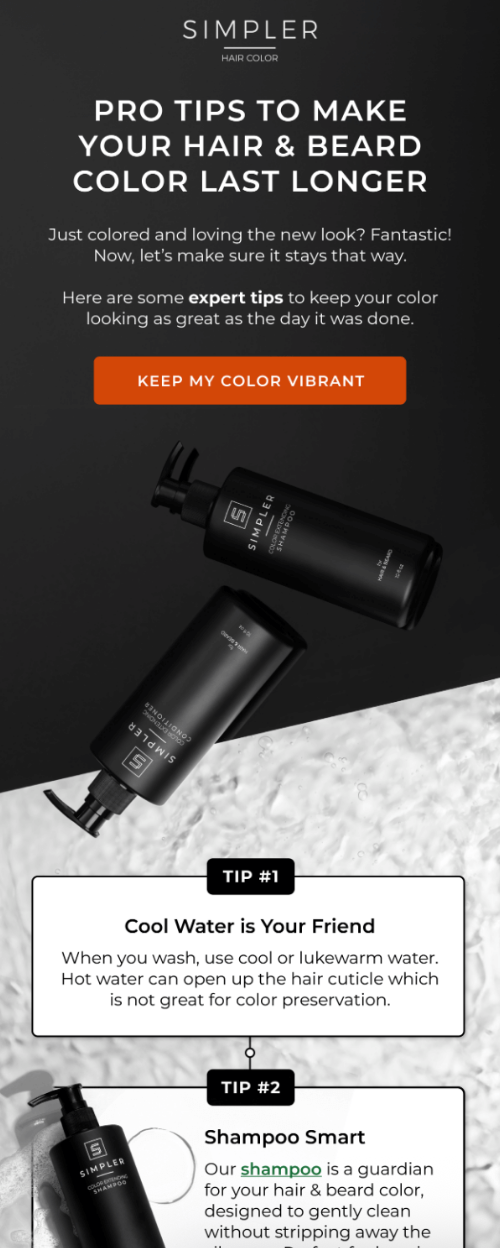
Right after BFCM, a lot of brands send more promotions, but at this stage in their journey, the customers would prefer campaigns that help them get the most out of what they’ve already bought.
In fact, 91% of consumers watch an explainer video to learn more about a product or service right after their purchase. This shows that customers actively look for help early in their journey. Customers are trying to understand:
Most product returns happen because customers don’t know how to use the product correctly or don’t understand what to expect. Educating your customers can help you solve this problem, too.
Your goals in the first 10 days after the Black Friday purchase have to be:
Product walkthrough campaigns are just what you need to achieve these goals.
Send a warm, helpful walkthrough covering:
Keep the tone helpful and reassuring because this is your first impression post-purchase.
By now, they’ve experimented with the product, and they’re curious for more.
This is the perfect moment to share:
This content deepens their connection with the product and reinforces its value.
Include:
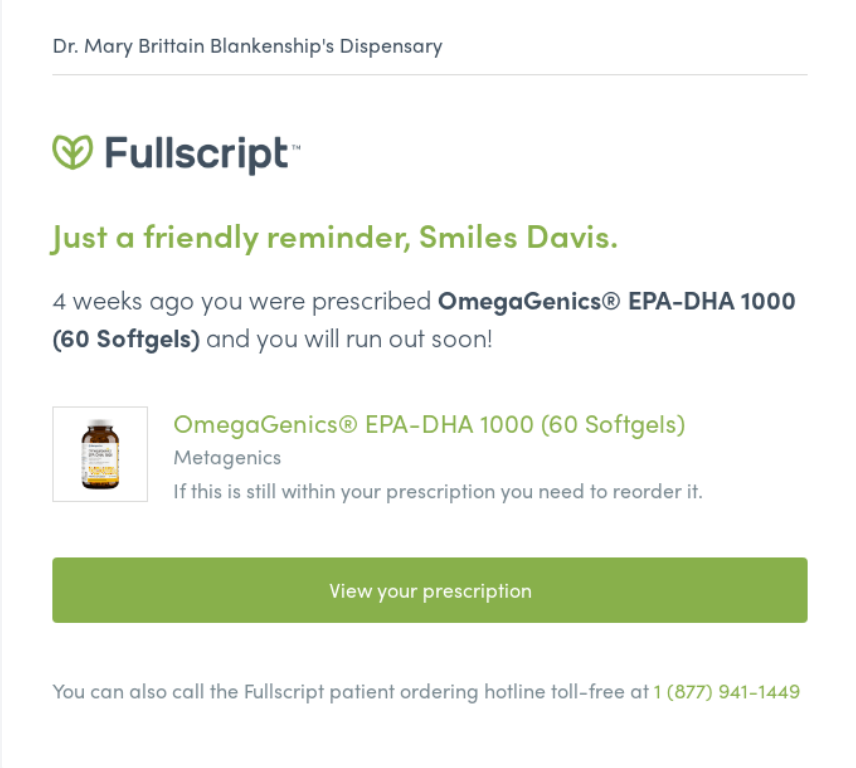
Once customers have started using your product and experiencing its benefits, they naturally move into the “maintenance” stage of their journey. This is where many brands make another common mistake: they wait too long to follow up or rely solely on discount-based nudges. But when it comes to the second purchase, timing matters far more than discounting.
In fact, consumer behavior studies show that customers appreciate replenishment nudges when they align with real usage patterns. Because it saves them time, avoids interruptions in their routine, and positions your brand as looking out for them.
At this stage, your customers are asking themselves:
Your job is to remove every bit of friction from that decision-making process.
Your goals from Days 15–25 have to be
Send a friendly reminder based on your product’s average usage cycle.
Include:
By this point, customers who use the product regularly are close to finishing it.
This message should include:
This is your final reminder in the cycle; keep it short and friendly.
Example message:
“Running out soon! Restock now to keep your results on track.”
Avoid sending replenishment nudges based on arbitrary dates. A supplement user, skincare customer, and home essential buyer all have different consumption patterns.
Use:
This makes your messages feel personalized and smart.
Generic reminders don’t work. Make it obvious that this message is about their product.
Example:
“Your Vitamin C Serum is likely running low… Here’s a quick reorder link.”
Your tone should feel like a friendly assistant:
Don’t use:
If you’re not in a consumable category, use this phase to send:
The goal remains the same: help customers continue their journey with your brand
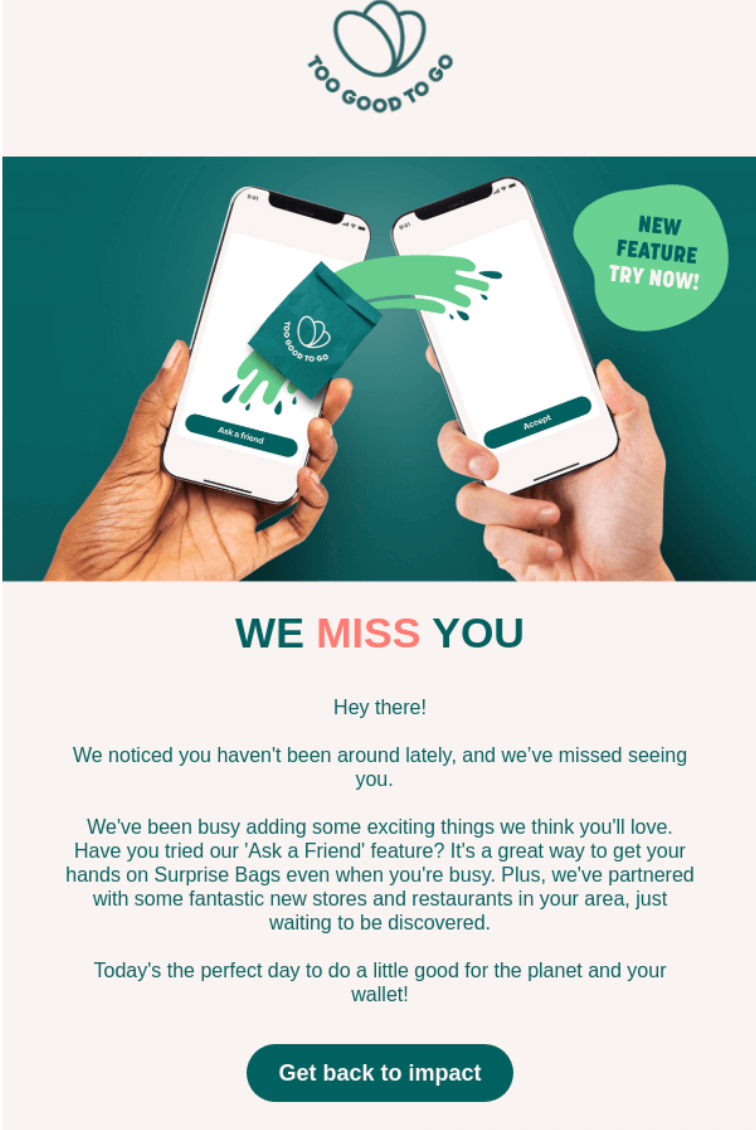
By the time you reach Day 25, your BFCM customers fall into one of two buckets:
If you wait 60–90 days before sending a win-back campaign, it might be too late. Because customer attention fades fast, and the real drop-off begins around the 30-day mark. After this point, their behavior starts to resemble that of a cold lead: lower engagement, lower intent, and higher cost to re-engage.
Emotion plays a huge role at this stage. Customers appreciate brands that notice their absence and check in warmly. A simple acknowledgment—combined with something new, useful, or exclusive—can reignite interest and remind them why they bought from you in the first place.
Your goal between Days 25 and 30 is simple:
Win-back nudges are your safety net. They help you pull customers back into the ecosystem right before they go dormant.
This message should feel warm, observant, and helpful.
Include:
This is where you layer in emotion and value.
Include:
Avoid aggressive discounting; you’re not trying to bribe them, just nudge them.
Your final touchpoint in this sequence should create gentle urgency.
Include:
Combine emotional messaging with tangible value
Phrases like "we miss you" or "haven't seen you in a while" humanize your brand—but pair them with something concrete: new arrivals, curated picks, or a light incentive.
Reference their original BFCM purchase
Make it clear this isn’t a mass email. Personalization increases the sense of relevance and boosts click-through rates.
Make the offer feel exclusive
Avoid generic promo blasts.
Your messaging should sound like, “Because you bought from our Holiday line, this one is just for you.”
Keep the window tight
A 5-day win-back window works because urgency drives action. Stretching it dilutes the effect.
A well-executed win-back phase delivers:
Let’s bring everything together into a simple, scalable 30-day post-BFCM strategy you can plug directly into your lifecycle setup.
Here is a practical timeline of the exact touchpoints that drive BFCM customer retention and turn one-time holiday buyers into repeat customers.
|
Days
|
Phase
|
Focus
|
Channel |
|---|---|---|---|
| 1-2 |
Educate
|
Welcome and product walkthrough |
Email
|
|
5
|
Educate
|
Tips & tricks
|
|
|
10
|
Educate
|
Check-in and advanced guide
|
Email
|
| 15-20 | Remind |
Replenishment reminder
|
Email & WhatsApp
|
| 22 | Remind | Restock nudge |
WhatsApp
|
|
25 |
Recover | “We noticed you haven’t been back.” | |
| 28 | Recover |
Win-back offer
|
|
| 30 | Recover | Final Invite |
Email
|
These segments ensure your post-BFCM customer lifecycle marketing feels personal and relevant.
When you execute your 30-day post-BFCM strategy with intention, it does far more than drive a few extra repeat purchases; it transforms how your business grows for the entire year.
Here’s what happens when you get those first 30 days right:
Instead of disappearing after their first order, these shoppers flow seamlessly into your post-purchase marketing, replenishment campaigns, loyalty programs, and regular promotional cycles. They stop behaving like seasonal shoppers and start behaving like true brand customers.
With an active base of repeat buyers, Q1 becomes one of the most predictable revenue periods of the year. Your BFCM customer retention fuels ongoing sales instead of leaving you scrambling for new acquisition.
When customers reorder within 30 days, your acquisition cost gets recovered far more quickly. That means more budget for testing new channels, expanding product lines, or scaling your best-performing ads.
Every well-executed repeat purchase campaign, replenishment reminder, and win-back nudge adds stability to your revenue, because you’re building relationships, not chasing one-off sales.
If you retain even a small percentage of last year’s cohort—and then add this year’s—you’re no longer starting from zero every November. Your base of loyal customers grows thicker, stronger, and more profitable year after year.
BFCM is the biggest acquisition moment of your year, but acquisition without retention is just rented revenue. What truly determines your growth isn’t how many orders you generate on Black Friday, but how many of those customers you keep. The 30 days after BFCM will decide whether those shoppers become loyal, repeat customers or quietly disappear before December ends.
Stop treating BFCM as a one-time spike. Start treating it as a launchpad.
When you follow a structured post-BFCM strategy, you turn seasonal buyers into year-long revenue drivers.
And the best part? You don’t need steep discounts or complicated funnels to begin.
Your BFCM customers are waiting.
The next 30 days will determine whether they fuel your year—or become another acquisition cost you’ll end up paying next November again. Use ZEPIC to create impactful Post-BFCM campaigns.

%201.png)


.png)