Meet

Neura HQ,
Your connected AI Agent Workforce Know more



Marketing performance is rarely static.
Creative fatigue, seasonal behavior, audience shifts, and channel dynamics constantly influence results. What worked last month may not work this month.
The teams that win are the ones that can detect movement early, not weeks later.
Reporting has never been the problem.
Most marketing teams today already have access to metrics like opens, clicks, deliveries, conversions, revenue. The real challenge is interpretation.
A report can tell you what happened during a given time period, but it often doesn’t answer the question marketers care about most: Are we improving, or are we standing still?
To get that answer, teams usually end up doing extra work. Switching between date ranges, pulling exports, comparing last week to this week, or doing quick mental math just to understand whether performance is moving in the right direction.
That friction adds up quickly, especially when you’re tracking multiple channels and journeys.
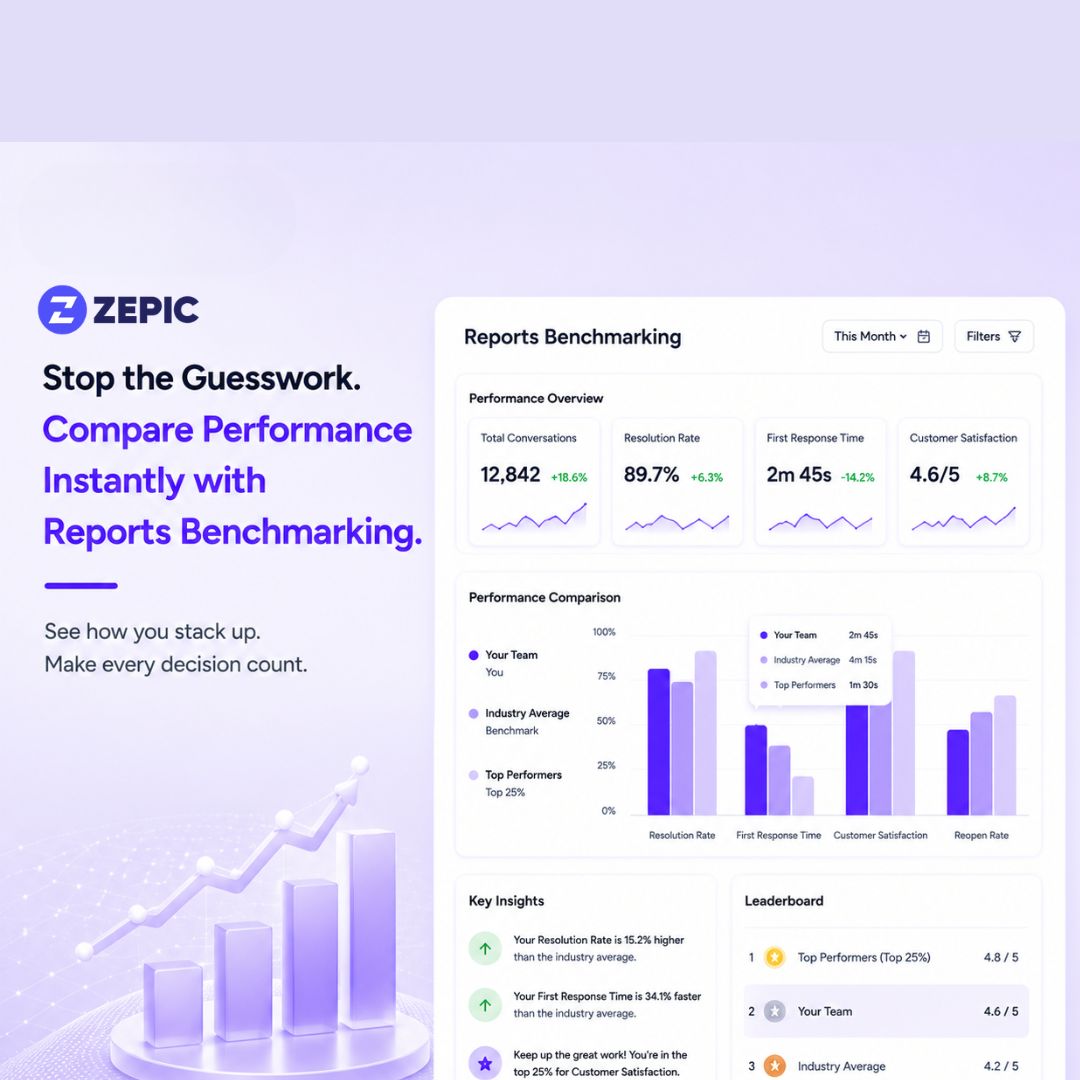
We’ve introduced performance benchmarking across all reporting modules in ZEPIC.
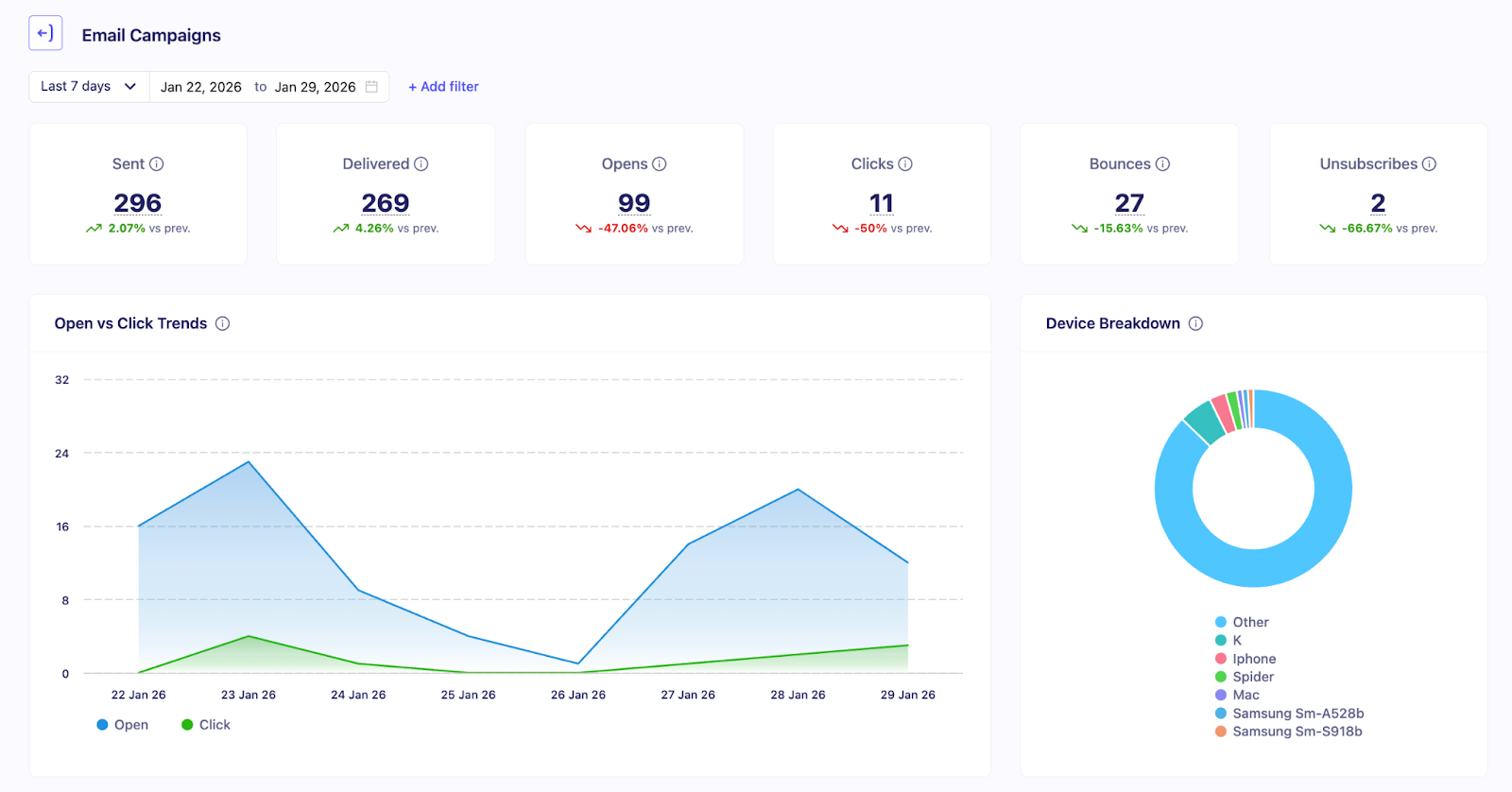
Now, when you select any time period inside Reports, ZEPIC automatically compares it against the previous period and shows percentage change across all key metrics. Instead of viewing metrics in isolation, you immediately get context on direction:
This happens automatically, without requiring additional filters, exports, or manual calculations.
Benchmarking helps you answer questions faster, such as:
Instead of treating reporting as a retrospective task, benchmarking makes reporting more actionable.
With Reports Benchmarking, each KPI now includes a clear trend indicator showing whether performance is up, down, or unchanged compared to the previous period.
This makes it easier to spot movement early and understand performance shifts without digging through multiple historical views.
Whether you're reviewing a weekly campaign or tracking ongoing flows, trends are now visible immediately.
Reports Benchmarking works across the full ZEPIC Marketing OS, giving teams a consistent way to track performance over time — across channels, workflows, and business outcomes.
You’ll see benchmarking trends across:
By embedding benchmarking directly into reports, ZEPIC helps teams spend less time analyzing and more time optimizing.
Benchmarking is most useful when it becomes part of your operating rhythm, not something you check once in a while. Here are a few practical ways teams can use it inside ZEPIC.
Instead of reviewing metrics in isolation, benchmarking helps you quickly understand what changed compared to last week.
A weekly report becomes much clearer when you can immediately see:
It’s a faster way to spot momentum early.
Not every KPI needs deep analysis every time. Benchmark indicators help you triage quickly:
You can focus effort where movement is actually happening.
Teams running both Email and WhatsApp campaigns often struggle to understand where engagement is shifting.
With benchmarking across reporting modules, you can track whether performance improvements are coming from:
Over time, this builds a clearer view of what’s driving outcomes.
The most common marketing question after making a change is: Did it help?
Benchmarking makes it easy to validate improvements, whether you’ve:
Instead of guessing, you can see trend movement immediately in the next period.
The goal isn’t perfect reporting, it’s consistent progress. Benchmarking turns reports into something more actionable: a simple feedback loop. Small changes, measured clearly, compounded over time.
Reports Benchmarking is now available across all reporting modules.
To explore it, head to Reports inside your ZEPIC dashboard, select any timeframe, and you’ll instantly see how performance compares to the previous period.

%201.png)


.png)