In 2010, Instagram made its debut as a photo-sharing app. Fast forward to 2026, and it has become one of the most profitable discovery engines for creators and brands around the world.
The platform now has over 350 million active business accounts competing for the consumers’ attention. So the biggest question in everyone’s mind is “How does the Instagram algorithm work in 2026?”
It is a totally valid question, considering how the platform is evolving at warp speed. For instance, last year, the platform announced that your posts and reels would show up on search engines. In May 2026, Instagram cracked down on faceless AI accounts and removed countless inactive accounts.
Brands like Nike and Victoria’s Secret lost millions of followers because of this great bot purge of 2026.
To make sure your brand is gaining followers and converting them into customers, you need to understand how the Instagram algorithm works now. Read on to know what’s changed and what you can do.
What the Instagram "Algorithm" Actually Is (and Why "Algorithm" Is the Wrong Word)
Before we dive into the technicalities, let’s get one thing straight: there is no single Instagram algorithm. Adam Mosseri, Head of Instagram, mentioned that they use a variety of algorithms, classifiers, and processes, each with its own purpose, and that they’re constantly working to better understand what people find most valuable.
What that means is that your Feed, Reels, Stories, Explore page, and Search results are each ranked by a separate AI system.
A Reel that performs well might never touch your main Feed algorithm, and an Instagram Story that your close friends love might not tell the Explore system anything. Each surface operates with its own signals and ranking logic.
This is important to remember because most creators make the mistake of optimizing for the algorithm as if it were one thing. The smarter move is to understand what each surface rewards and then create content accordingly.
The Aftermath of the Great Bot Purge of 2026
On May 6, 2026, Instagram shook the creator economy by deploying a highly sophisticated AI moderation tool designed to scrub fake engagement and inactive accounts. While celebrities like Kylie Jenner grabbed headlines by losing upwards of 15 million followers, the average small-to-mid-sized brand page experienced an immediate drop of 2% to 5%.
If your account took a hit, don't panic. Fake or inactive followers are algorithmic anchors. Because they never open your Stories, watch your Reels, or DM your content, they drive down your overall engagement-to-follower ratio.
When Instagram tests a new piece of content, it rolls it out to a small percentage of your existing followers first. If a huge chunk of those initial viewers are dormant bots, your content receives zero engagement signals, causing the algorithm to kill its reach entirely.
Losing those ghost accounts actually saves your reach because now your active followers make up a larger percentage of your test audience. So it is easier for your content to trigger the positive engagement signals the algorithm is looking for.
The Biggest Instagram Algorithm Changes in 2026
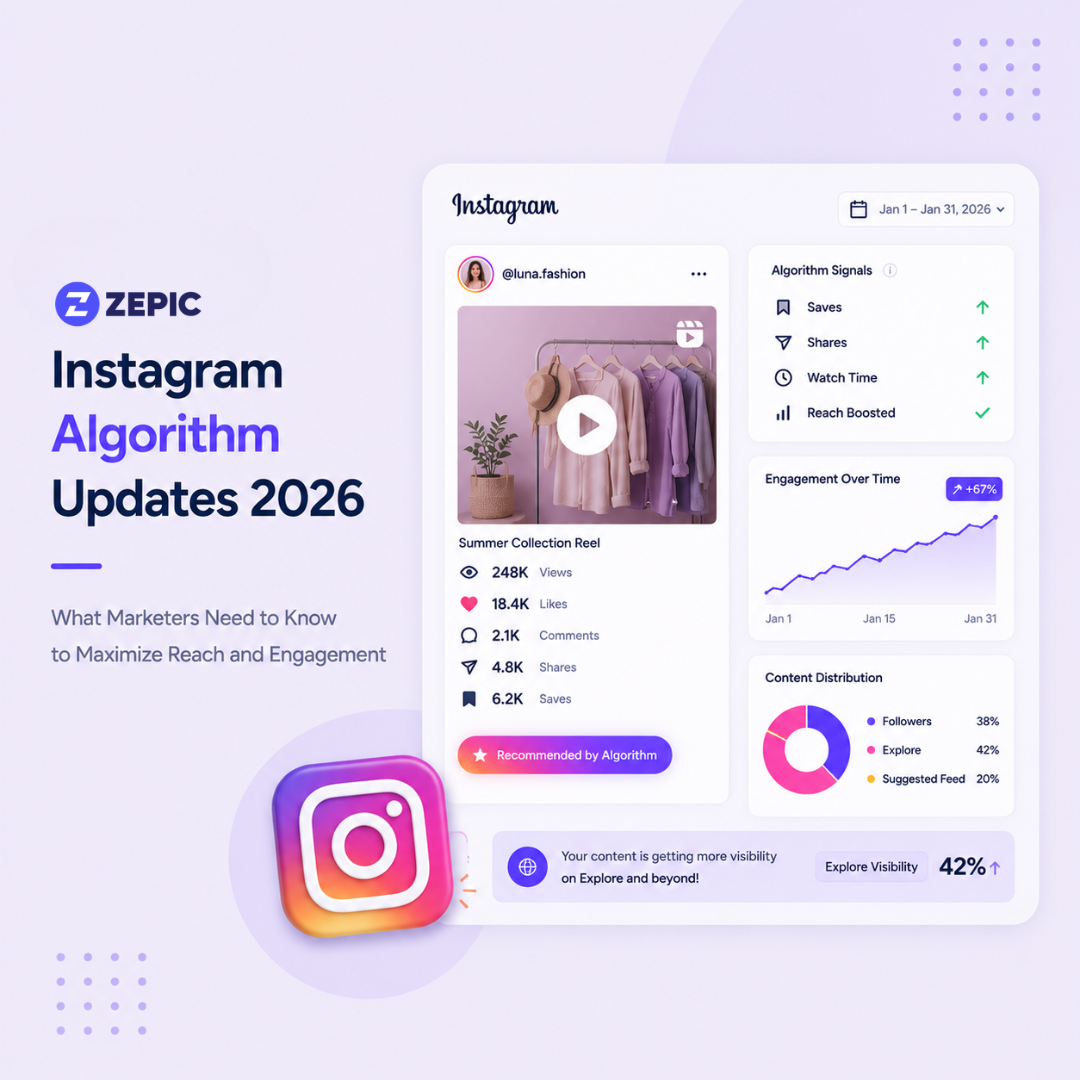
Views replaced likes as the primary metric across all formats: Instagram now prioritizes views over likes; it counts a View every time a post appears on a screen, even if it's repeat views. This applies to Reels, Stories, Photos, and Carousels. Mosseri confirmed that the platform wants creators to optimize for reach and watch time, not just passive likes.
DM shares became the strongest ranking signal for new-audience reach: When someone sends your post to a friend in a DM, Instagram treats that as a high-intent endorsement. According to data from GOSO, 1 DM share is equivalent to roughly 15 likes in distribution score. Instagram's internal data shows DM shares correlate with purchase intent 4x more strongly than likes.
The aggregator penalty went into effect: The platform has started actively penalizing accounts that repost content without adding original value. If you reshare a Reel or meme without adding to it, the algorithm will often surface the original creator's version instead of yours. Accounts posting 10 or more reposts within a 30-day window are excluded from Explore and Reels recommendations entirely.
"Your Algorithm" launched in December 2025: Users can now review the topics Instagram thinks they care about, add new ones, or reduce the weight of topics they do not want. For creators, this means your content needs to match the topics your audience actively chooses.
AI-powered content recognition went deeper: Instagram's system now categorizes content by analyzing visuals, text in images, and video audio, well beyond just hashtags. This makes keyword strategy in captions far more important than hashtag quantity.
The 2026 Instagram Ranking Signals
Across all surfaces, Instagram is prioritizing signals that indicate genuine connection and utility. Here is the confirmed ranking hierarchy from Adam Mosseri's Q1 2026 updates, ordered by weight:
Watch time and completion rate: This is the single most important signal, especially for Reels. A 45-second video watched to completion by 70% of viewers outperforms a 15-second video with 40% completion. Instagram also tracks repeat views, which signal that content is worth revisiting.
DM Shares (Sends per Reach): Mosseri said, "We actually do value both sends and saves in ranking, but we focus more on sends primarily because our whole hope is to inspire creativity that brings people together."
Saves: Educational content, templates, recipes, and reference guides earn saves consistently. Each save is worth roughly 10 likes on Instagram now.
Profile clicks: When someone taps through to your profile after seeing a post, Instagram reads it as the content did its job, and the account is worth exploring.
Conversation depth: Instagram no longer counts a "nice!" comment as meaningful. The system tracks whether comments spark back-and-forth threads.
Likes: Thought they still exist as a signal, they’re roughly 1/10th the weight of 2023. A post with 100 likes and 20 DM shares now outperforms a post with 1,000 likes and zero shares.
How the Instagram Algorithm Works for Each Content Type
Instagram Feed Algorithm
The Feed prioritizes content from accounts you already interact with. Signals include:
How recently have you engaged with a creator
Post popularity (likes, comments, saves) among similar users
Whether you have commented on similar content before
Your past DM history with the creator
The Feed algorithm also limits back-to-back posts from the same creator and blends followed and recommended accounts to diversify the experience.
Instagram Reels Algorithm
Reels is the primary discovery engine on Instagram. The metrics that matter include,
Watch time and completion rate above everything else
DM shares as the top signal for reaching non-followers
Entertainment value (does this Reel make people stop and watch?)
Whether the audio is original or trending
One new feature worth knowing: Trial Reels. Mosseri has specifically recommended this for 2026. Trial Reels show your content to non-followers first, without publishing to your main profile. If the Reel performs well with cold audiences, you then push it broadly. It is the best way to test new formats without risking your existing audience's perception of you.
Instagram Stories Algorithm
How often someone views your Stories (viewing history matters most)
Whether they have replied to a Story via DM
Their offline relationship with you (friends and family get pushed higher)
Whether they engage with interactive elements like polls, question stickers, or sliders
Stories ranked highest in someone's tray are almost always accounts they DM regularly. The takeaway is that Instagram Stories build relationships with existing followers, not new ones.
Instagram Explore Page Algorithm
Explore is where new audiences find you. It combines:
Your past activity (likes, saves, comments, profile visits)
Post popularity metrics: content that earns rapid engagement within its existing audience gets surfaced to cold audiences
Content similarity to what users already engage with
For Explore placement, content needs to clear five baseline checks: no watermarks from other platforms, no reposted content, original creation, community guideline compliance, and no engagement bait patterns.
Instagram Search Algorithm
Instagram's Search is increasingly keyword-driven. The system now reads your captions, bio, and on-screen text to categorize your content. Three to five relevant hashtags still help, but keyword-rich captions are the stronger play in 2026.
Instagram's Push for Original Content: What It Means for Brands
This is one of the most consequential shifts for brands in 2026. Instagram has been explicit about how original content gets more distribution. Aggregated, reshared, or recycled content gets less.
Mosseri addressed AI-generated content directly in early 2026:
"Authenticity itself is becoming infinitely reproducible. Because AI tools can now generate highly polished images and videos instantly, perfect content is becoming cheap and easy to produce. The content that stands out is often more human and less manufactured."
What this means for brands practically:
AI-generated Reels that lack human storytelling struggle. The Instagram algorithm does not explicitly penalize AI content, but AI content that fails to hold watch time gets treated the same as any low-performing post. AI-assisted content (a human story with AI production help) performs identically to fully human content.
Raw and real outperform polished and generic: Brands like Duolingo that lean into imperfect, character-driven content see outsized results. Duolingo's Instagram averages an 8.5% engagement rate, and Reels average 5 million views by using consistent character storytelling and rapid trend adoption.
The aggregator model is dead: If your Instagram strategy has relied on curating and reposting content from other creators, that approach now actively works against you. Every repost within a 30-day window counts toward the 10-repost threshold that gets you removed from recommendations.
Original audio and video earns a distribution bonus: Content made specifically for Instagram, without watermarks from TikTok or CapCut, gets preferential treatment in recommendations.
For brands, this is an opportunity. Most competitors are still posting polished stock-photo-style content. Brands that show behind-the-scenes moments or genuinely useful educational content in their own voice are consistently outperforming the "produced look.
Instagram DM Automation: The Algorithm's Hidden Growth Lever
Here is something most guides miss to tell you: Instagram DM automation is an algorithmic strategy that can help you with engagement and conversions.
When users engage with your automated DM flows, they spend more time inside the Instagram app. More time in-app is a positive signal to Instagram's ranking systems. When someone comments a keyword on your post, that comment also contributes to your post's engagement score, which drives broader reach in the algorithm.
The Comment-to-DM Strategy
The most effective approach works like this: you post a Reel or static post with a specific call to action, such as "Comment the word GUIDE and I'll send you the full checklist." When users comment, two things happen:
The comment volume sends a strong engagement signal to the algorithm, pushing the post to more non-followers
This strategy converts passive viewers into conversations at scale, and every conversation deepens the relationship signal between your account and the follower.
Story Reply Automation
Stories are another trigger point. Posting "Reply YES if you want early access" captures your most engaged followers, the ones who are already watching your daily content. These replies are high-intent signals both algorithmically and for your sales funnel.
AI DM Agents vs Basic Auto-Replies
Basic auto-replies send a link and end the conversation. Modern Instagram DM automation tools are equipped with AI that continues the conversation by asking qualifying questions. A user who asks about a fitness program might receive: "Sure, here is the link! Are you looking for beginner or advanced?" That follow-up turns a 5-second interaction into a 3-minute conversation, which generates significant time-in-app signals that the algorithm rewards.
Meta's Official API
The most important thing here is compliance. Tools that use Meta's official Instagram Graph API are safe. Third-party tools that scrape or simulate human behavior risk account shadowbans or permanent suspensions.
Use DM automation when:
You are receiving 20 or more DMs per day (manual responses become impossible at scale)
You want to capture leads from viral content without a "link in bio" dead end.
You are running a lead magnet, discount, or freebie campaign through Instagram
Wrapping Up
The 2026 Instagram algorithm rewards one thing above everything else: content people care enough to send to someone else. Watch time tells the algorithm that you can hold attention, DM shares tell it your content is worth spreading, and Saves tell it your content has lasting value.
The brands winning on Instagram right now are not the ones spending the most on production. They are the ones creating content with a specific person in mind, asking, "Would someone send this to their best friend?" before they hit publish. Add Instagram DM automation to capture the people who say yes, and you have a system that compounds over time.
Looking for an Instagram DM automation tool that understands user intent? Try ZEPIC today!
Frequently Asked Questions
How many hashtags should I use on Instagram in 2026?
Three to five highly relevant hashtags focused on your niche are generally enough. Instagram’s AI now understands captions and visual content directly, making keyword-rich captions more important than using large volumes of hashtags. Excessive hashtag usage can reduce content quality signals and limit reach.
Does the algorithm treat business accounts differently?
Yes, business accounts can experience slightly lower baseline organic reach compared to personal accounts. However, strong engagement signals such as early comments, saves, shares, and fast response times significantly reduce this gap and improve distribution.
How often should I post on Instagram in 2026?
Posting three to five high-quality posts per week generally performs better than posting low-quality content daily. Consistent Stories help maintain visibility and audience engagement, while poor-quality volume can negatively impact reach over time.
Does Instagram penalize AI-generated content?
Instagram does not directly penalize AI-generated content. However, content that fails to generate strong engagement signals such as watch time, saves, or shares will naturally receive lower distribution. AI-generated posts that feel generic or impersonal often underperform because users engage with them less.
How long does it take to see algorithm improvements?
Most creators and brands begin seeing measurable engagement improvements within two to four weeks of consistently applying stronger content and engagement practices. The algorithm needs repeated signals to identify content patterns that generate meaningful user interaction.
My follower count suddenly dropped in May 2026. Was I shadowbanned?
Probably not. Many accounts experienced follower drops during Instagram’s large-scale bot and inactive account cleanup in 2026. This removed fake and inactive followers from the platform. To verify your account health, check the “Account Status” section in Instagram settings. If there are no recommendation restrictions, your account is likely healthy and may even see stronger engagement rates moving forward due to a cleaner audience.
Desperate times call for desperate Google/Chat GPT searches, right? "Best Shopify apps for sales." "How to increase online sales fast." "AI tools for ecommerce growth."
Been there. Done that. Installed way too many apps. But here's what nobody tells you while you're doom-scrolling through Shopify app reviews at 2 AM—that magical online sales-boosting app you're searching for? It doesn't exist. Because if it did, Jeff Bezos would've bought (or built!) it yesterday, and we (fellow eCommerce store owners) would all be retired in Bali by now. Growing a Shopify store and increasing online sales isn’t easy—we get it. While everyone’s out chasing the next “revolutionary” tool/trend (looking at you, DeepSeek), the real revenue drivers are probably hiding in plain sight—right there inside your customer data. After working with Shopify stores like yours (shoutout to Cybele, who recovered almost 25% of their abandoned carts with WhatsApp automation), we’ve cracked the code on what actually moves the needle. Ready to stop app-hopping and start actually growing your sales by using what you already have? Here are four fixes that will get you there!
The Painful Truth: You're probably losing about 70% of your potential sales to cart abandonment. That's not just a statistic—it's real money walking out of your digital door. And looking for yet another Shopify app for abandoned cart recovery isn't going to fix it if you're not getting the fundamentals right.
The Quick Fix: Everyone knows you need multi-channel recovery that hits the sweet spot between "Hey, did you forget something?" and "PLEASE COME BACK!" But here's the reality—most recovery apps are a one-trick pony. They either do email OR WhatsApp, not both. And don't even get us started on personalizing offers based on cart value—that usually means toggling between three different dashboards while praying your apps talk to each other.
Enter ZEPIC: This is where we come in. With ZEPIC's automated Flows, you can: Launch WhatsApp recovery messages (with 95% open rates!) Set up perfectly timed email sequences (or vice versa) Create personalized recovery offers not just on cart value but based on your customer’s behavior/preferences Track and optimize everything from one dashboard
Fix #2: Reactivate past customers today
The Painful Truth: You're probably losing about 70% of your potential sales to cart abandonment. That's not just a statistic—it's real money walking out of your digital door. And looking for yet another Shopify app for abandoned cart recovery isn't going to fix it if you're not getting the fundamentals right.
The Quick Fix: Everyone knows you need multi-channel recovery that hits the sweet spot between "Hey, did you forget something?" and "PLEASE COME BACK!" But here's the reality—most recovery apps are a one-trick pony. They either do email OR WhatsApp, not both. And don't even get us started on personalizing offers based on cart value—that usually means toggling between three different dashboards while praying your apps talk to each other.
Enter ZEPIC: This is where we come in. With ZEPIC's automated Flows, you can: Launch WhatsApp recovery messages (with 95% open rates!) Set up perfectly timed email sequences (or vice versa) Create personalized recovery offers not just on cart value but based on your customer’s behavior/preferences Track and optimize everything from one dashboard
Offering light at the end of the tunnel is Google’s Privacy Sandbox which seeks to ‘create a thriving web ecosystem that is respectful of users and private by default’. Like the name suggests, your Chrome browser will take the role of a ‘privacy sandbox’ that holds all your data (visits, interests, actions etc) disclosing these to other websites and platforms only with your explicit permission. If not yet, we recommend testing your websites, audience relevance and advertising attribution with Chrome’s trial of the Privacy Sandbox.
Top 3 impacts of the third-party cookie phase-out
Who’s impacted
How
What next
Digital advertising and acquisition teams
Lack of cookie data results in drastic fall in website traffic and conversion rate
Review all cookie-based audience acquisition. Sign up for Chrome’s trial of the Privacy Sandbox
Digital Customer Experience
Customers are not served relevant, personalised experiences: on the web, over social channels and communication media
Multiply efforts to collect first-party customer data. Implement a Customer Data Platform
Security, Privacy and Compliance teams
Increased scrutiny from regulators and questions from customers about data storage and usage
Review current cookie and communication consent management, ensure to align with latest privacy regulations