Meet

Neura HQ,
Your connected AI Agent Workforce Know more



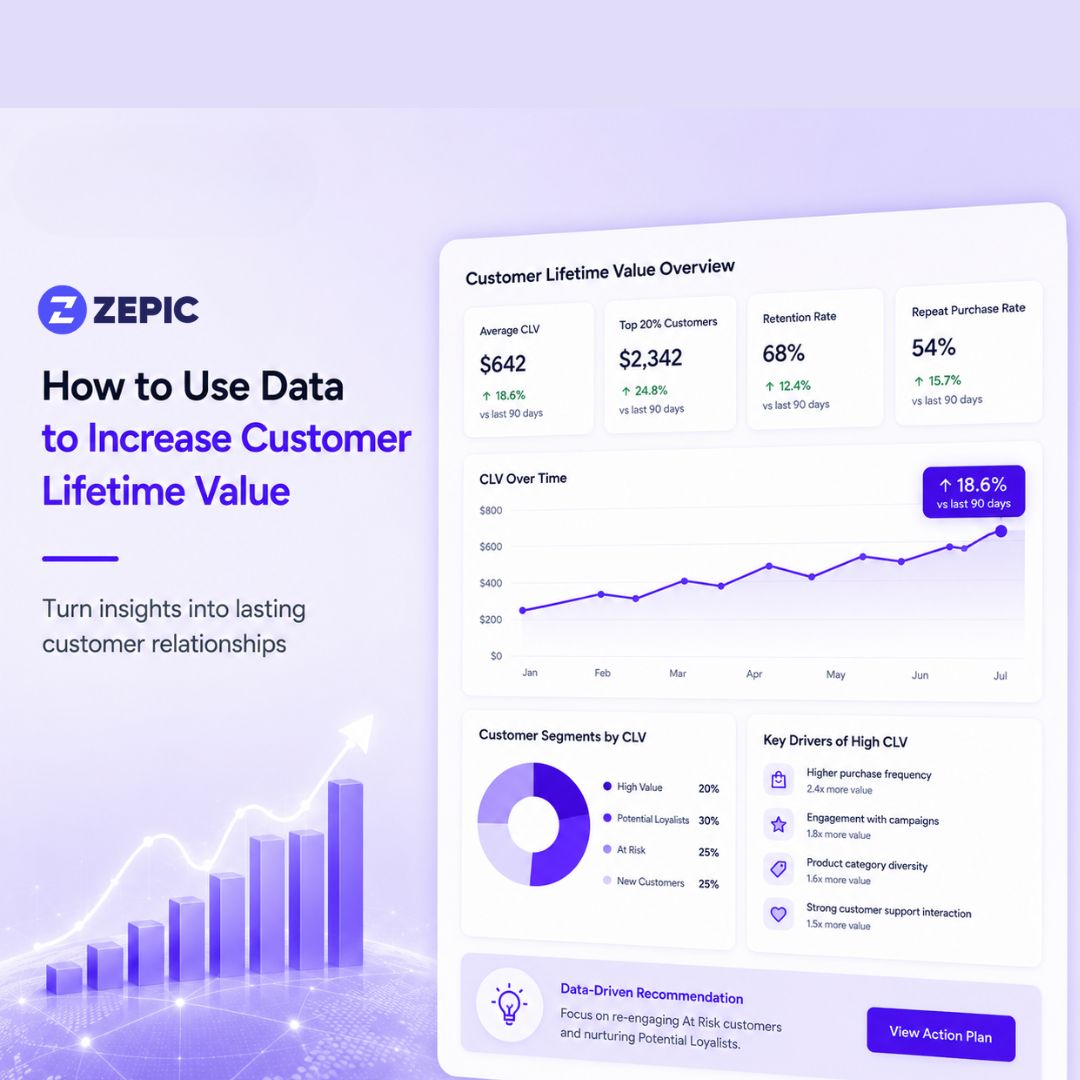
Customer Lifetime Value (CLV) is the total amount of money a customer spends with your business during their entire relationship with your brand. While many ecommerce teams focus heavily on the first purchase, the most profitable brands prioritize what happens after that initial transaction.
Increasing CLV is the most direct path to sustainable growth. When you maximize the value of every customer you acquire, you can afford to spend more on marketing, outbid your competitors, and build a more resilient business. This guide explores how to turn raw customer data into actionable strategies that keep shoppers coming back.
In the simplest terms, CLV represents the long-term health of your customer base. It is a metric that shifts the focus from short-term wins to long-term stability. To calculate it, you multiply your average order value (AOV) by the average number of times a customer buys per year, then multiply that by the average customer lifespan in years.
CLV = {Average Order Value} x {Purchase Frequency} x {Customer Lifespan}
For an ecommerce brand, a high CLV indicates strong product-market fit and effective brand loyalty. It means your customers trust your quality and find consistent value in your offerings. When CLV is high, your business becomes less dependent on the constant influx of new traffic. You begin to lean on a predictable engine of repeat revenue.
Relying solely on new customer acquisition is a risky and expensive strategy. In recent years, the cost per acquisition (CAC) on platforms like Meta and Google has climbed significantly.
Data from Bain & Company shows that increasing customer retention rates by 5% can increase profits by 25% to 95%. When you shift your focus toward CLV, you ensure that the expensive first click eventually pays for itself many times over.
To increase CLV, you must first understand the signals your customers are sending. Most brands have access to this data but fail to organize it into a usable format.
This is the most direct indicator of value. It includes:
Engagement data tells you how interested a customer is before they decide to buy. This includes email open rates, click-through rates, and how often they visit your website without purchasing.
A customer who opens every newsletter but hasn't bought in six months is a prime candidate for a "win-back" offer.
Data regarding which categories a customer browses or buys helps you personalize their experience. If a customer only buys men's running shoes, sending them emails about women's yoga gear is a wasted touchpoint that leads to unsubscribes.
Every customer has a unique rhythm. Some shoppers buy every 30 days like clockwork, while others only shop during major holiday sales. Identifying these patterns allows you to time your marketing messages perfectly.
Once you have organized your data, you can begin executing specific campaigns designed to extend the customer lifecycle.
Most products have a natural replenishment cycle. If you sell coffee, skincare, or pet food, you can use historical data to calculate exactly when a customer is likely to run out of their product.
Instead of sending generic weekly emails, set up an automated flow that triggers a few days before their expected "empty date." This reminds the customer to restock before they look for alternatives. For example, if your data shows the average bag of coffee lasts 21 days, send a "Running Low?" email on day 18.
Generic "Recommended for You" blocks often fail because they are too broad. Data-driven personalization uses "category affinity" to show customers products they actually want.
If a customer buys a camera, your next three emails should focus on lenses, tripods, and camera bags. By analyzing "frequently bought together" patterns across your entire database, you can present the most logical next step in the customer journey.
All customers are not created equal. The Pareto Principle often applies to ecommerce: 20% of your customers likely generate 80% of your revenue.
Identify these VIPs by looking for customers who have a high purchase frequency and a high AOV. Once identified, give them a different experience. This could include:
Data can tell you when a customer is about to leave before they actually disappear. This is called at-risk detection.
If a customer typically buys every 45 days and it has been 90 days since their last order, they are at a high risk of churn. You can use data to trigger an automated "We Miss You" campaign with a tiered discount to bring them back. The goal is to intervene the moment their behavior deviates from their established pattern.
One of the fastest ways to destroy CLV is to annoy your customers with too many messages. Use engagement data to determine how often each segment wants to hear from you.
By reducing the frequency for unengaged users, you prevent unsubscribes and keep the door open for future sales.
Loyalty is about more than just points. Use data to reward behaviors that lead to long-term value, such as:
When you incentivize these actions, you deepen the customer's investment in your brand. A customer who has written three reviews and referred a friend is much less likely to switch to a competitor.
The period between clicking "buy" and the package arriving at the door is the most emotional part of the customer journey. Use data to provide proactive updates.
If your shipping data shows a delay, send an automated email apologizing before the customer has to ask where their package is. Use the transactional "Order Confirmed" and "Out for Delivery" emails to share helpful content, such as "How to care for your new leather boots." This adds value without asking for more money immediately, building the trust necessary for a second purchase.
To know if your strategies are working, you must track specific retention KPIs. While total revenue is important, these metrics give you a more granular view of loyalty.
| Metric | What it Measures | Why it Matters |
|---|---|---|
| Repeat Purchase Rate | % of customers who have bought more than once. | High rates prove your product and initial experience are strong. |
| Purchase Frequency | The average number of orders per customer over a year. | Increasing this directly boosts CLV without needing new customers. |
| Time Between Orders | The average number of days between a first and second purchase. | Shortening this window accelerates your cash flow. |
| CLV to CAC Ratio | The relationship between customer value and acquisition cost. | A 3:1 ratio is generally considered the benchmark for a healthy brand. |
Even with the best intentions, brands often fall into traps that stifle their long-term growth.
The shift from acquisition-heavy marketing to a retention-first strategy is a necessity in the modern ecommerce landscape. High customer lifetime value is not a lucky accident. It is the result of consistently using data to anticipate needs and reward loyalty. When you move away from generic blasts and toward personalized, data-driven touchpoints, you build a brand that customers actually want to hear from.
Focusing on CLV allows you to build a sustainable business that can withstand rising ad costs and market shifts. By turning every transaction into an opportunity for a deeper relationship, you ensure that your most valuable asset, your existing customer base, continues to drive your growth.
Executing these strategies requires a clear, unified view of your customers. If your data is trapped in separate silos, you cannot effectively predict purchase timing or identify churn risk. ZEPIC bridges this gap by unifying your customer data into a single, actionable platform.
With ZEPIC, you can automate personalized journeys across Email, SMS, and WhatsApp based on real-time behavior. Stop guessing what your customers want and start using your data to drive repeat sales. Book a demo today.
A good CLV depends on your industry and your customer acquisition cost (CAC). A common benchmark for ecommerce brands is a 3:1 CLV-to-CAC ratio. This means each customer should generate at least three times the revenue of what it cost to acquire them. If your ratio is 1:1 or lower, sustaining profitability becomes difficult once operating expenses are factored in.
CLV is critical because retaining an existing customer is significantly less expensive than acquiring a new one. A high CLV creates predictable recurring revenue, improves profit margins, and strengthens cash flow. It also provides a competitive advantage, allowing your business to invest more confidently in high-quality acquisition channels.
Yes. Many effective CLV strategies focus on enhancing the customer experience rather than reducing prices. Proactive shipping updates, early access to new collections, personalized recommendations, and educational content related to previous purchases all help build loyalty and encourage repeat buying without eroding margins.

%201.png)


.png)