Meet

Neura HQ,
Your connected AI Agent Workforce Know more



.png)
TLDR
Discounting is the go-to marketing strategy for most e-commerce brands, especially during the holiday season. While it is the fastest path to increase sales, there’s a hidden cost that many businesses don’t calculate—your brand’s perceived value and recurring revenue.
Every time you run a discount, you’re reducing your brand’s perceived value. Over time, instead of viewing your brand as premium or desirable, they start to see it as one that’s always on sale. Ultimately, their loyalty is more to the discounts than the brand itself.
Discounts also affect your margins. For example, if your profit margin is 25% and you offer a 20% discount, you need to sell at least 80% more to make the same profit. That’s a huge gap to close, especially when ad costs are rising and customer acquisition is getting expensive every year.
And then comes the customer conditioning, a behavioral cost that’s even harder to reverse. Shoppers get used to waiting for deals, and even your best customers may stop buying at full price. Research shows that a third of shoppers now wait until a sale or discount period to make a purchase.

How can you increase your Average Order Value (AOV) without discounts?
In this guide, we’ll explore four proven sustainable strategies that help you grow AOV and protect your margins:
Upselling: Encourage customers to upgrade to premium versions or add enhancements that improve their experience.
Cross-Selling: Introduce complementary products that make their original purchase more useful or enjoyable.
Bundling: Package products together to create perceived value and convenience, without cutting into your margins.
Threshold Incentives: Motivate shoppers to hit a spending target by offering perks like free shipping or bonuses.
Brands lean heavily on discounts because they’re straightforward and deliver quick, measurable spikes in sales. A flash sale or a percentage off feels like an easy win for marketing teams under pressure to hit short-term revenue goals. The results might make it look like the strategy is working, but that’s often an illusion.
What you’re often seeing is future demand pulled forward. Customers who would have bought next week are simply buying today because of the sale. This “discount trap” is a dangerous cycle.
You lower prices to boost sales → your margins shrink → you discount again to keep revenue flowing.
What does this cost your business?
Margin erosion: Discounts shrink the gap between your selling price and cost, leaving less room for profit and reinvestment. For brands that are already operating on slim margins, even a small discount can make profitable scaling nearly impossible.
Customer conditioning: Frequent promotions teach shoppers to wait for deals. Once they know your pricing pattern, they’ll hesitate to buy at full price. This drives down overall revenue predictability.
Brand devaluation: A study of online apparel purchases revealed that when products were heavily discounted (10%–70% off), consumers directly perceived those items as lower quality. So, when discounts become a part of your identity, it’s hard to position your brand as premium.
According to a PwC report, 43% of consumers are willing to pay more for greater convenience, and 42% would pay more for a friendly, welcoming experience. In other words, people don’t always want cheaper; they want better.
Instead of asking, “How much should we discount?” start asking, “How can we make customers see more value in spending more?”
When brands focus on value creation, they tap into what actually drives purchasing decisions. This could be convenience, personalization, quality, or emotional connection.
Here’s how that value creation mindset looks in practice:
Price reduction mindset: “Let’s offer 15% off our skincare set this weekend.”
Value creation mindset: “Let’s launch a ‘Glow Routine Kit’ with a free skincare guide and early access to our next launch.”
The second approach still boosts perceived value, but it does so without cutting into profit margins.
Let’s look at more strategies that help you increase average order value without eating into your profits.
A study by Forrester found that cross-sells and upsells drive over 10–30% of e-commerce revenue. Upselling encourages customers to upgrade to a higher-value version of a product they already own or recently purchased. In post-purchase campaigns, the goal is to increase lifetime value.
Post-purchase upsells are most effective 2 days after purchase, when customers feel good about their decision and are still engaged with your brand. Since their satisfaction levels are high, they might be more receptive to your upsell campaign.
After a successful purchase, customers experience a dopamine boost, a sense of achievement, and ownership. This is when they’re more likely to say yes to an upgrade that promises more satisfaction or convenience.
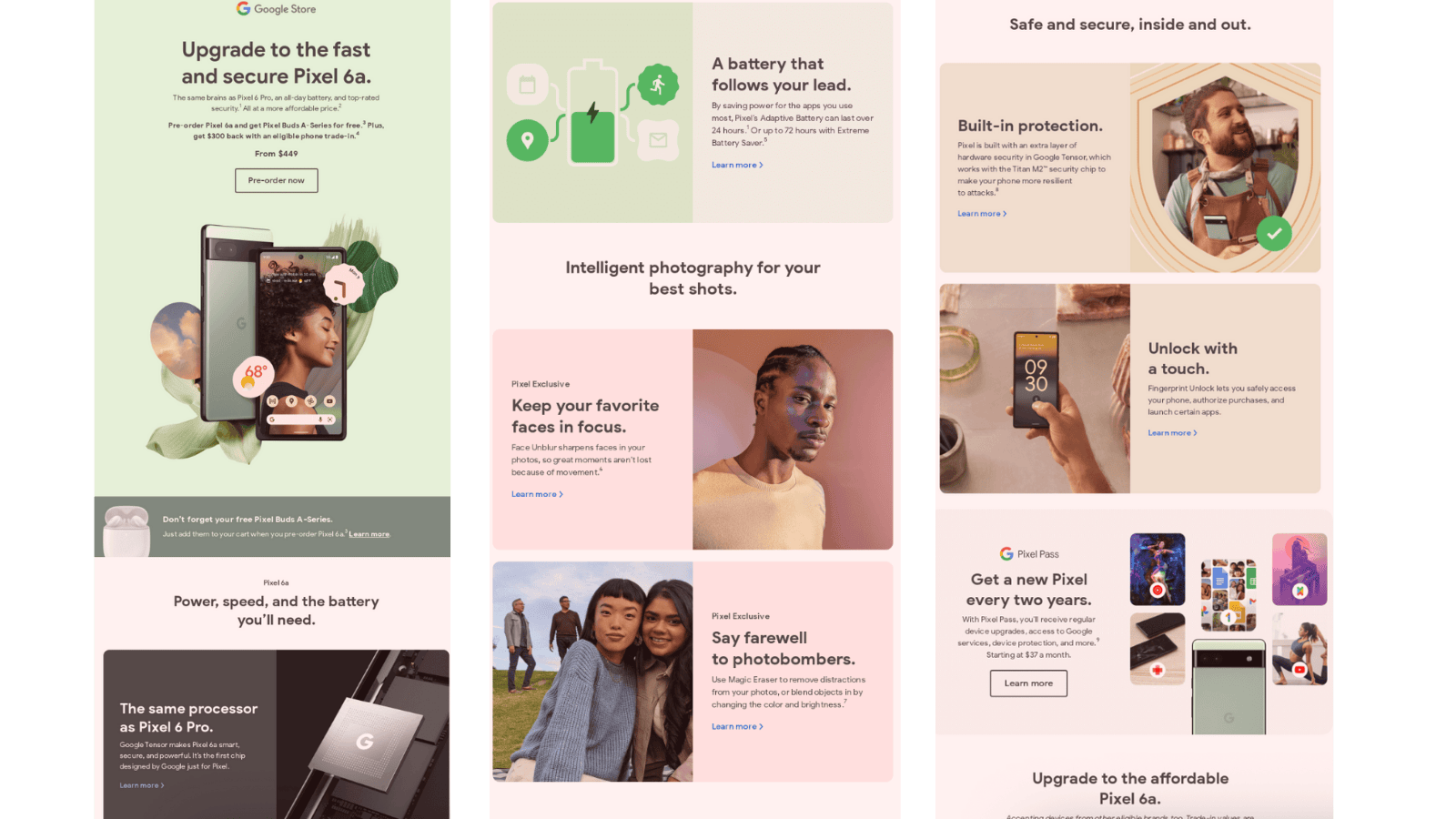
Google effectively uses upselling to move existing customers to newer, higher-value devices, in this case, from an older Pixel model to the Pixel 6a.
Instead of offering a discount, the email focuses on value-based messaging. It highlights that Pixel 6a is faster and affordable. The call to action encourages comparison (“Which Pixel is right for you?”) and subtly nudges customers to choose the premium option.
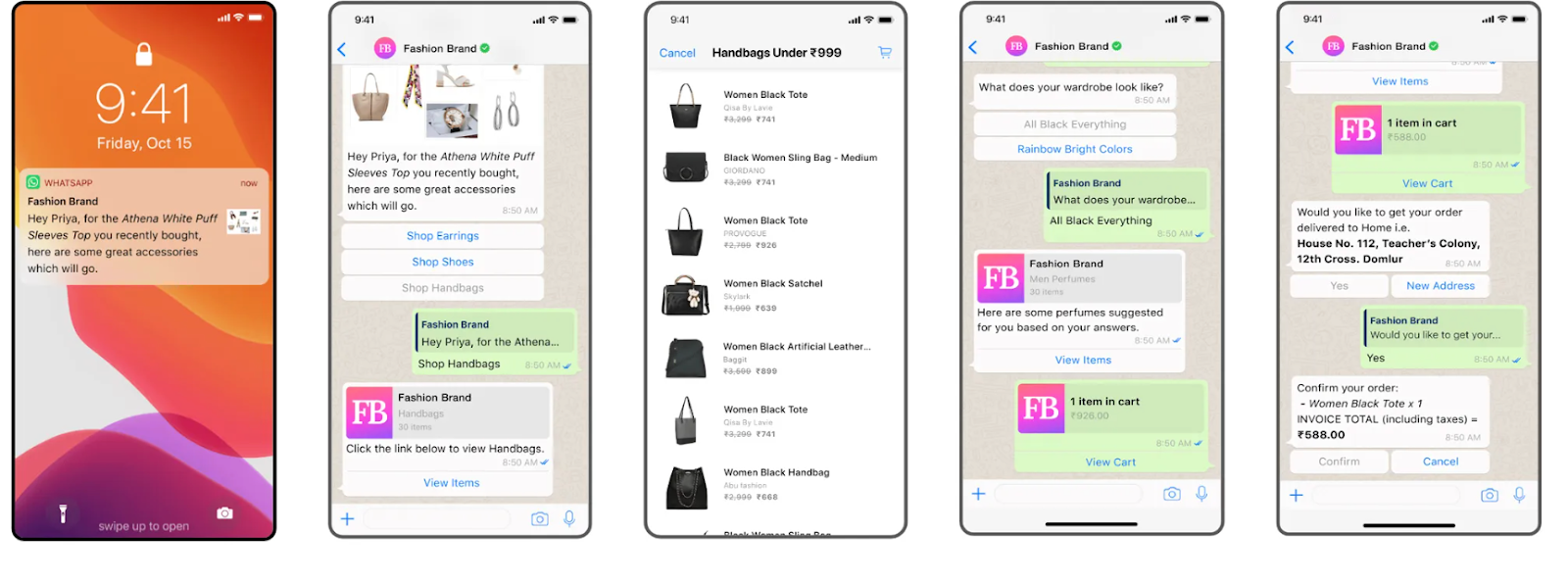
While upselling is about encouraging customers to move to a higher-end version of a product, cross-selling is about introducing complementary products that enhance the original purchase.
You’re essentially helping your customer get more value out of what they already bought.
For example, if someone buys a DSLR camera, cross-selling might suggest a memory card, tripod, or lens cleaning kit.
Cross-selling taps into the completion principle, i.e., the human desire to finish what they’ve started. Once a buyer commits to a product, they’re more open to related items that help them get the most out of their purchase.
It also leverages post-purchase momentum. Immediately after buying, customers are still in a positive emotional state, so they are more receptive to relevant suggestions that feel helpful.
When a customer buys an iPhone from Apple, the website and follow-up emails suggest related accessories like AirPods, a MagSafe charger, or a protective case.
These items enhance the main product’s functionality while subtly building a broader Apple ecosystem.
Timing: The ideal moment is 1–2 days after delivery, when customer satisfaction is high and they’re already using the product.
Relevance: Pair items that naturally complement the first purchase. Use behavioral data, not assumptions.
Subtlety: Keep it conversational and helpful; phrases like “Enhance your experience with…” work better than “Add this now!”
Automation: Use email or WhatsApp automation to trigger cross-sell flows based on past purchases.
If upselling is about “buying better,” and cross-selling is about “buying smarter,” bundling is about making the purchase feel like a win-win. It’s a pricing and positioning tactic where you group related products together—often at a slightly better value than buying them separately—without resorting to steep discounts.
Bundling taps into two key psychological triggers:
Perceived value: Customers feel they’re getting “more for less,” even if the overall discount is minimal.
Convenience: It reduces decision fatigue. A ready-made combo saves them the effort of figuring out what goes with what.
In behavioral economics, this ties to the effort justification bias. When shoppers feel they’re saving time and mental effort, they’re more likely to complete the purchase.
A study published by the National Bureau of Economic Research found that bundled offers can increase sales volume by up to 30%, especially when products are complementary and relevant to each other.

Reggie, a dog wellness brand, demonstrates how bundling can be done right with its “New Combo Alert” email. Instead of offering steep discounts, the brand combines two related products, a Feeder Mat and Freeze-Dried Training Treats, into a bundle priced at $49.99 (vs. $60 if bought separately), along with free shipping.
Set smart thresholds: Design bundles that are 20–30% above your current AOV to nudge customers toward higher spending without sticker shock.
Stack multiple benefits: Combine various perks, like free shipping or a small bonus item, instead of cutting prices deeply.
Keep it curated: Suggest specific, well-paired bundles instead of letting customers choose from everything.
Show clear value: Use phrases like “Worth $45, yours for $39” to visually anchor the savings and make the offer more compelling.
Threshold incentives are rewards or perks that customers unlock once they reach a certain spending limit. It could be free shipping if their average order value is $50 or a bonus gift if it is $75. When you do this, you encourage customers to increase their cart size to gain added value.
Psychologically, threshold incentives tap into goal-oriented behavior and the human desire to “unlock” achievements.
When shoppers see that they’re just a few dollars away from a reward, it triggers completion bias and pushes them to add one more item to reach the goal.
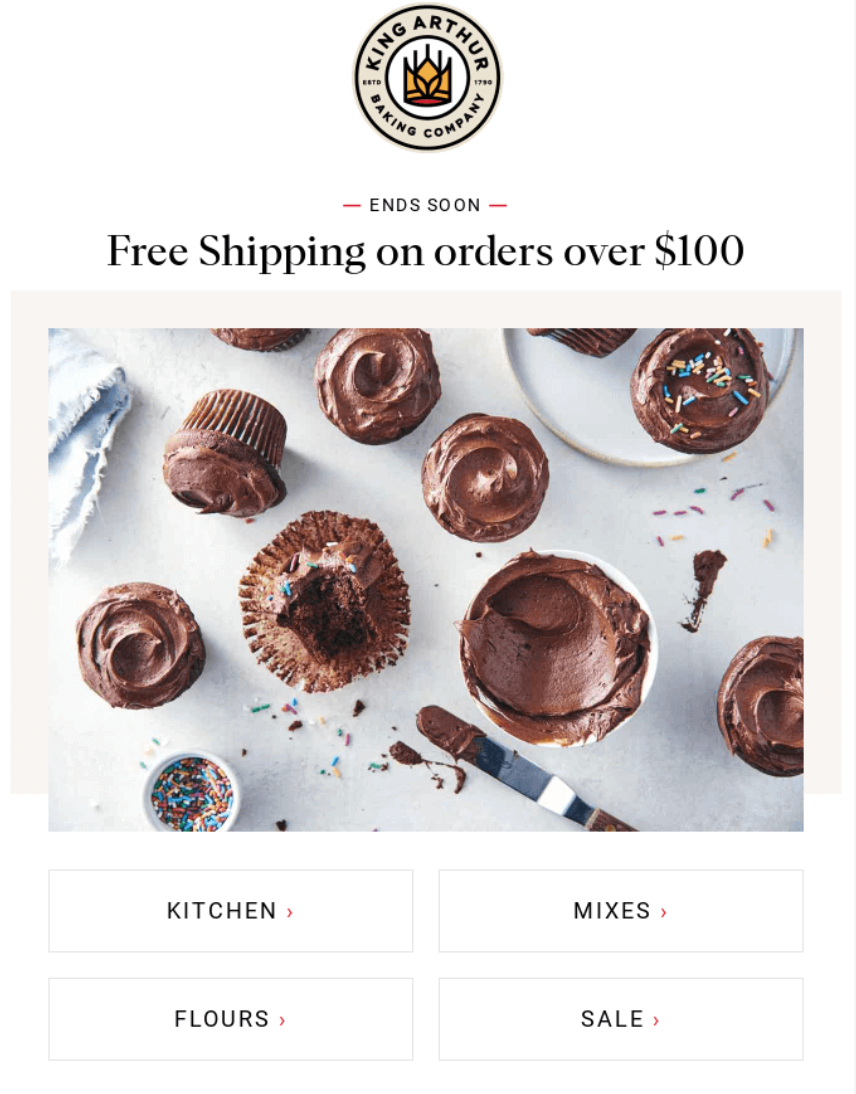
King Arthur Baking Company used a simple yet effective threshold incentive campaign:
“Free Shipping on Orders Over $100”
Their email featured warm, inviting visuals of baked goods and an “Ends Soon” message to add urgency. This clean, minimal approach made the incentive feel like an earned bonus rather than a marketing ploy, increasing both AOV and cart completion rates.
Set achievable thresholds: Place your first incentive about 10–20% above your current AOV so customers feel the target is within easy reach.
Highlight exact progress: Use dynamic cart messages (“You’re $8 away from your bonus gift”) to reinforce a sense of progress and urgency.
Create tiered rewards: Offer multiple thresholds like free shipping at $50, a bonus gift at $75, and 10% off at $100 to encourage even higher spending.
Make rewards feel valuable: Choose perks customers actually care about (e.g., free shipping, exclusive samples, or store credits).
Brands implementing threshold incentives typically see:
Increasing your Average Order Value (AOV) without discounts is all about orchestrating multiple strategies that complement each other across the customer journey.
Upselling, cross-selling, bundling, and threshold incentives work best when used together, strategically and sequentially.
Say you’re a skincare brand like Lumineux Botanicals. After a customer purchases a vitamin C serum, you can send a post-purchase upsell email two days later, suggesting the premium “Pro Glow” version with a higher concentration and better absorption.
A few days after delivery, a cross-sell campaign can recommend complementary products like a hydrating moisturizer and SPF, helping the customer build a complete skincare routine.
At the same time, bundling makes it easier for new shoppers to choose curated sets such as the “Radiance Trio” (cleanser, serum, and moisturizer), with a small built-in value advantage and the promise of convenience.
Finally, at checkout, threshold incentives like “Get free shipping on orders over $75” encourage customers to add that one extra product to boost the cart value organically.

Overwhelming customers with too many offers: Bombarding users with multiple prompts (“Upgrade now,” “Add this,” “Bundle and save”) can cause decision fatigue. Keep one clear next step per campaign.
Poor timing: Sending upsells too early, before customers experience the product, can feel transactional. Align messaging with customer sentiment and journey stage.
Generic recommendations: Irrelevant product suggestions weaken trust. Use behavioral data and past purchases to personalize every touchpoint.
No two audiences respond the same way; what drives higher AOV for one brand may fall flat for another. Experiment with different upsell intervals (e.g., immediately post-purchase vs. 2 days later), bundle combinations, and incentive thresholds to see what resonates best.
Track metrics like conversion rate, average order value uplift, and repeat purchase frequency to evaluate performance.
Use A/B testing to compare creative variations, copy styles, and call-to-action phrasing. Over time, these insights will help refine your strategy, ensuring you’re not just increasing AOV but doing so efficiently and profitably.
Automation makes it easy to execute these strategies at scale. Using behavioral triggers and segmentation, you can automatically send upsell emails post-purchase, recommend cross-sells after delivery, and display dynamic threshold banners at checkout, all without manual effort.
With ZEPIC, brands can take this a step further. ZEPIC’s platform allows you to build personalized customer journeys across channels like email and WhatsApp, all powered by real-time data.
The four strategies we explored focus on one core principle: helping customers see more value in spending more. Whether it’s upgrading to a better product, completing their routine with complementary items, choosing a convenient bundle, or unlocking free perks, each tactic improves engagement and strengthens brand perception.
When executed with the right timing, personalization, and automation, these strategies turn one-time buyers into loyal, higher-value customers.
Ready to launch winning campaigns to boost average order value? Learn how ZEPIC can help.

%201.png)


.png)