Meet

Neura HQ,
Your connected AI Agent Workforce Know more




TLDR
The holiday season is one of the busiest times for e-commerce brands. Despite economic uncertainty, 77% of consumers plan to spend more this holiday season. But increased spending doesn’t automatically translate into increased revenue for every brand.
Why does this happen?
Inboxes are saturated with “50% OFF” banners and frantic “LAST FEW HOURS!” reminders. When customers are overwhelmed by never-ending sales alerts, they stop paying attention. The more brands push, the quicker shoppers tune out, so what was meant to create urgency ends up creating indifference.
That’s why smart brands use a three-layer strategy that drives 3X revenue with half the discount.
Their strategy blends three complementary components: festive communication, well-timed flash sales, and urgency cues that move users from consideration to purchase. Together, these layers create a compounding effect that single-tactic campaigns simply cannot match.
This guide breaks down the complete playbook for executing this holiday marketing trio.
The holidays are a time when shoppers are emotionally charged and ready to buy. But they are also overwhelmed. They are navigating gift lists, deadlines, family commitments, and an inbox full of aggressive promotions. This creates a unique challenge for brands: demand is high, but attention is limited. In this environment, single-tactic holiday campaigns rarely deliver their full potential.
Imagine a home décor brand sending “Final Chance: Sale Ends Tonight” three days in a row. By the third email, customers stop believing the message. The urgency feels artificial, and the offer feels repetitive.
This is exactly where the three-layer strategy changes everything. Let’s look at how
If the same brand had started with festive communication, customers would already feel connected and more receptive. A warm holiday message, a thoughtful thank-you, or a small early-access perk builds familiarity and trust. It creates a positive emotional foundation so any upcoming offer feels relevant instead of intrusive.
Next, instead of repeating the same last-minute message, the brand could run a well-timed flash sale with a clear start and end. They could announce it a day in advance to build anticipation, then run it for a focused 4 to 6 hours. When the sale finally goes live, it feels intentional and worth paying attention to.
Finally, urgency cues play their role naturally. A reminder at the halfway mark or a last-hour alert feels credible because the event has a real beginning and ending. Customers understand that if they don’t act now, they will actually miss something meaningful.
Let’s dive into the details of how the triple holiday marketing play works.

During December, shoppers are not only buying products; they are buying gifts, celebrating traditions, and reflecting on the year. A brand that acknowledges this emotional context earns more attention than a brand that immediately pushes discounts. Holiday wishes form the emotional foundation of the Holiday Marketing Triple Play.
But most brands send a simple “Season’s Greetings” email. If you want to leave a lasting impression that translates into sales, build genuine connection through thoughtful messages, small surprises, or personalized notes. This transforms holiday wishes from a routine gesture into a relationship-building moment.

Flash sales are one of the most powerful revenue drivers during the holiday season. Shoppers are actively hunting for deals, comparing options, and making fast decisions. A well-designed flash sale aligns perfectly with this behavior and creates a moment customers do not want to miss.
However, most brands either run long, unfocused sales or repeat the same message for days. This drains the excitement and makes the promotion feel like just another discount rather than a time-sensitive event.
To make flash sales effective, you need three things—clear timing, a sharp window, and a build-up that signals something special is coming. When executed well, flash sales create intense bursts of traffic and conversions.
Teasing your flash sale 24 hours in advance gives customers something to look forward to. It also separates your brand from the constant stream of surprise discounts. A simple teaser email, WhatsApp alert, or story post can build just enough curiosity without overwhelming customers. When the sale goes live, they are ready.
A 4-6 hour window is the sweet spot for a flash sale. It is long enough for different time zones and busy schedules, yet short enough to maintain urgency. Anything longer reduces excitement and delays buying decisions. Anything shorter risks being missed entirely. This tight window trains customers to pay attention when you announce a flash sale.
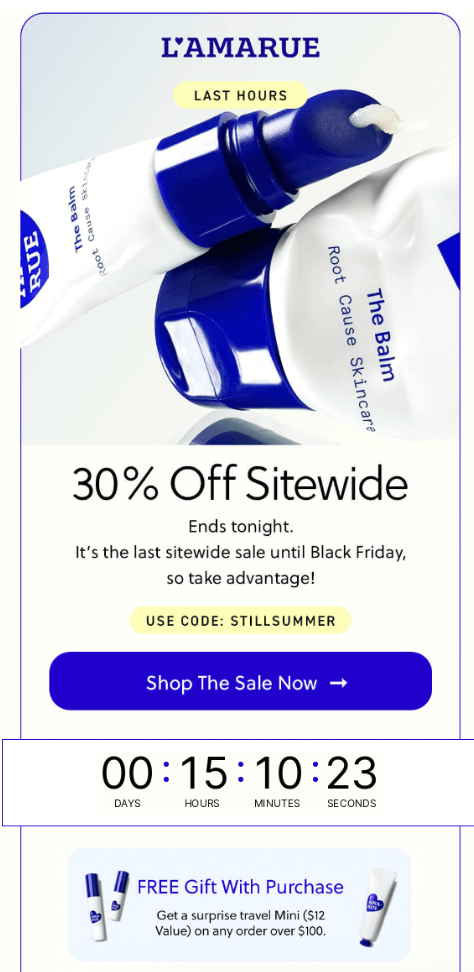
Urgency is the final layer that turns interest into action. Shoppers may browse your products, add items to cart, or even revisit a flash sale, but many still hesitate. This could be because they were distracted or still contemplating. A well-crafted urgency message gives them a clear reason to complete the purchase now instead of postponing it.
During the holidays, urgency becomes even more powerful. Customers are racing against shipping cutoffs, low-stock alerts, and last-minute gifting needs. But using urgency is a fine line between increasing conversions and damaging their trust. The key is to stay authentic, purposeful, and relevant to the customer journey.
Timer-based urgency
“Ends in 3 hours.”
Works well during flash sales, weekend deals, or time-bound bundles.
Inventory-based urgency
“Only 5 left in stock.”
Effective for limited editions, seasonal items, or bestsellers.
Deadline-based urgency
“Order by Dec 20 for delivery before Christmas.”
Ideal for shipping cutoffs, guaranteed delivery dates, and personalized products.
Using a mix of these three creates a multi-trigger urgency approach that feels natural rather than forced.
This structure keeps urgency clear without overwhelming the customer.
Urgency works best when paired with the other two layers of the Triple Play.
When you integrate urgency into festive messaging and flash sales, you make sure every campaign has a natural moment of action.

To maximize the impact of your holiday campaigns, orchestrate the three strategies—holiday wishes, flash sales, and urgency—across a carefully planned 4-week timeline. This phased approach builds momentum, sustains engagement, and leverages each strategy’s strengths at the right moments.
Week 1 (December 1-7)
Week 2 (December 8-14)
Week 3 (December 15-21)
Week 4 (December 22-31)
To make the Triple Play feel cohesive rather than overwhelming, assign each layer to the channels where it performs best.
By sequencing the Holiday Marketing Triple Play this way, you avoid overwhelming their audience, maintain relevance across all touchpoints, and drive engagement throughout the peak shopping season.
The holiday season is too crowded and competitive for any single tactic to carry your entire campaign. Brands that rely only on discounts or festive messages or urgency struggle to stand out. If you want to win, combine all three.
If you are implementing this framework for the first time, start simple. Choose the easiest layer to execute—often festive messaging or a single well-timed flash sale—then build from there. As you learn what resonates with your audience, layer in urgency, refine timing, and expand your calendar. Over time, this becomes a repeatable, scalable holiday system that protects margins and maximizes revenue year after year.
Want to put this Triple Play into action with ease? ZEPIC has just what you need; book a demo today!

%201.png)


.png)