Meet

Neura HQ,
Your connected AI Agent Workforce Know more



Taylor just posted a blistering one-star review on your website because her package arrived and the product was broken. Meanwhile, your marketing platform is unaware and sends Taylor product recommendations because the review data is trapped in your store's backend.
But here's the part that stings even more: last week, Taylor replied, "Is there a return policy?" to one of your WhatsApp campaigns. That message was unanswered, and the customer support team wasn’t notified.
By the time you see any of this in a weekly manual report, Taylor has already told five friends to shop elsewhere and started a thread on Reddit.
This is the damage caused by a disconnected stack, and it runs deeper than most brands realize. The problem isn't just that data doesn't flow in. It's that replies, intent signals, and real customer responses never flow back out to the systems that could act on them.
Your store is a complex machine with dozens of moving parts. You have an e-commerce platform like Shopify or WooCommerce managing your orders, a payment gateway processing every transaction, a logistics partner tracking shipments, and a review app gathering feedback.
Usually, these parts live in their own silos. They are like coworkers who work in the same office but never speak. One knows a package was damaged, while the other is busy sending a "We think you will love this" email. This silence is what frustrates customers and burns out your team.
The secret to fixing this is the webhook. And not just webhooks that listen, but webhooks that talk back.
A webhook is a real-time notification that your systems send to each other. When something happens on one platform (say, a new order in your store), a webhook sends a message to another platform (say, ZEPIC) with details of what happened and the data that came with it.
You don’t have to worry about manually exporting a CSV or delays.
Think of it like this: instead of ZEPIC asking your store, "Any new orders?" every few minutes, your store taps ZEPIC on the shoulder the moment something happens. That's the difference between reactive and real-time.
But the conversation doesn't have to stop there. ZEPIC can also fire webhooks outward, pushing enriched customer data, conversation outcomes, and extracted intent signals back to your CRM, your support desk, or any other tool in your stack. It's not a one-way pipe. It's a live, two-way data channel.
The e-commerce space is full of micro-moments. A customer adds something to the cart, checks out, waits for a delivery update, receives the order, and maybe leaves a review. Each of these moments is an opportunity to build trust and drive the next purchase.
But sandwiched between all of those moments is something brands consistently ignore: the reply. A customer responds to your shipping update, asking where their order is, or someone replies to your campaign with "Do you have this in blue?" These signals carry buying intent, and they are often more valuable than any click or open rate. But they vanish without a trace in most stacks.
With ZEPIC’s destination webhooks, you can make sure every meaningful customer response gets sent back to the right system so nothing falls through the cracks.
Every time a customer completes a flow in ZEPIC —opens a campaign, clicks a link, reaches a milestone—that engagement data has value beyond the campaign itself. With outbound webhooks, ZEPIC can push those updates back to your CRM automatically. A customer who clicked your upsell offer three times gets flagged as high-intent in your CRM without anyone exporting a CSV. Your sales team sees warm leads in real time instead of cold lists from last week.
A customer replies to your post-delivery WhatsApp message with, "The zip is broken; I want to return this." In most stacks, that message sits in an inbox or disappears entirely. ZEPIC can extract the return intent from that reply, automatically pause all marketing messages to that customer, and fire an outbound webhook to your help desk, creating a pre-filled support ticket with the customer's order details already attached. Your support team gets context. The customer gets a response.
Someone replies to a campaign with "Does this come in a larger size?" or "Can I get a bulk discount?" That is a purchase signal and not a support issue. ZEPIC can identify the buying intent in that reply and route it as a lead to the right person on your sales team via a webhook to your CRM or your internal tools, while simultaneously sending the customer an acknowledgment so they do not feel ignored.
A customer replies to a collection launch campaign, asking, "Which one is better for sensitive skin?" ZEPIC captures that as a preference signal and can use it to enrich the customer's profile with a skin concern attribute, trigger a new personalized flow with the right product recommendation, and push that preference data back to your store or CRM via an outbound webhook. The customer gets a helpful answer. Your stack gets smarter. And the next campaign they receive is already more relevant because of a single reply.
Payment failures are often silent revenue killers. A customer wants to buy, but their card is declined, or the connection drops. If you wait for a weekly audit to find these errors, that customer is already gone. When your payment gateway fires a "failed payment" webhook, ZEPIC catches it immediately. You can automatically send a WhatsApp message or an email with a direct link to try again. This turns a frustrating technical error into a helpful customer service win.
Most stores send a basic email when an order is placed. With webhooks, you can do much more. The moment your store records a new transaction, it can send that data to ZEPIC, which will then trigger a multichannel flow. This might include a WhatsApp confirmation with the order details and a follow-up email with a "Welcome" video. Your customer hears from you in seconds, which builds trust right when it matters most.
Your logistics partner knows exactly when a package hits a doorstep. Instead of guessing when to ask for a review, use a webhook. When the "delivered" status updates in your shipping tool, ZEPIC can wait exactly two hours before sending a review request. Because the excitement of the unboxing is still fresh, you are far more likely to get a response. If the review is positive, you can even trigger an automatic "thank you" discount for their next purchase.
Every brand has "VIP" customers, but many brands treat them like everyone else. You can set up a webhook to fire whenever a customer’s lifetime spend hits a specific milestone. The second they cross that threshold, ZEPIC can tag their profile and enroll them in a special loyalty flow. They could receive an exclusive offer.
Many tools treat a webhook as a simple on/off switch for a single message. ZEPIC is different. When a webhook event lands in ZEPIC, it becomes the starting point for a full, intelligent journey across email and WhatsApp. And when a customer responds, ZEPIC extracts meaning from it and sends that enriched signal outward to the rest of your stack.
When a customer places an order, ZEPIC updates their profile, adds them to a segment, and prepares the next step. When that customer replies to a message, ZEPIC captures the intent and routes it to the right system. Every touchpoint becomes a two-way data exchange and not just a broadcast.
You do not need a developer to get started. The process is designed to be finished in a single session.
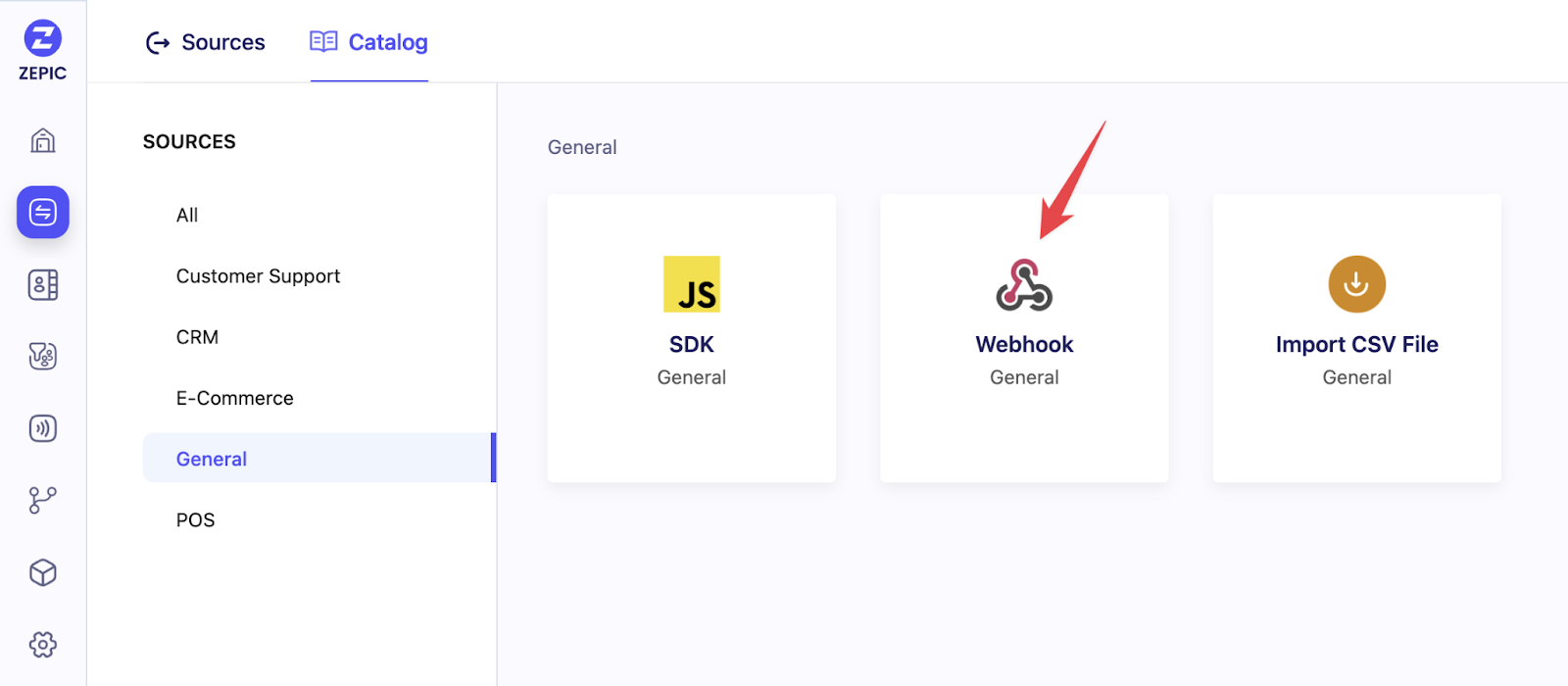
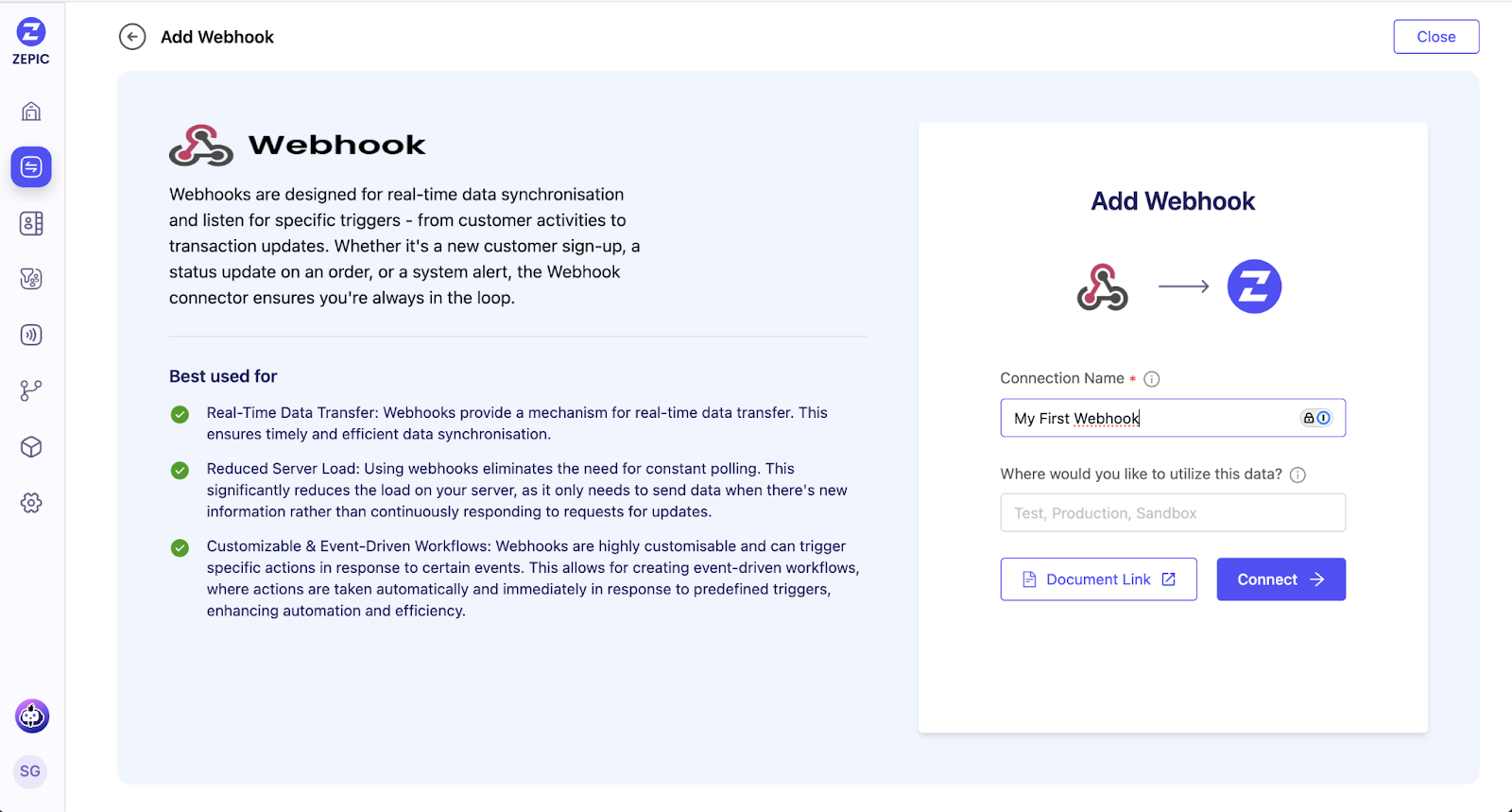
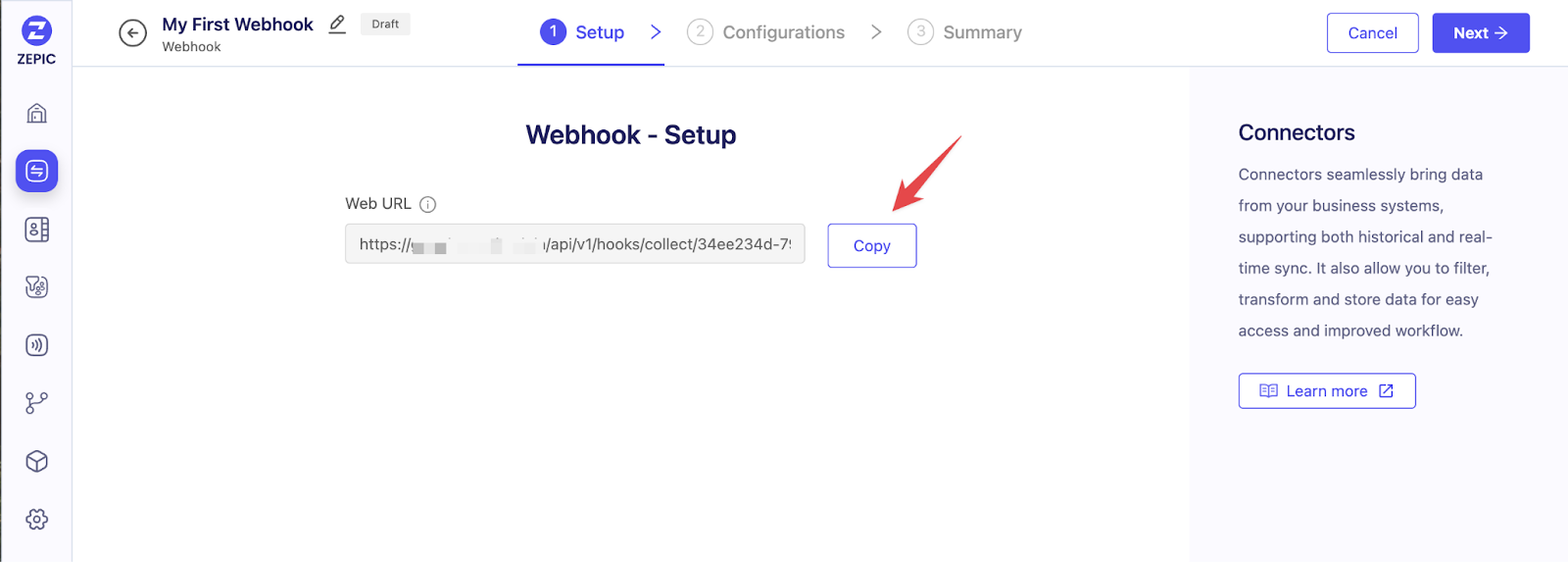
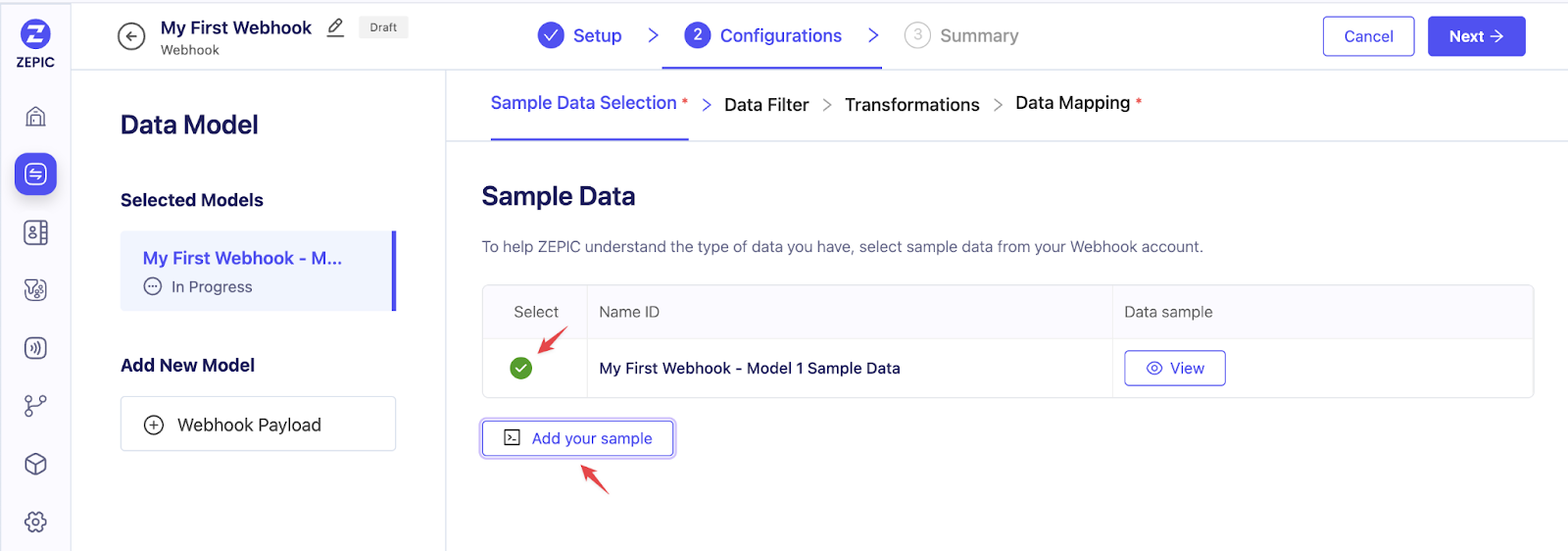
Most e-commerce brands already have the data. The problem is that it's sitting in one system while the customer is waiting on another. Webhooks close that gap. They make your store, your marketing platform, and your customer channels work as one connected system.
With ZEPIC, every webhook event becomes the starting point for a real-time, multichannel flow. The right message, on the right channel, at exactly the right moment.
Ready to connect your store to ZEPIC? Book a demo and see it in action.

%201.png)


.png)