A Customer Data Platform (CDP) unifies customer data from every touchpoint into a single profile, enabling personalized marketing and better customer experiences.
Choosing the right CDP depends on your business size, tech stack, marketing channels, and implementation needs.
The guide compares 10 leading retail CDPs, including ZEPIC, Salesforce Data Cloud, Adobe Real-Time CDP, Treasure Data, Twilio Segment, SAP Emarsys, BlueConic, Klaviyo, Oracle Unity, and Tealium.
Key capabilities to evaluate include real-time customer profiles, identity resolution, AI segmentation, omnichannel journeys, and marketing activation.
Enterprise platforms like Salesforce, Adobe, Oracle, and SAP offer powerful capabilities but often require longer implementations and higher budgets.
Mid-market and eCommerce brands may benefit from platforms like ZEPIC, Klaviyo, BlueConic, or Twilio Segment, depending on their marketing and technical requirements.
Before selecting a CDP, assess its data unification, real-time capabilities, channel support, integrations, AI features, scalability, and pricing model.
A successful CDP deployment starts with clear business goals, clean customer data, prioritized integrations, and team training.
The right CDP helps retailers improve personalization, customer retention, campaign performance, and omnichannel engagement.
If you’re a retail brand, you can agree that you collect a vast amount of data from shoppers. But how much of this data is actioned upon?
Every interaction leaves behind valuable customer signals. Someone browses your website, adds products to their cart, shops in-store, joins your loyalty program, opens your emails, chats with support, or responds to a WhatsApp campaign. Each touchpoint tells you something about their preferences and purchase intent.
The challenge is that this data usually lives in different systems. Your e-commerce platform knows what customers bought online, and your POS records in-store purchases. Without a way to connect these data sources, you end up with fragmented customer profiles and missed opportunities to personalize every interaction.
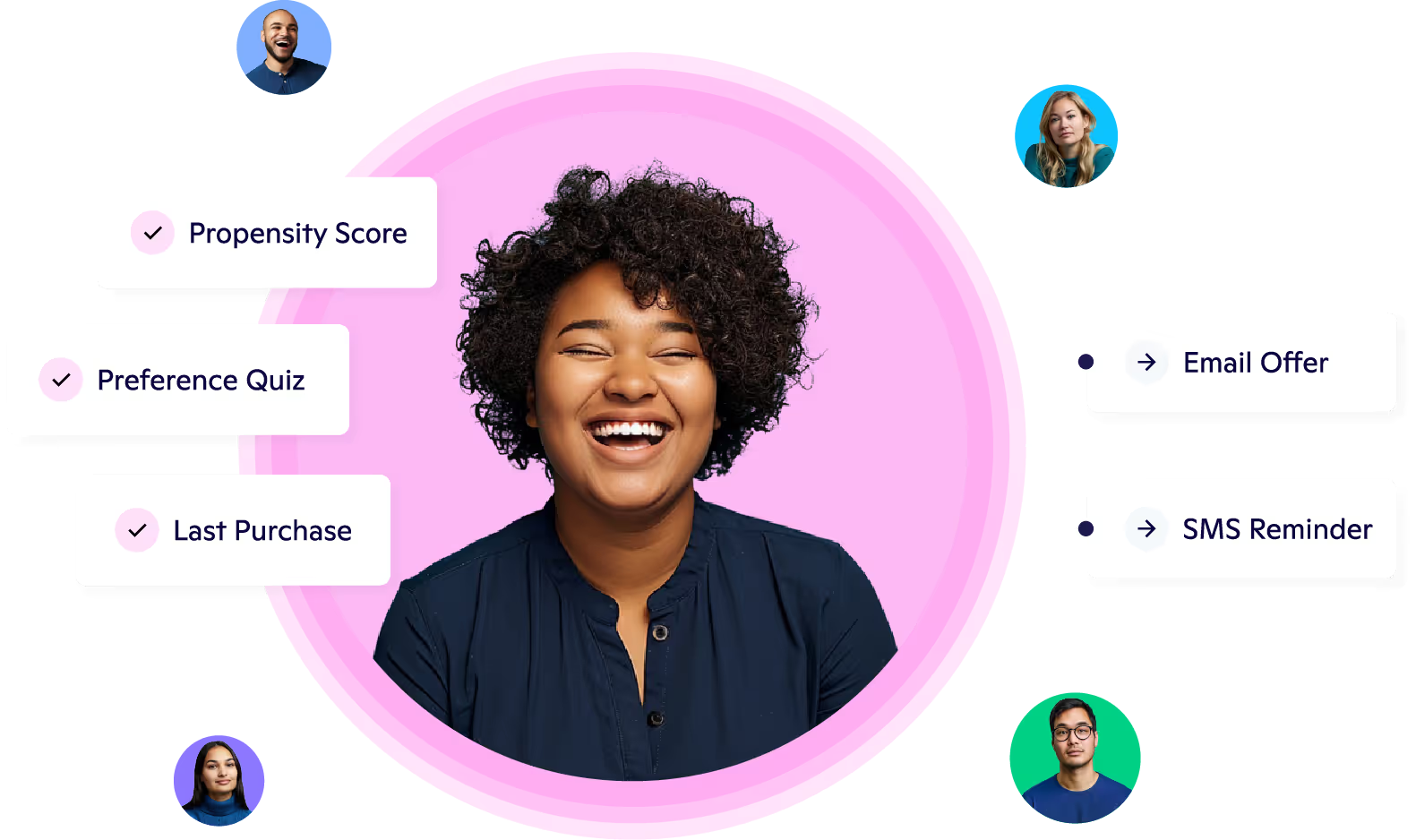
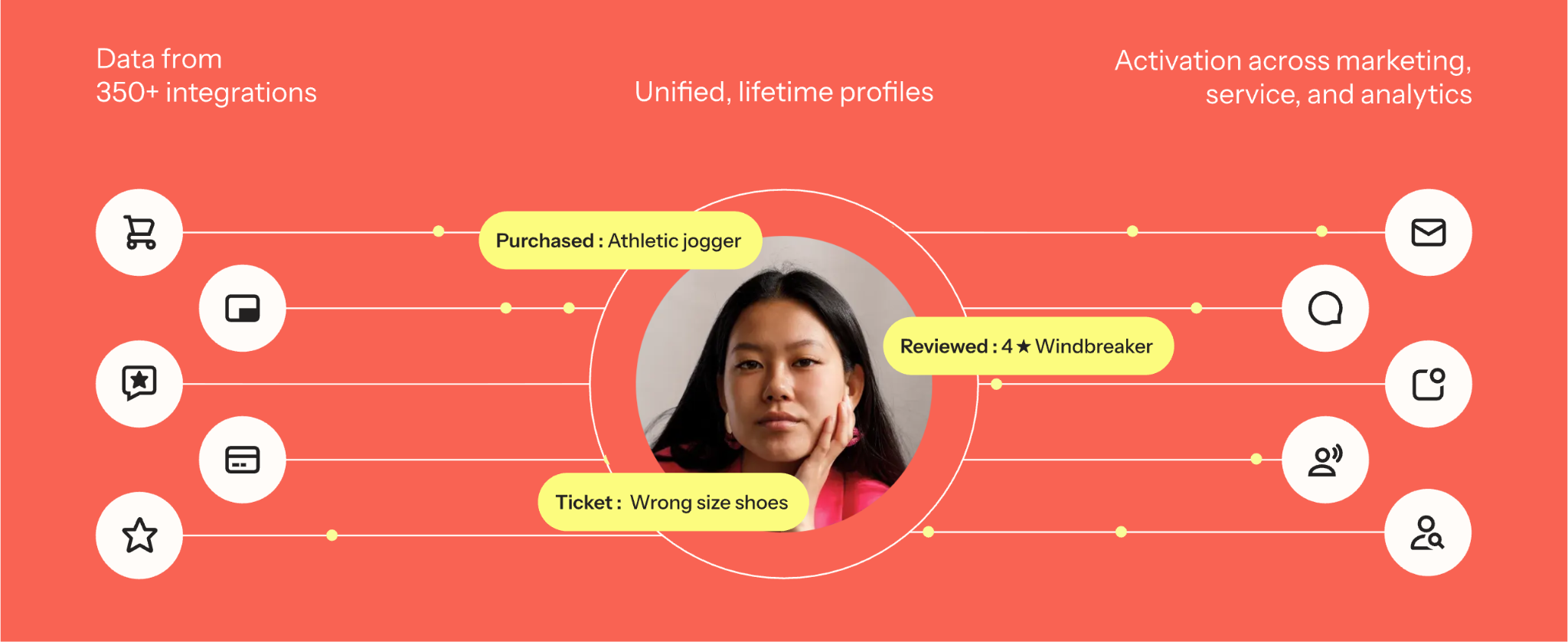
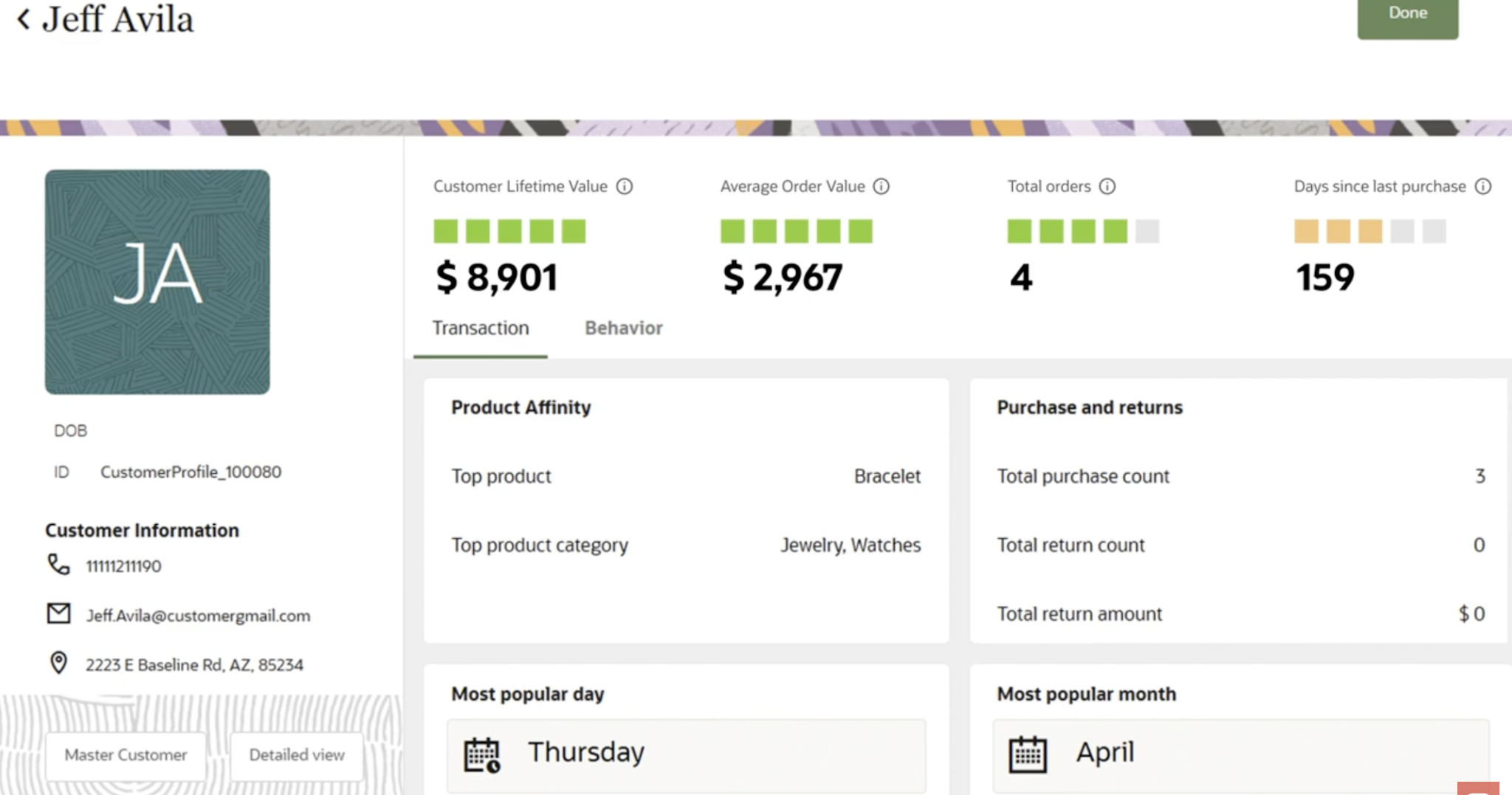
A retail CDP brings customer data from every channel into a single, unified profile. It helps you recognize the same shopper across online and offline touchpoints. It helps you build richer audience segments, trigger personalized journeys, and give every customer a more relevant experience. Instead of simply collecting data, you can finally use it to improve conversions, increase repeat purchases, and build long-term loyalty.
The CDP market has grown rapidly over the past few years, with platforms ranging from enterprise solutions designed for global retailers to marketer-friendly options built for fast-growing e-commerce brands. Choosing the right CDP depends on your existing tech stack, business size, and customer engagement strategy.
In this guide, we've compared the top 10 Customer Data Platforms for retail brands. Whether you're evaluating your first CDP or planning to replace an existing one, this guide will help you narrow down the right platform for your business.
Comparing the best CDPs for Retail Brands
Capability
ZEPIC
Salesforce
Adobe
Treasure Data
Segment
SAP Emarsys
BlueConic
Klaviyo
Oracle Unity
Tealium
Customer 360
✅
✅
✅
✅
✅
✅
✅
✅
✅
✅
Real-time Profiles
✅
✅
✅
✅
✅
✅
✅
✅
✅
✅
Identity Resolution
✅
✅
✅
✅
✅
✅
✅
✅
✅
✅
Behavioral Tracking
✅
✅
✅
✅
✅
✅
✅
✅
✅
✅
AI Segmentation
✅
✅
✅
✅
✅
✅
✅
✅
✅
✅
Predictive Audiences
✅
✅
✅
✅
✅
✅
Limited
✅
✅
✅
Journey Builder
✅
Via Marketing Cloud
Via Journey Optimizer
Partial
❌
✅
✅
✅
Via Oracle Marketing
Partial
Email Marketing
✅
Add-on
Add-on
Partial
❌
✅
✅
✅
Add-on
❌
SMS Marketing
✅
Add-on
Add-on
Partial
Via Twilio
✅
✅
✅
Add-on
❌
WhatsApp Marketing
✅
Partner
Partner
Partner
Via Twilio
Limited
Limited
Partner
Partner
Partner
Push Notifications
✅
✅
✅
Partial
Via Twilio
✅
✅
✅
✅
External
Product Catalog
✅
✅
✅
Partial
❌
✅
Partial
✅
✅
❌
Product Recommendations
✅
✅
✅
✅
Partial
✅
Partial
✅
✅
❌
Loyalty Data
✅
✅
✅
✅
API
✅
Partial
Partial
✅
API
POS Integration
✅
✅
✅
✅
API
✅
Limited
Limited
✅
✅
Customer Support Data
✅
✅
✅
✅
API
Partial
Partial
Limited
✅
API
Shopify Integration
Native
Connector
Connector
Connector
Native
Connector
Native
Native
Connector
Connector
Magento Integration
Native
Connector
Native
Connector
Connector
Connector
Native
Connector
Connector
Connector
WooCommerce Integration
Native
API
API
API
Connector
API
Connector
Native
API
API
API Availability
✅
✅
✅
✅
✅
✅
✅
✅
✅
✅
ZEPIC
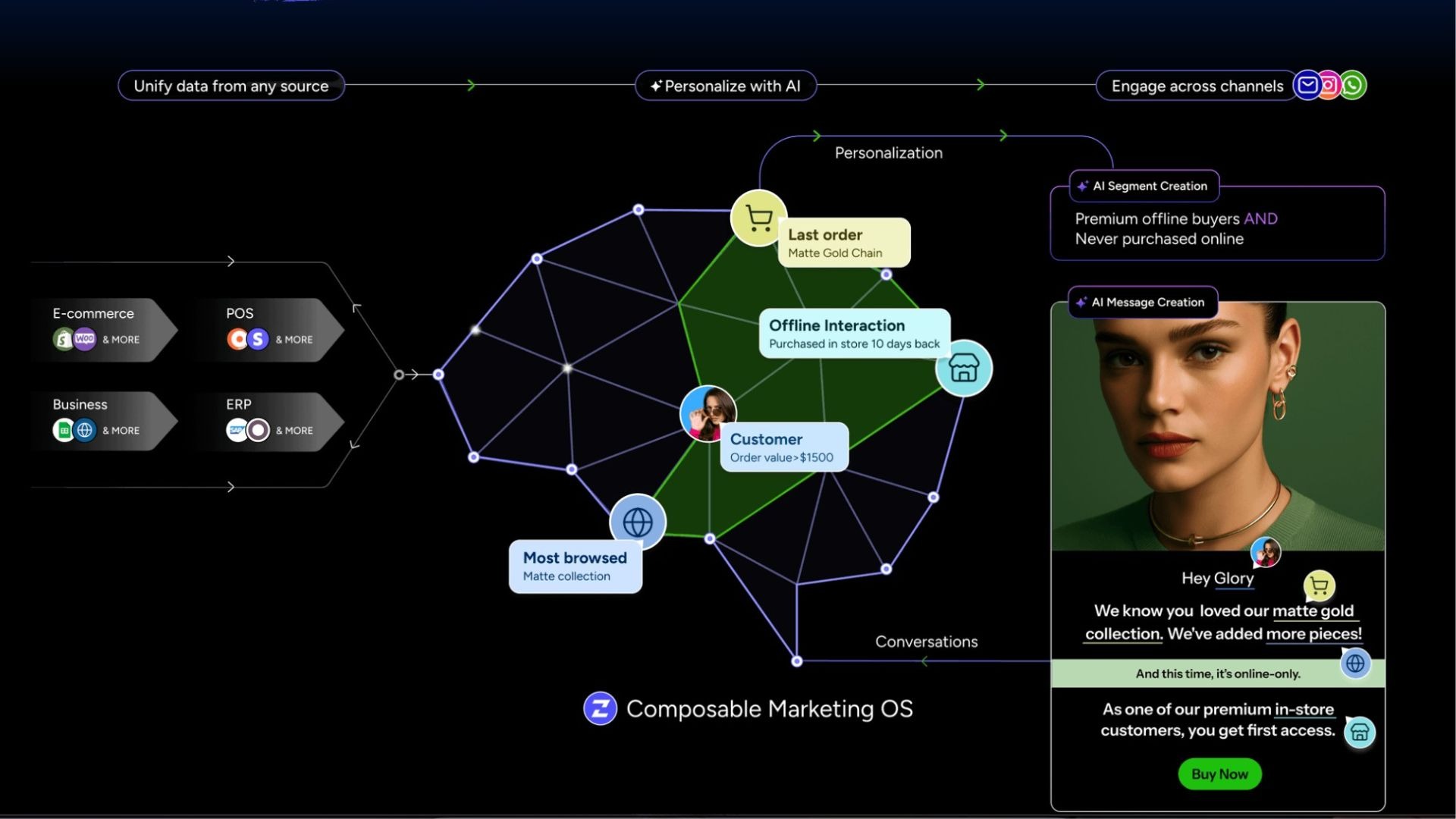
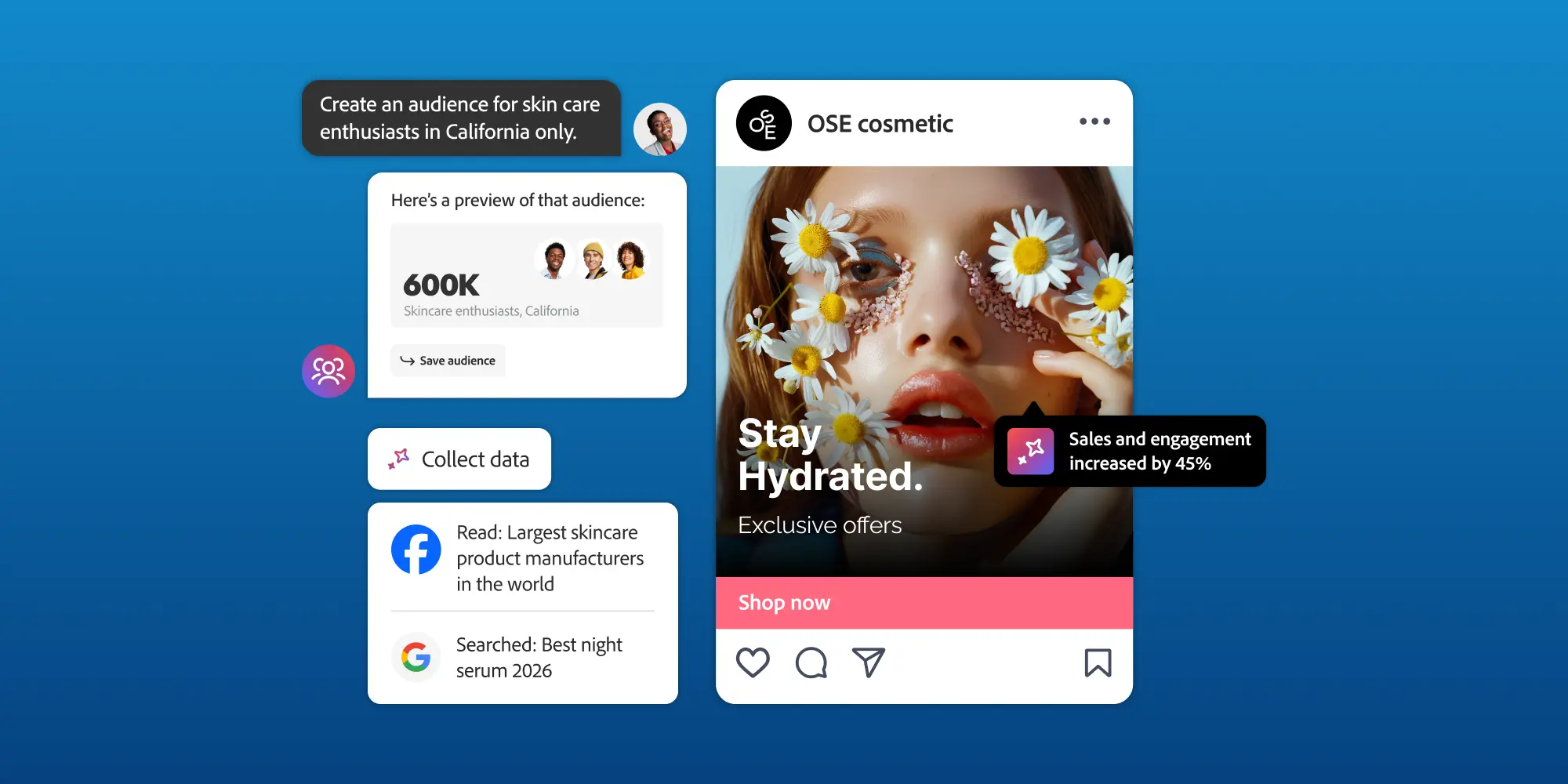
ZEPIC is a customer data platform that is designed to help retail brands power their omnichannel campaigns with customer data from various touchpoints. It offers AI-powered segmentation, customer journeys, and omnichannel campaign execution in a single platform. It is designed for retail and e-commerce brands that want to unify customer data and activate it across channels such as email, WhatsApp, Instagram, and SMS, without relying on multiple disconnected tools.
Feature Highlights
Customer 360 profiles
AI-powered audience segmentation
Omnichannel journey builder
Email, SMS, Instagram, and WhatsApp marketing
Custom objects
Real-time behavioral tracking
Custom reports that provide the flexibility to visualize any data
Marketing automation workflows
Pros
Customer data and campaign execution in one platform
Native support for omnichannel engagement
Marketer-friendly interface
Faster implementation than many enterprise CDPs
Built-in AI capabilities
Cons
Smaller partner ecosystem than legacy enterprise vendors
2. Salesforce Data Cloud
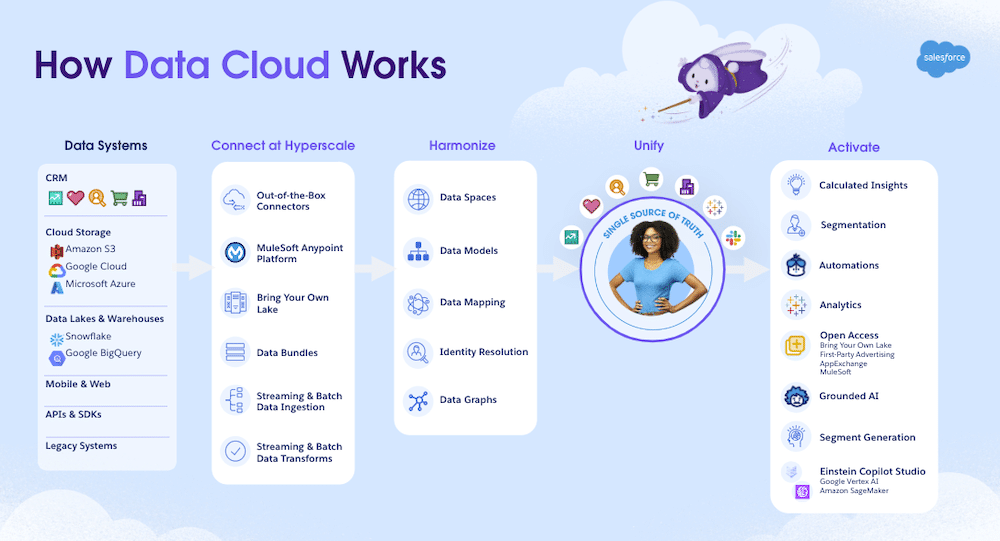
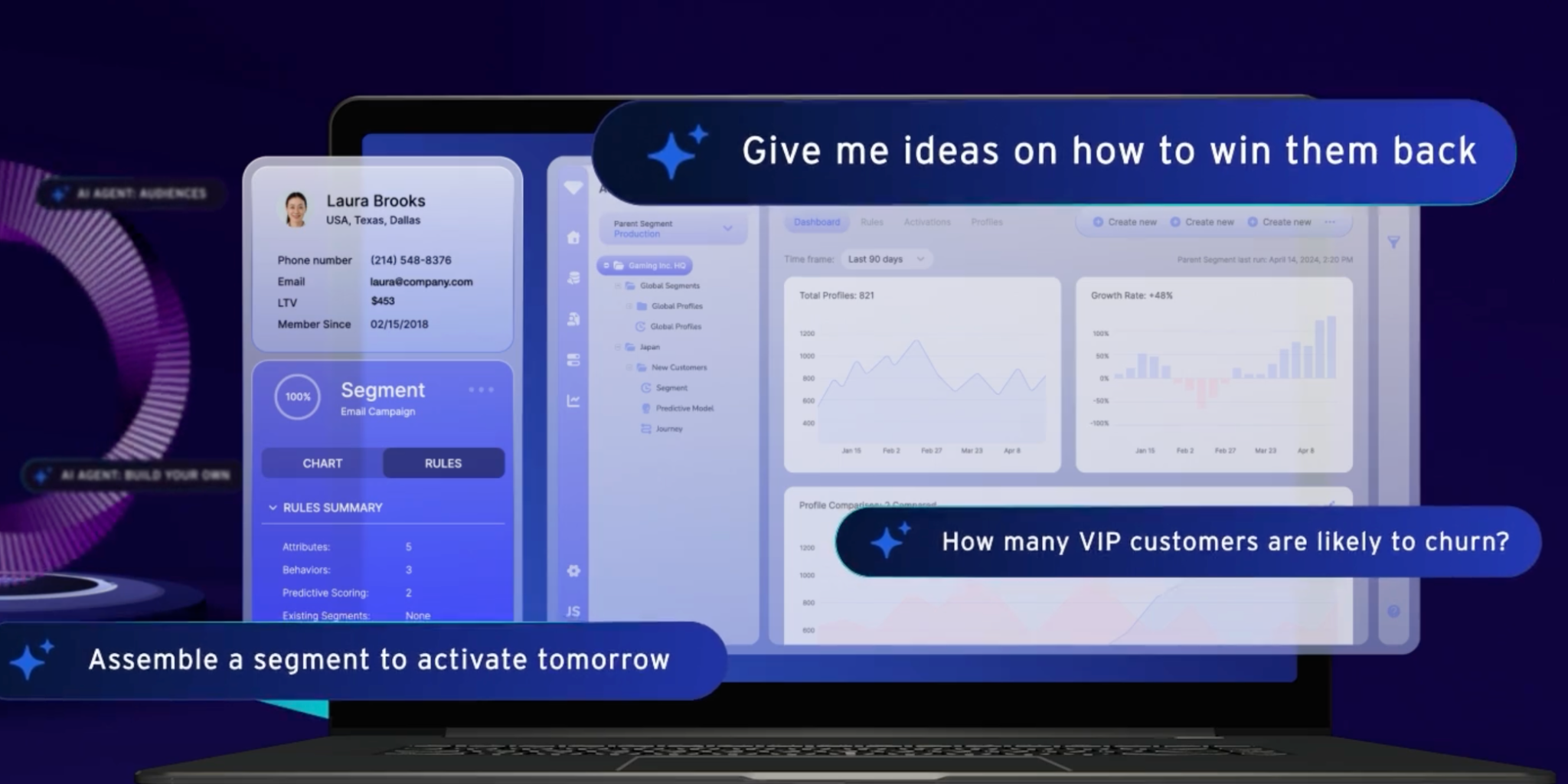
Salesforce Data Cloud is Salesforce's enterprise CDP that unifies customer data across CRM, commerce, service, and marketing systems. It is particularly valuable for retailers already invested in the Salesforce ecosystem.
Feature Highlights
Real-time customer profiles
Identity resolution
Einstein AI capabilities
Audience segmentation
Salesforce Commerce Cloud integration
Advanced analytics
Customer lifecycle tracking
Pros
Deep integration across Salesforce products
Enterprise-grade scalability
Strong AI and analytics capabilities
Extensive partner ecosystem
Cons
High implementation complexity
Premium pricing
Best suited for organizations already using Salesforce
3. Adobe Real-Time CDP
Adobe Real-Time CDP is part of Adobe Experience Platform and helps retailers unify customer data for personalization across digital and physical channels. It is a popular choice for brands already using Adobe's marketing and experience products.
Feature Highlights
Real-time customer profiles
Adobe Sensei AI
Audience management
Cross-channel personalization
Identity management
Data governance controls
Adobe Experience Cloud integrations
Pros
Excellent personalization capabilities
Strong analytics ecosystem
Enterprise-grade data governance
Deep Adobe integration
Cons
Complex implementation process
Steeper learning curve
Higher total cost of ownership
4. Treasure Data
Operating under a hybrid model with a cloud-managed control plane and a flexible localized data plane, Treasure Data (now branded as "Treasure AI") is a data-intensive enterprise CDP. It relies on a per-profile and per-event pricing architecture that includes unlimited segments and ad-hoc data queries.
Feature Highlights
Customer profile unification
Enterprise identity resolution
Predictive analytics
AI-powered insights
Extensive data connectors
Audience management
Real-time activation
Pros
Handles large-scale data environments
Strong retail and CPG capabilities
Advanced identity resolution
Flexible deployment options
Cons
Enterprise-focused pricing
Longer implementation timelines
May be more complex than necessary for mid-market retailers
5. Twilio Segment
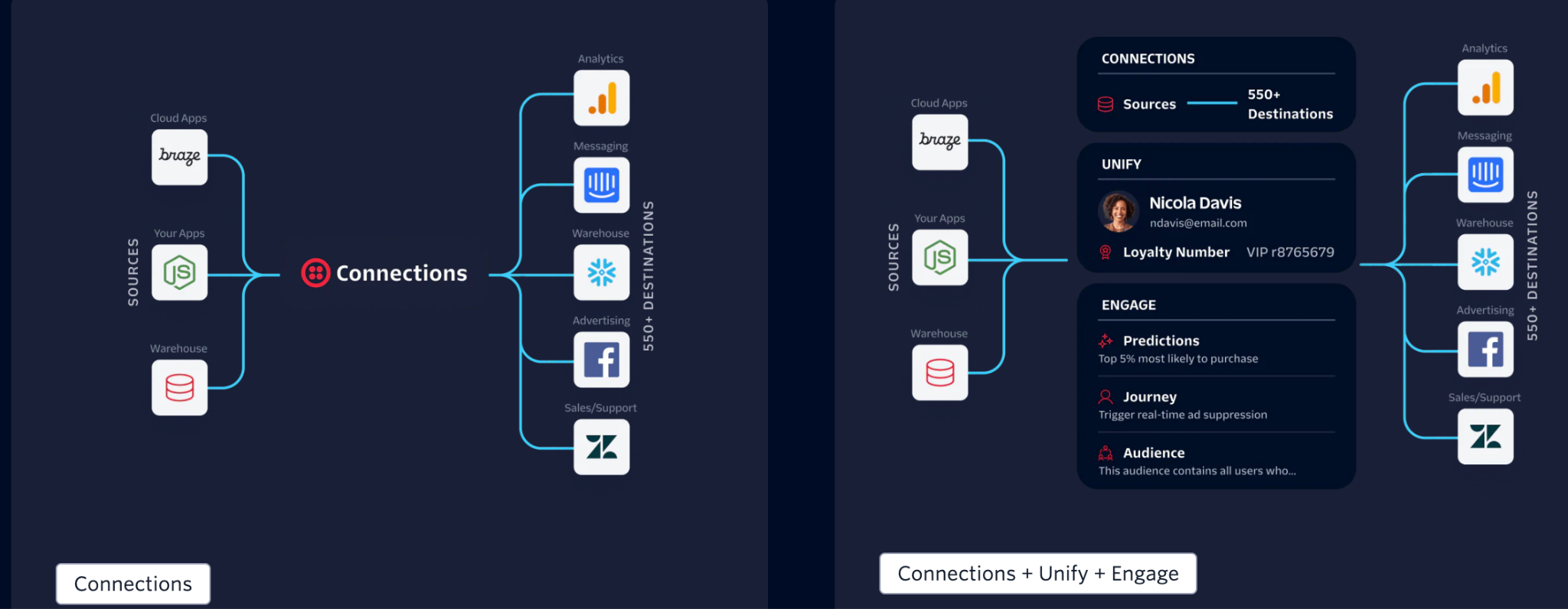
Twilio Segment is a developer-centric infrastructure CDP focused on real-time event-level collection, data quality management, and immediate downstream data routing. It features a Monthly Tracked Users (MTU) tiered pricing model with a free tier available for smaller data footprints.
Feature Highlights
Event tracking
Customer profile unification
Identity resolution
Real-time data pipelines
700+ integrations
Predictive audiences
Data governance tools
Pros
Industry-leading integration ecosystem
Excellent developer experience
Strong data collection capabilities
Highly flexible architecture
Cons
Requires additional tools for campaign execution
More technical than marketer-focused CDPs
Costs can increase with data volume
6. SAP Emarsys
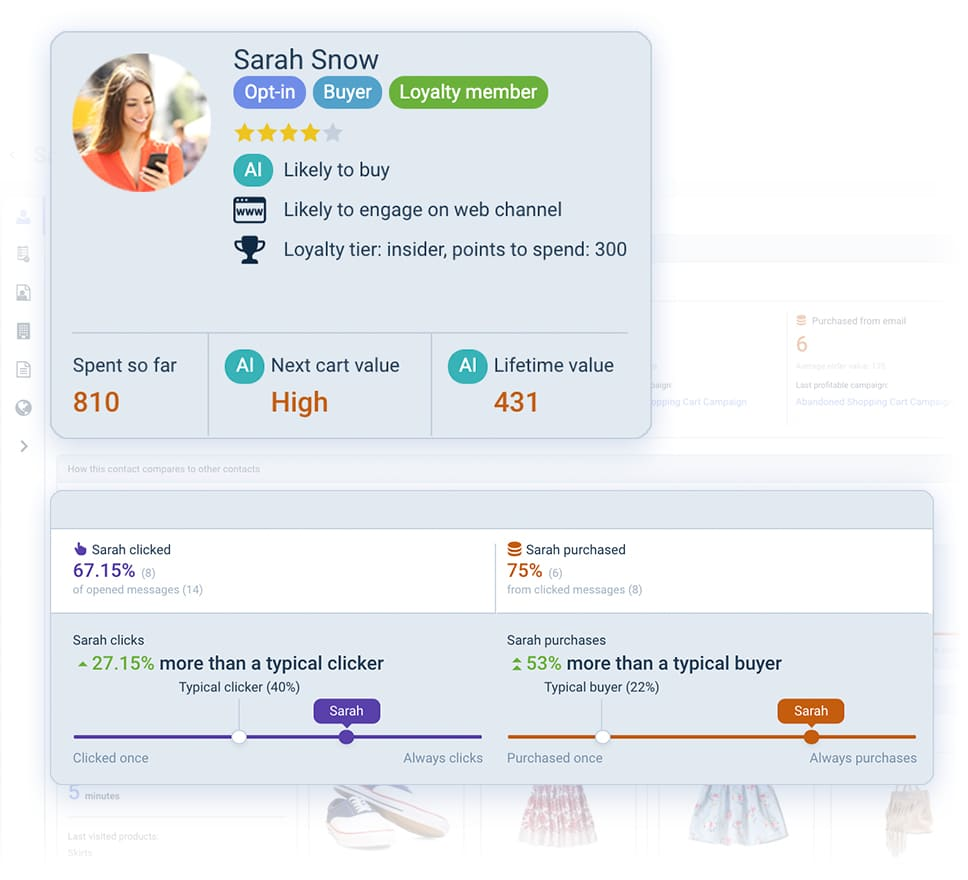
SAP Emarsys is an all-in-one, purpose-built retail marketing cloud and engagement environment embedded with comprehensive CDP-like profile unification capabilities . It utilizes an enterprise-tier subscription pricing model scaled by country or profile volume .
Feature Highlights
Customer profiles
AI-powered personalization
Omnichannel campaigns
Loyalty program support
Predictive analytics
Retail-specific automation templates
Ecommerce integrations
Pros
Strong retail focus
Built-in marketing capabilities
Excellent loyalty and lifecycle marketing support
Good fit for SAP customers
Cons
Best suited for SAP-centric environments
Less flexible outside the SAP ecosystem
Enterprise-oriented pricing
7. BlueConic
BlueConic is an intuitive, marketer-first SaaS CDP engineered to deliver exceptionally fast time-to-value for mid-market and scaling enterprise brands. It operates on a tiered subscription pricing model based on profile sizes and enabled feature sets.
Feature Highlights
Customer profile management
Audience segmentation
AI Workbench
Marketing activation
Ecommerce integrations
Real-time customer insights
Personalization tools
Pros
Easy for marketers to use
Fast implementation
Strong audience-building capabilities
Good fit for mid-market retailers
Cons
Less suitable for large enterprise environments
Smaller ecosystem compared to enterprise leaders
Advanced capabilities may require additional integrations
8. Klaviyo Data Platform
Klaviyo combines customer data management with email and SMS marketing. It is especially popular among Shopify and D2C brands because of its ease of use and ecommerce focus.
Feature Highlights
Customer profiles
Email marketing
SMS marketing
Audience segmentation
Predictive analytics
Ecommerce integrations
Product recommendation capabilities
Pros
Quick implementation
Excellent Shopify integration
Easy for marketers to manage
Strong email and SMS capabilities
Cons
Less suited for complex enterprise environments
Limited offline retail capabilities
Omnichannel functionality is narrower than enterprise CDPs
9. Oracle Unity
Oracle Unity is Oracle's enterprise customer data platform designed to unify customer intelligence across sales, marketing, and service operations.
Feature Highlights
Customer profile unification
AI-powered analytics
Audience segmentation
Identity resolution
Oracle CX integrations
Predictive models
Customer intelligence dashboards
Pros
Strong enterprise capabilities
Advanced analytics
Excellent fit for Oracle customers
Robust identity management
Cons
Complex implementation
Best value comes within Oracle ecosystem
Limited adoption among mid-market retailers
10. Tealium AudienceStream
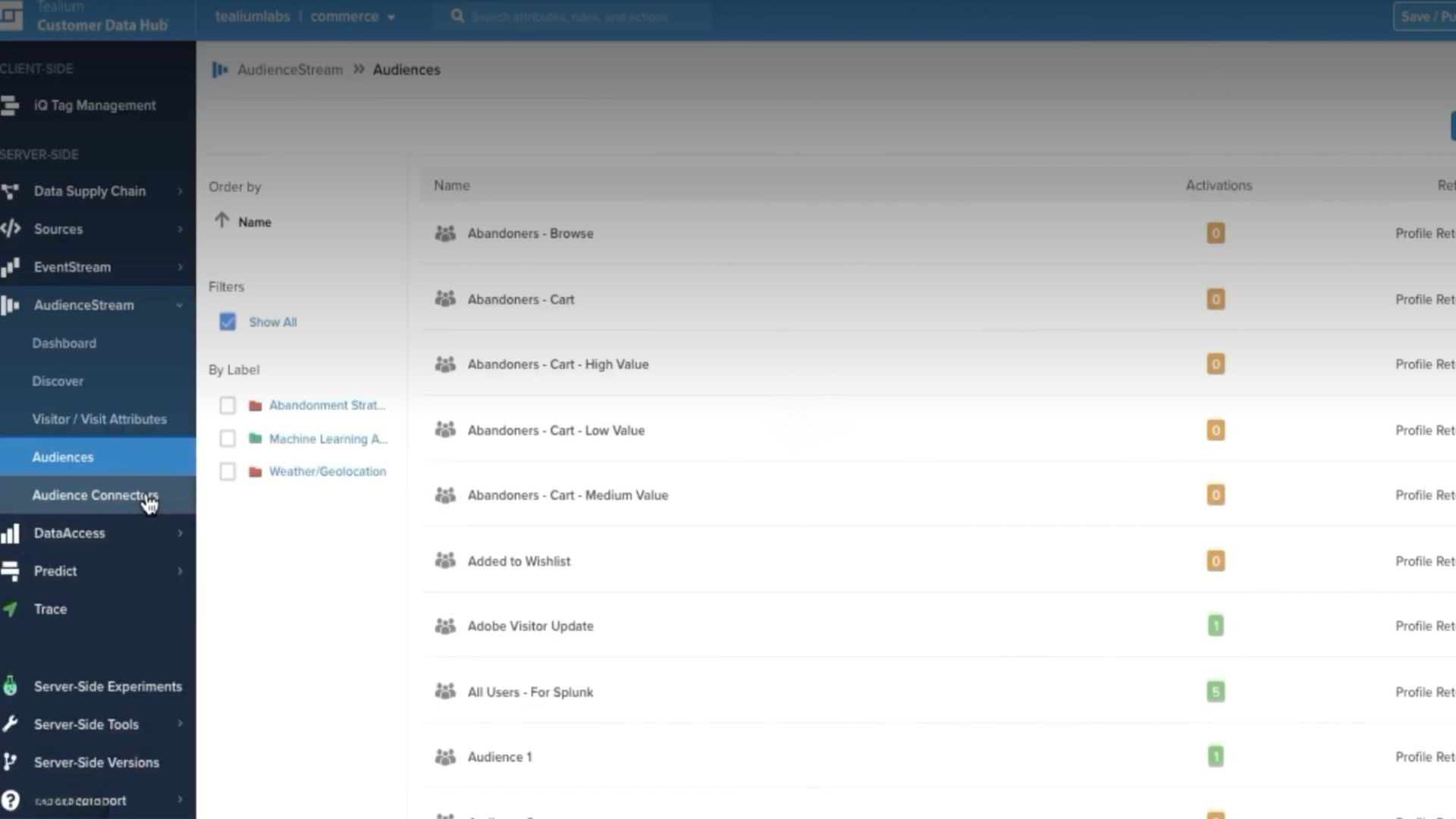
Tealium AudienceStream combines customer data management with real-time event collection and audience activation. It is often chosen by organizations already using Tealium's tag management and data collection solutions.
Feature Highlights
Real-time customer profiles
Audience segmentation
EventStream integration
Predict ML
Server-side tracking
Identity resolution
Extensive connector ecosystem
Pros
Strong real-time data capabilities
Excellent data collection infrastructure
Large integration library
Flexible deployment options
Cons
Marketing execution requires additional tools
The interface feels less modern than some competitors
More technical than marketer-focused platforms
Questions to Ask Before Choosing a Customer Data Platform
Choosing a CDP is a long-term investment. The right platform should fit your business today while giving you room to grow as your customer base, channels, and data volume increase.
Let’s look at some questions to ask every vendor before making a decision.
1. Can it unify all of my customer data?
Your CDP should connect data from every customer touchpoint, including:
Ecommerce platforms
POS systems
Loyalty programs
Email and SMS platforms
Customer support tools
Mobile apps
Social channels
Website behavior
The goal is to create one complete customer profile instead of maintaining multiple disconnected records.
2. Does it support real-time customer profiles?
Retail moves quickly. If a customer abandons a cart, redeems loyalty points, or makes an in-store purchase, your CDP should reflect those changes immediately so campaigns stay relevant.
3. Which marketing channels are supported?
Some CDPs focus only on collecting customer data, while others also let you activate that data through marketing campaigns.
Check whether the platform supports:
Email
SMS
WhatsApp
Push notifications
Social messaging
Paid advertising audiences
The fewer external tools you need, the simpler your marketing stack becomes.
4. How much engineering effort is required?
Some enterprise CDPs require months of implementation and ongoing developer support.
If your marketing team wants to create audiences, launch journeys, and build automations independently, look for a platform with an intuitive interface and low-code workflows.
5. Does it integrate with your existing technology stack?
Before committing to a platform, verify integrations with your:
Ecommerce platform
CRM
ERP
POS system
Analytics tools
Customer support software
Payment platforms
Strong native integrations reduce implementation time and improve data accuracy.
6. What AI capabilities are included?
Many modern CDPs include AI features, but the capabilities vary.
Ask whether the platform supports:
Predictive audience building
Product recommendations
Churn prediction
Customer lifetime value prediction
AI-powered segmentation
Journey optimization
These capabilities can significantly improve personalization and campaign performance.
7. How does pricing scale?
Some vendors charge based on customer profiles, while others price by events, tracked users, or feature tiers.
Understand how costs will change as your business grows to avoid unexpected increases later.
How to Prepare for a CDP Deployment
A successful CDP implementation starts long before the software goes live. Preparing your data and defining clear business goals can significantly reduce implementation time and help your team see value faster.
Define your business objectives
Start by identifying what you want your CDP to achieve.
Common goals include:
Creating a single customer view
Improving customer segmentation
Increasing repeat purchases
Recovering abandoned carts
Personalizing omnichannel campaigns
Improving customer retention
Clear objectives will help you prioritize use cases after deployment.
Audit your customer data
Make a list of every system that stores customer information.
This could include:
Ecommerce platform
POS
CRM
Loyalty platform
Marketing tools
Customer support software
Mobile app
Website analytics
Understanding where your data lives makes integration planning much easier.
Clean your data
Duplicate records, inconsistent customer IDs, and outdated information reduce the effectiveness of any CDP.
Before implementation:
Remove duplicate profiles
Standardize customer attributes
Review consent and privacy settings
Define naming conventions
Clean data leads to more accurate customer profiles and better segmentation.
Prioritize integrations
You don't need to connect every system on day one.
Start with the platforms that have the greatest impact on customer experience, such as your e-commerce platform, POS, CRM, and marketing channels. Additional integrations can be added over time.
Train your marketing team
A CDP is only valuable if your team uses it effectively.
Make sure marketers understand how to:
Build customer segments
Create automated journeys
Interpret customer insights
Measure campaign performance
Use AI-powered recommendations
The faster your team becomes comfortable with the platform, the sooner you'll see measurable results.
Wrapping Up
Retail brands have more customer data than ever before. The challenge is turning that information into meaningful customer experiences.
The right Customer Data Platform helps you connect customer interactions across online and offline channels, build richer customer profiles, personalize every campaign, and make faster marketing decisions based on real-time insights.
Every platform in this guide has its own strengths. Enterprise retailers already invested in ecosystems like Salesforce, Adobe, SAP, or Oracle may benefit from staying within those platforms. Shopify-first brands may prioritize ease of use, while developer-focused teams may value flexibility and extensive APIs.
If you're looking for a platform that combines customer data, AI-powered segmentation, omnichannel journeys, and campaign execution in one place, ZEPIC offers a modern approach built for retail brands that want to move quickly without managing multiple disconnected tools.
Ready to Turn Customer Data Into Personalized Experiences?
Book a personalized demo today and see how ZEPIC can help you create smarter customer journeys, improve engagement, and drive more repeat purchases.
Frequently Asked Questions
What exactly is a CDP and how is it different from my CRM?
A Customer Data Platform (CDP) unifies customer data from every source, including online, in-store, mobile, loyalty, and email, into a single, real-time customer profile. A CRM, by contrast, manages customer relationships and interactions, typically focused on sales and service workflows. Your CRM is great at managing the sales process for known customers who've entered your funnel, while a CDP is built to collect, unify, and activate data for everyone interacting with your brand, including anonymous web visitors, loyalty members who've never bought online, and in-store-only shoppers. In practice, a CDP feeds clean, unified data into your CRM, making it smarter and more effective, which is why many retailers use both.
Do I really need a CDP if I have Salesforce, Oracle, or SAP?
Salesforce, Oracle, and SAP all offer built-in CDP capabilities (Salesforce Data Cloud, Oracle Unity, SAP Emarsys), but these are limited to data within their own ecosystem.
You need a standalone CDP if:
You use multiple systems that don't talk to each other (e.g., Shopify + legacy POS + third-party loyalty)
Your data lives in data warehouses or lakes outside your CRM
You need faster time-to-value than your enterprise platform offers
You want vendor flexibility so your data isn't locked into one system
You're fine with a built-in CDP if:
You're deeply committed to one vendor (Salesforce, Adobe, Oracle) and want seamless integration
Your data already lives mostly within that vendor's system
How do CDPs handle privacy compliance like GDPR and CCPA?
Best-in-class CDPs include:
Consent management: Tracks opt-in/opt-out status and respects customer preferences across all channels
Data governance: Controls who can access what data and ensures audit trails
Right to deletion: Can remove a customer's data on request
Data residency: Stores data in compliant regions such as the EU or US
Encryption: Protects data in transit and at rest
Compliance is a shared responsibility: choose a CDP with strong compliance features, then document your own data governance practices.
How long does a CDP implementation take?
Timelines depend on complexity:
Simple (SMB e-commerce): 2-4 months, especially with solutions like ZEPIC, Klaviyo, or BlueConic
Mid-market (omnichannel retail): 4-8 months, since you'll need to integrate POS, loyalty, email, and ad platforms
Enterprise (multi-brand, complex governance): 6-12+ months, requiring data architecture work, stakeholder alignment, and change management
What does a CDP actually do for my retail business?
CDPs enable:
Omnichannel personalization: The same customer gets consistent, personalized offers online, in-store, and via email
Real-time activation: Trigger campaigns instantly based on behavior, such as cart abandonment, a store visit, or low inventory
Loyalty integration: Combine loyalty points, purchase history, and preferences into one profile
Inventory-driven marketing: Alert customers about back-in-stock items or flash sales based on their browsing history
Better attribution: Understand which channels drive customers to purchase
Customer lifetime value optimization: Identify high-value customers and tailor engagement
Reduced manual work: Automate segmentation and campaign deployment
How do I get my POS data into a CDP?
Most CDPs integrate with POS systems via:
Pre-built connectors: Platforms like ZEPIC, Salesforce, Treasure Data, and Segment have connectors for Shopify, BigCommerce, and some legacy POS systems
API webhooks: Real-time POS events, such as a purchase or discount applied, sent to the CDP via API
Batch data imports: Daily or hourly exports of transaction data
Data warehouse connection: POS data lands in your data warehouse, then flows to the CDP
What data sources can a CDP connect to?
Nearly any data source, including:
E-commerce: Shopify, WooCommerce, Magento, BigCommerce, and custom platforms
Loyalty: Custom loyalty platforms, SAP Loyalty, and specialized platforms
Analytics: Google Analytics, Adobe Analytics, Mixpanel
Advertising: Facebook, Google Ads, TikTok, LinkedIn
Data warehouses: Snowflake, BigQuery, Redshift, Databricks
Call centers and support: Zendesk, Freshdesk, and custom systems
I'm using Salesforce. Should I use Salesforce Data Cloud or a standalone CDP?
Use Salesforce Data Cloud if:
You're heavily invested in Salesforce, including CRM, Commerce Cloud, and Marketing Cloud
You need tight CRM integration
Complexity isn't a concern, since Salesforce requires expertise
You want a single vendor relationship
Use a standalone CDP if:
Your data lives outside Salesforce, such as in POS, loyalty, or a data warehouse
You need faster implementation, since standalone CDPs can be quicker
You want the flexibility to switch vendors later
Salesforce's cost is prohibitive
Many large retailers actually use both: a standalone CDP for data unification, feeding clean data into Salesforce CRM.
I'm a Shopify store. What's the best CDP?
Top choices include:
ZEPIC: Modern, agile, with native Shopify integration
Klaviyo: The simplest option, freemium, with tight Shopify integration
BlueConic: Faster and more feature-rich than Klaviyo, while still simple
Segment: The most flexible, developer-friendly option
Tealium: Great for real-time events
These all stand out because they offer native Shopify connectors that sync products, orders, and customer data with minimal setup.
I'm a small retail brand. Do I really need enterprise CDPs like Salesforce or Adobe?
No. Enterprise CDPs are overkill for small brands. Better options include:
ZEPIC: Modern, agile, a good middle ground between simple and complex
Klaviyo: Designed for SMB e-commerce, with a freemium starting point
BlueConic: Fast deployment, marketer-friendly, and affordable
Budget: expect $100-$1,000/month to start, scaling with customer growth.
What's the best CDP for omnichannel retail?
Top tier options include ZEPIC, Salesforce Data Cloud, Adobe Real-Time CDP, and Treasure Data. The key requirements for omnichannel are POS integration, real-time profile updates, inventory visibility, store associate tools, and multi-channel activation. All of these top-tier options check those boxes, so the right choice depends on your existing tech stack and budget.
What's the fastest retail CDP to get started with?
ZEPIC: Less than a week, thanks to modern, streamlined onboarding
Klaviyo: 2-4 weeks for Shopify stores; just connect and start sending
BlueConic: 4-8 weeks to build segments and set up campaigns
Segment: 6-8 weeks, requiring more setup but offering more flexibility




.jpg)

%201.png)


.png)