Meet

Neura HQ,
Your connected AI Agent Workforce Know more



TLDR:
Online channels have traditionally had a big advantage in tracking customer behavior. E-commerce platforms can easily log every click, scroll, cart addition, and product page view.
For a long time, physical brick-and-mortar stores lagged in this level of analytical granularity.
However, this dynamic is changing in 2026. Modern physical store locations are turning into sophisticated, data-rich environments that act as physical extensions of a brand's digital ecosystem.
According to the McKinsey 2026 State of the Consumer report, physical stores are vital for brand discovery, with 28% of Gen Z consumers discovering new brands through brick-and-mortar visits.
With the complete deprecation of traditional third-party tracking cookies, retail brands are investing heavily in comprehensive in-store data collection strategies.
Collecting data directly in the store environment allows businesses to build complete consumer profiles without relying on external data brokers. Let’s look at how you can collect first- and zero-party data in your store.
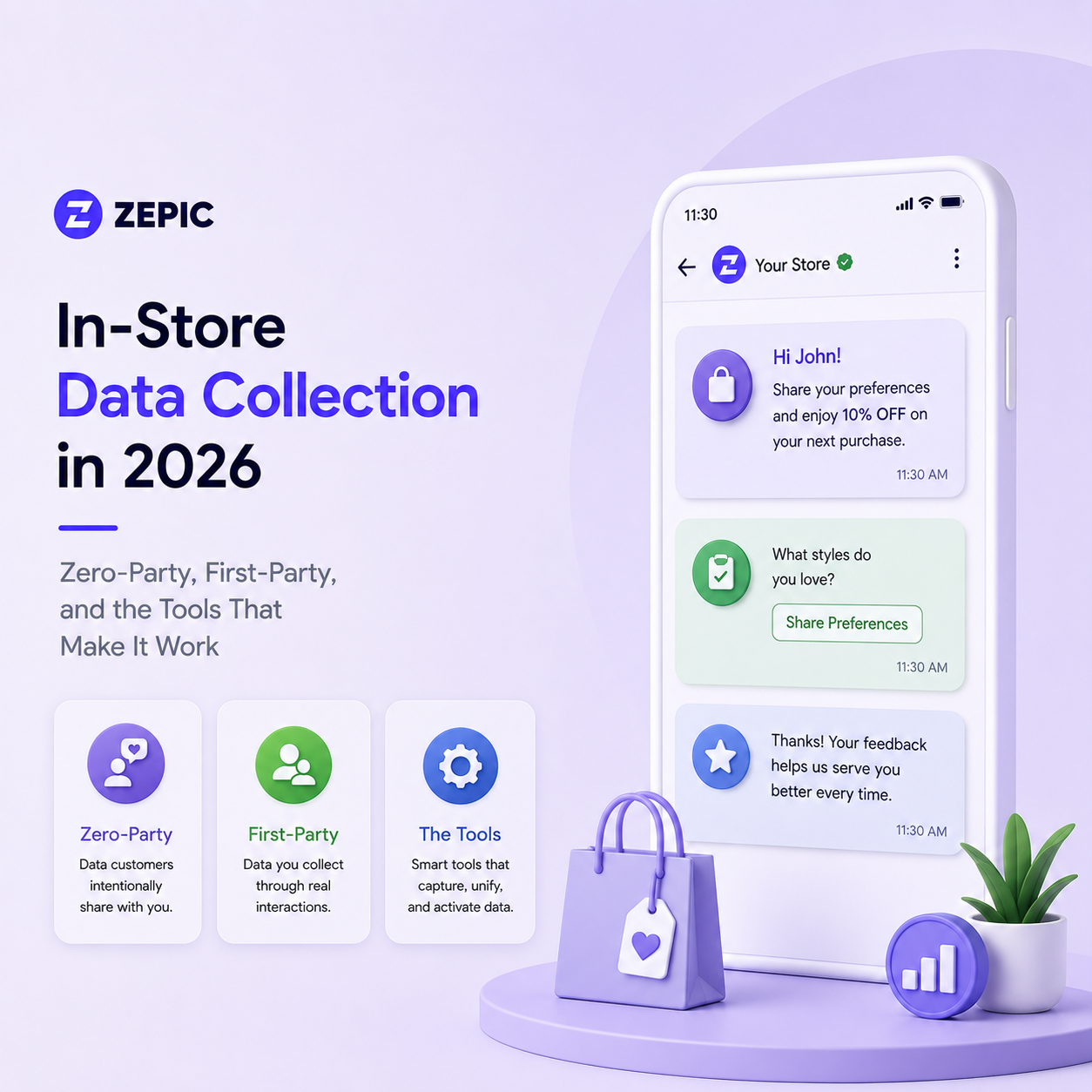
To build an effective optimization model for physical storefronts, you have to understand the difference between the two primary classes of owned data available on the sales floor.
Understanding how these data streams interact across the entire customer lifecycle helps you identify exactly where to place collection touchpoints along the physical journey.
To capture zero-party data, you have to create clear incentives for shoppers. Customers will share their personal preferences and pain points when they receive immediate value in return.
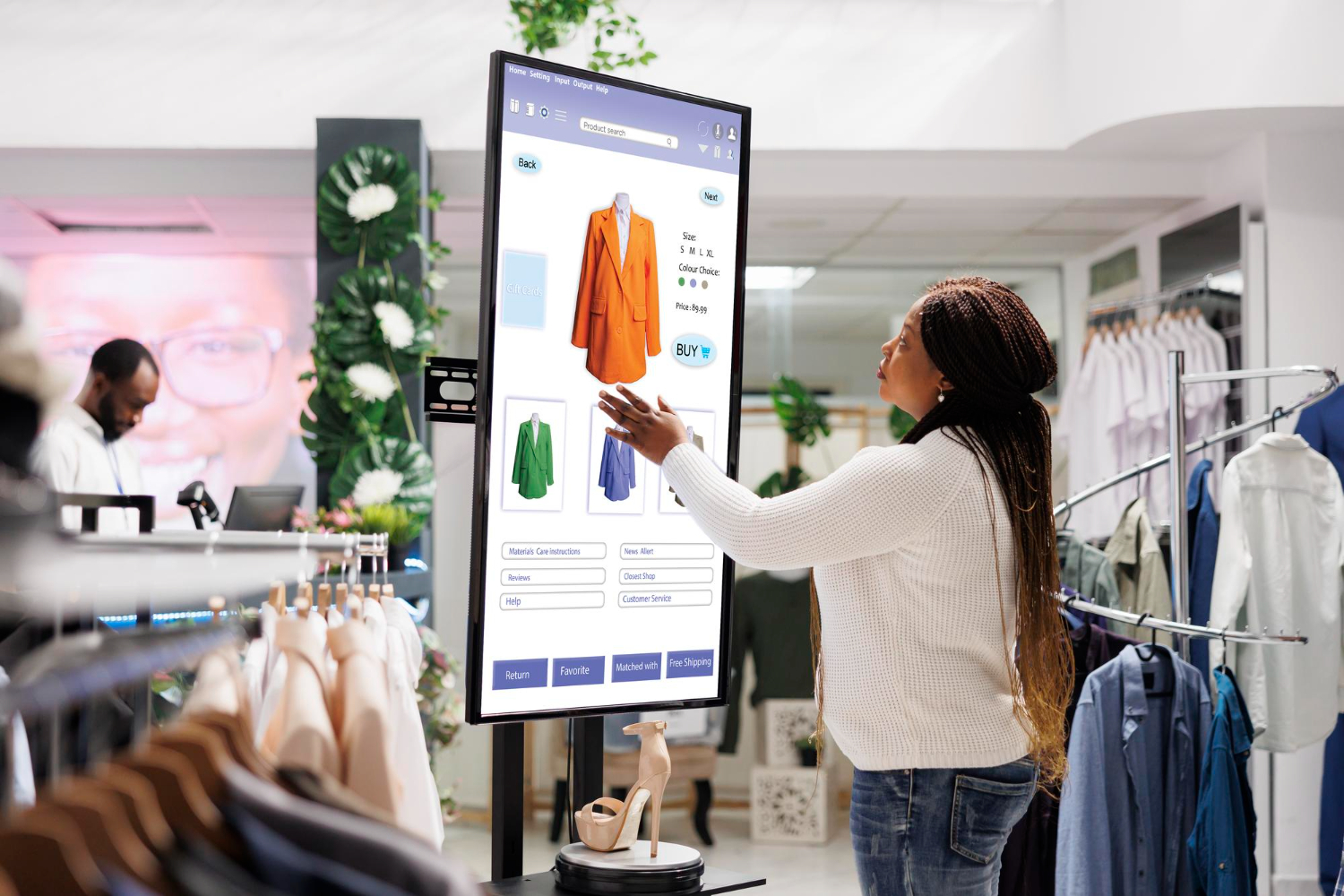
Placing interactive screens or tablets in areas with a lot of foot traffic allows you to act as digital consultants.
For example, a beauty retailer can place an interactive skin analysis kiosk in the cosmetics aisle. The kiosk guides the customer through a brief questionnaire regarding skin sensitivity, current routines, and specific skincare goals.
The customer receives an instant, personalized product recommendation list, while your store captures zero-party data about exactly what the consumer is looking for. This method eliminates guesswork and logs accurate preference attributes directly into the user's unified profile.
Many retailers are replacing traditional printed signage with smart, localized QR codes attached to product displays or shelving units. When scanned, these codes launch hyper-focused mobile web experiences.
For example: A grocery retailer can place a QR code in the wine department that opens a quick three-question palate quiz.
When answering questions about flavor preferences and meal pairings, shoppers receive immediate bottle recommendations and a digital coupon. The retailer gains immediate data on the customer's taste preferences and budget considerations, which helps fuel future personalized email campaigns.
Apparel brands are transforming the fitting room experience by deploying connected interactive mirrors. When a customer walks into a fitting room with tagged garments, the mirror recognizes the items via sensor networks. The screen displays product details, available sizes, and coordinating items.
If a shopper uses the mirror interface to request a larger size or a different color, that action provides highly specific zero-party data. It indicates a clear stylistic interest while flagging an explicit fit issue with the original item. This direct feedback loops straight back to inventory and product development systems.
The point of checkout provides a natural opportunity to gather explicit feedback. Instead of printing long, paper receipts that consumers immediately discard, you can offer smart digital receipts sent via text or email.
The digital receipt interface includes an embedded, one-click survey that asks simple, targeted questions regarding the purchase experience or future product interests. Offering a small loyalty point bonus or an entry into a monthly draw drives high completion rates, converting a routine transaction into a preference-gathering asset.
First-party data collection focuses heavily on tracking behavioral signals as customers move through a store. These methods capture objective actions, revealing how shoppers interact with spaces and products in real time.
Offering free, high-speed guest Wi-Fi is one of the best ways to collect behavioral data. To access the network through a captive portal, shoppers provide their email address or scan their digital loyalty card app.
Once the device connects, the store's wireless access points can map the unique media access control (MAC) address of the smartphone as it moves through the building. This setup provides aggregate data on overall dwell times, high-traffic corridors, and popular departments, helping retailers optimize layout designs and product placements.
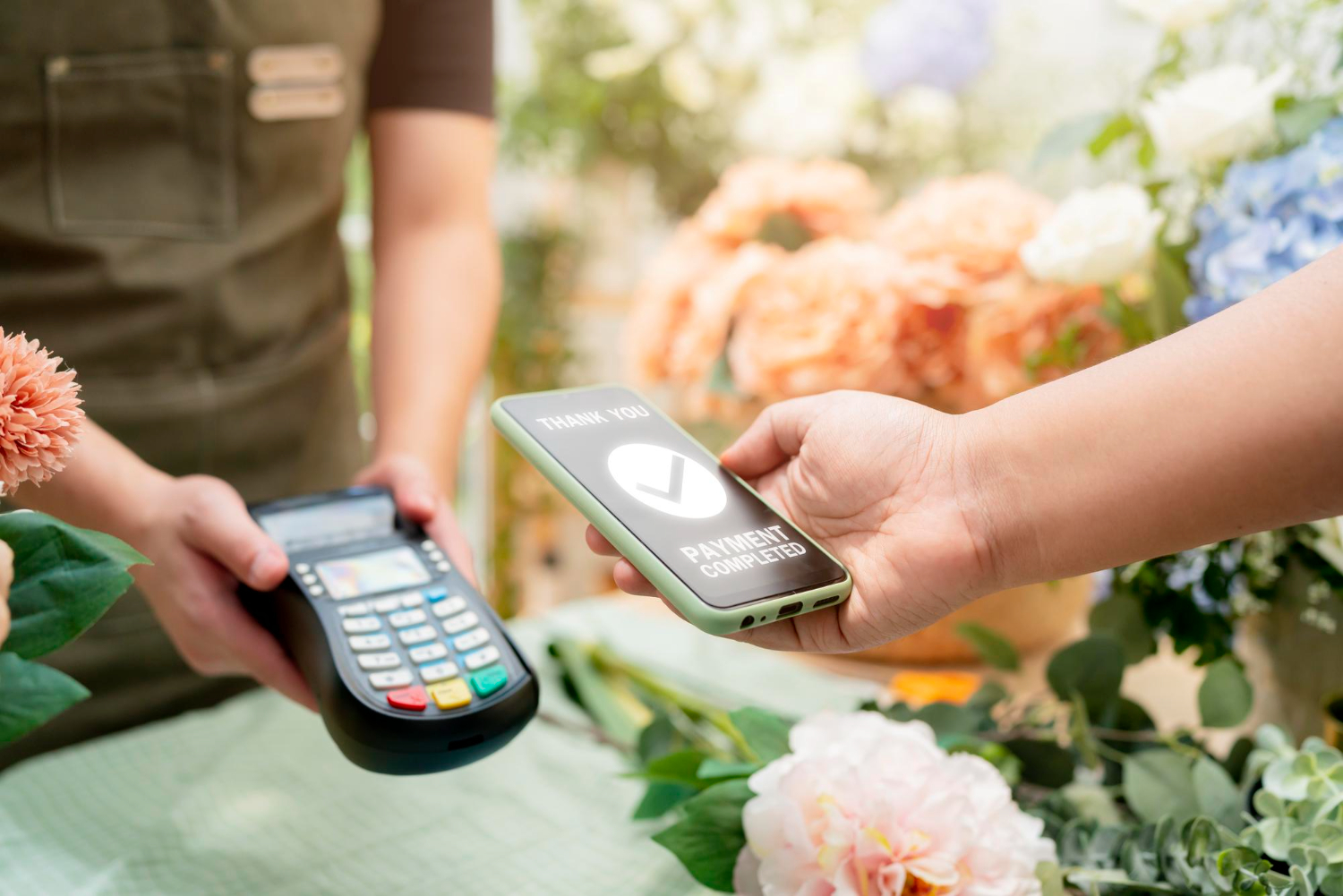
The front-line checkout register is the ultimate behavioral ledger. In 2026, modern point-of-sale software automatically connects brick-and-mortar purchases with a customer's online profile.
When a buyer scans a loyalty barcode, taps a mobile app, or uses a linked credit card, the system logs the exact time, store location, item mix, discount usage, and total spend.
You can use mobile tablets on the sales floor to allow associates to check out customers anywhere in the store, capturing transaction data at the exact moment of decision.
Radio-frequency identification (RFID) tags are no longer used solely for basic inventory counts. You can use continuous shelf-level RFID readers to track item movement dynamically.
When a shopper picks up a premium jacket from a rack, a sensor logs the event. If the item is returned to the rack two minutes later, the system records a high-intent engagement that did not convert into a sale. Aggregating these shelf-abandonment data points helps merchandising teams identify pricing resistance or fit discrepancies before they impact overall revenue.
Deploying low-cost Bluetooth Low Energy (BLE) beacons throughout a store allows stores to communicate directly with proprietary brand apps on customer smartphones. If a customer has downloaded the store's app and enabled location permissions, the beacons can trigger contextual push notifications when the shopper enters a specific aisle.
For example, walking into the home goods section can instantly surface a coupon for cookware. This proximity-based interaction logs precise departmental visit patterns, mapping out exactly how long customers browse specific product families.
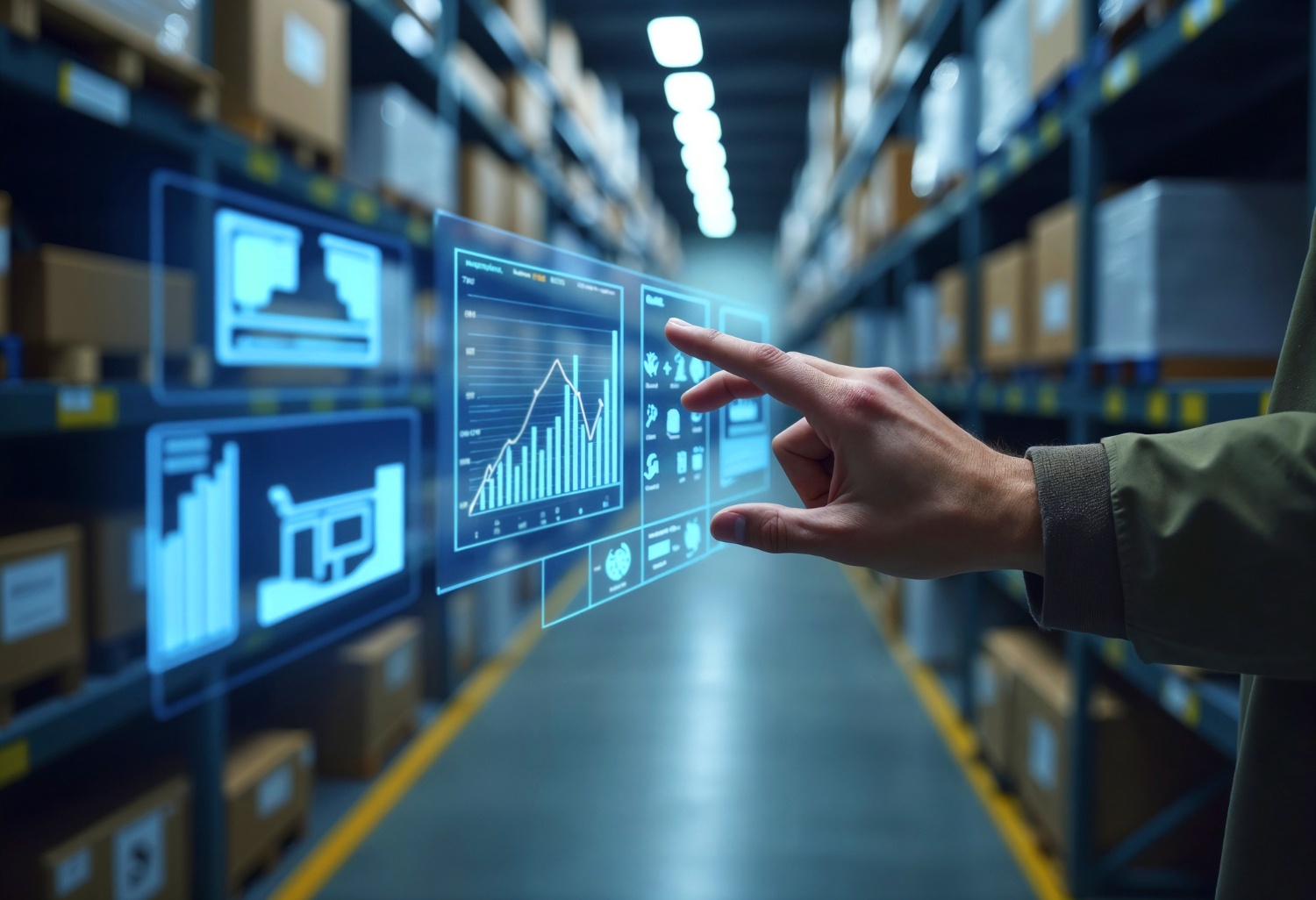
Raw data collected on a retail floor is only valuable if a business can process, unify, and act upon it instantly.
A specialized Customer Data Platform serves as the central brain for omnichannel operations. In-store data points, such as point-of-sale logs, Wi-Fi portal registrations, and kiosk quiz results, arrive as raw, unstructured signals.
The CDP ingests these distinct inputs in real time, cleaning and organizing the data to link it directly to a single, persistent customer profile. This integration ensures that an offline interaction instantly updates a customer's profile, allowing online marketing automation systems to reflect their in-store behavior immediately.
Processing thousands of continuous sensor pings from RFID antennas, Wi-Fi routers, and Bluetooth beacons can overwhelm traditional cloud storage networks. Retailers address this challenge by deploying edge computing gateways directly inside the physical store building.
These local hardware appliances process raw sensor data locally, filtering out background noise and temporary signals. The system only transmits meaningful behavioral events, such as verified department dwell times or completed transactions, to central databases. This method minimizes bandwidth costs and ensures low-latency performance for in-store applications.
A primary challenge in managing physical store data is connecting anonymous store behavior with known customer identities. Identity resolution engines use sophisticated matching algorithms to bridge this gap safely.
If a consumer uses an interactive kiosk with an email address and later checks out using a credit card matching a known loyalty profile, the identity resolution tool stitches these data points together. This process forms a continuous, coherent record of the entire customer relationship across both physical and digital spaces.
If you want to collect data within physical stores, you need to adhere to certain privacy regulations. Data privacy laws impose restrictions on automated decision-making and tracking technologies used without explicit user awareness.
Data from Gartner shows that U.S. states alone levied over $3.4 billion in privacy-related fines during 2025. This reality proves that regulatory bodies have shifted their focus from general education to full-scale compliance enforcement. Retailers must design their in-store data collection mechanisms with transparent, user-centered privacy frameworks in mind.
"Regulators are shifting their efforts away from spreading awareness to full-scale enforcement. This is increasingly becoming the standard in 2026 and beyond." — Nader Henein, VP Analyst at Gartner
To build a sustainable framework, retailers must focus heavily on a transparent value exchange. Customers understand that their data is valuable, and they expect clear benefits when sharing it.
You must make opt-in procedures clear, simple, and symmetrical. If a customer can sign up for Wi-Fi tracking with a single click, they must be able to revoke that permission just as easily within the store's mobile app or web portal. Pre-checked consent boxes are no longer viable under modern compliance standards.
The gap between online and in-store data collection has effectively closed. Every touchpoint on the sales floor, from a kiosk quiz to a Wi-Fi login to an RFID-tagged jacket returned to the rack, now generates the same caliber of behavioral and preference data that e-commerce platforms have collected for years. The retailers pulling ahead in 2026 aren't necessarily the ones gathering the most data; they're the ones that can unify it into a single, actionable customer profile without making shoppers feel surveilled.
That's the real bottleneck for most brands: not collection, but connection. A kiosk questionnaire, a POS transaction, and a beacon-triggered notification are worthless in isolation. They only become valuable when an identity resolution engine and a CDP stitch them into one coherent record that both your in-store associates and your email marketing team can act on in real time.
If you're ready to move past siloed data and start unifying zero-party and first-party signals from your stores, kiosks, and POS systems into a single customer view, ZEPIC is built for exactly this. Its built-in CDP connects with 50+ tools, including Shopify, POS, and loyalty platforms, to create a real-time 360-degree customer profile, then lets you activate that data instantly across email, WhatsApp, and other channels.
Book a free demo with ZEPIC today and see how quickly you can turn in-store behavior into personalized, revenue-driving campaigns.

%201.png)


.png)